BrightStar

Ver todos os Events

Descubra encontros conscientes

events

Yoga
Meditation
Breathwork
Qigong
Tai Chi
Sacred Music
World Music
Medicine Music
Sound Healing
Ecstatic Dance
Destinos populares
BaliSedonaLos AngelesCosta RicaNew YorkSan FranciscoAustinMiamiJoshua TreeTulum
Ver todas as categoriasVer todos os destinos

Explorar todos os recursos

Ferramentas poderosas para expandir seus eventos

Recursos da plataforma

Precificação dinâmica inteligente
Categorias de ingressos
Lugares marcados
Recuperação de carrinho abandonado
Recuperação de visitantes
Doações e preço variável
Sistema de afiliados
Scanner de ingressos
Códigos de desconto
Perguntas personalizadas
Compartilhamento de ingressos
Upsells e adicionais
Análises e relatórios
Sequências de e-mail
Lista de espera / Notificar / Lembrar
Pessoas e Lugares
Artists & TeachersEvent OrganizersVenues & StudiosKnowledge BaseGlossaryInspiration
Ver todos os recursosSobre nós
PreçosBlog
Language
Saved events
Ver todos os eventos

events

YogaMeditationBreathworkQigongTai ChiSacred MusicWorld MusicMedicine Music

Destinos populares

BaliSedonaLos AngelesCosta RicaNew YorkSan Francisco

Pessoas e Lugares

Artists & TeachersEvent OrganizersVenues & StudiosKnowledge BaseGlossaryInspiration

Recursos da plataforma

Precificação dinâmica inteligenteCategorias de ingressosLugares marcadosRecuperação de carrinho abandonadoRecuperação de visitantesDoações e preço variávelSistema de afiliadosScanner de ingressosCódigos de descontoPerguntas personalizadasCompartilhamento de ingressosUpsells e adicionaisAnálises e relatóriosSequências de e-mailLista de espera / Notificar / Lembrar
Ver todos os recursosSobre nós
PreçosBlog
EntrarBuscadoresCriadores
  • Ver todos os Eventos
  • Para buscadores
  • Yoga
  • Meditação
  • Respiração consciente
  • Qigong
  • Tai chi
  • Música sagrada
  • World music
  • Música de medicina
  • Terapia sonora
  • Dança extática
  • Retiros
  • Workshops
  • Todas as categorias →
  • Bali
  • Sedona
  • Los Angeles
  • Costa Rica
  • Tulum
  • Byron Bay
  • San Francisco
  • Austin
  • New York
  • San Diego
  • Denver
  • Seattle
  • Portland
  • Miami
  • Todas as cidades →
  • Join the Movement
  • Why we list
  • Sell Globally
  • Para criadores
  • Para equipes
  • Para escritores
  • Para professores
  • Para artistas de kirtan
  • Para estúdios
  • Para festivais
  • Para centros de retiro
  • Para organizações sem fins lucrativos
  • Embaixador da marca
  • Estudos de caso
  • Ingressos grátis
  • Elevate
  • Amplify
  • Rede de 500K+ compradores
  • Recuperação de carrinho abandonado
  • Precificação dinâmica inteligente
  • Categorias de ingressos
  • Eventos recorrentes
  • Lugares marcados
  • Sistema de afiliados
  • Lista de espera / Notificar
  • Scanner de ingressos
  • Widget incorporável
  • Distribuição de eventos
  • Central de mensagens
  • Integrações
  • Relatórios
  • Todos os recursos →
  • Sobre
  • O ecossistema
  • Blog
  • Glossário
  • Inspiração
  • Central de ajuda
  • Contato
  • Documentação da API
  • Recursos da marca
  • Carreiras
  • Imprensa
  • Termos de Serviço
  • Política de Privacidade

Eventos

  • Ver todos os Eventos
  • Para buscadores
  • Yoga
  • Meditação
  • Respiração consciente
  • Qigong
  • Tai chi
  • Música sagrada
  • World music
  • Música de medicina
  • Terapia sonora
  • Dança extática
  • Retiros
  • Workshops
  • Todas as categorias →

Destinos

  • Bali
  • Sedona
  • Los Angeles
  • Costa Rica
  • Tulum
  • Byron Bay
  • San Francisco
  • Austin
  • New York
  • San Diego
  • Denver
  • Seattle
  • Portland
  • Miami
  • Todas as cidades →

Para criadores

  • Join the Movement
  • Why we list
  • Sell Globally
  • Para criadores
  • Para equipes
  • Para escritores
  • Para professores
  • Para artistas de kirtan
  • Para estúdios
  • Para festivais
  • Para centros de retiro
  • Para organizações sem fins lucrativos
  • Embaixador da marca
  • Estudos de caso
  • Ingressos grátis
  • Elevate
  • Amplify

Recursos

  • Rede de 500K+ compradores
  • Recuperação de carrinho abandonado
  • Precificação dinâmica inteligente
  • Categorias de ingressos
  • Eventos recorrentes
  • Lugares marcados
  • Sistema de afiliados
  • Lista de espera / Notificar
  • Scanner de ingressos
  • Widget incorporável
  • Distribuição de eventos
  • Central de mensagens
  • Integrações
  • Relatórios
  • Todos os recursos →

Empresa

  • Sobre
  • O ecossistema
  • Blog
  • Glossário
  • Inspiração
  • Central de ajuda
  • Contato
  • Documentação da API
  • Recursos da marca
  • Carreiras
  • Imprensa
  • Termos de Serviço
  • Política de Privacidade
BrightStar
© 2026 BrightStar. Todos os direitos reservados.
Inspiration

Kalam Waheguru: Divine Word in Sikh Spiritual Practice

Professor Paramjeet Singh
Jan 3, 2013
6 min de leitura

Kalam Waheguru refers to the divine word, utterance, or creative command of God (Waheguru) in Sikh theology and spiritual practice. The concept represents how the Infinite expresses itself through sound, vibration, and language—a foundational principle in Sikh cosmology, kirtan (devotional singing), and personal meditation. Understanding Kalam Waheguru connects practitioners to the creative force underlying existence and deepens engagement with sacred sound as a path to awareness.

Leitura · 6 seções

What is Kalam Waheguru in Sikh Philosophy?

In Sikh teaching, Kalam Waheguru—literally "the word of God" or "God's utterance"—describes the divine creative command through which all existence manifests. This concept draws from Sikh foundational texts, including the Guru Granth Sahib, where sound and word are understood as the primary expressions of the Infinite. Kalam is not merely spoken language but a vibrational force; it is the Hukam (divine order) expressing itself in audible and perceptible form.

The principle assumes that consciousness does not exist separately from expression—that the divine utterance and divine being are inseparable. When Guru Nanak, the founder of Sikhism, speaks of Kalam in the Mool Mantar (the opening verse of the Guru Granth Sahib), he establishes that the One Reality manifests through creative utterance. This utterance is not an act that occurred once in ancient time but an ongoing, present-moment vibration sustaining all life.

How Does Kalam Waheguru Function in Creation?

According to Sikh cosmology, Kalam Waheguru operates as the creative principle—the mechanism by which the formless, infinite Waheguru gives rise to form, time, space, and consciousness. Just as sound vibrations can be detected as measurable frequencies, the Kalam is understood as the subtle vibrational foundation underlying physical reality. Every atom, every thought, every moment of awareness participates in and emerges from this divine utterance.

This framework suggests that creation is not a distant historical event but an ongoing process. The universe does not exist because God spoke once; it exists because God continually speaks. Practitioners who meditate on or recite Kalam Waheguru are aligning their own consciousness with this creative force, tuning themselves to the frequency at which existence itself vibrates. This alignment is believed to reduce separation between the individual self (jiva) and the universal Self (Brahman or Waheguru).

What Role Does Kalam Waheguru Play in Kirtan and Meditation?

In Sikh spiritual practice, Kalam Waheguru finds direct application in kirtan—the devotional singing of shabads (hymns) from the Guru Granth Sahib. Kirtan is not entertainment or performance in the traditional sense; it is understood as a practice of aligning one's voice, breath, and mind with the divine utterance. When a singer or sangat (congregation) joins in kirtan, they participate in actualizing Kalam Waheguru in the present moment.

The practice operates on multiple levels simultaneously:

  • Vibrational alignment: The specific sound frequencies and raags (melodic frameworks) carry particular spiritual qualities and are believed to attune the nervous system and consciousness to higher states of awareness.
  • Linguistic depth: The words themselves—often composed by the Gurus—encode spiritual teachings, philosophical truths, and devotional sentiment that work on conscious and unconscious levels.
  • Communal resonance: When multiple voices sing together, the Kalam is amplified both acoustically and spiritually, creating a field that elevates collective consciousness.
  • Personal meditation: Individual practice of Naam Simran (remembrance of the divine name) often involves internal or whispered repetition of sacred words or mantras, attuning the individual to Kalam through breath and thought.

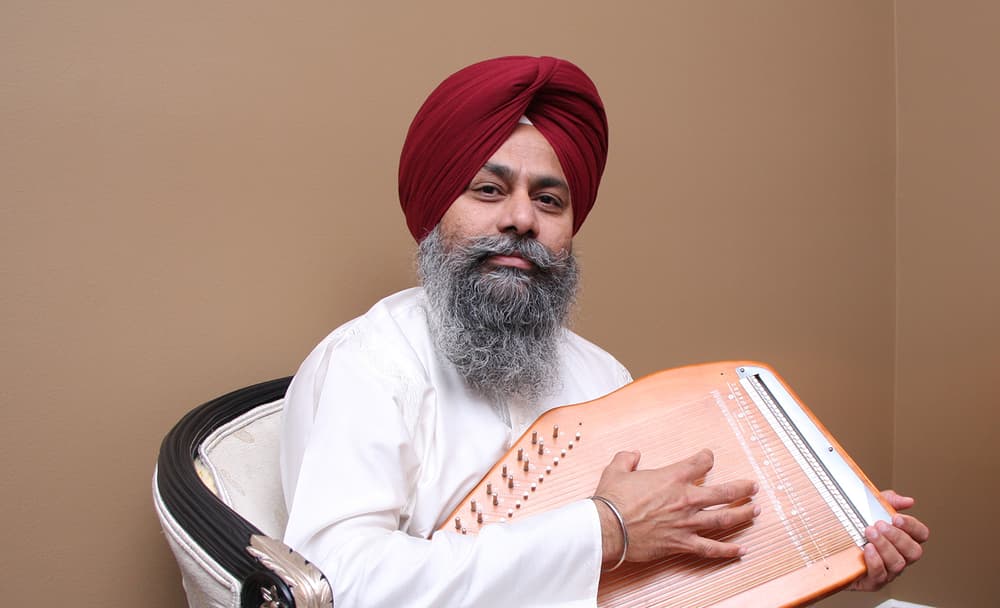
Professor Paramjeet Singh, through his teaching and practice, emphasizes that Kalam Waheguru is not merely an abstract theological concept but a living, embodied experience accessible through disciplined engagement with sacred sound and word.

How Can Understanding Kalam Waheguru Deepen Spiritual Practice?

Recognizing Kalam Waheguru transforms how a practitioner relates to language, sound, and consciousness itself. Rather than viewing words as arbitrary symbols, this understanding positions language as a direct expression of creative intelligence. Speech, then, becomes a sacred act—not something to be engaged in casually but with awareness of its power and origin.

For those engaged in Sikh practice, this awareness can manifest as:

  • Deepened attention during kirtan, listening not just with ears but with full consciousness to how the Kalam moves through voice and creates internal shifts.
  • Greater intentionality in personal Nam Simran, understanding each repetition as an attunement to cosmic vibration rather than a mere mental exercise.
  • Enhanced appreciation for the Guru Granth Sahib, recognizing that the shabads are not historical documents but living utterances of the divine that speak differently to each practitioner based on their readiness to receive.
  • A shift in speech and thought patterns toward greater alignment with truth (Sat), understanding that all utterance echoes and participates in Kalam Waheguru.

What is the Relationship Between Kalam Waheguru and Individual Consciousness?

Sikh philosophy, as reflected in teachings on Kalam Waheguru, suggests that individual consciousness is not separate from divine utterance but rather a localized expression of it. The Hukam (divine order) that manifests as Kalam Waheguru operates through all beings. Human awareness—the capacity to know, to create, to speak, to love—is understood as Kalam expressing itself at the level of individual consciousness.

This has a radical implication: spiritual practice is not about acquiring something foreign or becoming something other than what we are. Rather, it is about recognizing and aligning with the divine utterance that is already expressing itself as our own consciousness. The "small" self is revealed to be an expression of the "large" Self—Kalam at a particular frequency.

This framework dissolves the subject-object duality that typically characterizes spiritual seeking. There is no practitioner separate from practice, no meditator separate from meditation. There is only Kalam expressing itself, and awakening occurs when this truth is directly realized.

Where to go from here

To explore Kalam Waheguru more deeply, practitioners can engage with the Guru Granth Sahib directly, reading the Mool Mantar and associated shabads that elaborate on divine utterance and creation. Attending or participating in kirtan—either in sangat or through recorded collections—provides experiential entry into these teachings. Professor Paramjeet Singh's work, available through his YouTube channel, website, and social media, offers contemporary teachings that bridge classical Sikh theology with lived spiritual practice. Individual practice of Nam Simran, approached with understanding that each repetition is alignment with Kalam Waheguru, becomes a direct avenue for experimentation and deepening. Finally, studying Sikh cosmology alongside other spiritual traditions that emphasize divine sound (such as Hindu Nada Brahman teachings) can enrich and contextualize understanding of how Kalam functions as a universal principle expressed through particular traditions.

Comments

Loading the conversation…

Professor Paramjeet Singh
ArtistProfessor Paramjeet Singh

Professor Paramjeet Singh is an Indian classical vocalist and Sikh kirtan artist who has mastered over 125 ragas and devoted his career to preserving the devotional music of saints…

Ver perfilSite
Explorar temas
Kalam-waheguruSikh-spiritualityDivine-wordKirtanSacred-sound

Tem perguntas?

Perguntas frequentes

Kalam Waheguru refers to the divine word or utterance of God in Sikh theology—the creative force through which all existence manifests and is sustained. It represents the vibrational foundation of reality and is understood as an ongoing divine expression rather than a one-time creation event.
Kalam Waheguru is engaged through kirtan (devotional singing of shabads), Nam Simran (repetition and remembrance of sacred names), and meditation on sacred texts. These practices align individual consciousness with the divine utterance and are believed to attune the practitioner to higher states of awareness.
While both are central to Sikh cosmology, Kalam refers specifically to the utterance or word through which divine creative force expresses itself, while Hukam refers to the divine order or command that governs all existence. Kalam is the mechanism; Hukam is the principle it implements.
While rooted in Sikh tradition, the principle of Kalam Waheguru—divine expression through sound and vibration—reflects a universal understanding found in many spiritual traditions. Any conscious engagement with language, sound, and intention can become an avenue for recognizing and aligning with this principle.
Recognizing Kalam Waheguru transforms speech from arbitrary communication into a sacred act—one that participates in divine creative expression. This understanding encourages greater intentionality, truthfulness, and awareness in how one uses language and thought.
The Guru Granth Sahib is understood as a living expression of Kalam Waheguru—the divine word in textual form. The shabads (hymns) it contains are believed to encode spiritual wisdom and carry vibrational qualities that attune practitioners to cosmic consciousness when engaged with reverence and attention.
Kalam Waheguru parallels concepts like the Logos in Christian tradition or Nada Brahman (divine sound) in Hindu philosophy—all describing a creative principle expressed through sound or word. While the terminology differs, these traditions share the understanding that consciousness manifests through vibrational utterance.

Continuar lendo

More from Professor

Ver Tudo
Raag Rageshwari Practice: How Sargam Phrases Build a Raag
Inspire

Raag Rageshwari Practice: How Sargam Phrases Build a Raag

A classroom Raag Rageshwari drill built from sargam phrases shows how sur, voice control, taal and riyaz come together. Here is what the pra…

1 min read
Raag-Based Gurbani Kirtan: The Beauty of Mere Laalan Ki Sobha
Inspire

Raag-Based Gurbani Kirtan: The Beauty of Mere Laalan Ki Sobha

Learn how raag-based Gurbani kirtan preserves authentic Sikh devotional music through the shabad "Mere Laalan Ki Sobha," performed in classi…

1 min read
Awareness Beyond the Person: The Direct Path to Universal Consciousness
Inspire

Awareness Beyond the Person: The Direct Path to Universal Consciousness

At Monte Sahaja, a seeker discovers that consciousness itself—not the person—is the unchanging witness of all experience. A radical shift in…

1 min read
The Longing Behind the Glass: Why We Reach for Relief
Inspire

The Longing Behind the Glass: Why We Reach for Relief

Alcohol and other substances offer a fleeting escape—but what people are really seeking is freedom from themselves, a spiritual longing misp…

1 min read

Continue explorando

Continue sua jornada

Mais sabedoria e mais encontros de todo o diretório BrightStar.

Mais artigos

Explore a biblioteca completa de ensinamentos, entrevistas e guias.

Voltar a todos os artigos →

Professores e artistas

Conheça as linhagens, os músicos e os guias do mundo consciente.

Explorar artistas →

Encontre um evento

Kirtan, retiros, banhos de som, breathwork, festivais — acontecendo em breve.

Ver eventos →