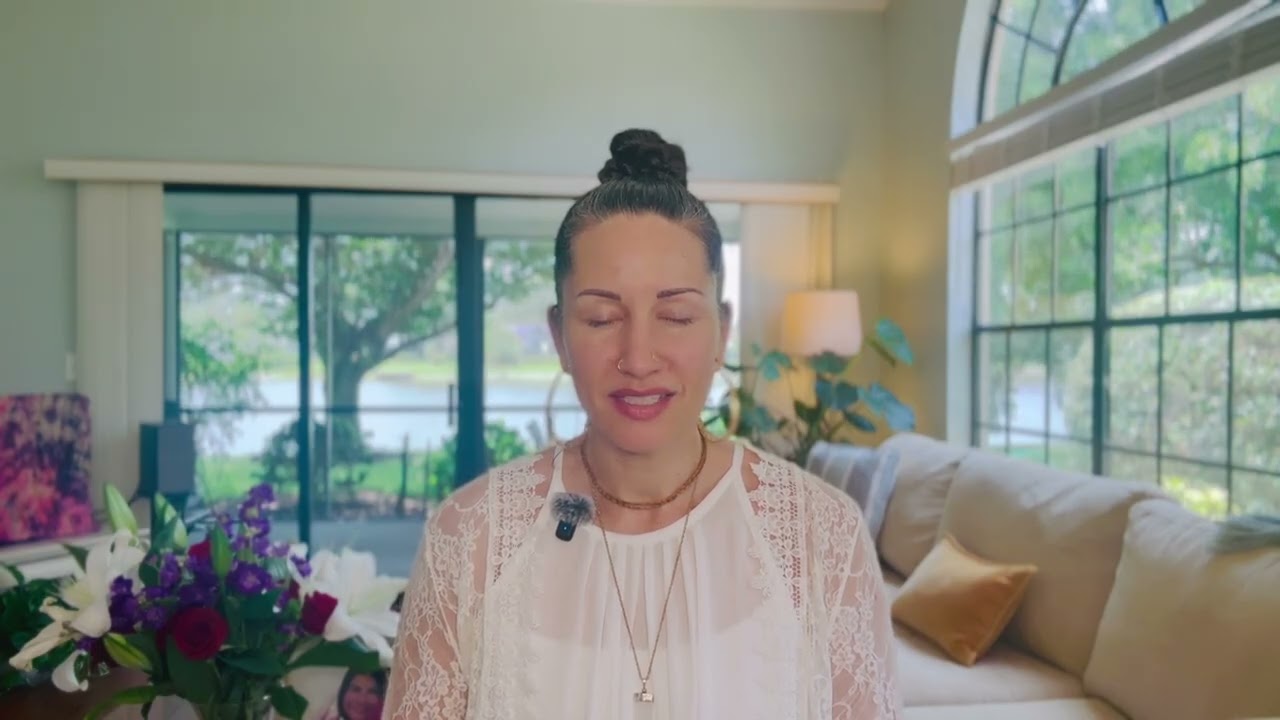
Two minutes and twenty-one seconds is not much time to settle a question people have argued about for generations, and Saqib Rizvi, a newer creator on YouTube, doesn't try to settle it in full. His video, titled "Meditation | Is It Connected To Religion?", makes one pointed case: that the belief linking meditation to religion has no real rationale, that meditation is best understood as "an exercise for the mind," and that a technique named after Buddhists or practiced within Hinduism does not belong exclusively to them. He leans on a comparison most of us can picture immediately, the way running, swimming, and dancing train the body. The idea is simple, a little provocative, and worth testing. Below is a close look at what he says, why his analogy carries most of the weight, and where a viewer should push back.
The central claim arrives early and without hedging. "Many people think that meditation is a religious practice," he opens. He then names the figures people tend to picture: monks, yogis, practitioners of Hinduism and Buddhism, and followers of mystics such as Rumi and Osho. His answer comes at the 0:24 mark: "let me tell you very honestly that there is no rationale behind this belief."
Notice what he does not say. He does not claim that meditation has no spiritual dimension. At 0:39 he concedes that "meditation is also done as a spiritual practice by some people." His target is narrower and, for that reason, easier to defend. He is arguing about who is entitled to practice meditation, and about whether the association with religion should decide that question. For him it should not. Business professionals, doctors, athletes, and artists, he says at 0:44, practice it "as an exercise for the mind." Spiritual and secular uses can coexist, and the second does not require the first.
The argument rests on a comparison he makes twice. At 1:13 he says: "Like running, swimming, dancing are exercises for the body, in a similar fashion, meditation is an exercise for the mind." Then at 1:22 he turns the comparison into a reductio: "How weird it would be if somebody says that dancing is a religious activity because it is also practiced in Hinduism."
This is the sharpest move in the video, and it works for a specific reason. Almost nobody thinks of dancing as a religious act merely because some religious traditions include it. A ballet class is not a sermon, and a person who swims laps is not performing a rite. By placing meditation beside these activities, Rizvi asks viewers to notice that they already apply a different standard to meditation. Dance can be sacred in one setting and athletic or social in another, and the setting determines the meaning. Meditation, he suggests, deserves the same flexibility.
A reader should also see the limits of the comparison. Analogies help a viewer see a pattern, but they do not prove that the pattern holds in every case. Someone could respond that meditation, unlike dancing, was developed by specific traditions with specific aims, and that those aims are part of what the practice is. Rizvi does not address that objection. His analogy shows that religious origin does not automatically make a practice religious for everyone else. Whether it fully separates the practice from its origins is a separate question the two minutes leave open.
Rizvi's implicit answer is yes. The logic runs like this: Buddha's association with meditation, he says at 1:30, "doesn't mean that only Buddhists can do meditation." Because one tradition is linked to a practice, others are not barred from it. He then offers an invitation rather than a lecture: "We can do meditation our own way without associating it with religion."
That sentence describes a position many contemporary teachers and researchers have taken in various forms, and the video's own description places this debate inside the rise of the Mindfulness Movement. The description states that some people believe meditation "has its roots in Religion," while others "wish to de-institutionalize Meditation so that it can be liberally practiced without any Religious connotation associated with it." Rizvi sits clearly in the second camp. The word "de-institutionalize" is useful here. It separates a practice from the organizations that carried it for centuries, a distinction that matters whether you think the separation is healthy or a loss.
The most concrete thing Rizvi offers is a list of outcomes. At 0:59 he says there is "ample research that shows that meditation relieves stress, anxiety, depression and also improves focus, productivity, creativity, et cetera." That list is doing real work. If meditation produces measurable effects on attention and mood, then treating it as an exercise for the mind becomes more than metaphor.
There is a catch, and a careful reader should name it. Rizvi does not cite a study, a researcher, or a journal in the video. "Ample research" is a claim he asserts rather than documents. That does not make it false. It does mean the viewer who wants to build on it should go looking for the evidence and judge its quality personally, particularly on claims as broad as relieving depression and boosting creativity. Those are large promises, and a two-minute video is not the place to verify them.
Honesty about this video means being clear about its limits. The argument is brief, and several questions go unanswered. He does not explain what meditation consists of in practice, whether that is focused attention, breath awareness, open monitoring, or something else. He does not describe how the traditions he names understood the practice, so the viewer cannot compare the "exercise" framing with the original contexts. He does not discuss what might be lost when a practice is separated from the community, ethics, or teachings that once surrounded it. And he does not address critics who argue that the secular version is a different thing entirely.
None of this makes the central point wrong. It means the video works best as a starting question rather than a finished answer. Rizvi frames himself as "just starting with my journey," in his words at 2:00, and the modest scope fits that self-description. He ends not with a thesis but with an appeal: "please do explore meditation as it is a beautiful practice and it transforms lives."
The most useful response to a video like this is to treat its claims as hypotheses. Three questions follow directly from what Rizvi says. First, when you meditate, what are you training: attention, patience, emotional steadiness, or something you would call spiritual? Second, does your answer change if the practice is framed as exercise versus devotion, and does that framing change what you actually do? Third, if you came to meditation through a religious tradition, what did that tradition give you that a purely secular exercise framing might not?
These questions do not require a religious commitment to answer, and they do not require rejecting one. They simply ask a viewer to notice what the practice means to them. Rizvi's analogy invites exactly this kind of attention. Dancing can be sacred, athletic, or social depending on who is dancing and why. Meditation, by his account, can be the same.
Start with the video itself, which is short enough to rewatch and pause at the moments above. Then read its description, which frames the wider debate and introduces the Mindfulness Movement as the most visible example of meditation moving beyond religious settings. From there, the productive next step is to look for the research Rizvi gestures toward and read it with the same skepticism you would bring to any strong claim. Finally, consider the question he leaves open: whether a practice keeps its meaning when it leaves the tradition that shaped it. Two minutes will not answer that, but they can start the conversation.