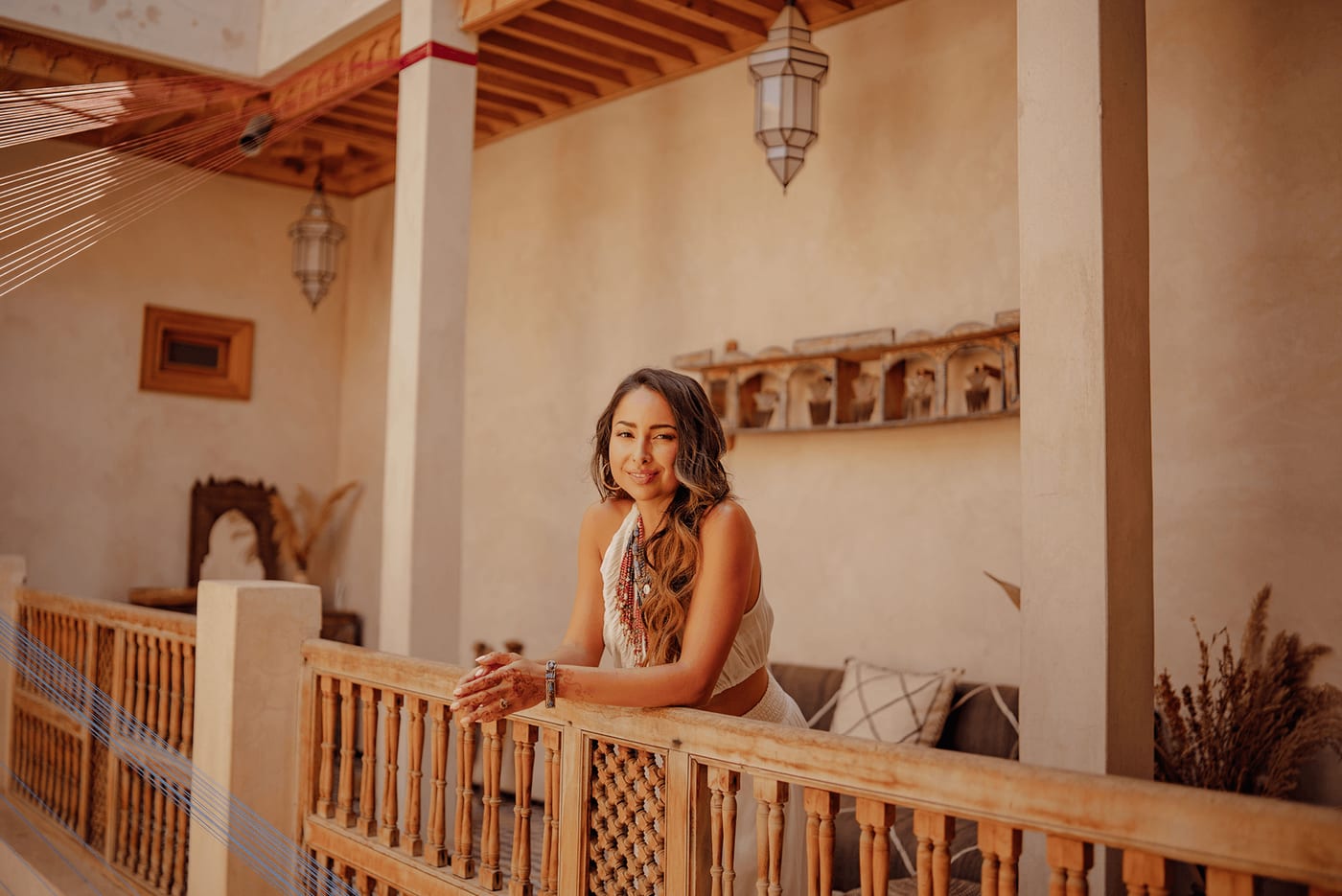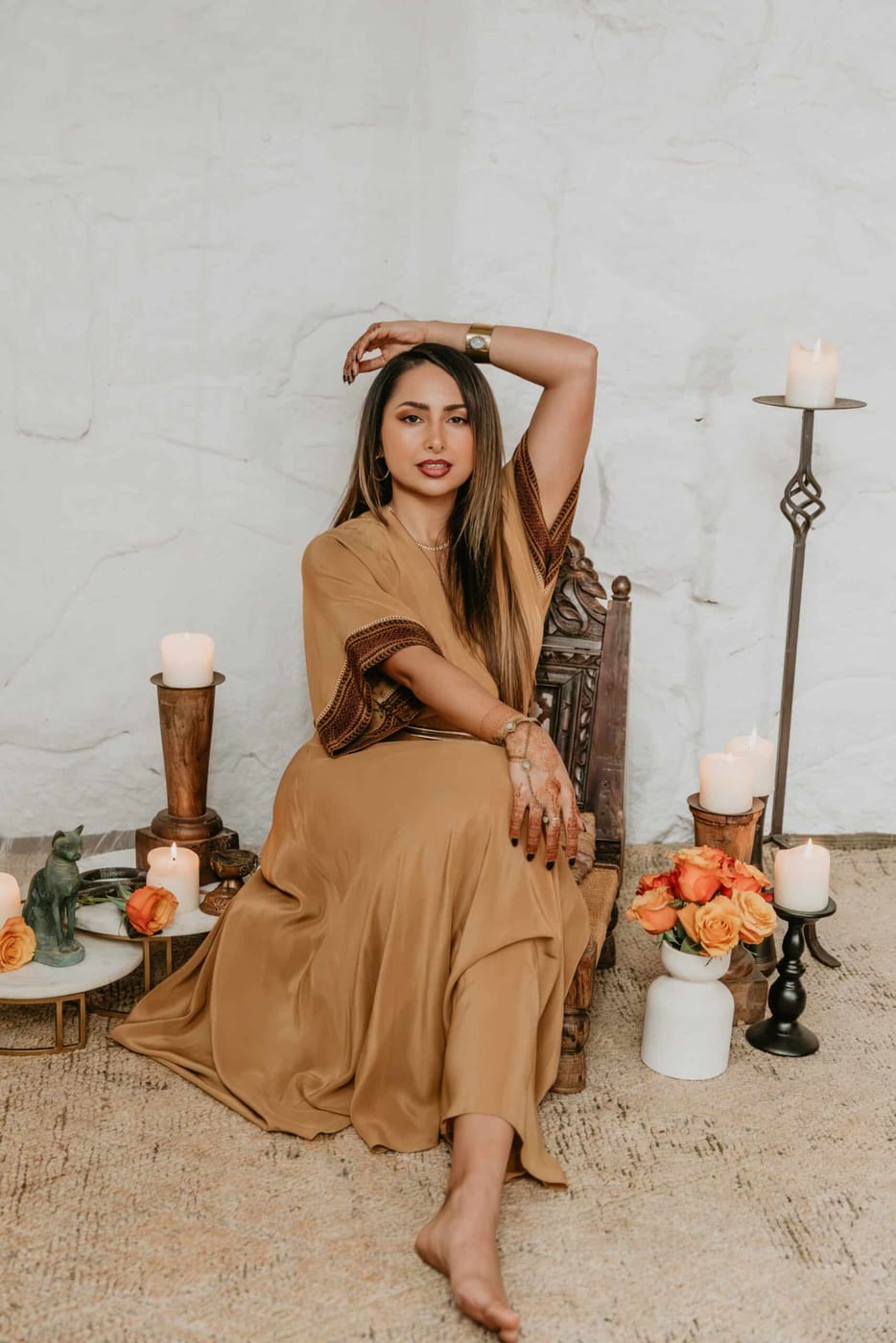

"Trust The Path" arrives on June 18, 2026, as a single with one track, and it belongs to the stretch of Sahara Rose's recent output where music has become a growing part of her creative life. Most people know her first as a bestselling author, speaker and spiritual teacher, and as host of the Highest Self Podcast, which her site describes as the #1 spirituality podcast in the U.S. for over nine years, with more than 60 million downloads. Her music extends the same teaching in another register. Her 2024 album My Body Is An Altar is her most substantial full-length statement, and singles such as "Trust Flow" and "Just By Feeling" sit around this release. "Trust The Path" continues that thread of trust and surrender, and it reads as one more entry in a body of work that treats embodiment as the center of spiritual life.
A single is a small container. There is no album arc to follow, no sequencing to decode. What you get is one idea, offered whole.
Here the record is thin, so this guide is candid about it. Detailed documentation of Sahara Rose's instrumentation, production and vocal approach is limited, and no credits or collaborators are listed for this release. What can be said honestly comes from the shape of her work. Her music sits in a contemporary space that bridges pop accessibility with sacred themes. It is not ambient or healing-genre music, and it is not traditional mantra or monastic chanting. Her stated philosophy, lived wisdom over theory, suggests sound meant to be felt and inhabited in the body rather than held at a contemplative distance.
Expect a voice that speaks as a teacher speaks: personal, direct, grounded in experience. The title itself sets the mood, an invitation toward surrender and confidence in one's direction rather than spectacle. Beyond that, trust your own ears. Press play before you read anything more about the sound, and let the first listen be your own.
"Trust The Path." With a single, the title track is the whole story, and it earns the attention for three reasons.
First, the message fits the teacher. Sahara Rose frames dharma, purpose and the unfolding of a life as things to be felt and lived in everyday experience, not deferred or intellectualized. A song called "Trust The Path" puts that conviction into a form you can carry through a commute or a walk.
Second, it connects to the nearby singles. "Trust Flow" and "Just By Feeling" circle similar ground, so this track lands as part of a larger conversation about trust, presence and intuition.
Third, its brevity is a feature. A single-track release asks for one sustained listen, and it can be returned to as a touchstone in a way a longer record rarely allows.
It helps to be precise here. Sahara Rose's work draws primarily from the Ayurvedic and dharmic traditions of India, approached through the divine feminine and embodied practice rather than renunciate or ascetic paths. She does not claim a formal guru-shishya lineage, and she is not presenting bhakti devotionalism. So "Trust The Path" is better placed in a contemporary, accessible, body-centered strand of spiritual music than in the classical kirtan or devotional canon.
That distinction matters for expectations. Listeners seeking reverent chanting or silent, ambient stillness will find a different temperament. This is music from a teacher who brings Vedic ideas into modern, everyday life and who treats sensuality, heartbreak and desire as legitimate sacred subjects. The sound is in conversation with her teaching, not with the temple tradition.
This single speaks most directly to someone standing at a threshold: a career pivot, the aftermath of a breakup, a stretch where the next step is unclear and certainty is unavailable. Her audience tends to be people drawn to her framework of the Dharma Archetypes (Visionary, Teacher, Artist, Entrepreneur, Activist) and to her willingness to keep spirituality grounded, relatable and fun. If you have listened to the Highest Self Podcast and want a more portable, musical version of its themes, this is a natural next step.
It will land less well for listeners who want strict classical devotion, rigorous scriptural study, or purely meditative soundscapes. Her own materials are plain that her music is not built for those uses.
Start with headphones and a single uninterrupted play, without multitasking. Because the track is short in the sense that a single is a focused statement, give it your full attention once before using it as background. Then try it in motion: a walk, a slow stretch, a few minutes of movement in your room. Her emphasis on embodiment suggests the music is meant to be inhabited rather than merely observed.
Evening works well for reflection, especially if you are holding a decision. Morning works if you want to set a tone of trust before the day begins. Either way, ask yourself one question as it ends: where in my life am I resisting the path I am already on?
If it resonates, move on to My Body Is An Altar for the fuller picture, and to the podcast's solocasts to hear the teaching behind the song.