The Journey to Inner Freedom
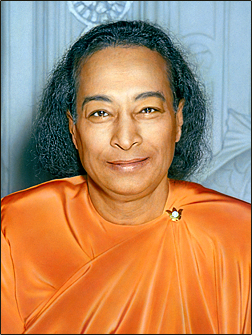
Paramahansa Yogananda's assertion that "In the truest sense, freedom cannot be bestowed; it must be achieved" invites us to reflect on the nature of freedom itself. This profound statement emphasizes that true liberation is not a gift handed down from external sources but rather a state of being that we must actively cultivate within ourselves. The stakes are high; understanding this distinction can transform our approach to life, urging us to take responsibility for our own spiritual journey and self-realization.
In a world often characterized by external pressures and societal expectations, Yogananda's words serve as a clarion call to reclaim our autonomy. Freedom, in this context, is not merely the absence of constraints but a deep, inner realization of our true nature. It challenges us to engage in the arduous yet rewarding process of self-discovery and personal growth, reminding us that the path to liberation is paved with effort, introspection, and commitment.
The image / the metaphor
At first glance, Yogananda's quote presents a striking dichotomy between the concepts of bestowal and achievement. The imagery conjured here is one of active engagement versus passive reception. The verb "bestowed" implies a gift, something that can be handed over, while "achieved" suggests a journey, a struggle, and an active pursuit. This contrast evokes a felt sense of urgency and responsibility, inviting us to consider how we engage with our own freedom.
Diving deeper into the metaphor, we can see that the notion of freedom as an achievement implies a process of transformation. It is akin to a sculptor chiseling away at a block of marble to reveal the statue within. Each strike of the chisel represents the effort, discipline, and dedication required to uncover our true selves. This metaphor encourages us to embrace the challenges and trials we face as essential components of our journey toward authentic freedom.
In the speaker's tradition
Paramahansa Yogananda's teachings are deeply rooted in the spiritual tradition of Hinduism, where concepts such as dharma, self-realization, and the pursuit of moksha (liberation) are central. In this context, freedom is intricately linked to the idea of dharma, or one's rightful duty, which must be understood and embraced for true liberation to occur. The journey toward self-realization is not merely an individual endeavor; it is a path that aligns with the greater cosmic order, where our personal freedom contributes to the collective harmony of existence.
Yogananda's emphasis on personal effort resonates with the teachings found in the Bhagavad Gita, where Lord Krishna instructs Arjuna on the importance of action and selfless service. The Gita teaches that true freedom arises not from renunciation of the world but from engaging with it while remaining unattached to the fruits of our actions. This profound understanding aligns with Yogananda's assertion that freedom must be actively achieved through conscious effort and self-awareness.
Living the teaching
Consider a modern scenario where this teaching resonates: an individual grappling with the constraints of a demanding job. They may feel trapped, yearning for freedom from the daily grind. However, by recognizing that true freedom lies not in changing their external circumstances but in cultivating an inner sense of purpose and fulfillment, they can begin to shift their perspective. This realization empowers them to take proactive steps, such as seeking alignment with their values or pursuing passions outside of work, ultimately leading to a deeper sense of freedom.
In the realm of relationships, Yogananda's teaching can also be applied. Imagine a partnership where one person feels stifled by the other's expectations. Instead of seeking freedom through separation, they can engage in open communication, expressing their needs and desires. This effort to understand and redefine the relationship can lead to a more authentic connection, illustrating that freedom is achieved through mutual understanding and respect, rather than simply escaping from constraints.
A reflection
As we contemplate Yogananda's profound insight, we are invited to ask ourselves: What does true freedom mean to me, and how am I actively working to achieve it in my life? This question encourages introspection and invites us to explore the areas where we may be waiting for external circumstances to change, rather than taking the initiative to cultivate our own inner liberation. In this journey, we may discover that the path to freedom is not a distant destination but a continuous process of self-discovery and growth.