The Freedom of Surrender: Embracing the Divine
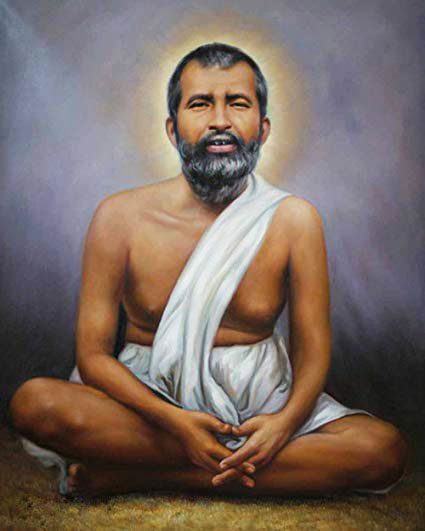
Sri Ramakrishna's profound assertion, "He who has surrendered his self to the Lord has nothing of his own," invites us to explore the depths of surrender and the relinquishment of the ego. In a world that often equates selfhood with ownership and control, this statement challenges us to reconsider our understanding of identity and possession. It beckons us to a state of being where true freedom lies not in the accumulation of personal achievements or material possessions, but in the profound act of yielding oneself to a higher power.
This notion of surrender is not merely a passive relinquishment; it is an active engagement with the divine. To surrender one's self is to dissolve the barriers that separate us from the essence of existence, allowing for a transformative experience that transcends the limitations of the ego. In this light, the quote becomes a call to awaken to a deeper reality, one where the self is not lost but rather redefined in the context of a greater whole. It is a reminder that in letting go, we may discover the fullness of life that exists beyond our narrow definitions of self.
The image / the metaphor
The imagery within Ramakrishna's quote evokes a sense of profound release. The verb "surrender" suggests an active choice, a conscious decision to relinquish control and embrace vulnerability. This act of surrender is not one of defeat but rather a courageous step toward liberation. The phrase "has nothing of his own" conjures a paradoxical sense of freedom; in giving up the illusion of ownership, one finds a deeper connection to the universe and its divine source. It is as if the act of surrender transforms the self into a vessel, open and receptive to the divine flow of life.
Diving deeper into the metaphor, we can see that this surrender is akin to the process of a seed germinating in the soil. The seed must relinquish its hard outer shell, allowing itself to be transformed by the nourishing earth. In this way, surrender becomes a fertile ground for spiritual growth. The self, when surrendered, is not annihilated but rather transformed into something greater, much like the seed that becomes a flourishing plant. This metaphor encapsulates the essence of Ramakrishna's teaching: that true life emerges from the willingness to let go.
In the speaker's tradition
Within the rich tapestry of Hindu philosophy, the concept of surrender is intricately woven into the fabric of bhakti, or devotional love. Bhakti emphasizes the importance of surrendering the self to the divine, recognizing that true fulfillment comes from aligning one's will with that of a higher power. This idea resonates with the notion of kenosis, the self-emptying of one's own desires to make space for divine grace. In this context, surrender is not a loss but a profound act of devotion that leads to spiritual awakening and union with the divine.
Ramakrishna's teachings echo the sentiments found in the Bhagavad Gita, where Lord Krishna advises Arjuna to surrender his ego and act in accordance with dharma. The Gita emphasizes that true action arises from a place of surrender, where the individual recognizes their role within the cosmic order. This alignment with the divine will allows for a life of purpose and meaning, transcending the limitations of the personal self. In this light, Ramakrishna's quote serves as a reminder of the transformative power of surrender within the broader context of Hindu spirituality.
Living the teaching
Consider a modern scenario where the teaching of surrender can be applied: a professional facing overwhelming stress and burnout. In the pursuit of success, one may become ensnared in the belief that personal achievement defines self-worth. By embracing the principle of surrender, this individual can begin to release the need for control and recognition, allowing themselves to trust in the unfolding of life. This shift can lead to a newfound sense of peace, where the individual recognizes that their value is inherent and not contingent upon external validation.
Another application of this teaching can be found in interpersonal relationships. Imagine a situation where conflict arises due to differing opinions or desires. By practicing surrender, one can let go of the need to be right or to impose their will on others. Instead, they can approach the relationship with openness and compassion, fostering an environment where understanding and connection can flourish. In this way, surrender becomes a pathway to deeper intimacy and harmony, allowing love to flow freely without the constraints of ego.
A reflection
As we contemplate the essence of Ramakrishna's quote, we are invited to reflect on our own relationship with surrender. What aspects of your life are you clinging to, and how might letting go open the door to a deeper connection with the divine? In this moment of reflection, consider the ways in which surrender could transform your experience of self and the world around you. How might you embrace the freedom that comes from relinquishing the illusion of ownership and control?