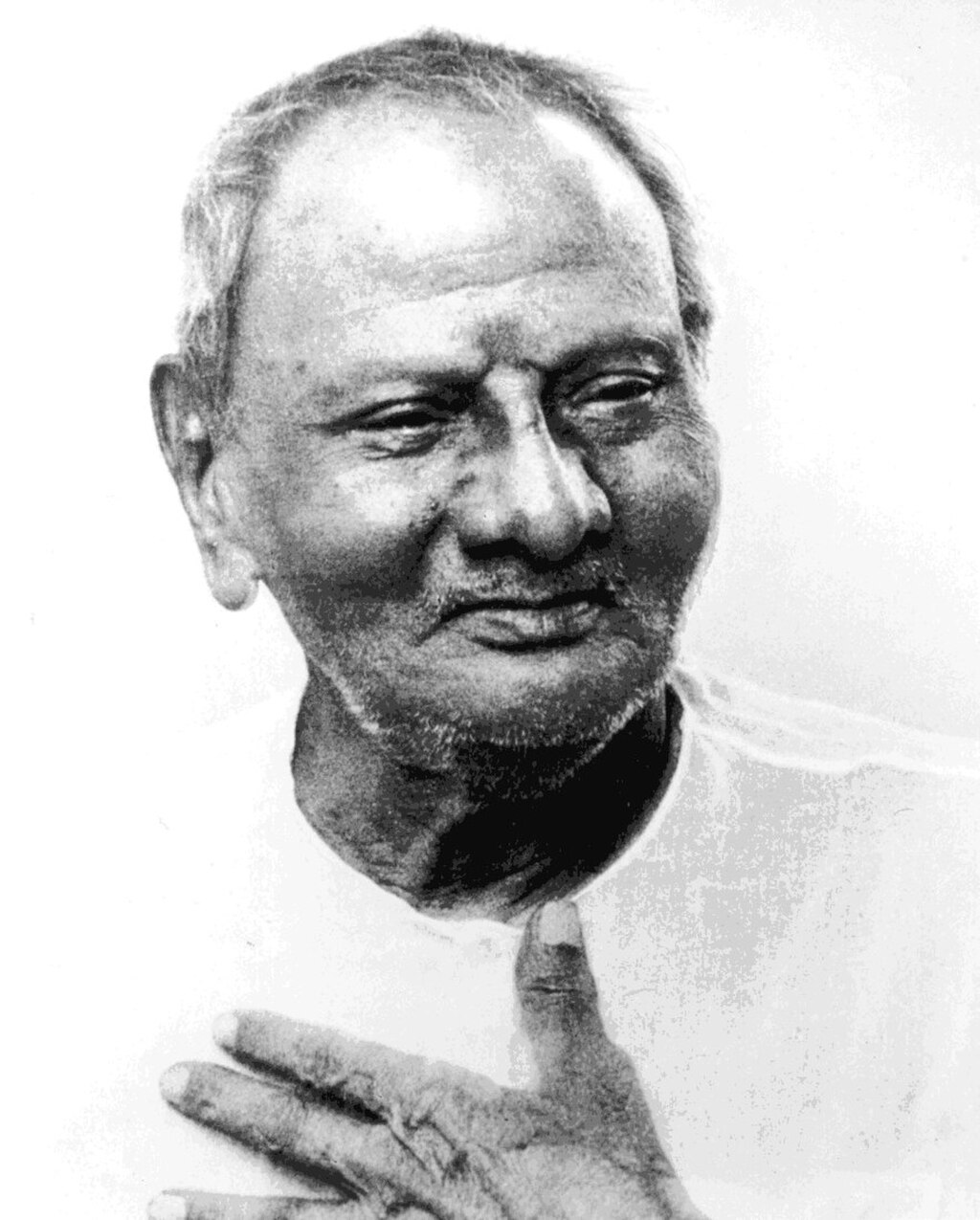
The Boundless Nature of Awareness
Nisargadatta Maharaj's assertion that "real awareness has no opposite" invites us to explore the profound depths of consciousness beyond dualistic perceptions. In a world often defined by contrasts—light and dark, joy and sorrow, self and other—this statement challenges us to reconsider the very fabric of our understanding. It beckons us to a state of being where awareness transcends the limitations of oppositional thinking, urging us to recognize the essence of existence that remains untainted by duality. This exploration is not merely philosophical; it is a vital inquiry into the nature of our own experience and the liberation that comes from recognizing our true selves.
Delving deeper, we find that this quote encapsulates a transformative insight into the nature of awareness itself. Real awareness, as Maharaj suggests, is not a mere state of mind but rather an intrinsic quality of our being. It is the unconditioned consciousness that exists prior to all distinctions and judgments. By acknowledging that awareness has no opposite, we are invited to step into a realm of unity, where the separations we often cling to dissolve, revealing the interconnectedness of all life. This realization is not just an intellectual exercise; it is a profound shift in perception that can lead to a more harmonious existence.
The image / the metaphor
The imagery in Maharaj's quote evokes a sense of expansiveness, suggesting that awareness is like an infinite sky, unbounded and ever-present. When we consider the phrase "has no opposite," we can visualize a vast ocean of consciousness where waves of thought and emotion arise and fall, yet the ocean itself remains unchanged. This metaphor highlights the stability and permanence of awareness, contrasting sharply with the transient nature of our thoughts and feelings. In this light, awareness is not something we possess; it is the very essence of our being, a constant presence that underlies all experiences.
In the speaker's tradition
Nisargadatta Maharaj's insights are deeply rooted in the non-dual tradition, which emphasizes the oneness of existence and the illusion of separateness. Concepts such as *advaita* (non-duality) and *sunyata* (emptiness) resonate with the idea that real awareness transcends dualistic distinctions. In this context, awareness is not merely a mental construct but the fundamental essence of reality itself. This perspective aligns with the teachings of other sages, such as Ramana Maharshi, who also emphasized the importance of self-inquiry and the realization of one's true nature as the ultimate goal of spiritual practice.
In his seminal work, *I Am That*, Maharaj articulates the notion that the self is not confined to the ego or personal identity but is instead an expression of the universal consciousness. This aligns with the Buddhist concept of *anatta*, or non-self, which posits that clinging to a fixed identity leads to suffering. By recognizing that awareness is devoid of opposites, we can begin to dissolve the barriers that separate us from our true nature and from one another, fostering a sense of compassion and interconnectedness that is essential for spiritual growth.
Living the teaching
Consider a modern scenario where the teaching of non-oppositional awareness can be applied: a workplace conflict. Imagine two colleagues who are at odds over a project. Each is entrenched in their perspective, viewing the situation through a lens of right and wrong. By invoking the understanding that real awareness has no opposite, one might approach the conflict with a sense of openness, recognizing that both perspectives hold validity. This shift allows for a more collaborative dialogue, where the focus moves from winning an argument to understanding each other's viewpoints, ultimately leading to a more harmonious resolution.
In the realm of personal relationships, this teaching can also illuminate the dynamics of love and conflict. When faced with a disagreement with a partner, the instinct may be to defend one's position, creating a divide. However, by embracing the idea that awareness transcends oppositional thinking, one can cultivate a space of empathy and understanding. This approach encourages both partners to step back from their individual narratives and recognize the shared essence of their connection. In doing so, they can navigate their differences with compassion, fostering a deeper bond that honors the unity underlying their relationship.
A reflection
As we contemplate Maharaj's profound statement, we are invited to ask ourselves: How can I cultivate a deeper awareness that transcends the dualities of my daily life? This question encourages us to explore the ways in which we may be clinging to oppositional thinking, whether in our relationships, our work, or our inner dialogues. By reflecting on this inquiry, we open ourselves to the possibility of experiencing life from a place of unity and acceptance, allowing the essence of awareness to guide us toward a more fulfilling existence.