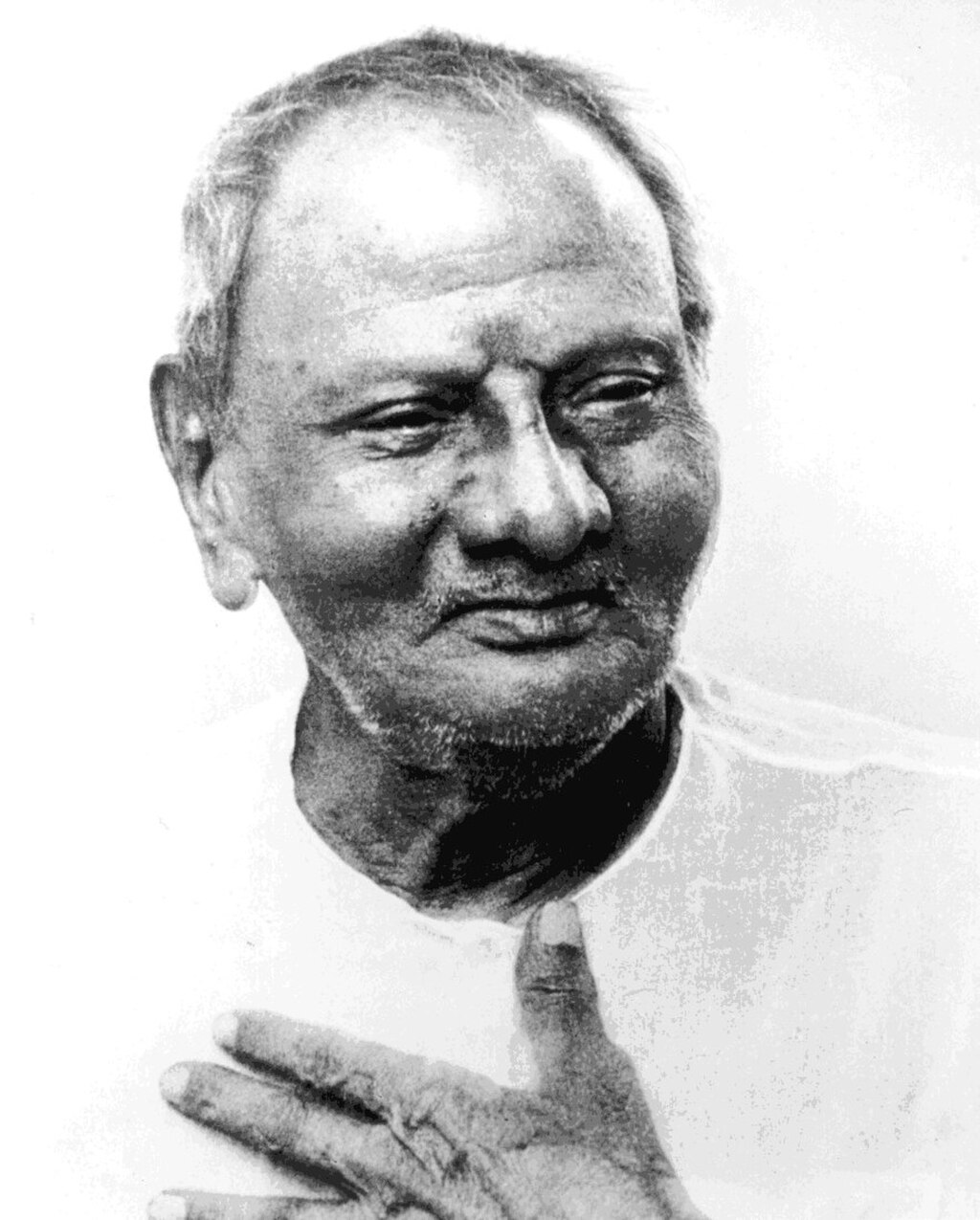
The Essence of Being: Unraveling the I-Thought
Nisargadatta Maharaj's assertion, "In the absence of the I-thought, there is no person," invites us to explore the intricate relationship between our sense of self and the essence of existence. This profound statement challenges the very foundation of our identity, suggesting that the notion of a separate self is merely a construct. Understanding this concept is crucial, as it opens the door to a deeper awareness of our true nature, beyond the confines of ego and personal narrative.
At its core, this quote speaks to the heart of non-dual philosophy, where the distinction between self and other dissolves. The I-thought, or the egoic sense of "I," is often seen as the source of suffering and separation. By examining this thought, we can begin to peel away the layers of our conditioned identity, revealing a more expansive and interconnected experience of being. This exploration is not merely intellectual; it is a transformative journey that can lead to profound liberation.
The image / the metaphor
The imagery in Maharaj's quote evokes a sense of emptiness and potentiality. The phrase "absence of the I-thought" suggests a space where the usual markers of identity—our roles, beliefs, and personal stories—cease to exist. In this absence, the notion of a distinct person fades, leaving behind a vast, unconditioned awareness. This felt sense of emptiness is not one of loss but rather a fertile ground for the emergence of a more authentic self, unencumbered by the limitations of ego.
Diving deeper into the metaphor, we can envision the I-thought as a veil that obscures our true nature. When this veil is lifted, we encounter a profound stillness, a state of being that transcends the dualities of existence. In this space, we are not defined by our thoughts or experiences; instead, we become aware of the underlying essence that connects all beings. This realization can be both liberating and daunting, as it challenges our deeply ingrained beliefs about who we are and how we relate to the world.
In the speaker's tradition
Nisargadatta Maharaj's teachings are rooted in the non-dual tradition, which emphasizes the interconnectedness of all existence. Concepts such as sunyata (emptiness) and prajna (wisdom) resonate deeply with his assertion about the I-thought. In this context, the dissolution of the ego is not a negation of self but a recognition of the deeper reality that underlies our experiences. This aligns with the idea of kenosis, or self-emptying, found in various spiritual traditions, where the relinquishing of the personal self leads to a fuller realization of the divine.
In his seminal work, "I Am That," Maharaj articulates the importance of recognizing the transient nature of thoughts and identities. He encourages seekers to inquire into the source of the I-thought, urging them to investigate the question, "Who am I?" This inquiry is reminiscent of the teachings found in Advaita Vedanta, where the ultimate goal is to realize the non-dual nature of reality, transcending the illusion of separateness and embracing the unity of existence.
Living the teaching
Consider a modern scenario where this teaching can be applied: a moment of frustration in a crowded subway. As we navigate the chaos, our I-thoughts may amplify feelings of irritation and separation from others. However, by recognizing that these thoughts are not the entirety of our being, we can shift our perspective. Instead of identifying with the frustration, we can observe it as a passing cloud in the vast sky of our awareness, allowing us to respond with compassion rather than reactivity.
In relationships, the teaching of the I-thought can illuminate the dynamics of conflict. When disagreements arise, we often cling to our individual perspectives, reinforcing the sense of separation. By recognizing the transient nature of the I-thought, we can approach conflicts with a sense of openness and curiosity. This shift allows for deeper connection and understanding, as we move beyond the confines of our personal narratives and engage with the shared essence that binds us all.
A reflection
As we contemplate Maharaj's profound statement, we are invited to explore the nature of our own I-thoughts. What would it mean to experience a moment without the weight of personal identity? In this inquiry, we may find a pathway to greater freedom and connection, revealing the essence of our being that exists beyond the confines of self. How might our lives transform if we embraced the possibility of being without the I-thought, allowing our true nature to emerge?