BrightStar

Parcourir tous les Events

Découvre des rassemblements conscients

events

Yoga
Meditation
Breathwork
Qigong
Tai Chi
Sacred Music
World Music
Medicine Music
Sound Healing
Ecstatic Dance
Destinations populaires
BaliSedonaLos AngelesCosta RicaNew YorkSan FranciscoAustinMiamiJoshua TreeTulum
Voir toutes les catégoriesVoir toutes les destinations

Explorer toutes les fonctionnalités

Des outils puissants pour développer tes événements

Fonctionnalités de la plateforme

Tarification dynamique intelligente
Catégories de billets
Places assignées
Récupération des paniers abandonnés
Récupération des visiteurs
Dons & Prix variables
Système d'affiliation
Scanner de billets
Codes promo
Questions personnalisées
Partage de billets
Ventes additionnelles & Options
Analyses & Rapports
Séquences d'emails
Liste d'attente / Notifier / Rappeler
Personnes & Lieux
Artists & TeachersEvent OrganizersVenues & StudiosKnowledge BaseGlossaryInspiration
Voir toutes les fonctionnalitésÀ propos
TarifsBlog
Saved events
Parcourir tous les événements

events

YogaMeditationBreathworkQigongTai ChiSacred MusicWorld MusicMedicine Music

Destinations populaires

BaliSedonaLos AngelesCosta RicaNew YorkSan Francisco

Personnes & Lieux

Artists & TeachersEvent OrganizersVenues & StudiosKnowledge BaseGlossaryInspiration

Fonctionnalités de la plateforme

Tarification dynamique intelligenteCatégories de billetsPlaces assignéesRécupération des paniers abandonnésRécupération des visiteursDons & Prix variablesSystème d'affiliationScanner de billetsCodes promoQuestions personnaliséesPartage de billetsVentes additionnelles & OptionsAnalyses & RapportsSéquences d'emailsListe d'attente / Notifier / Rappeler
Voir toutes les fonctionnalitésÀ propos
TarifsBlog
ConnexionChercheursCréateurs
Tibetan BuddhistOm Mani Padme Hum · Om Mani Padme Hum · Om Mani Padme Hum · Om Mani Padme Hum ·
  • Parcourir tous les Événements
  • Pour les chercheurs
  • Yoga
  • Méditation
  • Breathwork
  • Qi gong et tai-chi
  • Tai-chi
  • Musique sacrée
  • Retraites
  • Ateliers
  • Toutes les catégories →
  • Bali
  • Sedona
  • Los Angeles
  • Costa Rica
  • Tulum
  • Byron Bay
  • San Francisco
  • Austin
  • Toutes les villes →
  • Pour les créateurs
  • Pour les équipes
  • Pour les écrivains
  • Pour les enseignants
  • Pour les artistes de kirtan
  • Pour les studios
  • Pour les festivals
  • Pour les centres de retraite
  • Pour les associations
  • Ambassadeur de marque
  • Études de cas
  • Billetterie gratuite
  • Elevate
  • Amplify
  • Réseau de 350K+ acheteurs
  • Récupération des paniers abandonnés
  • Tarification dynamique intelligente
  • Catégories de billets
  • Événements récurrents
  • Places assignées
  • Système d'affiliation
  • Liste d'attente / Notifier
  • Scanner de billets
  • Widget intégrable
  • Diffusion d'événements
  • Messagerie
  • Intégrations
  • Rapports
  • Toutes les fonctionnalités →
  • À propos
  • L'écosystème
  • Blog
  • Glossaire
  • Inspiration
  • Centre d'aide
  • Contact
  • Documentation API
  • Ressources de marque
  • Carrières
  • Presse
  • Conditions d'utilisation
  • Politique de confidentialité

Événements

  • Parcourir tous les Événements
  • Pour les chercheurs
  • Yoga
  • Méditation
  • Breathwork
  • Qi gong et tai-chi
  • Tai-chi
  • Musique sacrée
  • Retraites
  • Ateliers
  • Toutes les catégories →

Destinations

  • Bali
  • Sedona
  • Los Angeles
  • Costa Rica
  • Tulum
  • Byron Bay
  • San Francisco
  • Austin
  • Toutes les villes →

Pour les créateurs

  • Pour les créateurs
  • Pour les équipes
  • Pour les écrivains
  • Pour les enseignants
  • Pour les artistes de kirtan
  • Pour les studios
  • Pour les festivals
  • Pour les centres de retraite
  • Pour les associations
  • Ambassadeur de marque
  • Études de cas
  • Billetterie gratuite
  • Elevate
  • Amplify

Fonctionnalités

  • Réseau de 350K+ acheteurs
  • Récupération des paniers abandonnés
  • Tarification dynamique intelligente
  • Catégories de billets
  • Événements récurrents
  • Places assignées
  • Système d'affiliation
  • Liste d'attente / Notifier
  • Scanner de billets
  • Widget intégrable
  • Diffusion d'événements
  • Messagerie
  • Intégrations
  • Rapports
  • Toutes les fonctionnalités →

Entreprise

  • À propos
  • L'écosystème
  • Blog
  • Glossaire
  • Inspiration
  • Centre d'aide
  • Contact
  • Documentation API
  • Ressources de marque
  • Carrières
  • Presse
  • Conditions d'utilisation
  • Politique de confidentialité
BrightStar
© 2026 BrightStar. Tous droits réservés.
Inspire

Rebuilding at 60: From SpinalFusion to NYC Marathon

RR
Rich Roll
Aug 27, 2026
8 min de lecture
À regarder · 9

Rich Roll walks into his home gym—a modest container that's become the starting point for his most deliberate comeback yet. At the threshold of turning 60, he's not chasing PRs or competing for glory. Instead, he's undertaking something far more humbling: learning how to move his body again after a decade of debilitating back pain culminated in spinal fusion surgery last spring.

This is the premise of Open Container, a new video series in which Roll invites viewers into the granular, unglamorous work of athletic rehabilitation. It's a departure from the heroic ultra-endurance narratives that defined his public identity—the Stanford swimmer turned sedentary attorney who reinvented himself at 40, summiting mountains and running across deserts. Now, at a different threshold, the story is not about transcendence through extremity. It's about fidelity to the body as it is, and the patience required to rebuild.

Lecture · 6 sections

A Decade of Decline

Roll's athletic arc is well documented: Division 1 swimmer at Stanford, then a career pivot into law. By his own account, he became a "sedentary slob" before a midlife pivot led to ultra-endurance pursuits that earned him recognition across running, cycling, and swimming communities. But that relentless drive—the same discipline that propelled him through Ironmans and hundred-mile runs—eventually exacted a cost he hadn't anticipated.

"I endured about a decade of debilitating back pain," he explains in the opening moments of the series. The pain was chronic enough that it forced him to confront a reality most elite athletes avoid until late in life: the body has limits, and ignoring them has consequences.

Spinal fusion surgery arrived as both necessity and rupture. "I've never undergone like a real surgery before and I completely underestimated how much this would crush me and lay me out," he recalls. "Like I literally was in so much pain." The recovery was not the swift rebound he might have anticipated. For six months, walking was the only movement available to him. Even at nine months post-op, he found himself asking: "Am I ever going to feel like a normal person again?"

The mental toll matched the physical one. When you've built your identity around what your body can accomplish, and that body suddenly can't, identity fractures. "When you've put so much distance between yourself and the things that you enjoy like physical movement," Roll notes, "you are kind of disconnected from who you are."

Why Core Work Matters More Than It Used to

The standard athlete's playbook—the one burned into Roll's muscle memory from his 1987 Stanford swimming days—no longer applies. In those days, the protocol was volume: swim 20,000 meters a day, then hit the gym with a routine that stayed with him for four decades. But forty years of sports science evolution has passed.

Now, post-fusion, the priority is inverted. Where he once chased intensity and distance, he's now chasing stability and functional integrity. This means core work—the "annoying" exercises he used to brush aside—has become primary.

His physical therapist has him working with what he calls "this ball"—a stabilizing tool that isolates core muscles with an efficiency that surprises him. The exercise is deceptively simple: place the ball between your knees and elbows, press hard enough to feel the burn, then progress to alternating limb movements while maintaining compression. "And if you press hard enough, it starts to burn. And then the advanced version of that is alternating like moving your arms and your legs like this and then pressing, coming together to press."

This is not sexy work. There are no Strava segments, no race photos, no narrative arc of conquest. Yet Roll recognizes something his younger self couldn't: this is the foundation. Everything that happens next—the return to running, the New York City Marathon he's targeting for late October—depends on rebuilding what was never emphasized before: stability, mobility, and what he calls a "bulletproof core to support my lower back."

The Indoor Bike as Aerobic Reset

Running remains forbidden for now. His surgeon, Roll notes with wry understatement, was "not exactly enthusiastic about the prospect of me running again." But he's "pretty convinced" he'll get there, contingent on building that foundational strength. In the meantime, his aerobic work happens on an indoor trainer using Zwift, the cycling simulation platform he describes as "Grand Theft Auto for endurance nerds."

The appeal of Zwift, for Roll, extends beyond mechanics. "There's no NPCs in Zwift. Everybody is a protagonist. So these are all real people." It's a subtle but important distinction—he's training alongside actual humans in a shared digital space, not pursuing a solitary metric on a treadmill or trainer. For someone rebuilding their relationship with movement, that human presence matters.

His zone-2 aerobic rides—low-intensity, high-duration efforts that build aerobic capacity without stress—are part of a disciplined reboot. "All I'm doing is creating a very base level of aerobic fitness," he explains. "I'm not riding hard. I have such a long way to go to rebuild my fitness. And I'm not in a rush. I want to do it the right way."

This restraint is perhaps the most radical aspect of Roll's comeback. For someone accustomed to pushing boundaries, not pushing is its own discipline.

A Twofold Goal, and the Imposter Syndrome of Starting Over

By late October, when Roll turns 60, he wants to be as fit as possible—not peak fit, but genuinely recovered fit. Then, roughly a week later, he wants to complete the New York City Marathon. Not to PR. Not to prove anything to anyone. Just to run 26.2 miles as a participant among participants. "I just want to be a runner among runners, and I want to complete the race. I haven't been able to run in probably about 3 and 1/2 years."

The ambition is modest only on the surface. Returning to running after spinal fusion surgery, particularly at 60, is a genuine achievement—one that depends entirely on the foundational work he's doing now.

What Roll discovers in the gym, however, is an unexpected vulnerability. Despite a lifetime of competitive athletic achievement, he finds himself intimidated walking into a public gym. "I've competed at the very highest level of sport. And when I walk into a gym, I'm like insecure," he admits. The irony isn't lost on him: if he feels this way, what does a person without his athletic history experience? "If I'm feeling this way, you know, what is a what is somebody who doesn't have the kind of experience that I've had feeling when they're walking into a gym."

It's a moment of genuine humility. Roll recognizes that the gap between knowing what to do and actually doing it—with proper technique, proper intention, proper patience—is wider than his 1987 playbook can close. "The gym routine that I do is like it's sort of like what you learn when you're young is just like it stays with you," he reflects. "But, that was like 40 years ago. I would imagine there's been some advances in the science of, you know, understanding like how to do resistance training."

The Return of Enthusiasm

Yet beneath the vulnerability is something unexpected: genuine enthusiasm. For the first time in years, Roll feels what he calls "a sense of possibility and this uptick in my vitality and energy." He's not just rehabbing; he's rediscovering. "I feel like I'm becoming myself again, looking in the mirror like, 'Oh, yeah, I remember that guy. I'm him.' And that's been really fun and exciting."

That renewed enthusiasm is what's driving Open Container. After a decade of pain and months of immobility, Roll has reentered a zone where movement feels possible again—not the old heroic kind, but the deeper, more grounded kind that comes from genuine recovery. That's a story worth following, and worth sharing.

Where to Go From Here

The series represents a new kind of documentation: not the triumph narrative, but the process narrative. Roll plans to bring in experts—coaches, physical therapists, movement specialists—to explore the science behind the work he's doing. The audience becomes what he calls "students together," learning not from a position of mastery, but from genuine curiosity about how to age athletically, how to move intelligently, and how to rebuild when the old playbook no longer works.

At 60, having run ultra-marathons and swum across channels, Rich Roll's most important race may be the one no one photographs: the patient, deliberate work of reassembling himself—one core contraction, one zone-2 mile, one day of patience at a time.

Transcript

[0:07] Welcome to the container, my home gym.

[0:11] I wanted to bring [music] you guys

[0:12] inside my world because I've been on a

[0:15] bit of a journey. I am a lifetime

[0:17] [music] athlete. I was a collegiate

[0:19] Division 1 swimmer at Stanford. Turned

[0:22] attorney, turned sedentary [music]

[0:24] slob. I reinvented myself at 40, became

[0:27] this ultra endurance athlete, [music]

[0:29] did a whole bunch of crazy things. And

[0:31] then I endured about a decade of

[0:33] debilitating back pain. Last spring

[0:36] [music] I finally underwent spinal

[0:39] fusion surgery and I am in the process

[0:41] of recovering from that, which has

[0:43] required [music] an unbelievable amount

[0:45] of patience in which I have not been

[0:47] able to move [music] my body until very

[0:49] recently. And so now I'm in the process

[0:52] of putting the pieces back together,

[0:54] figuring out how [music] to

[0:56] reassemble myself and build the ultimate

[1:00] foundation for strength, mobility,

[1:03] endurance, and adventure. I wanted to

[1:05] share with you guys what I'm doing, why

[1:08] [music] I'm doing it, how I'm doing it,

[1:11] and this is episode one of my attempt to

[1:16] do that very thing.

[1:31] It's Grand Theft Auto for endurance

[1:33] nerds.

[1:35] It's called Zwift. [music]

[1:36] There's no NPCs in Zwift. Everybody

[1:40] [music] is a protagonist. So these are

[1:42] all real people.

[1:44] That's for right now, though.

[1:47] All I'm doing

[1:49] is creating [music]

[1:51] a very base level

[1:54] of aerobic [music] fitness. I'm not

[1:55] riding hard.

[1:57] I have such a long way to go

[2:00] to rebuild my fitness.

[2:02] And I'm not in a rush. I want to do it

[2:03] the right way.

[2:05] So, I'm just keeping everything chill.

[2:08] My body is still very much healing.

[2:10] And just trying to

[2:11] >> [music]

[2:11] >> reconnect with my body, reconnect with

[2:13] my relationship with fitness,

[2:16] remember why I fell in love with it in

[2:17] the first place.

[2:20] >> [music]

[2:20] >> I feel like I'm becoming myself again,

[2:22] looking in the mirror like, "Oh, yeah, I

[2:24] remember that guy. I'm him." And that's

[2:26] been really fun [music] and exciting.

[2:28] And it's given me this sense of

[2:30] possibility

[2:31] and this uptick in my vitality and

[2:34] energy where I feel

[2:36] enthusiastic [music] for the first time

[2:38] in a long time

[2:40] to start storytelling and bringing all

[2:43] of you guys kind of inside my world to

[2:45] share [music] what I've learned uh in

[2:48] service to all of you.

[2:53] At the end of October, I turn 60, and I

[2:56] have a twofold goal. The first is to be

[2:58] as fit as humanly possible

[3:01] on that birthday to celebrate turning

[3:03] 60, [music] and then to participate a

[3:07] week or so later in the New York City

[3:09] >> [music]

[3:09] >> Marathon as a sort of final conclusion

[3:12] to this recovery from spinal fusion

[3:14] surgery. [music]

[3:16] I'm not going into that race trying to

[3:18] PR or impress anybody. I just want to be

[3:21] a runner among runners, and I want to

[3:23] complete the race. I haven't been able

[3:25] to run [music]

[3:26] in probably about

[3:28] 3 and 1/2 years.

[3:30] Right now, I'm still [music] too soon in

[3:32] the spinal fusion recovery process to

[3:34] begin running again. Uh my surgeon was

[3:38] [music] not exactly enthusiastic about

[3:41] the prospect of me running again.

[3:43] >> [music]

[3:43] >> I'm pretty convinced that I'm going to

[3:45] be able to do that,

[3:47] but it depends upon

[3:49] my commitment to rebuilding my strength

[3:53] with resistance training to create

[3:55] [music]

[3:56] a bulletproof core to support my lower

[3:59] back and to become functionally strong

[4:02] with a focus on

[4:04] mobility. These [music] are things I

[4:06] haven't really ever emphasized or

[4:08] focused on in my athletic life. It's

[4:11] just about getting out there and running

[4:13] or getting on the [music] bike as

[4:14] quickly as possible or jumping in the

[4:15] pool. And at my age and given what I

[4:19] have [music] endured,

[4:21] it's now, you know, very clear to me

[4:23] that the most important thing that I

[4:25] need to be doing is working on all of

[4:27] those little things that are so easy to

[4:29] overlook when you're [music] younger and

[4:31] you can get away with them. I can't get

[4:33] away with them anymore and so I have

[4:35] made all the things I used to brush

[4:37] aside like the core work and the

[4:39] stretching, [music] the flexibility, the

[4:42] annoying mobility exercises, that's the

[4:44] primary focus of my workouts. It's

[4:47] really basic stuff, [music] but I've

[4:49] been doing this now for a couple months

[4:51] and I can tell you it's already

[4:53] >> [music]

[4:54] >> paying dividends and I think this stuff

[4:56] is really important. I'm learning all of

[4:58] this as I go and I can't wait to

[5:00] introduce you to some of the experts I'm

[5:02] going to have coming in so that we can

[5:04] all be students together.

[5:07] >> [music]

[5:09] >> You ready for some bouncy ball action?

[5:11] It's pretty sexy.

[5:13] Rather than do sit-ups or more

[5:16] traditional core exercises, my PT

[5:18] [music]

[5:19] uh has me doing these super annoying

[5:22] things with this ball that really

[5:24] isolate the core muscles and shockingly,

[5:27] they actually work. All you do is put

[5:29] the ball between your knees and your

[5:31] elbows and press

[5:32] >> [music]

[5:32] >> and if you press hard enough,

[5:35] it starts to burn.

[5:37] And then the advanced version of that is

[5:40] alternating like moving your arms and

[5:42] your legs like this

[5:44] and then pressing, coming together to

[5:46] press.

[5:49] So, I did

[5:51] about 75 minutes on [music]

[5:53] the indoor bike trainer

[5:55] of low end zone two.

[5:58] Done some stretching and some mobility

[6:00] exercises.

[6:02] Some basic simple core stuff.

[6:05] And now [music] I'm going to do some

[6:07] shoulder and back resistance training.

[6:11] >> [music]

[6:12] >> Everything that I'm doing is very low

[6:13] weight high rep right now until I get

[6:16] stable enough to [music] start stacking

[6:19] more weight.

[6:21] I want to make sure that I'm not doing

[6:22] anything [music] that's compressing my

[6:23] spine. I want to build my body up, but I

[6:26] don't want to

[6:27] >> [music]

[6:28] >> uh do anything that's going to

[6:29] compromise the healing

[6:31] of the spinal fusion. So, I've never

[6:34] undergone like a

[6:36] real surgery before and I completely

[6:38] underestimated how much this would crush

[6:41] me and lay me out. Like I literally was

[6:44] in so much pain. The recovery process

[6:46] has been

[6:48] extensive and extremely difficult

[6:51] requiring a huge amount of patience.

[6:54] >> [snorts]

[6:54] >> Uh I wasn't able to do anything except

[6:56] walk

[6:57] for like 6 months and that was extremely

[7:00] difficult. And even at like 9 months

[7:04] I still was like, am I ever going to

[7:06] feel like a normal person again? And

[7:08] that impacted my mental health

[7:11] my relationship with my body and uh

[7:15] when you've put so much distance between

[7:17] yourself

[7:19] and the things that you enjoy

[7:21] like physical movement in my case, you

[7:24] are kind of disconnected from who you

[7:26] are. You start to forget that those

[7:28] things are

[7:30] um crucial in order to like feel like

[7:32] yourself.

[7:33] For this, I have to keep the weight

[7:35] super low.

[7:39] Choose the about perfect technique, not

[7:42] how much weight I can add. It's just how

[7:45] am I engaging the core, what is my body

[7:48] position.

[7:50] I'm just doing these things very slowly.

[7:52] It's probably a bad idea, actually.

[8:01] Gym environments are [music] incredibly

[8:03] intimidating.

[8:04] I've competed at the very highest level

[8:07] of sport.

[8:08] And when I walk into a gym, I'm like

[8:11] insecure. You know, and then I think,

[8:13] why should I be intimidated? I've done

[8:14] more as an athlete than probably

[8:16] everyone in this gym, or most of the

[8:18] people in the gym. So, if I'm feeling

[8:20] this way, you know, what is a what is

[8:22] somebody who doesn't have the kind of

[8:23] experience that I've had feeling when

[8:26] they're walking into a gym. So, I'm not

[8:28] like a huge gym person, I never have

[8:30] been.

[8:31] Now, I'm super enthusiastic about

[8:33] resistance training. Uh not only do I

[8:36] need it, and is it something that's

[8:38] super important at my age, but I'm

[8:40] actually really enjoying it.

[8:42] I just need to understand it better, and

[8:44] to learn more. Because the gym routine

[8:46] that I do

[8:48] is like

[8:49] it's sort of like what you learn when

[8:51] you're young is just like it stays with

[8:52] you. So, when I was swimming at

[8:54] Stanford, this is like 1987,

[8:57] right? We would work out.

[8:59] We'd swim like 20,000 m a day, and then

[9:01] we would go to the gym.

[9:04] And there was a certain kind of like

[9:05] routine that we would do.

[9:08] And that's the routine that I do in

[9:09] here. But, that was

[9:12] like 40 years 40 years ago. I would

[9:15] imagine there's been some advances in

[9:19] the science of, you know, understanding

[9:22] like how to do resistance training. I

[9:24] think it's hard when you're just a

[9:26] well-intentioned

[9:28] person trying to get good information uh

[9:32] to

[9:33] uh you know, figure out like what's the

[9:35] best use of your time. How many sets of

[9:38] this exercise should I do? Is higher

[9:41] weight, low rep better than lower

[9:43] weight, high rep? It seems like these

[9:46] are questions that are constantly being

[9:47] asked and uh

[9:50] are always uh being updated and there

[9:52] never seems to be any kind of real

[9:55] resolution or maybe I'm wrong, but these

[9:58] are some of the questions I want to ask

[9:59] and get answers to uh and why I want to

[10:02] bring people in here to share their

[10:04] experience. Not just people who are like

[10:06] experts in the gym, but people who have

[10:09] lived interesting lives who enjoy the

[10:11] process of of of working out, doing

[10:14] resistance training. It has the

[10:16] potential to be a cool

[10:19] kind of twist on the podcast format

[10:21] because we're going to be talking to

[10:23] each other, but we're going to be

[10:25] engaged in an activity. So, it's a more

[10:27] kind of like dynamic

[10:29] field trip activity-based

[10:33] conversation

[10:34] podcast to YouTube kind of thing, but

[10:37] who knows and we'll figure it out as we

[10:39] go

[10:40] kind of thing, if that makes sense.

[10:43] We're going to learn together. We're

[10:44] going to [music] move together. We're

[10:46] going to improve together. We're going

[10:48] to grow together and uh I hope that you

[10:51] will join me on this journey. I'm

[10:53] excited about this. [music]

[10:54] I'm really excited about this. Hope you

[10:56] are, too. Hit that subscribe button and

[10:58] we'll [music] see you next time.

[11:00] Say thank you.

[11:02] Yeah.

RR
AuteurRich Roll

Ultra-endurance athlete, author, and podcast host who transformed from addiction to becoming a world-class athlete and prominent wellness advocate promoting plant-based living and…

Voir le profilSite web
Explorer les thèmes
Athletic-recoverySpinal-fusionCore-strengthAging-athleteEndurance

Des questions ?

Questions fréquemment posées

Zone 2 is low-intensity, high-duration aerobic training that builds aerobic capacity without excessive stress on the body. Roll uses it on an indoor bike trainer (Zwift) because it allows him to rebuild cardiovascular fitness gradually while protecting his healing spine, prioritizing patience over intensity.
After spinal fusion, the core muscles stabilize and protect the lower back and spine during all movement. Roll's physical therapist emphasizes core isolation and stability work because without a 'bulletproof core,' any return to running or higher-intensity exercise risks re-injury.
In Roll's case, he couldn't do anything but walk for six months post-op, and even at nine months he was still asking if he'd feel normal again. Full functional recovery and return to sport typically requires many months of progressive rehabilitation.
Zwift is a cycling simulation platform Roll describes as 'Grand Theft Auto for endurance nerds.' Unlike solo trainer work, Zwift features real people racing and riding together in a shared digital world, providing community and motivation during aerobic base-building.
There's no universal age limit, but it depends entirely on individual healing and foundational strength. Roll's surgeon was hesitant about running, but Roll believes a strong, stable core built through resistance training can support a return to running, even at 60.
He's using low weight and high repetitions, focusing on perfect technique over load. This protects his healing spine from compression while building functional strength. He avoids heavy lifting that might compromise spinal fusion integrity.
Rather than retiring, Roll is undergoing deliberate rehabilitation with the goal of completing the NYC Marathon in late October and being as fit as possible by his 60th birthday—not to PR, but to return to moving as himself again.

Continuer la lecture

More from Rich

Voir tout
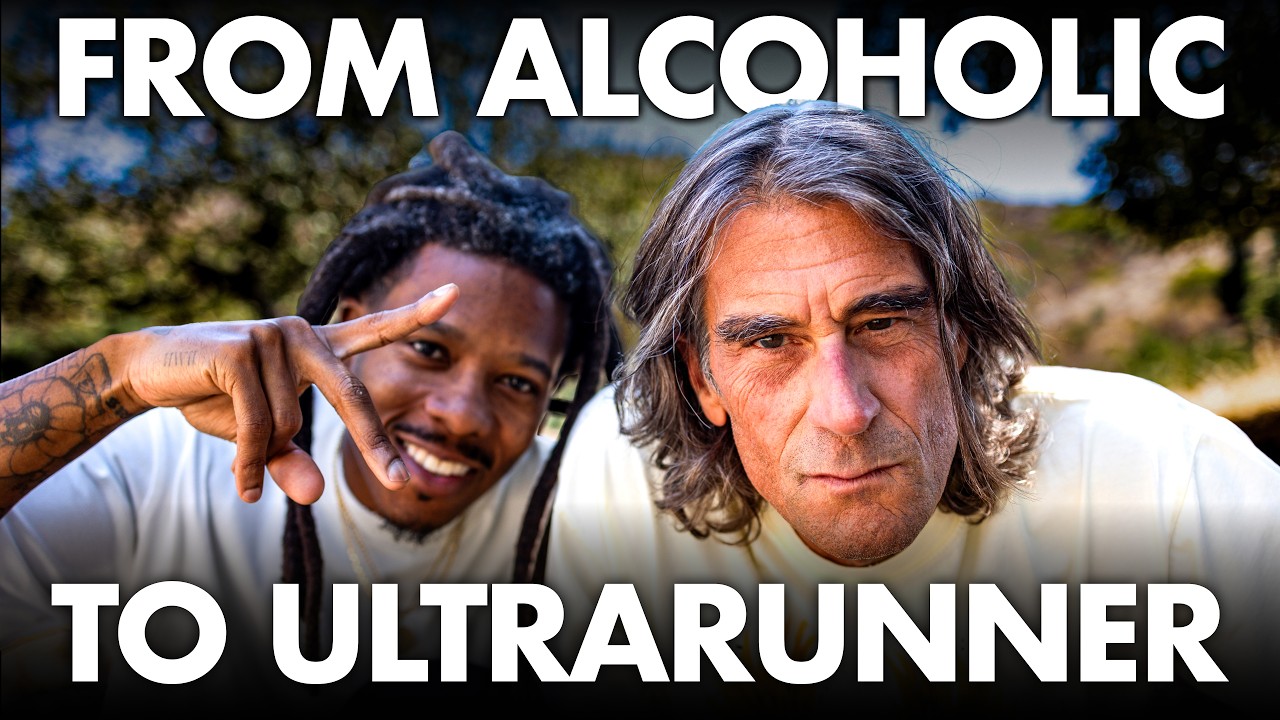
From Morning Drinking to 340-Mile Desert Runner: One Man's Redemption
Inspire

From Morning Drinking to 340-Mile Desert Runner: One Man's Redemption

Tommie Runz shares how nine years of sobriety, plant-based living, and ultra-running transformed him from a daily drinker to an advocate for…

1 min read
The Rich Roll Podcast
Inspire

The Rich Roll Podcast

The Rich Roll Podcast delivers expert endurance training and racing insights. Essential listening for athletes.…

1 min read
The Missing Piece: How Real Thinking Creates Real Results
Inspire

The Missing Piece: How Real Thinking Creates Real Results

Most vision boards fail because people skip the actual thinking. Eckhart Tolle reveals the rhythm that unlocks insight and the two distinct …

1 min read
Ocean Goddess Rising: Two Voices Reimagine Yemaya
Inspire

Ocean Goddess Rising: Two Voices Reimagine Yemaya

Deva Premal and Ajeet unite in a devotional collaboration honoring Yemaya, the Yoruba ocean goddess, recorded in Costa Rica with arbutar acc…

1 min read

Continue d’explorer

Poursuis ton chemin

Plus de sagesse et de rassemblements dans tout l’annuaire BrightStar.

Plus d’articles

Parcours toute la bibliothèque d’enseignements, d’entretiens et de guides.

Retour à tous les articles →

Enseignants et artistes

Découvre les lignées, les musiciens et les guides du monde conscient.

Explorer les artistes →

Trouver un événement

Kirtan, retraites, bains sonores, breathwork, festivals — bientôt près de chez toi.

Parcourir les événements →