BrightStar

Parcourir tous les Events

Découvre des rassemblements conscients

events

Yoga
Meditation
Breathwork
Qigong
Tai Chi
Sacred Music
World Music
Medicine Music
Sound Healing
Ecstatic Dance
Destinations populaires
BaliSedonaLos AngelesCosta RicaNew YorkSan FranciscoAustinMiamiJoshua TreeTulum
Voir toutes les catégoriesVoir toutes les destinations

Explorer toutes les fonctionnalités

Des outils puissants pour développer tes événements

Fonctionnalités de la plateforme

Tarification dynamique intelligente
Catégories de billets
Places assignées
Récupération des paniers abandonnés
Récupération des visiteurs
Dons & Prix variables
Système d'affiliation
Scanner de billets
Codes promo
Questions personnalisées
Partage de billets
Ventes additionnelles & Options
Analyses & Rapports
Séquences d'emails
Liste d'attente / Notifier / Rappeler
Personnes & Lieux
Artists & TeachersEvent OrganizersVenues & StudiosKnowledge BaseGlossaryInspiration
Voir toutes les fonctionnalitésÀ propos
TarifsBlog
Language
Saved events
Parcourir tous les événements

events

YogaMeditationBreathworkQigongTai ChiSacred MusicWorld MusicMedicine Music

Destinations populaires

BaliSedonaLos AngelesCosta RicaNew YorkSan Francisco

Personnes & Lieux

Artists & TeachersEvent OrganizersVenues & StudiosKnowledge BaseGlossaryInspiration

Fonctionnalités de la plateforme

Tarification dynamique intelligenteCatégories de billetsPlaces assignéesRécupération des paniers abandonnésRécupération des visiteursDons & Prix variablesSystème d'affiliationScanner de billetsCodes promoQuestions personnaliséesPartage de billetsVentes additionnelles & OptionsAnalyses & RapportsSéquences d'emailsListe d'attente / Notifier / Rappeler
Voir toutes les fonctionnalitésÀ propos
TarifsBlog
ConnexionChercheursCréateurs
  • Parcourir tous les Événements
  • Pour les chercheurs
  • Yoga
  • Méditation
  • Breathwork
  • Qi gong
  • Tai-chi
  • Musique sacrée
  • Musiques du monde
  • Musique médecine
  • Soins sonores
  • Danse extatique
  • Retraites
  • Ateliers
  • Toutes les catégories →
  • Bali
  • Sedona
  • Los Angeles
  • Costa Rica
  • Tulum
  • Byron Bay
  • San Francisco
  • Austin
  • New York
  • San Diego
  • Denver
  • Seattle
  • Portland
  • Miami
  • Toutes les villes →
  • Join the Movement
  • Why we list
  • Sell Globally
  • Pour les créateurs
  • Pour les équipes
  • Pour les écrivains
  • Pour les enseignants
  • Pour les artistes de kirtan
  • Pour les studios
  • Pour les festivals
  • Pour les centres de retraite
  • Pour les associations
  • Ambassadeur de marque
  • Billetterie gratuite
  • Elevate
  • Amplify
  • Réseau de 500K+ acheteurs
  • Récupération des paniers abandonnés
  • Tarification dynamique intelligente
  • Catégories de billets
  • Événements récurrents
  • Places assignées
  • Système d'affiliation
  • Liste d'attente / Notifier
  • Scanner de billets
  • Widget intégrable
  • Diffusion d'événements
  • Messagerie
  • Intégrations
  • Rapports
  • Toutes les fonctionnalités →
  • À propos
  • L'écosystème
  • Blog
  • Glossaire
  • Inspiration
  • Centre d'aide
  • Contact
  • Documentation API
  • Ressources de marque
  • Carrières
  • Presse
  • Conditions d'utilisation
  • Politique de confidentialité

Événements

  • Parcourir tous les Événements
  • Pour les chercheurs
  • Yoga
  • Méditation
  • Breathwork
  • Qi gong
  • Tai-chi
  • Musique sacrée
  • Musiques du monde
  • Musique médecine
  • Soins sonores
  • Danse extatique
  • Retraites
  • Ateliers
  • Toutes les catégories →

Destinations

  • Bali
  • Sedona
  • Los Angeles
  • Costa Rica
  • Tulum
  • Byron Bay
  • San Francisco
  • Austin
  • New York
  • San Diego
  • Denver
  • Seattle
  • Portland
  • Miami
  • Toutes les villes →

Pour les créateurs

  • Join the Movement
  • Why we list
  • Sell Globally
  • Pour les créateurs
  • Pour les équipes
  • Pour les écrivains
  • Pour les enseignants
  • Pour les artistes de kirtan
  • Pour les studios
  • Pour les festivals
  • Pour les centres de retraite
  • Pour les associations
  • Ambassadeur de marque
  • Billetterie gratuite
  • Elevate
  • Amplify

Fonctionnalités

  • Réseau de 500K+ acheteurs
  • Récupération des paniers abandonnés
  • Tarification dynamique intelligente
  • Catégories de billets
  • Événements récurrents
  • Places assignées
  • Système d'affiliation
  • Liste d'attente / Notifier
  • Scanner de billets
  • Widget intégrable
  • Diffusion d'événements
  • Messagerie
  • Intégrations
  • Rapports
  • Toutes les fonctionnalités →

Entreprise

  • À propos
  • L'écosystème
  • Blog
  • Glossaire
  • Inspiration
  • Centre d'aide
  • Contact
  • Documentation API
  • Ressources de marque
  • Carrières
  • Presse
  • Conditions d'utilisation
  • Politique de confidentialité
BrightStar
Téléchargez l'app
Télécharger dans l'App StoreDisponible surGoogle Play
© 2026 BrightStar. Tous droits réservés.
Inspiration

Why Stress Isn't Caused by External Circumstances

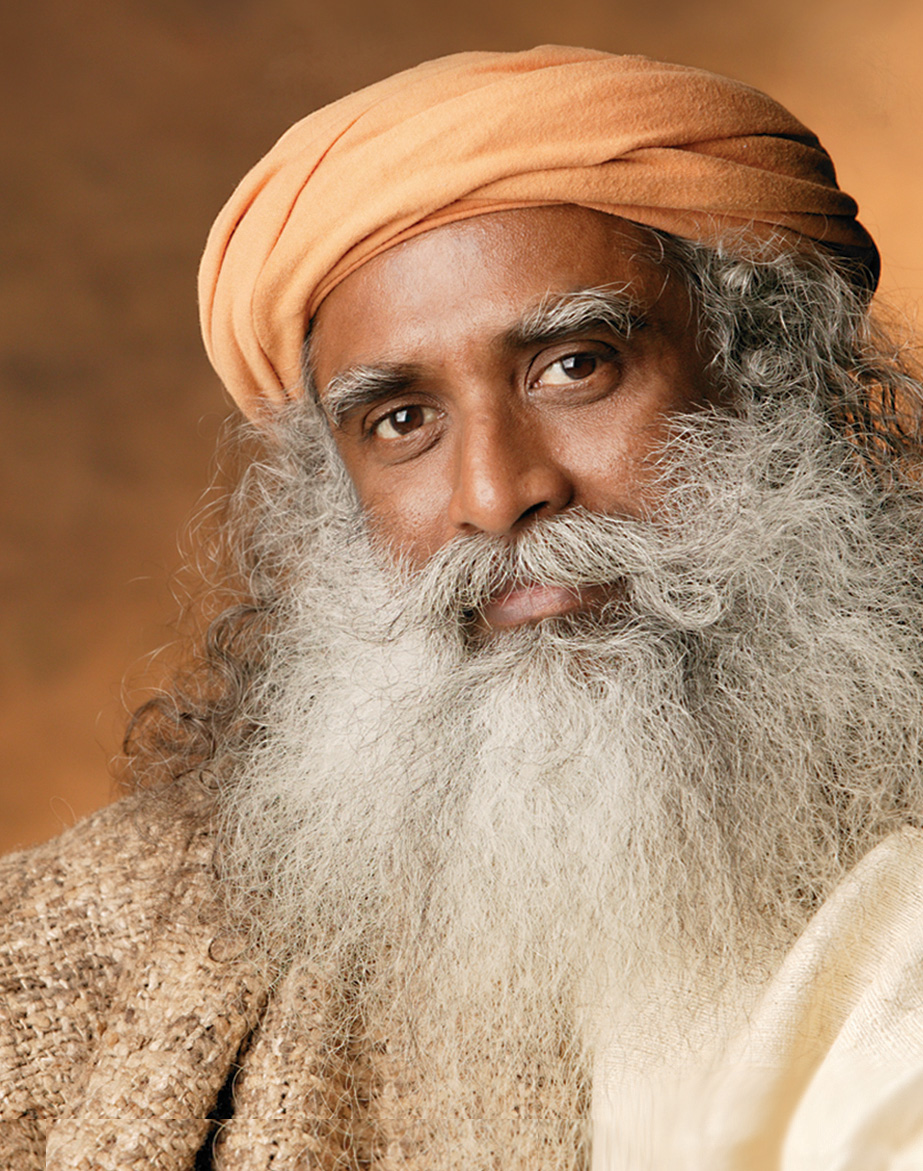
Sadhguru
Sadhguru
Sep 15, 2012
7 min de lecture

Source : Sadhguru

Most people attribute stress to their jobs or survival pressures, but Sadhguru argues that stress stems from how we handle our circumstances, not the circumstances themselves. Even when external survival needs are fully met, people remain unsettled. The root issue is unconscious living—operating on autopilot rather than with awareness. Blissfulness is humanity's natural state, but only when we engage with life consciously. Through the story of an Orthodox Bishop seeking guidance from an Indian Yogi, Sadhguru reveals that our inner turmoil is essentially self-created, and how we live determines whether we experience peace or chaos.

Lecture · 7 sections

What People Get Wrong About Their Stress

When asked why they experience stress, most people point to the same culprit: their job. The work demands, the deadlines, the responsibilities—surely these are the source of their suffering. This explanation feels intuitive and almost universal in modern life. Yet Sadhguru identifies a critical flaw in this reasoning. If stress truly came from external demands, then removing those demands should eliminate the stress. But observation shows something entirely different.

Sadhguru presents a striking observation: even when survival needs are completely taken care of—when people no longer have to work, when their material security is guaranteed—they still do not settle into peace. Their inner turbulence persists. This reveals that the external circumstances, the job itself, the work pressures, are not the root cause of stress. The job becomes a convenient explanation, a place to assign blame, but it is not the actual mechanism generating the stress.

If the problem were truly external, solving the external would solve the problem. Instead, Sadhguru suggests, people carry an internal condition that remains unchanged regardless of their external situation. This inner condition is what actually determines whether someone experiences peace or turmoil.

How Unconscious Living Creates Inner Turmoil

The mechanism behind stress, according to Sadhguru's teaching, is the quality of consciousness we bring to our actions and choices. Life is not something that happens to us—it is something we actively make through how we handle each moment. This is a radical shift in responsibility: you are not a victim of circumstance, but the creator of your inner experience through the way you engage with life.

Unconscious living means operating on automatic patterns, reacting without awareness, handling situations mechanically. When you move through life this way, your "inner situation can become turmoil." The chaos is not imposed from outside; it is generated from within through inattention, through the absence of conscious choice. You may be going through the motions—doing your job, managing your responsibilities—but if you do these things without presence, without awareness of what you are actually doing and why, you generate internal stress.

Conscious living, by contrast, means engaging with each situation with full awareness. It means handling things deliberately rather than automatically. This is not about doing less or achieving less; it is about doing things with consciousness rather than on autopilot. The same action—performed consciously—produces a different inner result.

Why Blissfulness Is Your Natural State

Sadhguru's core claim is that blissfulness is not something you need to create or earn—it is your natural state of being. This is a profound reorientation. Most people believe they must achieve happiness, that it comes as a reward for success or as a result of external good circumstances. Sadhguru reverses this: blissfulness is the ground state. When you do the right things—when you handle life with consciousness and awareness—this natural state simply reveals itself.

The "right things," in this framework, are not moral commandments or external rules. They are actions taken with awareness, with presence, with consciousness. When you operate this way, you are not working against your nature; you are aligning with it. Blissfulness emerges naturally.

Conversely, when you handle things unconsciously, you are not simply missing out on happiness—you are actively creating the opposite. Turmoil, stress, and inner chaos are the natural result of unconscious action. They are not punishments imposed from outside; they are the direct outcome of how you are living.

The Bishop and the Yogi: A Story About Making Our Own Life

Sadhguru illustrates this teaching through a story involving an Orthodox Bishop who seeks out an Indian Yogi. While the description does not provide the full narrative, the story serves to demonstrate a central principle: "Life is essentially our making." The Bishop's journey to find spiritual guidance reflects the human search for answers, but the real insight Sadhguru draws from the story points to the fact that each person's life situation is fundamentally shaped by how they have engaged with their own existence.

The lesson here challenges the victim narrative. You are not a passive recipient of life—you are an active maker of it. Your inner condition reflects your choices, your awareness, and your way of handling situations. This is both a diagnosis of the problem and the key to solving it: if you made the stress through unconscious living, you can unmake it through conscious living.

The Distinction Between Circumstance and Inner Condition

A crucial part of Sadhguru's analysis is the separation between two things people often conflate: external circumstances and inner condition. People speak as if these are connected, as if external circumstances directly determine inner peace. But this misses the actual mechanism.

Two people in identical external circumstances—the same job, the same salary, the same living situation—can have completely different inner experiences. One may be stressed and turbulent; the other may be calm and present. The difference is not circumstantial; it is how they are handling that circumstance. One is unconscious; the other is conscious. One is caught in automatic patterns; the other is engaged with presence.

This distinction is liberating because it means you are not helpless. You cannot always control your external circumstances immediately, but you can control your consciousness, your awareness, your way of handling what is in front of you. You have agency over the actual source of your stress.

Reframing Survival and Stress

Society often frames stress as emerging from the need to survive and meet basic needs. The logic goes: survival is demanding, therefore people are stressed. But Sadhguru's observation breaks this chain. He notes that even when survival needs are fully handled—when people are secure, provided for, free from the need to work—stress does not disappear. This suggests that survival anxiety is not the root.

Instead, what appears to be survival-based stress is often stress rooted in how people approach their existence. They may be unconsciously driven by fear, or by conditioned patterns of striving, or by automatic reactions to situations. When survival needs are met, these unconscious patterns remain active, still generating stress even though the original "threat" is gone.

This reframing invites a different approach to stress management: not trying to engineer perfect external circumstances, but developing consciousness in how you engage with whatever circumstances exist.

Where to Go From Here

If Sadhguru's analysis is correct—that stress comes not from circumstances but from unconscious handling of life—then the path forward is to develop awareness. This might look like bringing attention to your patterns, noticing when you are operating on autopilot, pausing before reacting, and making deliberate choices about how to handle situations. It could involve practices that build presence and consciousness, whether through meditation, yoga, or simply conscious attention to daily activities.

The insight also suggests that complaining about circumstances, while sometimes justified, misses the leverage point. You have direct access to how you handle your life. You do not have direct access to everything that happens to you. Focusing energy on developing consciousness and presence addresses the root cause of stress, not just its symptoms.

Comments

Loading the conversation…

Avec

Les artistes de cet article

Sadhguru
Sadhguru
Teacher

Sadhguru, born Jaggi Vasudev in 1957 in Mysore, India, grew up in a traditional South Indian family. From a young age, he exhibited a keen interest in nature and the outdoors,…

Explorer les thèmes
Stress-consciousnessInner-peaceUnconscious-livingBlissfulnessAwareness

Des questions ?

Questions fréquemment posées

Sadhguru explains that stress does not come from external circumstances like work demands but from how unconsciously you handle your life. Even when survival needs are met and external pressures removed, people remain unsettled because the root cause—unconscious living—is still present. The job is a convenient excuse, not the actual source.
Conscious living means engaging with your circumstances and actions with full awareness and deliberate choice, rather than operating on automatic patterns and reactions. The same action performed consciously generates peace; performed unconsciously, it generates stress. Consciousness is the bridge between your circumstances and your inner state.
According to Sadhguru, blissfulness is your natural state of being, not something you must create. It emerges naturally when you handle life with consciousness and awareness. You do not earn it; you reveal it by removing the unconscious patterns that obscure it.
Rather than focusing on changing external circumstances, develop consciousness in how you engage with those circumstances. The same demanding job handled with awareness and presence generates different inner results than the same job handled unconsciously. Your leverage is in your awareness, not in the situation itself.
Yes, according to this teaching. Sadhguru states that life is essentially your making. Your inner condition—whether peaceful or turbulent—reflects how you have handled your existence. This responsibility is also the key to freedom: if you created the stress through unconscious living, you can unmake it through conscious living.

Continuer la lecture

More from Sadhguru

Voir tout
Mind as Vehicle: Are You Driving Consciously?
Inspire

Mind as Vehicle: Are You Driving Consciously?

Explore how the mind functions like a vehicle requiring skilled operation. Learn why unconscious mental habits create suffering and how awar…

9 min read
Sleep Hours and Spiritual Practice: What Yogis Actually Need
Inspire

Sleep Hours and Spiritual Practice: What Yogis Actually Need

Sadhguru reveals his personal sleep patterns and explains why the typical 8-hour prescription doesn't apply to those with disciplined yogic …

8 min read
Awareness Beyond the Person: The Direct Path to Universal Consciousness
Inspire

Awareness Beyond the Person: The Direct Path to Universal Consciousness

At Monte Sahaja, a seeker discovers that consciousness itself—not the person—is the unchanging witness of all experience. A radical shift in…

8 min read
What You Know for Sure: Consciousness Aware of Itself
Inspire

What You Know for Sure: Consciousness Aware of Itself

Tolle answers Oprah's closing question with one certainty: you are conscious. Here is why noticing that awareness halts thought, and the sma…

9 min read

Continue d’explorer

Poursuis ton chemin

Plus de sagesse et de rassemblements dans tout l’annuaire BrightStar.

Plus d’articles

Parcours toute la bibliothèque d’enseignements, d’entretiens et de guides.

Retour à tous les articles →

Enseignants et artistes

Découvre les lignées, les musiciens et les guides du monde conscient.

Explorer les artistes →

Trouver un événement

Kirtan, retraites, bains sonores, breathwork, festivals — bientôt près de chez toi.

Parcourir les événements →