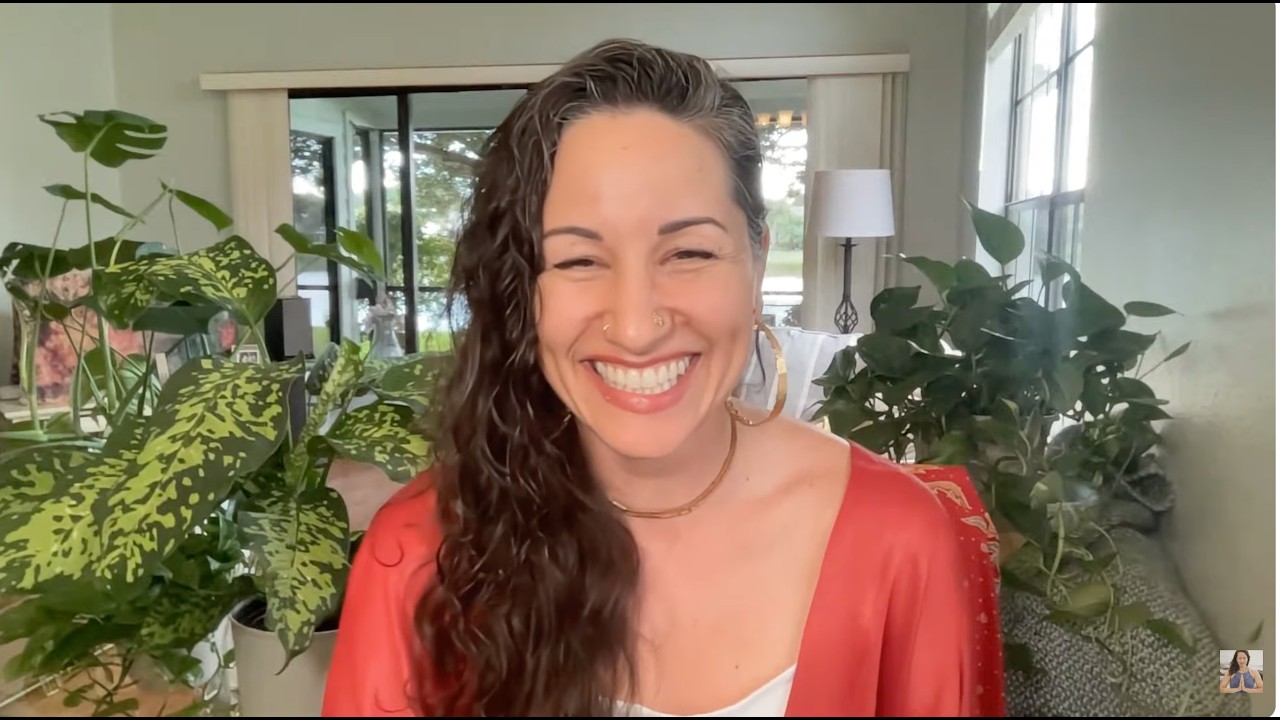
In a world that pulls us outward constantly—toward productivity, performance, and perpetual self-improvement—there exists a counterintuitive act of rebellion: the deliberate return to love. Not love as sentiment, but love as a foundational practice; a deliberate turning toward kindness, first for oneself, then naturally radiating outward. This is the landscape Selena Lael inhabits, a self-love mentor and dharma teacher who structures healing experiences around the premise that wholeness begins with pause, breath, and the permission to be held by community.
The phrase "return" carries weight here. It suggests that love—in its purest form, as acceptance and benevolence—is not something to be earned or constructed, but rather recovered. Most contemplative traditions teach that beneath the noise of self-judgment, fear, and conditioning lies an inherent capacity for compassion. The work, then, is not to build something new but to clear the path back to what was always present. This distinction matters. It shifts the inquiry from "How do I become more loving?" to "What prevents me from recognizing the love that already exists?"
A return to love in practice looks like deliberate pause. In a culture engineered for constant motion, the act of stopping—truly stopping—becomes a revolutionary gesture. It creates space for what Lael's teaching framework addresses: the body's held tension, the mind's repetitive loops, the heart's protective walls, and the soul's hunger for meaning and connection.
Lael structures her community gatherings around interlocking modalities, each serving a specific function in the return to wholeness. Meditation anchors the experience—a seated practice that trains attention and reveals the mind's habitual patterns. From that foundation of stillness, conscious breathing (pranayama in yogic tradition) works as both regulatory and revelatory tool. The breath bridges body and mind; regulated breathing signals the nervous system that safety is possible, while conscious breath awareness illuminates how emotion literally lives in the body.
Dharma talk—teachings drawn from Buddhist, yogic, and wisdom traditions—provides intellectual and philosophical ground. But dharma in this context is not abstract philosophy. It speaks directly to the obstacles that keep practitioners locked in self-rejection: perfectionism, shame, the belief that love must be earned. It names these patterns and offers alternative frameworks.
The inclusion of community connection recognizes what neuroscience has confirmed: humans heal in relationship. Loneliness and isolation deepen the wound; witnessed presence reverses it. A gathering structured around loving-kindness becomes a permission slip—"You are allowed to be here exactly as you are"—that individuals often cannot grant themselves alone.
Self-love is not a thought experiment. It lives in the nervous system, the breath, the muscles, the organs. When someone carries chronic self-judgment, that judgment is not abstract; it manifests as tension in the jaw, shallow breathing, a collapsed chest, or rigidity in the spine. The body keeps score, as trauma researcher Bessel van der Kolk has documented, and the body is also where recovery begins.
Breathwork in a loving-kindness context serves this direct function: it teaches the physiology of safety. Extended exhalations activate the parasympathetic nervous system—the body's brake pedal. This physiological shift then makes the mental practice of self-compassion feel possible rather than performative. You cannot cognitively convince yourself to be kind if your nervous system is in a state of threat; the body must be invited into a different story first.
One of the most overlooked aspects of modern self-help is its fundamental loneliness. The individual is positioned as the unit of change: "Fix yourself. Optimize yourself. Heal yourself." But this framework reproduces the exact isolation and self-scrutiny that created the wound in the first place. A community experience oriented toward loving-kindness flips this. The individual is contextualized within the larger organism of the group; healing becomes mutual and witnessed.
In such spaces, participants often report a simple but transformative realization: other people are struggling with the same self-doubt, the same perfectionism, the same fear of not being enough. This recognition—"I am not uniquely broken"—is itself a form of medicine. It breaks the spell of shame, which thrives in isolation and secrecy.
There is a cultural myth that healing requires intensity: intense therapy, intense workouts, intense self-examination. But pause operates differently. Pause is the space where the nervous system can finally exhale. It is where habitual reactivity loses its grip. In pause, you are not trying to become someone better; you are simply here. That simplicity—the sheer permission to exist without agenda—is radical in a world structured around endless becoming.
Lael's framework honors this. By opening with meditation and breathwork before dharma talk, the teaching is not imposed on an agitated mind. The mind has been invited into quiet. From that ground, words land differently. They are heard, not just processed.
These four dimensions of being are often compartmentalized in Western wellness culture. The body gets a yoga class. The mind gets therapy or self-help. The heart gets therapy again. The soul gets religion or spirituality, if anything. But they are not separate systems; they are an integrated whole. A pain in the body speaks to an emotion in the heart. An unexpressed grief affects the mind's clarity. A disconnection from soul-level meaning leaches vitality from all dimensions.
A teaching structure that explicitly names and honors all four domains recognizes this integration. Meditation nourishes the mind and soul simultaneously. Breathwork nourishes the nervous system (body) and brings presence (mind). Dharma talk speaks to the heart's deepest questions about meaning and belonging. Community connection nourishes all four, the experience of being truly seen and met activating the full spectrum of human aliveness.
If this framework resonates, the first gesture is the simplest: pause. Not in pursuit of anything, but as an act of permission. Sit for five minutes with your breath. Notice what arises without trying to fix it. Investigate the possibility that beneath your self-judgment might lie a wellspring of natural kindness toward yourself—not as a goal, but as something already present, waiting to be recognized. Consider seeking out a community space, whether a meditation group, a dharma gathering, or a healing circle, where your presence is welcomed as it is. The return to love is not a solo journey; it happens in the turning toward yourself and, by extension, toward others who are doing the same work. That mutual turning, witnessed and held, is where real transformation lives.