Most of us arrive at spiritual practice through a door of profound recognition—a sudden, undeniable sense that life contains depths we were never taught to explore. That recognition carries hunger: we find traditions, teachers, maps from the East, and we grab them with both hands. We trade our old life for a new wardrobe, a new diet, a new identity. We become vegetarian. We wear white. We keep strict hours. We perform enlightenment so convincingly that passersby mistake the costume for the person underneath.
But there's a problem hidden in this rush to transformation. We can move so fast into the external forms of practice that we leave behind the actual work: the real, messy, moment-to-moment integration of spiritual insight into the body and habits we actually live in. We "got holy too fast," as Ram Dass puts it—and when that happens, something important cracks.
The Crack in the Costume
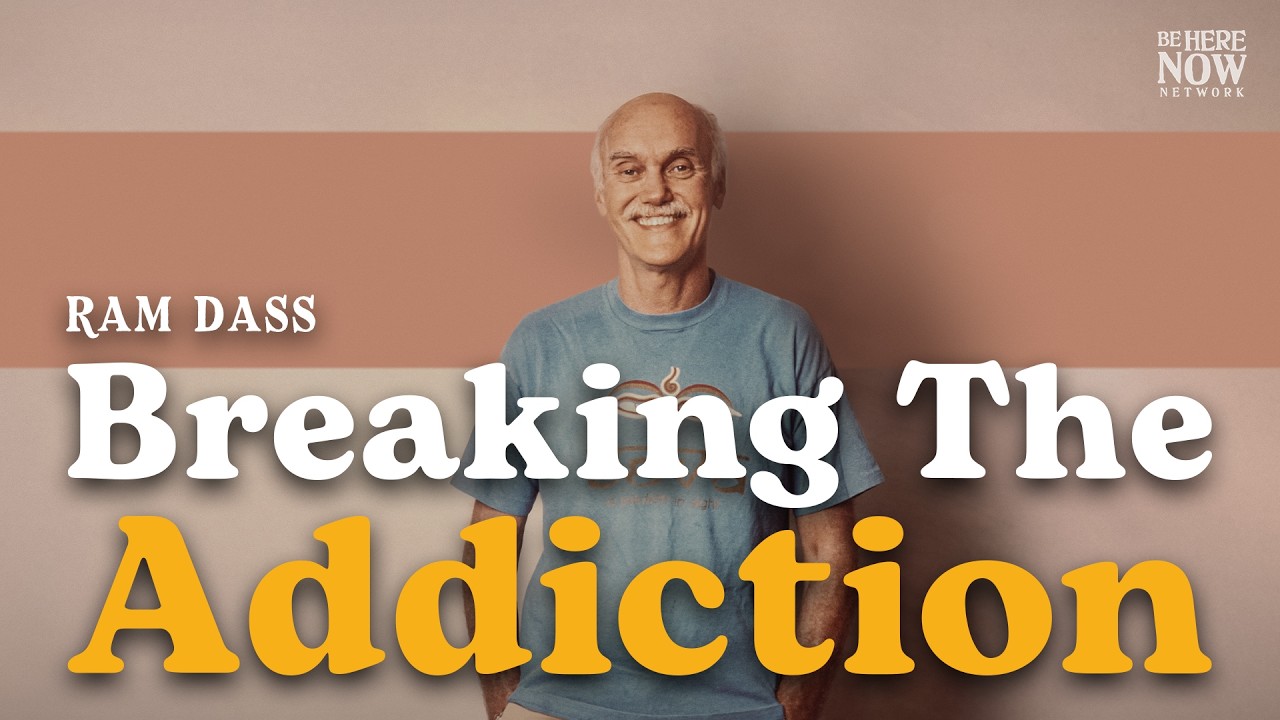
The story that illustrates this best is also the story behind the title: Ram Dass's six-year vegetarian streak, and how it ended in a Chinese restaurant with spare ribs and a complete reconsidering of what practice actually means.
After six years of strict vegetarianism—long enough to wear the identity like a medal, to mentally compare notes with other seekers about spiritual discipline—Ram Dass realized something uncomfortable. He was still craving foods he wasn't "supposed" to eat. And underneath the craving was a question that cut to the heart of all spiritual bypassing: "What am I afraid of? The devil?"
The decision, when it came, was radical in its simplicity: "I've just got to break my own record so I can get on with it." Not with a whisper, not with shame, but with intention and even humor. He walked into a dimly lit Chinese restaurant and ordered spare ribs—a choice he describes with deliberate specificity: "I'm a Jew and a Hindu. I'll order spare ribs cuz that really does it at all levels." He was breaking his own rule completely, and he was going to do it conscious and awake, not in hiding.
The ribs arrived. He sat with them. And before eating, he did something that transformed the whole moment: he offered them to Maharaji, his guru. "I say Maharaji I know you'll find this strange and then I crack up completely since he is the spare ribs and me eating them too." The absurdity, the compassion, the surrender—all of it at once. No longer performing holiness. Just a person, eating, aware of the paradox that even the guru is present in the meal.
When Honesty Breaks Through Walls
What happened next wasn't punishment from God. It was something far stranger: connection. A man in the next booth, wearing a suit and tie, had been watching the whole scene unfold. After Ram Dass finished, the stranger came over. "I couldn't help noticing the way you offered the food," he said. "The spirit was so powerful, it affected me tremendously."
The man was a salesman for an electronics company from MIT—and a fundamentalist Christian. What followed was a long conversation about Christ, the Bible, and the ways all of us pretend to be more spiritually integrated than we actually are. The Christian admitted his own hypocrisy: finding himself in bars, drawn to beautiful women, disguising desire as spiritual interest. "It's all got to be out front," Ram Dass reflected. "There's no who you going to hide from? You're all the guru."
The irony was perfect. The Christian asked Ram Dass what he ate. Ram Dass looked down at the pile of bones on his plate. Honesty had created a bridge that performance could never build.
Why Diet Isn't the Real Practice
The deeper lesson here isn't about food at all. It's about the way seekers often choose one aspect of practice—usually the easiest to perform and measure—and make it stand in for the whole work. Diet became Ram Dass's marker of spiritual advancement, when in fact the real practice is much broader and much harder: integration.
He acknowledges that certain practices do require dietary discipline. "If you're trying to do say kundalini yoga you've got to watch every morsel that goes into your mouth because if you try to do pranayam and you don't care be very careful about your diet you're really going to blow your scene of your body of this incarnation." And at certain stages of meditation, he notes, you become so sensitive that "you'll really recognize that statement you are what you eat and you'll notice the vibration of animals that have died violently in your" body.
But this isn't the whole truth. Tibetan practitioners, he points out, "have always eaten meat and they're certainly as high as anybody else I know." The rule isn't universal. The work is internal.
The real insight is this: "The diet just like everything else you've got to listen in your heart to hear what you particularly need as your sadena." Your personal spiritual practice, your dharma. Not what the book says. Not what the guru said someone else should do. What your heart needs, right now, in this body, in this life.
The Fanatic and the Marketplace
The danger, he explains, is that "we got much more purist about our diets than we did about the rest of the game. And we've got to bring it all together." You can't sit in meditation with a perfect macrobiotic diet while your sexuality, your speech, your thoughts remain unexamined and reactive. "You can't have lustful sex and be a macrobiotic and think you're making it. See, the sex has to be as conscious as the the rice you put in the pot."
This is where the title—"Hearing Your Dharma, Hearing Your Part"—becomes clear. Each of us is asked to listen carefully to what our particular practice is, what our particular dharma asks of us. Not to adopt the practice of someone else, even a guru. Not to perform someone else's enlightenment. To hear, with deep honesty, what integration actually looks like for this person, in this life, at this stage.
Most of us, Ram Dass notes, are not sitting in caves in the Himalayas. "You like I am dealing with the stuff of daily life in the marketplace and the fire burns hot." That's not a handicap. "The hotter the fire, the faster the purification." The risk is you might think you "went under"—that you've failed, that eating spare ribs or feeling desire or making mistakes means you've lost the path. But that's an illusion born of fear. "The fact is you can't go under. See, that's the one that's so far out. You can think you went under. You can really scare yourself. Oh, I went under. See? But in fact, if you give yourself that little space again, you come right back up again."
When the Mountain Comes Down
Ram Dass tells another story to illustrate the danger of mistaking retreat for realization. He spent time in the Arizona desert, achieving a state of profound grace: the cacti luminous, visions clear, total nonattachment, love and compassion pouring through him. "And I saw a wolf and I loved it and the wolf loved me and it was oh it was incredibly spacey." He believed he had found who he really was.
But then he drove back toward Los Angeles, settling in the Bay Area—"where it's this all satsang, isn't it?"—convinced he could "eat fire" and handle the intensity of spiritual community in the marketplace. Almost immediately, his guru Krishna told him: "I think you ought to go off by yourself for a day." When Ram Dass asked if he meant paranoia, Krishna was direct: "Yeah, totally." So Ram Dass spent a night in Samuel Taylor State Park to cool out before returning.
The lesson: the clarity we find in solitude is real, but it's not complete. Real practice happens in the marketplace, in relationship, in the friction between self and world. That's where honesty becomes possible. That's where the spare ribs become a teaching.
Where to go from here
The invitation here is to examine your own practice with radical honesty. Where are you performing spirituality instead of living it? Which rules have you internalized because they're someone else's dharma, not yours? What would it feel like to listen—really listen—to what your heart needs in this season of your life, rather than copying the path of someone else?
This doesn't mean abandoning discipline. It means bringing awareness to every part of life with equal intensity: your diet, yes, but also your sexuality, your speech, your thoughts, your relationships. It means understanding that the marketplace—the messy, hot, difficult daily life—isn't an obstacle to practice. It's where practice actually happens. And it means giving yourself permission to revise, to break your own records, to eat the spare ribs if your heart says so—as long as you do it awake, conscious, and honest. That's the dharma. That's hearing your part in the dance.
Be Here Now Network is the creator of Heart Wisdom with Jack Kornfield, a podcast exploring consciousness, spirituality, and personal transformation. With 313 episodes, they have c…
Hearing your dharma means listening deeply to what your particular spiritual practice needs to be—not copying someone else's path or following rules because a book or authority says so, but tuning into your own heart to understand what integration actually requires at this stage of your life.
Yes. While certain practices like kundalini yoga require strict dietary discipline, and some stages of meditation make you sensitive to the vibrations in food, this isn't universal. High practitioners across traditions—including Tibetan Buddhist teachers—have eaten meat. The real practice is bringing consciousness to every choice, not to one rule.
Spiritual bypassing is using spiritual practice and identity to avoid doing the deeper, more difficult work of real integration. You might become vegetarian, wear white, and maintain strict discipline while ignoring lustful thoughts, reactive speech, or dishonesty in relationships—performing holiness while the rest of your life remains unconscious.
The path that's right for you is the one your heart recognizes as necessary for your integration—not the one that looks most impressive or matches someone else's journey. Real listening requires honesty about where you actually are, what you're actually struggling with, and what practice would actually help.
Absolutely. The quiet clarity found in solitude is real, but incomplete. The actual fire of practice—the rapid purification—happens in relationship, in daily life, in the friction between self and world. That's where honesty becomes possible.
Getting holy too fast means adopting the external forms of spiritual practice (diet, dress, rules) so quickly that you skip the internal integration work. You end up performing enlightenment while internal conflicts remain unexamined, creating a split between your outer image and inner reality.
No. You can think you've failed, which creates fear and contraction. But the actual teaching is that you can't go under—you can only appear to go under. If you give yourself a little space, you come right back up. The only real failure is losing awareness and believing the fear.
Because real spiritual practice isn't about perfecting one area (diet) while leaving others unconscious (sexuality, speech, thought). Integration means bringing the same quality of awareness—the same mantra, the same intention—to every aspect of life equally, or you're just creating a more subtle hypocrisy.