BrightStar

Parcourir tous les Events

Découvre des rassemblements conscients

events

Yoga
Meditation
Breathwork
Qigong
Tai Chi
Sacred Music
World Music
Medicine Music
Sound Healing
Ecstatic Dance
Destinations populaires
BaliSedonaLos AngelesCosta RicaNew YorkSan FranciscoAustinMiamiJoshua TreeTulum
Voir toutes les catégoriesVoir toutes les destinations

Explorer toutes les fonctionnalités

Des outils puissants pour développer tes événements

Fonctionnalités de la plateforme

Tarification dynamique intelligente
Catégories de billets
Places assignées
Récupération des paniers abandonnés
Récupération des visiteurs
Dons & Prix variables
Système d'affiliation
Scanner de billets
Codes promo
Questions personnalisées
Partage de billets
Ventes additionnelles & Options
Analyses & Rapports
Séquences d'emails
Liste d'attente / Notifier / Rappeler
Personnes & Lieux
Artists & TeachersEvent OrganizersVenues & StudiosKnowledge BaseGlossaryInspiration
Voir toutes les fonctionnalitésÀ propos
TarifsBlog
Language
Saved events
Parcourir tous les événements

events

YogaMeditationBreathworkQigongTai ChiSacred MusicWorld MusicMedicine Music

Destinations populaires

BaliSedonaLos AngelesCosta RicaNew YorkSan Francisco

Personnes & Lieux

Artists & TeachersEvent OrganizersVenues & StudiosKnowledge BaseGlossaryInspiration

Fonctionnalités de la plateforme

Tarification dynamique intelligenteCatégories de billetsPlaces assignéesRécupération des paniers abandonnésRécupération des visiteursDons & Prix variablesSystème d'affiliationScanner de billetsCodes promoQuestions personnaliséesPartage de billetsVentes additionnelles & OptionsAnalyses & RapportsSéquences d'emailsListe d'attente / Notifier / Rappeler
Voir toutes les fonctionnalitésÀ propos
TarifsBlog
ConnexionChercheursCréateurs
  • Parcourir tous les Événements
  • Pour les chercheurs
  • Yoga
  • Méditation
  • Breathwork
  • Qi gong
  • Tai-chi
  • Musique sacrée
  • Musiques du monde
  • Musique médecine
  • Soins sonores
  • Danse extatique
  • Retraites
  • Ateliers
  • Toutes les catégories →
  • Bali
  • Sedona
  • Los Angeles
  • Costa Rica
  • Tulum
  • Byron Bay
  • San Francisco
  • Austin
  • New York
  • San Diego
  • Denver
  • Seattle
  • Portland
  • Miami
  • Toutes les villes →
  • Join the Movement
  • Why we list
  • Sell Globally
  • Pour les créateurs
  • Pour les équipes
  • Pour les écrivains
  • Pour les enseignants
  • Pour les artistes de kirtan
  • Pour les studios
  • Pour les festivals
  • Pour les centres de retraite
  • Pour les associations
  • Ambassadeur de marque
  • Billetterie gratuite
  • Elevate
  • Amplify
  • Réseau de 500K+ acheteurs
  • Récupération des paniers abandonnés
  • Tarification dynamique intelligente
  • Catégories de billets
  • Événements récurrents
  • Places assignées
  • Système d'affiliation
  • Liste d'attente / Notifier
  • Scanner de billets
  • Widget intégrable
  • Diffusion d'événements
  • Messagerie
  • Intégrations
  • Rapports
  • Toutes les fonctionnalités →
  • À propos
  • L'écosystème
  • Blog
  • Glossaire
  • Inspiration
  • Centre d'aide
  • Contact
  • Documentation API
  • Ressources de marque
  • Carrières
  • Presse
  • Conditions d'utilisation
  • Politique de confidentialité

Événements

  • Parcourir tous les Événements
  • Pour les chercheurs
  • Yoga
  • Méditation
  • Breathwork
  • Qi gong
  • Tai-chi
  • Musique sacrée
  • Musiques du monde
  • Musique médecine
  • Soins sonores
  • Danse extatique
  • Retraites
  • Ateliers
  • Toutes les catégories →

Destinations

  • Bali
  • Sedona
  • Los Angeles
  • Costa Rica
  • Tulum
  • Byron Bay
  • San Francisco
  • Austin
  • New York
  • San Diego
  • Denver
  • Seattle
  • Portland
  • Miami
  • Toutes les villes →

Pour les créateurs

  • Join the Movement
  • Why we list
  • Sell Globally
  • Pour les créateurs
  • Pour les équipes
  • Pour les écrivains
  • Pour les enseignants
  • Pour les artistes de kirtan
  • Pour les studios
  • Pour les festivals
  • Pour les centres de retraite
  • Pour les associations
  • Ambassadeur de marque
  • Billetterie gratuite
  • Elevate
  • Amplify

Fonctionnalités

  • Réseau de 500K+ acheteurs
  • Récupération des paniers abandonnés
  • Tarification dynamique intelligente
  • Catégories de billets
  • Événements récurrents
  • Places assignées
  • Système d'affiliation
  • Liste d'attente / Notifier
  • Scanner de billets
  • Widget intégrable
  • Diffusion d'événements
  • Messagerie
  • Intégrations
  • Rapports
  • Toutes les fonctionnalités →

Entreprise

  • À propos
  • L'écosystème
  • Blog
  • Glossaire
  • Inspiration
  • Centre d'aide
  • Contact
  • Documentation API
  • Ressources de marque
  • Carrières
  • Presse
  • Conditions d'utilisation
  • Politique de confidentialité
BrightStar
Téléchargez l'app
Télécharger dans l'App StoreDisponible surGoogle Play
© 2026 BrightStar. Tous droits réservés.
Inspire

The Monk Who Cured Addicts in 10 Days: Surrender and Action

Be Here Now Network
Be Here Now Network
Oct 18, 2026
10 min de lecture
À regarder · 8

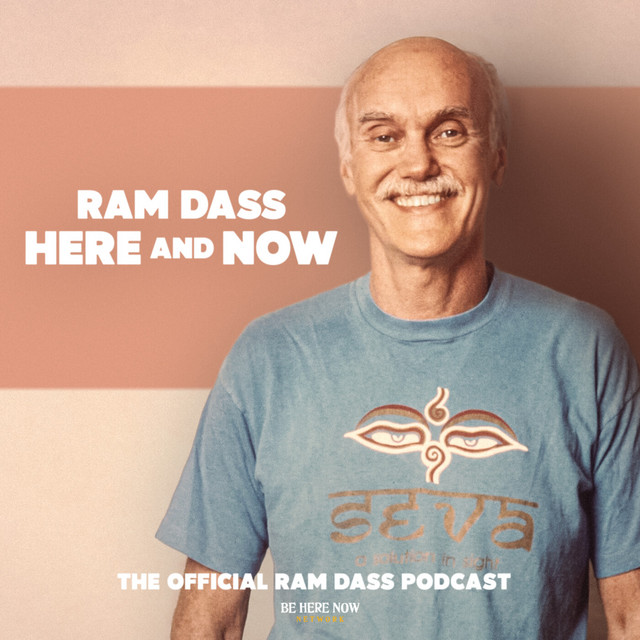
Picture a dusty road in Thailand, a Western seeker in the passenger seat, and a woman who has spent years quietly helping the down-trodden driving him toward a monastery he has been told not to miss. That is the scene Ram Dass returns to in this clip from Here and Now Podcast Episode 307, "Being in Other Planes of Reality." The monastery belonged to a former narcotics agent who had given up government service to become a Theravada Buddhist monk, and who, according to the story, ran a ten-day program that freed heroin and opium users from their dependence. Ram Dass uses that account to reach for something larger than a success story: a portrait of a mind so emptied of its own grasping that it becomes the instrument of healing itself. The talk is about surrender, about acting without clinging to results, and about what is left of "the one who does" when the sense of separation finally dissolves.

Lecture · 6 sections

How did a former narcotics agent end up curing addicts in ten days?

The story arrives secondhand, and Ram Dass is careful about that. He was in Thailand staying with Molly Whitehouse, whose husband had served as American ambassador there before he died. She had stayed on, loved the country and its people, and, in his telling, spent her life helping those who had the least. "Ram Dass, I want you to meet this monk," she told him. He trusted her judgment, the way you trust a friend who has recommended a film you would not otherwise have chosen.

What caught his attention was the claim she made about the monastery. According to her, the program lasted ten days, cost $15, and 70 percent of the people who went there became free of drugs. Ram Dass knows the American treatment landscape well enough to be skeptical of those numbers. He doesn't insist on them. He passes them along as the kind of detail that makes a listener lean forward, then moves on to the person who ran the place.

That man, Ram Dass says, had been a narcotics agent for the Thai government. His aunt, a figure he describes as a Buddhist saint, once asked him a question that cut through his professional self-image: why was he doing what he was doing, and why didn't he help people instead of hurting them? His answer was a shrug and a confession. "I don't know how to do it any different." She offered a bargain: purify yourself, and I will help you. He resigned from government work and took robes.

The monastic discipline he entered is famously strict. Ram Dass notes that Theravada monks observe 228 precepts, which he sums up as renunciation carried "to a fine art": no soft beds, no singing, no eating in the afternoon, and more. He adds, with a laugh the transcript preserves, that this former agent was so gung-ho he took on ten extra. The treatment itself, as Ram Dass describes it, was austere and physical. Patients drank an herbal brew that worked as a diuretic, passed a pail around a circle, and sweated out what their bodies had been holding. The first-day arrivals, he recalls, looked like "out and out junkies," skin and bones, many of them from Europe and Asia. By the sixth day they began to come around, by the eighth they were walking, and on the tenth they left.

What did the blanket test really ask?

When Ram Dass asked the monk whether anyone but him could do this work, the answer was a noncommittal "Perhaps." Then came the question Ram Dass still hasn't fully decoded. Imagine, the monk said, you are cold up in the mountains, and I offer you another blanket. Would you accept it?

Ram Dass describes his reaction with the self-deprecation of a man who knows he is being tested. He was trying, as he puts it, to be a good Jewish boy and work out what the right answer was. He said no, he already had a blanket. "Very good," the monk replied, and then sharpened the scenario. He would leave his blanket anyway. You go out in your own blanket to relieve yourself, it rains, you come back, and yours is wet. Will you use mine?

"Of course I'll use your blanket. Your blanket's dry, my blanket's wet." (Ram Dass, Here and Now Podcast Ep. 307, clip at 4:36)

The monk said no. Ram Dass never learned why, and he says he failed the exam at the second question. The parable works on several levels at once. It is a koan about clinging to your own dry blanket, the small comfort of being right and self-sufficient even when a better offer is standing in front of you. It also turns on a basic question of ego: is the act of helping about the helper's sense of self, or about the need in front of you? The monk's refusal to offer a simple, rational answer is part of the teaching. You cannot pass the exam by reasoning your way to the correct response. The test is whether you are willing to let your own position go.

Why was the monk's mind stronger than addiction?

This is the center of the talk, and Ram Dass handles it with care. The monk's program, he says, promised patients that they would be free when they left and never need return. Ram Dass came to see that this promise was not a marketing line. It rested on something he calls the monk's mind, which he distinguishes from intellect.

"His mind, not his intellect, but his mind was stronger than their addiction. And so that when he said that, that was truth. And that truth was more powerful than their addiction." (Ram Dass, Here and Now Podcast Ep. 307, clip at 5:32)

In Ram Dass's account, the monk was not simply giving a cure. He was the cure, because he had surrendered "into the thing itself." Years of renunciation and purification, he suggests, had worn him down to a kind of clarity. He had watched his own attachments and kept letting them go, one after another. Even the subtlest attachment was on the table: the rush of feeling good about doing good. Ram Dass pauses on that point with real honesty. Helping people is wonderful, and yet the satisfaction of being the helper is one more thing to cling to.

This is why the monk's statement could be trusted. A promise of freedom from a person who still needs to be seen as the rescuer carries a hidden condition. A promise from someone who has let go of the rescuer is different. It is not a technique but a presence.

Can you act fully without clinging to the outcome?

Ram Dass then turns to his own circle. He looked around at friends who had dedicated their lives to helping addicts, and he saw a common pattern. Some worked every waking hour. Yet they were, in his words, "still busy being somebody doing something." Their dedication was real, but it was also organized around an identity: the good person who helps.

He reaches for the Bhagavad Gita to name the alternative. Be not identified with being the actor. Be not attached to the fruits of the action. Then, the instruction that Krishna gives Arjuna on the battlefield: go forward and do the work. Ram Dass reads this not as permission to be careless but as a call to impeccable action. Recognize that you are, in a sense, a pawn in a larger game. Do not inflate the ego into the author of outcomes. Do your best and let what will happen, happen.

"You do it impeccably. You become an impeccable peace-er. You lead your life impeccably, but without attachment or clinging." (Ram Dass, Here and Now Podcast Ep. 307, clip at 7:46)

Ram Dass calls this doing your dharma. The word matters. Dharma here is not a list of tasks but a way of living fully in one's proper function, without the grasping that turns service into self-regard. The monk, in his reading, had reached the point where he could die into his form because he was no longer attached to it. The form continued, the healing continued, and the self that needed credit had quietly dropped away.

There is a practical edge to this, too. Ram Dass says he searched for someone to send to the monk for training and could not find anyone willing to "die into just becoming the instrument of healing." Everyone wanted to be the healer. Few wanted to be the channel. The distinction is subtle and, for many people in helping professions, uncomfortable. It asks you to examine whether your compassion is serving the person in front of you or quietly feeding your need to be seen as compassionate.

What happens to the enjoyer when dualism ends?

The talk's most provocative passage reaches for a metaphor that Ram Dass admits may be "too far." He compares the devotee, the bhakti yogi, to someone who wants to stay at the edge, just before merging. Like extending foreplay indefinitely, the devotee lingers in the sweet tension of separation because at the moment of union, dualism disappears. The yogi holds back, savoring the distance between lover and beloved.

"When dualism ends, there goes the enjoyer. Now, you're just the enjoyment." (Ram Dass, Here and Now Podcast Ep. 307, clip at 8:36)

He ties this back to his own longing. All the years of spiritual effort are an attempt to make the journey faster, and then, when it finally accelerates, you want to hold on to the rush a little longer. You enjoy the sense of being a seeker, of being the one who is progressing. The final step asks you to release even that. When the enjoyer goes, nothing is lost. What remains is pure enjoyment without a separate witness. That, for Ram Dass, is what the monk had discovered in his ten-day clinic and in his unwavering refusal to keep a dry blanket for himself.

It is worth holding the story lightly. The figures about the program, the number of precepts, and the details of the treatment are reported from Molly Whitehouse's account and from Ram Dass's memory of a single visit. Its power lies less in verifiable outcomes than in the question it poses. Where in your own helping, teaching, or healing do you still need to be the one who helps? And what would it look like to become the instrument itself?

Where to go from here

If this clip stirred something, the full episode, "Being in Other Planes of Reality" from Ram Dass's Here and Now Podcast, sets this story inside a wider conversation about having nowhere to stand. Listen for the parts of the talk that circle back to the blanket, the monk, and the dissolving enjoyer. Read the Bhagavad Gita passages Ram Dass cites, especially the teaching on acting without attachment to fruits, and notice where your own helping has an edge of self-regard. The practice is not to stop helping. It is to notice when the helper's identity is doing the work, and to let the work continue without it.

Comments

Loading the conversation…

Transcript

[0:02] I was in um

[0:04] Thailand.

[0:06] And um I was staying with this woman

[0:08] Molly Whitehouse who had

[0:10] her husband had been the ambassador to

[0:12] uh Thailand from the United States. And

[0:13] then he died and the new ambassador came

[0:17] in, but she loved Thailand and she

[0:18] stayed on and she loved people and they

[0:20] were always

[0:21] sleeping on her floor and hanging out.

[0:23] And she was always helping the

[0:24] down-trodden. Lovely woman.

[0:28] And she said, "Ram Dass, I want you to

[0:31] meet this monk."

[0:34] And when I really feel somebody's really

[0:36] clear and they say, "I want you to do

[0:38] something like I want you to when

[0:39] somebody that you know says, "I want you

[0:41] to see a movie." You'll go see it

[0:42] because they said it.

[0:46] So she we drove down to see this monk in

[0:49] his monastery. And the really the thing

[0:50] that got me most was that she said,

[0:55] "At the monastery that he runs, they

[0:57] cure drug addicts, heroin and opium

[1:00] addicts."

[1:03] And she said, "The program lasts 10 days

[1:06] and it costs $15.

[1:09] And 70% of the people that go there get

[1:12] free of drugs."

[1:16] Now,

[1:17] I understand the drug world of the

[1:20] United States

[1:22] and the ways that addicts are dealt

[1:24] with. And I know that with heroin and

[1:26] opium, you don't expect to do it in 10

[1:28] days for $15.

[1:31] So we drove down and and she told me the

[1:33] story. She said this man had been a narc

[1:36] for the Thai government.

[1:38] A narcotics agent, excuse me.

[1:42] >> [laughter]

[1:44] >> And he had an aunt who was a Buddhist

[1:45] saint, whatever that means.

[1:48] And she said to him once, "Why are you

[1:50] doing what you're doing? Why don't you

[1:51] help people? You're going to hurt people

[1:53] with doing what you're doing."

[1:54] And he says, "I don't know how to do it

[1:56] any different." She says, "Will you

[1:57] purify yourself and I'll help you."

[2:01] So, he resigned from government service

[2:03] and he became a Theravadan Buddhist

[2:05] monk.

[2:08] Theravadan Buddhist monks have 228

[2:11] no-no's.

[2:13] I mean, they have carried renunciation

[2:15] to a fine art.

[2:18] You can't sit on a soft bed, you can't

[2:21] sing, you can't eat afternoon, you can't

[2:24] etc.

[2:27] And he was so gung-ho he had to 10 more.

[2:30] >> [laughter]

[2:33] >> And then she gave him a um a brew, an

[2:36] herbal brew, a diuretic.

[2:40] And he started this place and people

[2:42] would come and for 10 days three times a

[2:44] day they drink this stuff out of a pail

[2:46] and then the next pail is passed and

[2:48] they vomit into it and it's

[2:50] do it around this circle.

[2:52] And they have sweats, so they have all

[2:53] the things that you'd have at a place. I

[2:55] mean, diuretics and sweats and so on.

[2:59] And when I met him, I first they took me

[3:01] through and they were the first dayers

[3:03] and the second day. The first dayers

[3:04] look like out and out junkies. I mean,

[3:06] like in opium dens.

[3:08] Skin and bones and they're from Europe

[3:10] and Asia.

[3:11] Second dayers look still that way, but

[3:13] by the sixth day they begin to come

[3:15] around. By the eighth day they look

[3:16] pretty good. They're walking around.

[3:18] 10th day they leave.

[3:21] So, I said to him,

[3:23] "How do you do this?"

[3:26] And I said to him, "Could anybody but

[3:28] you do this?"

[3:31] He said, "Perhaps."

[3:34] I said, "Could I?"

[3:37] It's not a bad thing if you can do that.

[3:40] He looked me up and down and with great

[3:43] dubiousness he said, "Perhaps."

[3:48] And then as if he was giving me a little

[3:49] preliminary exam,

[3:52] which I have yet to understand by the

[3:54] way.

[3:56] He said,

[3:57] "Supposing, he said, you had a blanket

[4:00] and I came along and offered you another

[4:02] blanket. It was very cold up in the

[4:03] mountains. Would you accept it?"

[4:07] I mean, this just came out of nowhere.

[4:08] So,

[4:10] I mean, every I'm trying to think of,

[4:12] you know, I'm trying to be a good Jewish

[4:13] boy, you know, what does he expect me to

[4:15] say, you know, how do I get an A, you

[4:16] know?

[4:19] >> [laughter]

[4:21] >> You always revert to type under

[4:23] pressure.

[4:24] >> [laughter]

[4:32] >> So, I said, "No, I have a blanket.

[4:36] I don't need your blanket." He said,

[4:38] "Very good."

[4:41] He said, "But I leave my blanket anyway.

[4:43] And you go out in your blanket to pee.

[4:46] And it rains and you come back and your

[4:48] blanket's wet. Will you use my blanket?"

[4:52] So, I said, "Of course I'll use your

[4:53] blanket. Your blanket's dry, my

[4:55] blanket's wet."

[4:56] He says, "No."

[4:59] "No?"

[5:00] "No."

[5:02] I don't know why not and that was the

[5:04] end cuz I failed the exam after the

[5:05] second question. You know, I don't I

[5:07] don't know what the third question is

[5:08] and he's died.

[5:12] He took the third question with him to

[5:13] the grave.

[5:15] But what I realized that what I was

[5:17] saying, he says, "We just tell the

[5:18] people you'll be here for 10 days and

[5:20] you will be free when you leave and you

[5:22] don't have to be addicted anymore. You

[5:24] can never come back here again."

[5:28] What I realized after I'd been with him

[5:29] a little bit was that

[5:32] that his

[5:36] his mind, not his intellect, but his

[5:38] mind was stronger than their addiction.

[5:43] And so that when he said that, that was

[5:45] truth.

[5:46] And that truth was more powerful than

[5:48] their addiction.

[5:51] And I realized that he had said that

[5:53] because he was the cure. He wasn't just

[5:56] giving the cure.

[5:59] He had surrendered into the thing

[6:01] itself. He was the thing.

[6:08] And all the renunciation, the

[6:09] purification had just kind of honed

[6:12] down. He had watched his own attachments

[6:14] and kept letting go and letting go and

[6:15] letting go. And even the attachment to

[6:17] himself getting the rush from doing

[6:19] good.

[6:22] Is that too far? Can you hear that? The

[6:23] issue of dualism, the issue of staying

[6:26] on the edge where you're It's like the

[6:29] way a bhakti, a devotional yogi, always

[6:31] wants to stay just before merging.

[6:36] It's like extending the foreplay

[6:39] indefinitely.

[6:41] Cuz at the moment of orgasm, dualism

[6:43] disappears.

[6:45] And he died into his path. And I came

[6:48] back and I looked around for I went to

[6:50] looked at all these friends who have

[6:52] dedicated their lives to helping

[6:53] addicts.

[6:56] But they were all doing it

[6:58] I mean, not 9:00 to 5:00. Some of them

[7:00] were doing it every waking moment, but

[7:02] they were still busy being somebody

[7:04] doing something.

[7:07] And the Bhagavad Gita says,

[7:10] "Be not identified with being the

[7:12] actor."

[7:16] And then it says,

[7:18] "Be not attached to the fruits of the

[7:19] action."

[7:23] And then go forward and do it.

[7:27] It's what Krishna says to Arjuna when he

[7:28] tells him to go fight.

[7:30] He says, "Don't think you're doing it

[7:32] anyway. You're just a pawn in a game.

[7:34] Don't Don't build your ego so big."

[7:38] And you do the best you can, and what

[7:39] will happen will happen. It's got to do

[7:41] with more than just you're doing stuff.

[7:44] So, relax. Just do it as It's what's

[7:46] called doing your dharma. You do it

[7:48] impeccably.

[7:49] You become an impeccable peace-er.

[7:54] You lead your life impeccably, but

[7:56] without attachment or clinging.

[7:59] You die into your form

[8:02] because you're not attached to it.

[8:05] And I saw that he had done that, and I

[8:07] couldn't find anybody else to send to

[8:10] him for training.

[8:11] I didn't find anybody that wanted to die

[8:13] into just becoming the instrument of

[8:14] healing.

[8:16] Everybody wanted to be a healer.

[8:22] It's like all the years you're trying to

[8:24] make the spiritual journey go faster,

[8:26] and then it starts to go so fast just

[8:28] out of

[8:30] you know, you want to hold onto the rush

[8:31] a little while longer.

[8:34] You want to enjoy dualism just a little

[8:36] bit more because when dualism ends,

[8:38] there goes the enjoyer.

[8:40] Now, you're just the enjoyment.

Be Here Now Network
ArtistBe Here Now Network

Be Here Now Network is the creator of Heart Wisdom with Jack Kornfield, a podcast exploring consciousness, spirituality, and personal transformation. With 313 episodes, they have c…

Voir le profilSite web
Explorer les thèmes
Non-attachmentSurrenderDharmaBhagavad-gitaBhakti

Des questions ?

Questions fréquemment posées

Ram Dass says the monk asked him whether he would accept a blanket offered in the cold mountains. When he said no, the monk described leaving his own blanket behind, going out in his own to relieve himself in the rain, and asking whether he would then use the monk's dry blanket. Ram Dass says he failed the test at the second question and never learned the answer the monk wanted.
Ram Dass reports these details as he heard them from Molly Whitehouse, who told him the program lasted ten days, cost $15, and that 70 percent of attendees became free of drugs. He presents the figures as secondhand and does not vouch for them. His own observation was of patients who looked severely unwell on their first days and were walking by the tenth.
He distinguishes the monk's mind from his intellect and says that mind was stronger than the patients' addiction, so that the monk's promise of freedom was a truth more powerful than their dependence. Ram Dass attributes this to the monk having surrendered his attachments, including even the satisfaction of feeling good about helping.
Ram Dass draws on the Bhagavad Gita's instruction to be not identified with being the actor and not attached to the fruits of action. He describes dharma as doing your work impeccably and living your life without clinging, rather than building a large ego around being the one who helps.
He describes the bhakti yogi who stays just before merging, because at the moment of union dualism disappears. Ram Dass says the devotee wants to enjoy the sense of separation a little longer, and that when dualism ends, the enjoyer disappears and only the enjoyment remains.
The clip comes from Ram Dass Here and Now Podcast Episode 307, titled 'Being in Other Planes of Reality.' According to the video description, the talk explores being on other planes of reality and getting comfortable with having nowhere to stand.
Ram Dass suggests noticing when the identity of being the helper is doing the work, and letting the action continue without that identity. He emphasizes doing your best with impeccability while releasing attachment to outcomes and to the good feeling that helping brings.

Continuer la lecture

More from Be

Voir tout
Your Life as Preparation for Dying: Lessons from Banaras
Inspire

Your Life as Preparation for Dying: Lessons from Banaras

Ram Dass recalls the burning ghats of Varanasi, a devotee's vision at his guru's death, and Huxley's last words on letting go. Here is what …

1 min read
The Up-Level Trap: Why Oneness Still Means Doing the Dishes
Inspire

The Up-Level Trap: Why Oneness Still Means Doing the Dishes

In a 1978 talk, Ram Dass warns about the spiritual up-level game, the attachment to blissful states, and the difference between seeing onene…

1 min read
Stories as Medicine: How Compassion Heals Division and Builds Connection
Inspire

Stories as Medicine: How Compassion Heals Division and Builds Connection

In this profound exploration of human connection, renowned spiritual teacher Jack Kornfield reveals how stories serve as medicine for our di…

1 min read
Walking the Tightrope: How to Serve Both Heaven and Earth Without Losing Your Balance
Inspire

Walking the Tightrope: How to Serve Both Heaven and Earth Without Losing Your Balance

Ram Dass reveals the spiritual challenge of our time: staying connected to divine consciousness while remaining present to human suffering a…

1 min read

Continue d’explorer

Poursuis ton chemin

Plus de sagesse et de rassemblements dans tout l’annuaire BrightStar.

Plus d’articles

Parcours toute la bibliothèque d’enseignements, d’entretiens et de guides.

Retour à tous les articles →

Enseignants et artistes

Découvre les lignées, les musiciens et les guides du monde conscient.

Explorer les artistes →

Trouver un événement

Kirtan, retraites, bains sonores, breathwork, festivals — bientôt près de chez toi.

Parcourir les événements →