The Hare Krishna Maha Mantra—"Hare Krishna Hare Krishna Krishna Krishna Hare Hare / Hare Rama Hare Rama Rama Rama Hare Hare"—is one of the most widely recognized and chanted mantras in bhakti yoga and Krishna consciousness. This article explores the structure, meaning, and practice of the Maha Mantra within a heart-centered kirtan tradition, where the goal is not intellectual understanding alone but direct emotional and spiritual engagement through collective chanting, call-and-response, and musical accompaniment.
The Hare Krishna Maha Mantra consists of sixteen names arranged in a specific sequence: Hare, Krishna, Rama, and their variations. The name "Maha" means "great," reflecting the status of this mantra within Krishna consciousness traditions. The mantra invokes two principal forms of the divine: Krishna (the cowherd lover, associated with joy and divine play) and Rama (the righteous king, associated with divine virtue and protection). Hare refers to the divine energy or the consort of the divine.
Unlike mantras that focus on abstract concepts or single deities, the Maha Mantra weaves together multiple names and relationships, creating a multi-dimensional call to the divine. The repetition of each name—"Hare Krishna Hare Krishna Krishna Krishna Hare Hare" followed by "Hare Rama Hare Rama Rama Rama Hare Hare"—establishes a rhythmic, almost meditative pattern that allows practitioners to enter deeper states of consciousness through sound.
Kirtan is the Sanskrit term for congregational chanting or call-and-response singing. In a kirtan setting, a lead vocalist (often accompanied by harmonium, guitar, bass, and percussion) introduces the mantra or a devotional song, and participants respond, repeating the melody and lyrics. This participatory structure transforms chanting from a solitary practice into a collective experience of devotion and connection.
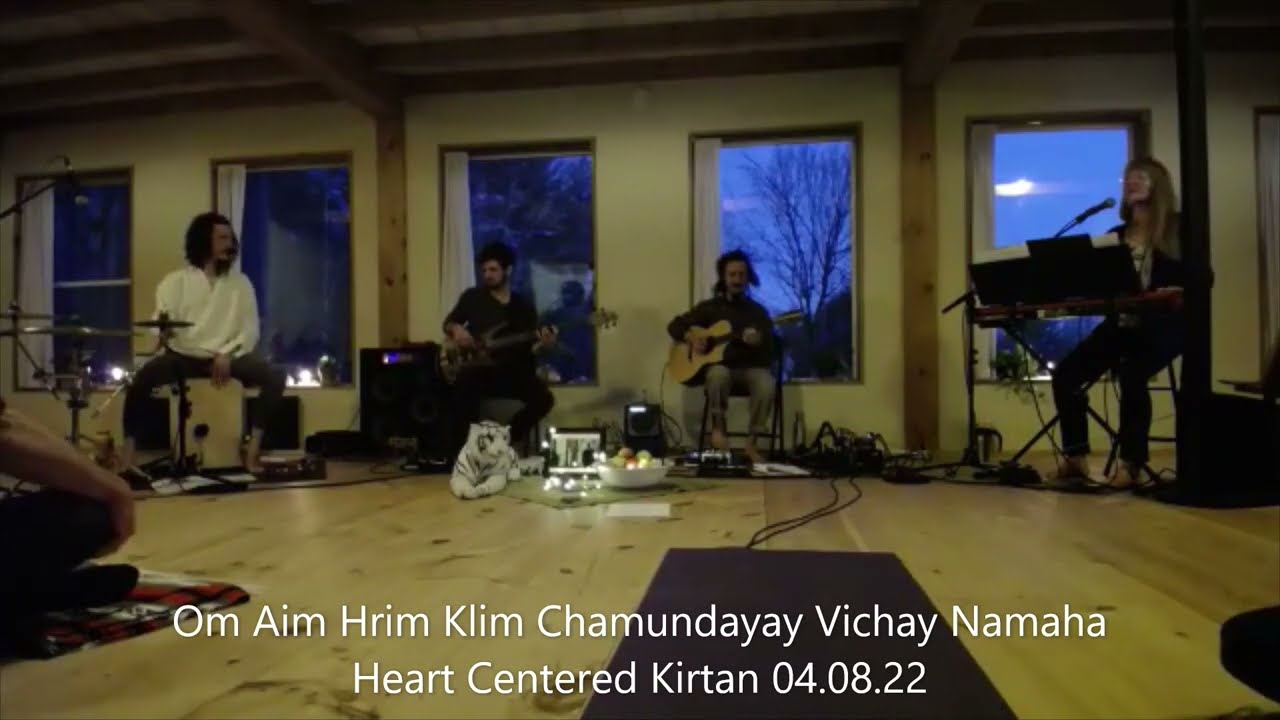
The musical arrangement is crucial to the practice. In the Heart-Centered Kirtan approach, instrumentalists provide harmonic support and rhythmic grounding, allowing participants to feel held and supported as they chant. The harmonium, a hand-pumped keyboard, establishes the melodic framework. The guitar adds warmth and accessibility, making the practice feel intimate rather than ceremonial. Bass provides depth and grounding, while percussion marks time and creates a subtle energetic pulse that unifies the group.
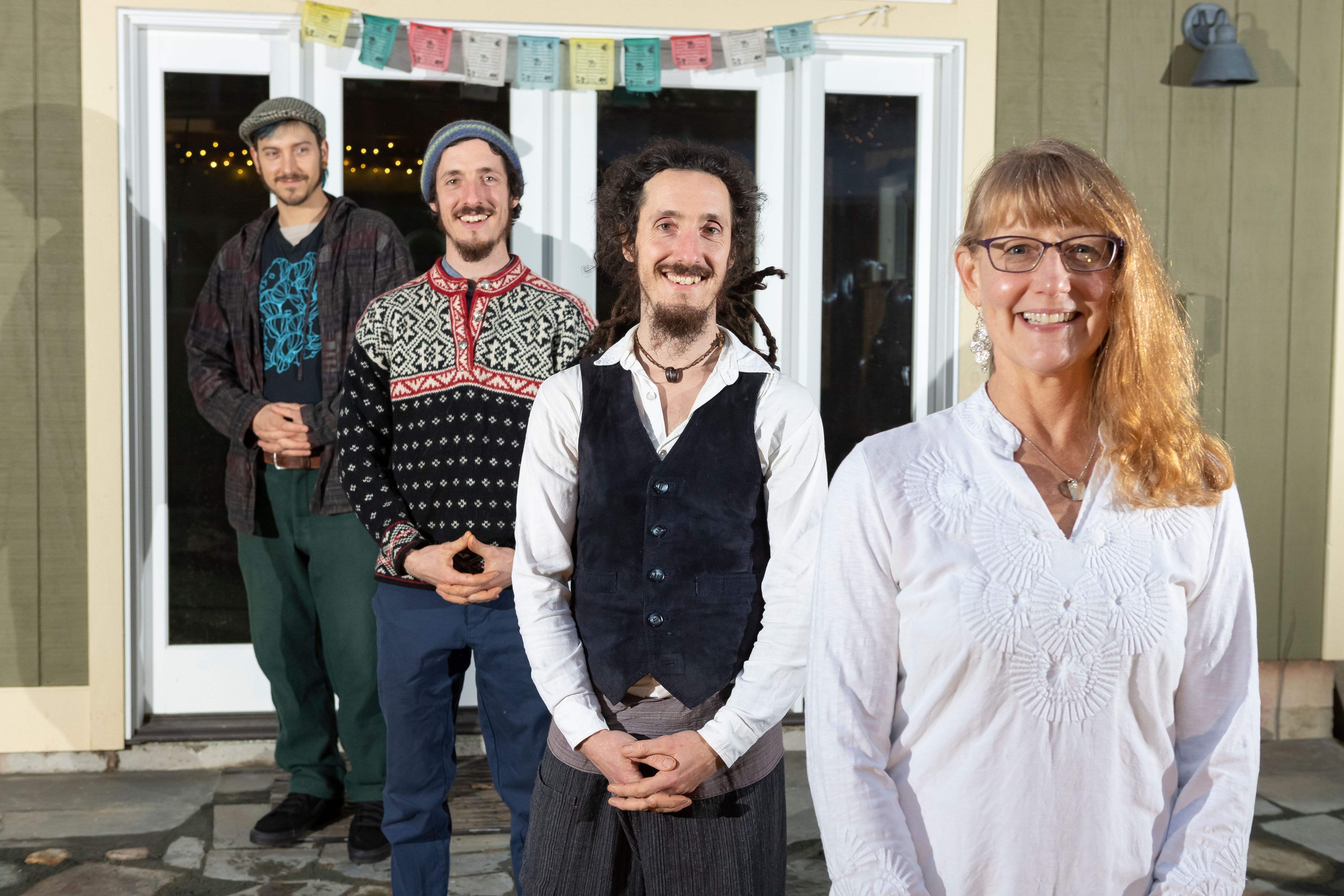
The live recording documented here—performed at Green River Yoga & Movement in Greenfield, Massachusetts, on June 24, 2019—captures this collaborative spirit, with Libby Volckening on harmonium and lead vocals, James Robinson on guitar, Thomas Matherly on bass, and Amanda Turk on percussion. Each musician is not merely accompanying the chant; each is actively participating in creating a container for spiritual deepening.
Heart-centered kirtan refers to an approach to chanting that prioritizes emotional sincerity, authenticity, and the felt experience of devotion over technical perfection or doctrinal correctness. Rather than focusing on proper Sanskrit pronunciation or adherence to rigid musical form, heart-centered kirtan invites participants to feel the mantra, to allow its vibrations to resonate in the chest, the seat of emotion and intuitive knowing.
In this approach, the goal is not to achieve a particular mental state or to accumulate spiritual merit through repetition. Instead, the practice asks: What does it feel like to call out to the divine? What opens in the heart when we collectively voice these names? Heart-centered kirtan honors the direct, emotional pathway to spiritual experience, treating the mantra as a vehicle for expressing longing, gratitude, joy, and surrender.
The Maha Mantra's structure is deceptively simple but profoundly effective. The sequence repeats the same sixteen syllables (counting all repetitions), but the variation in emphasis creates different energetic contours. "Hare Krishna Hare Krishna Krishna Krishna Hare Hare" moves through the names with an accelerating quality in the middle (Krishna Krishna), before settling back into Hare Hare. The second half, "Hare Rama Hare Rama Rama Rama Hare Hare," follows an identical rhythmic pattern but invokes a different divine presence.
This repetition is not mindless or monotonous in practice. Each cycle can deepen, each return to Hare can feel fresher, each invocation of Krishna or Rama can land differently depending on the intention, breath, and attention of the chanter. The mantra functions like a spiral, moving through the same territory but at deeper levels with each rotation.
In bhakti yoga traditions, the Hare Krishna Maha Mantra is regarded as a direct means of connecting with the divine consciousness. The mantra is not viewed as poetry or symbolism alone; it is understood as a living vibration, imbued with spiritual power. When chanted with sincerity, the mantra is believed to purify the heart, dissolve obstacles to spiritual awareness, and invite the presence of Krishna or the divine into one's consciousness.
For contemporary practitioners, particularly in Western yoga communities, the Maha Mantra serves multiple purposes. It offers a bridge to an ancient spiritual tradition while remaining accessible to beginners. It provides a container for collective spiritual practice in secular or interfaith settings. It offers rhythmic, sonic, and emotional tools for meditation and stress reduction. And for those with a devotional inclination, it becomes a genuine spiritual practice, a means of relationship with the divine rather than merely a wellness technique.
Chanting activates multiple systems simultaneously. The repetitive vocalization engages the parasympathetic nervous system, slowing the heart rate and activating the relaxation response. The rhythmic breathing synchronized with the mantra regulates the autonomic nervous system and creates a meditative state. The emotional resonance of calling out names invokes feelings of openness, vulnerability, and connection.
Neurologically, repetitive vocalization stimulates areas of the brain associated with emotional regulation and social bonding. When chanting occurs in a group, mirror neurons fire, creating a subtle neurochemical synchronization between participants. The vibrational frequency of the human voice, particularly at certain pitches sustained in chanting, may activate resonance in the chest and head cavities, creating a sensation of inner vibration that many practitioners describe as "heart opening."
Energetically, within yoga philosophy, the mantra is believed to activate chakras (energy centers), particularly the heart chakra (Anahata), associated with compassion, love, and spiritual awakening. The repeated invocation of divine names is thought to purify these centers and allow dormant spiritual energy to rise and unfold.
Music is not decorative in kirtan; it is structural and transformative. The harmonium's melody provides a focal point for attention; without it, the mantra can feel abstract or scattered. The guitar's harmonic progressions create emotional texture—major chords may feel bright and uplifting, while minor or modal variations create introspection or depth. The bass holds space, providing a gravitational center that allows participants to feel supported. The percussion creates a subtle pulse, a heartbeat that synchronizes the group and invokes the felt sense of life itself.
In a well-executed kirtan, musicians are not performing for an audience; they are co-creating an experience with participants. The musicians listen to the energy in the room, sensing when to build, when to simplify, when to hold space, when to invite more fullness. This responsiveness transforms kirtan from a rote repetition into an alive, evolving conversation with the divine.
One of the strengths of the Hare Krishna Maha Mantra and heart-centered kirtan practice is accessibility. The mantra requires no prior Sanskrit knowledge, no initiation, no belief system. A person can walk into a kirtan and participate fully in their first encounter. The simple call-and-response structure means newcomers can join without preparation. The emotional truth of calling out to something greater than oneself transcends cultural and religious boundaries.
In contemporary yoga studios, spiritual centers, and community gatherings, the Maha Mantra has become a widely recognized bridge practice—accessible enough for secular practitioners seeking meditation and community, yet deep enough for those pursuing genuine spiritual path.
If you are drawn to this practice, consider attending a live kirtan in your area or exploring recorded versions online. Notice what arises when you chant—emotions, sensations, images, or simply quietness. There is no "right" experience. Some practitioners feel devotional opening; others feel calm or empty. Both are valid. If you want to deepen your understanding, explore the philosophy of bhakti yoga and the tradition of Krishna consciousness. Read the Bhagavad Gita, particularly Krishna's teachings on devotion and divine love. If you resonate with the practice, consider establishing a personal chanting practice, even for ten or fifteen minutes daily. Many practitioners find that solo chanting opens different dimensions than group practice, allowing for more spontaneity and intimacy. Finally, trust the mantra—the tradition holds that the names themselves carry consciousness and will reveal their depths to sincere practitioners over time.