BrightStar

Parcourir tous les Events

Découvre des rassemblements conscients

events

Yoga
Meditation
Breathwork
Qigong
Tai Chi
Sacred Music
World Music
Medicine Music
Sound Healing
Ecstatic Dance
Destinations populaires
BaliSedonaLos AngelesCosta RicaNew YorkSan FranciscoAustinMiamiJoshua TreeTulum
Voir toutes les catégoriesVoir toutes les destinations

Explorer toutes les fonctionnalités

Des outils puissants pour développer tes événements

Fonctionnalités de la plateforme

Tarification dynamique intelligente
Catégories de billets
Places assignées
Récupération des paniers abandonnés
Récupération des visiteurs
Dons & Prix variables
Système d'affiliation
Scanner de billets
Codes promo
Questions personnalisées
Partage de billets
Ventes additionnelles & Options
Analyses & Rapports
Séquences d'emails
Liste d'attente / Notifier / Rappeler
Personnes & Lieux
Artists & TeachersEvent OrganizersVenues & StudiosKnowledge BaseGlossaryInspiration
Voir toutes les fonctionnalitésÀ propos
TarifsBlog
Language
Saved events
Parcourir tous les événements

events

YogaMeditationBreathworkQigongTai ChiSacred MusicWorld MusicMedicine Music

Destinations populaires

BaliSedonaLos AngelesCosta RicaNew YorkSan Francisco

Personnes & Lieux

Artists & TeachersEvent OrganizersVenues & StudiosKnowledge BaseGlossaryInspiration

Fonctionnalités de la plateforme

Tarification dynamique intelligenteCatégories de billetsPlaces assignéesRécupération des paniers abandonnésRécupération des visiteursDons & Prix variablesSystème d'affiliationScanner de billetsCodes promoQuestions personnaliséesPartage de billetsVentes additionnelles & OptionsAnalyses & RapportsSéquences d'emailsListe d'attente / Notifier / Rappeler
Voir toutes les fonctionnalitésÀ propos
TarifsBlog
ConnexionChercheursCréateurs
  • Parcourir tous les Événements
  • Pour les chercheurs
  • Yoga
  • Méditation
  • Breathwork
  • Qi gong
  • Tai-chi
  • Musique sacrée
  • Musiques du monde
  • Musique médecine
  • Soins sonores
  • Danse extatique
  • Retraites
  • Ateliers
  • Toutes les catégories →
  • Bali
  • Sedona
  • Los Angeles
  • Costa Rica
  • Tulum
  • Byron Bay
  • San Francisco
  • Austin
  • New York
  • San Diego
  • Denver
  • Seattle
  • Portland
  • Miami
  • Toutes les villes →
  • Join the Movement
  • Why we list
  • Sell Globally
  • Pour les créateurs
  • Pour les équipes
  • Pour les écrivains
  • Pour les enseignants
  • Pour les artistes de kirtan
  • Pour les studios
  • Pour les festivals
  • Pour les centres de retraite
  • Pour les associations
  • Ambassadeur de marque
  • Études de cas
  • Billetterie gratuite
  • Elevate
  • Amplify
  • Réseau de 500K+ acheteurs
  • Récupération des paniers abandonnés
  • Tarification dynamique intelligente
  • Catégories de billets
  • Événements récurrents
  • Places assignées
  • Système d'affiliation
  • Liste d'attente / Notifier
  • Scanner de billets
  • Widget intégrable
  • Diffusion d'événements
  • Messagerie
  • Intégrations
  • Rapports
  • Toutes les fonctionnalités →
  • À propos
  • L'écosystème
  • Blog
  • Glossaire
  • Inspiration
  • Centre d'aide
  • Contact
  • Documentation API
  • Ressources de marque
  • Carrières
  • Presse
  • Conditions d'utilisation
  • Politique de confidentialité

Événements

  • Parcourir tous les Événements
  • Pour les chercheurs
  • Yoga
  • Méditation
  • Breathwork
  • Qi gong
  • Tai-chi
  • Musique sacrée
  • Musiques du monde
  • Musique médecine
  • Soins sonores
  • Danse extatique
  • Retraites
  • Ateliers
  • Toutes les catégories →

Destinations

  • Bali
  • Sedona
  • Los Angeles
  • Costa Rica
  • Tulum
  • Byron Bay
  • San Francisco
  • Austin
  • New York
  • San Diego
  • Denver
  • Seattle
  • Portland
  • Miami
  • Toutes les villes →

Pour les créateurs

  • Join the Movement
  • Why we list
  • Sell Globally
  • Pour les créateurs
  • Pour les équipes
  • Pour les écrivains
  • Pour les enseignants
  • Pour les artistes de kirtan
  • Pour les studios
  • Pour les festivals
  • Pour les centres de retraite
  • Pour les associations
  • Ambassadeur de marque
  • Études de cas
  • Billetterie gratuite
  • Elevate
  • Amplify

Fonctionnalités

  • Réseau de 500K+ acheteurs
  • Récupération des paniers abandonnés
  • Tarification dynamique intelligente
  • Catégories de billets
  • Événements récurrents
  • Places assignées
  • Système d'affiliation
  • Liste d'attente / Notifier
  • Scanner de billets
  • Widget intégrable
  • Diffusion d'événements
  • Messagerie
  • Intégrations
  • Rapports
  • Toutes les fonctionnalités →

Entreprise

  • À propos
  • L'écosystème
  • Blog
  • Glossaire
  • Inspiration
  • Centre d'aide
  • Contact
  • Documentation API
  • Ressources de marque
  • Carrières
  • Presse
  • Conditions d'utilisation
  • Politique de confidentialité
BrightStar
© 2026 BrightStar. Tous droits réservés.
Inspiration

Approaching the Mystery of Aging and Death

Be Here Now Network
Be Here Now Network
May 5, 2025
7 min de lecture

Fear of suffering in old age and death drives much of our denial around mortality. Through work with the dying, meditation, and a willingness to see death as an exploratory adventure rather than a catastrophe, we can prepare ourselves psychologically and spiritually. This involves moving beyond the Western cultural valorization of linear, analytical thinking and opening to non-linear, intuitive modes of consciousness. Rather than resist the mystery of aging, we can approach it with the same curiosity and playfulness that spiritual explorers like Timothy Leary modeled.

Lecture · 6 sections

Why Do We Deny the Reality of Aging and Death?

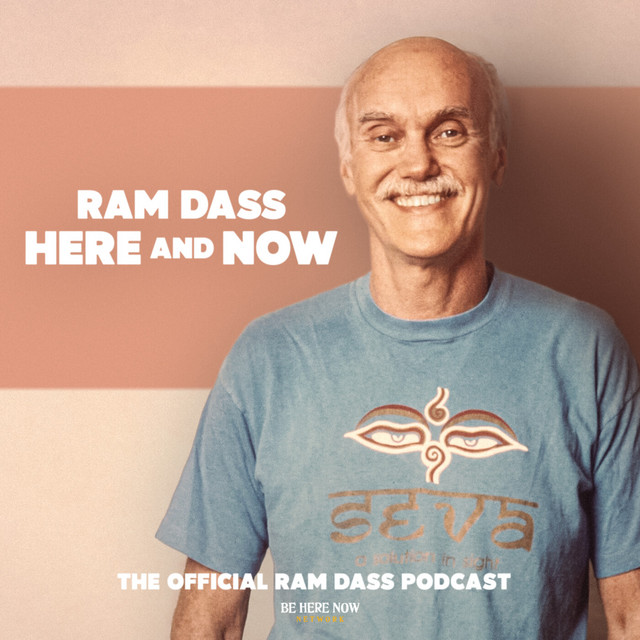
Fear of future suffering is one of the most universal human experiences, yet Western culture provides almost no healthy container for discussing or preparing for aging and mortality. According to this talk from Ram Dass's 1996 aging study group, we tend to respond to that fear with massive denial. Rather than acknowledge the inevitability of decline, illness, and death, most people push these thoughts away entirely—a coping mechanism that actually intensifies anxiety when we finally face these realities.

The core issue is anticipatory fear: we suffer not from what is actually happening now, but from mental projections about what might happen. A person in their 50s or 60s may feel fine physically but be tormented by imaginings of future pain, disability, or cognitive decline. This fear is rational—aging does bring losses—but the response of denial prevents us from doing the psychological and spiritual groundwork that could genuinely prepare us.

What Does Preparation for Death Actually Look Like?

Ram Dass's work with people who are severely ill or in the process of dying has given him a concrete model for what psychological preparation can accomplish. This is not morbid rumination but rather a systematic opening of consciousness to the reality of mortality. By spending time with the dying and listening to their fears, insights, and final acceptance, he has learned what kinds of spiritual and mental preparation actually reduce suffering when the moment comes.

The preparation involves several layers. First is the intellectual acknowledgment that aging and death are not aberrations or failures but natural processes. Second is emotional processing of the fears that arise—particularly the fear of losing one's capacities and dignity. Third is spiritual exploration of what persists beyond physical decline and death. This last layer is crucial because it directly counters the materialist narrative that says once the body fails, there is nothing left.

What Is the Fear of Losing Our Linear Mind?

One specific fear that emerges in preparation work is the terror of losing one's analytical and linear thinking capacity. In Western culture, the logical mind—the ability to think sequentially, solve problems, remember facts, and maintain a coherent narrative identity—is extraordinarily valued. We are trained from childhood that our worth depends partly on mental performance. The prospect of dementia, confusion, or cognitive decline thus feels not just inconvenient but identity-threatening.

However, Ram Dass points out that this valorization of linear thinking is culturally specific, not universal. Many spiritual traditions have long recognized that non-linear, intuitive, and even "mind-less" states of consciousness have profound value. Meditation reveals that there are states of awareness that don't require linear thought—states that can be peaceful, connected, and meaningful. By opening ourselves to non-linear thinking before we are forced to (whether through age, illness, or spiritual practice), we can make peace with the reality that we are not only our analytical minds.

This is not a denial of the real losses involved in cognitive decline. Rather, it is a shift in what we take to be essential about ourselves. If we identify only with the linear mind, its loss feels like annihilation. If we can touch other modes of consciousness—the simple awareness of breath, the felt sense of connection, the quiet presence underneath thought—then cognitive decline becomes a transition rather than a catastrophe.

How Did Timothy Leary Approach Death as an Adventure?

One of the most memorable elements of this teaching is Ram Dass's reflection on his old friend Timothy Leary, the legendary psychologist and psychonaut who embraced psychedelics and consciousness exploration for decades. When Leary was diagnosed with terminal cancer and approaching death, he didn't withdraw into denial or despair. Instead, he treated death as he had treated every other frontier of consciousness: as a glorious adventure to be explored with curiosity and even playfulness.

For Leary, death was not a problem to be solved or an enemy to be fought but a mystery to be entered into. This attitude allowed him to maintain creativity, humor, and a kind of spiritual openness even as his body was failing. Rather than asking "How do I avoid this?" he was asking "What is this? What will it teach me? How can I go into it consciously?" This reframing is not denial of the difficulty; it is a refusal to add psychological suffering on top of physical suffering.

Ram Dass suggests that we might all benefit from adding a touch of the "Leary Method" to our approach to aging and mortality. This means cultivating an explorer's mindset, even toward the unknown territory of death. It means recognizing that the adventure doesn't end when the body fails—it transforms. Whether one believes in continuation of consciousness after death or not, this attitude reduces the specific suffering that comes from resistance and fear.

How Does Spiritual Practice Prepare Us for These Realities?

While the talk emphasizes perspective shift and psychological openness, the underlying engine for this transformation is spiritual practice. Meditation and contemplative work are the primary tools that allow us to touch consciousness beyond the linear mind and to loosen our identification with the body and ego. Someone who has spent years in meditation has already developed a felt sense that awareness is larger than thought, that the self is not fixed, and that change and dissolution are the nature of existence.

This is why preparation for death is not merely intellectual—knowing that attachment causes suffering or that bodies are impermanent does not free us unless we have experientially verified these truths. Meditation creates that direct experience. It shows us, again and again, that thoughts arise and pass away, that sensations are impermanent, that there is a dimension of awareness that witnesses all change without being destroyed by it.

For those without a meditation practice, Ram Dass's work with the dying provides another doorway: witnessing how others navigate the threshold, hearing their wisdom in the final weeks of life, recognizing that there is something courageous and peaceful possible even in extremity. This witnessing can shift our imagined future from a nightmare of abandonment and pain to a possibility that holds both difficulty and grace.

Where to Go From Here

The practical implications of this teaching are both modest and radical. Modestly, it suggests that each of us might spend some time reflecting on our mortality—not obsessively, but regularly and honestly. What am I afraid will happen as I age? What losses feel most threatening? What parts of my identity feel fragile? These are not morbid questions but the beginning of real preparation.

More radically, it suggests that our culture desperately needs to reintegrate death awareness into the fabric of ordinary life. Rather than hiding aging people, pretending illness doesn't happen, and treating death as a medical failure, we might reclaim older wisdom traditions that saw aging and dying as sacred passages—opportunities for deepening, teaching, and conscious transition.

For anyone interested in this work, beginning or deepening a meditation practice is perhaps the most direct path. Spending time with elders, reading accounts of conscious dying, and engaging with spiritual teachers who have integrated mortality awareness into their lives all accelerate the process. And perhaps most importantly, approaching our own aging and the aging of those we love with curiosity rather than dread—treating it, as Timothy Leary did, as a mystery worth exploring.

Comments

Loading the conversation…

Be Here Now Network
ArtistBe Here Now Network

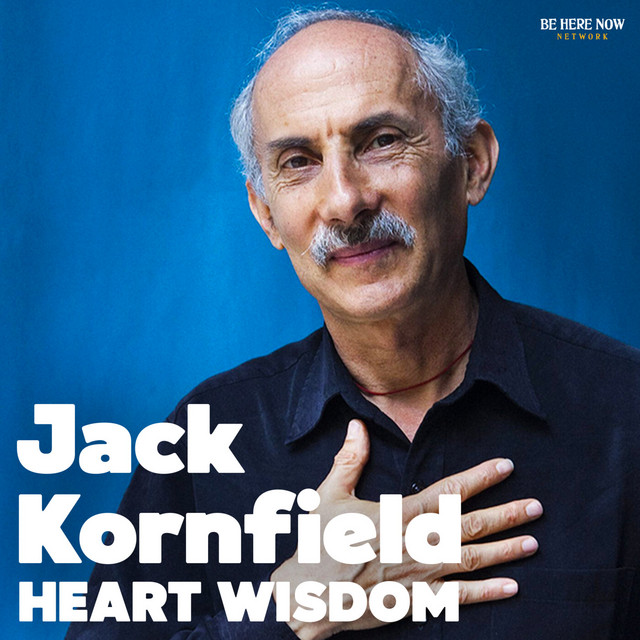
Be Here Now Network is the creator of Heart Wisdom with Jack Kornfield, a podcast exploring consciousness, spirituality, and personal transformation. With 313 episodes, they have c…

Voir le profilSite web
Explorer les thèmes
Aging-mortalityDeath-dyingFear-sufferingConsciousness-awarenessMeditation-practice

Des questions ?

Questions fréquemment posées

Rather than denial, the approach is to gradually open to mortality through meditation, witnessing others who are dying consciously, and shifting perspective from seeing death as catastrophe to seeing it as a transition or mystery. Developing awareness beyond the linear mind through spiritual practice also reduces identification with physical decline.
Leary treated his terminal illness as a conscious adventure to be explored rather than fought, maintaining curiosity and even humor. This 'Leary Method' reframes death as a frontier of consciousness rather than purely as loss, reducing the suffering that comes from resistance.
Linear, logical thinking is highly valorized in Western culture, making people identify their worth and identity with mental performance. Recognizing that non-linear states of consciousness (accessible through meditation) have value helps reduce the terror of cognitive decline in aging.
Witnessing how others navigate mortality, hearing their wisdom and acceptance in their final weeks, and recognizing that there is peace and courage possible even in extremity shifts our imagined future from nightmare to possibility that holds both difficulty and grace.
Denial pushes away acknowledgment of mortality entirely, which actually intensifies anxiety and prevents psychological preparation. Thoughtful reflection on mortality—what we fear will happen, what losses feel threatening—is the beginning of genuine preparation.
Meditation shows directly through experience that awareness is larger than thought, that the self is not fixed, and that change is the nature of existence. This loosens identification with body and ego, making the prospect of death less identity-threatening.

Continuer la lecture

More from Be

Voir tout
Your Life as Preparation for Dying: Lessons from Banaras
Inspire

Your Life as Preparation for Dying: Lessons from Banaras

Ram Dass recalls the burning ghats of Varanasi, a devotee's vision at his guru's death, and Huxley's last words on letting go. Here is what …

1 min read
Dying as Spiritual Awakening: Lessons from a 1976 Retreat Talk
Inspire

Dying as Spiritual Awakening: Lessons from a 1976 Retreat Talk

A 1976 retreat talk, now released as Here and Now Ep. 314, uses stories of Maharaj-ji, a dying student, and Varanasi to reframe death as an …

1 min read
Stories as Medicine: How Compassion Heals Division and Builds Connection
Inspire

Stories as Medicine: How Compassion Heals Division and Builds Connection

In this profound exploration of human connection, renowned spiritual teacher Jack Kornfield reveals how stories serve as medicine for our di…

1 min read
Walking the Tightrope: How to Serve Both Heaven and Earth Without Losing Your Balance
Inspire

Walking the Tightrope: How to Serve Both Heaven and Earth Without Losing Your Balance

Ram Dass reveals the spiritual challenge of our time: staying connected to divine consciousness while remaining present to human suffering a…

1 min read

Continue d’explorer

Poursuis ton chemin

Plus de sagesse et de rassemblements dans tout l’annuaire BrightStar.

Plus d’articles

Parcours toute la bibliothèque d’enseignements, d’entretiens et de guides.

Retour à tous les articles →

Enseignants et artistes

Découvre les lignées, les musiciens et les guides du monde conscient.

Explorer les artistes →

Trouver un événement

Kirtan, retraites, bains sonores, breathwork, festivals — bientôt près de chez toi.

Parcourir les événements →