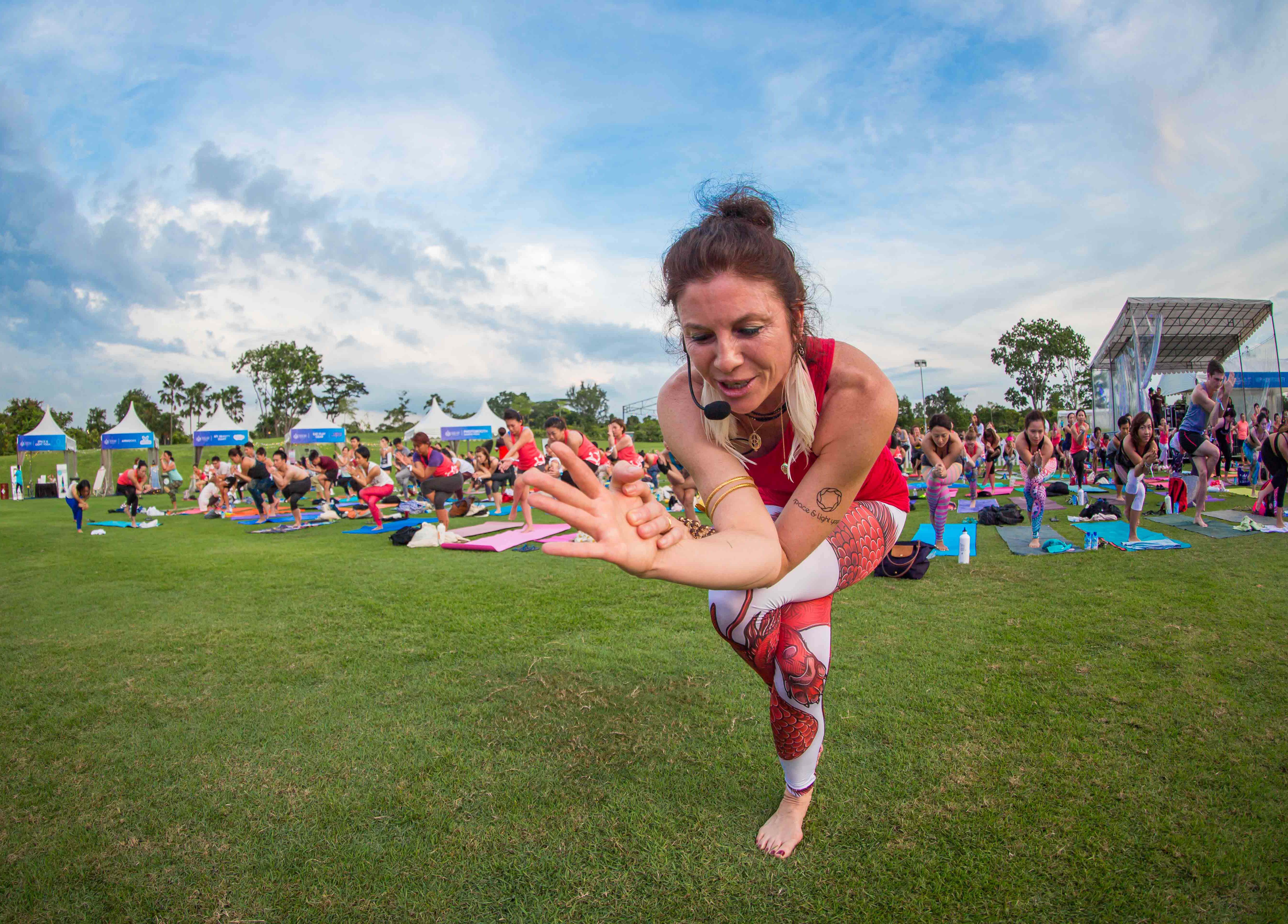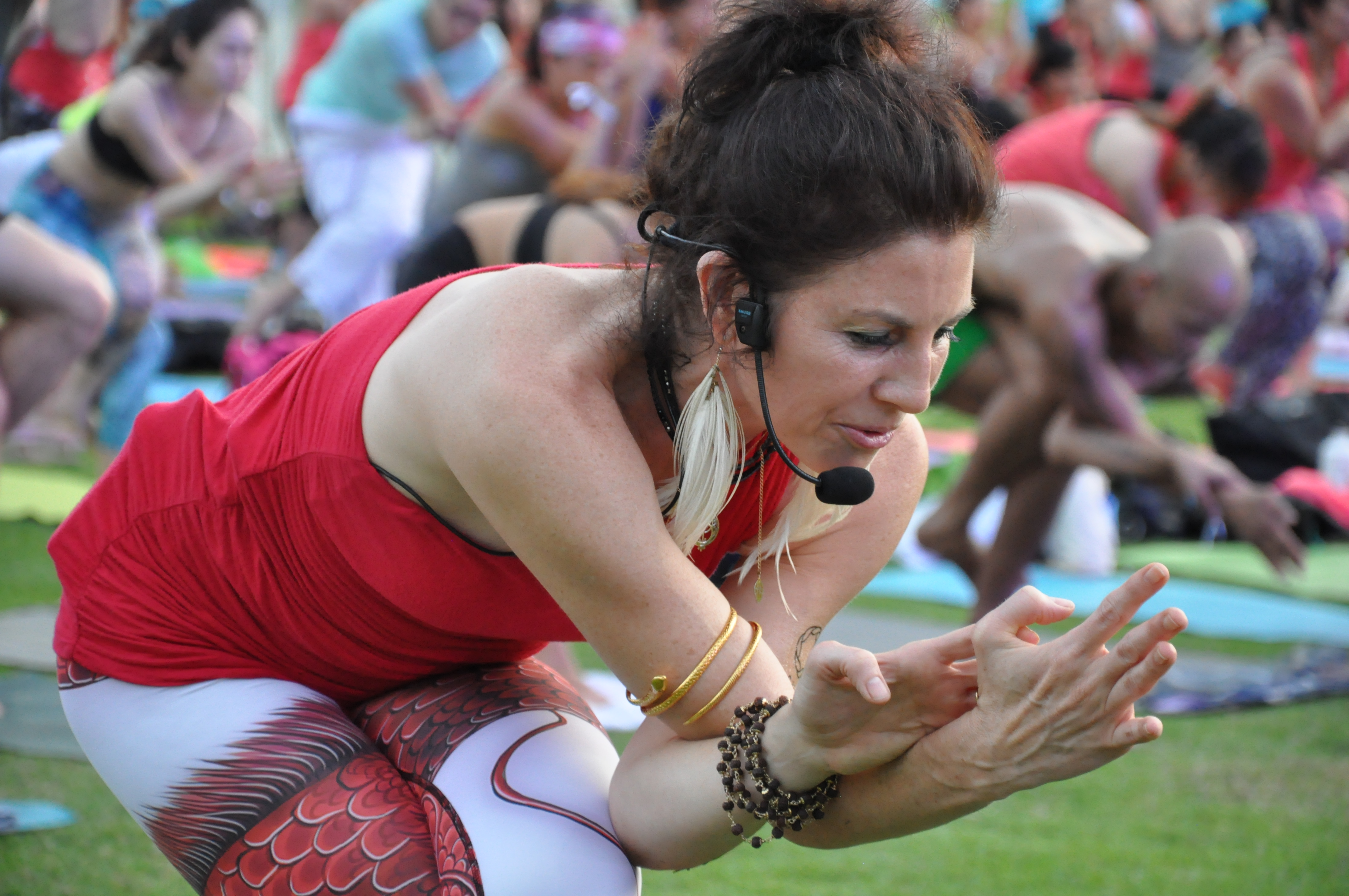

Sianna Sherman came to yoga not as a birthright, but as a discovery—one reached after years of exploring movement and contemplative practices. Her background in dance and somatic movement would later become the foundation for her distinctive approach to sequencing and alignment, a synthesis of the physical and the philosophical that defines her teaching today. Eventually, she committed to formal study with teachers rooted in Tantric and bhakti yoga traditions, training extensively in both India and the United States. It was this immersion in classical lineages, paired with her embodied understanding of the body in motion, that set the course for her life's work.
Sherman's core contribution to contemporary yoga culture is the creation and cultivation of Rasa Yoga Collective, an organization built not around celebrity or brand, but around sustained study, mentorship, and community. Founded to bring together students and teachers in deeper relationship, the Collective operates outside the typical transactional model of yoga workshops and weekend trainings. Instead, it offers retreats, multi-week immersions, and teacher trainings designed for long-term transformation rather than quick credentialing.
The name itself—Rasa—carries weight. In Sanskrit aesthetic theory, rasa refers to the essence or emotional flavor of an experience, the ineffable quality that arises when technique meets devotion. Sherman's teaching embodies this principle, blending rigorous technical training with a devotional sensibility that honors yoga's roots as a spiritual practice, not merely a fitness regime.
Her approach integrates vinyasa flow with mantra, pranayama, and the study of foundational texts such as the Bhagavad Gita and the Yoga Sutras. This is yoga as a complete system: physical, philosophical, and devotional. It's a model that asks students to engage not just with poses, but with the ideas and practices that gave rise to them.
Sherman has built her practice around international instruction, carrying her work to studios, retreat centers, and festivals across a remarkable geographic span: India, Colombia, the United States, Sweden, Denmark, England, Turkey, Mexico, Germany, and the Bahamas. This isn't the itinerary of a touring personality, but of a teacher committed to meeting students where they are—literally and metaphorically.
Her mobility reflects a broader ethos: yoga as a living tradition that crosses borders and adapts to context without losing its integrity. Whether teaching in a Balinese retreat center or a Scandinavian studio, Sherman maintains the thread of classical lineage while remaining responsive to the cultural moment and the students in the room.
Central to her legacy are the 200-hour and 300-hour teacher trainings recognized by Yoga Alliance. These programs have become incubators for a generation of teachers who now lead classes in studios and wellness centers worldwide. But Sherman's trainings stand apart for their emphasis on philosophical underpinnings and ongoing mentorship, not just certification.
Her work centers on accessibility across the full spectrum of practice. Beginners seeking foundational alignment find entry points; experienced teachers arrive to refine their craft and deepen their understanding of the tradition. This dual focus—honoring both the novice and the adept—is rare in an industry often segmented by skill level and marketing demographic.
The Rasa Yoga Collective model prioritizes community and sustained connection over one-off workshops. It's a counter-narrative to the fast-consumption culture of wellness, asking students and teachers alike to commit to a longer arc of learning.
Sherman's classes are known for their attention to alignment and sequencing—the legacy of her movement background. But technique is always in service of something larger. Her integration of mantra and pranayama creates a multidimensional practice, one that engages body, breath, mind, and spirit in concert.
This holistic framework draws from classical yoga lineages, particularly Tantric and bhakti traditions, which view the body not as something to transcend but as a vehicle for awakening. In Sherman's hands, vinyasa becomes a moving meditation, each transition an opportunity for awareness and devotion.
In an era when yoga has been both commodified and critiqued, Sherman represents a steadier path. She reaches students hungry for substance, for practices rooted in tradition but alive to contemporary life. Her audience includes those disillusioned with the superficiality of boutique fitness yoga, as well as serious practitioners seeking depth and lineage.
She matters because she holds a center. She honors the Indian origins of the practice while teaching it skillfully across cultures. She builds community without cult of personality. She insists that yoga is more than asana, more than wellness, more than brand—that it remains, at its core, a transformative discipline capable of awakening wisdom and compassion.
Today, Sherman continues to teach internationally, lead teacher trainings, and expand the reach of Rasa Yoga Collective. Her work remains rooted in the principles that have always guided it: technical excellence, philosophical depth, devotional heart, and the belief that yoga is best transmitted through relationship and sustained practice.
In a fragmented world, she offers continuity. In a hurried culture, she offers immersion. And in an industry often marked by trend and transaction, she offers something increasingly rare: lineage, integrity, and the long, slow work of transformation.