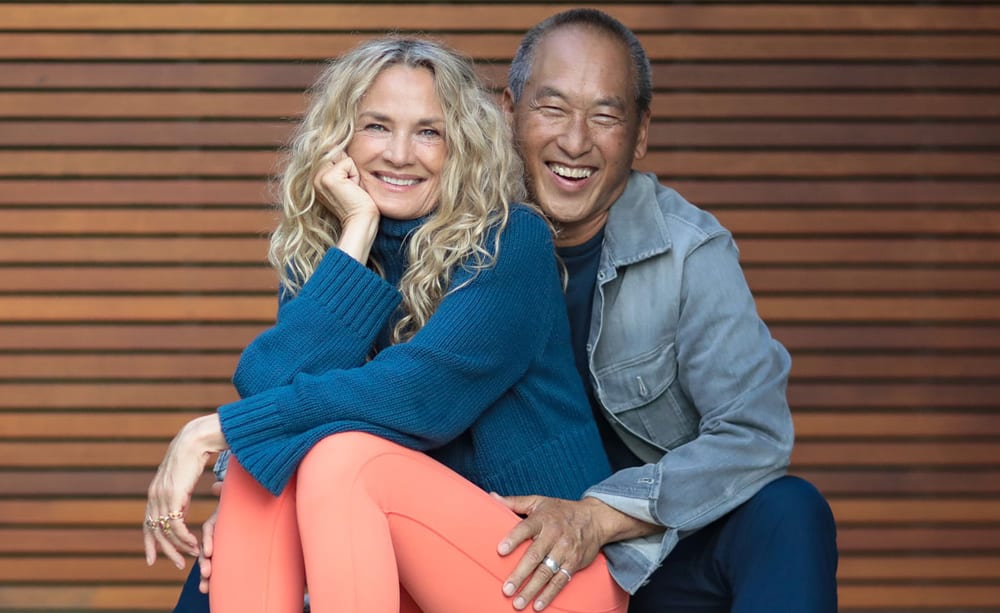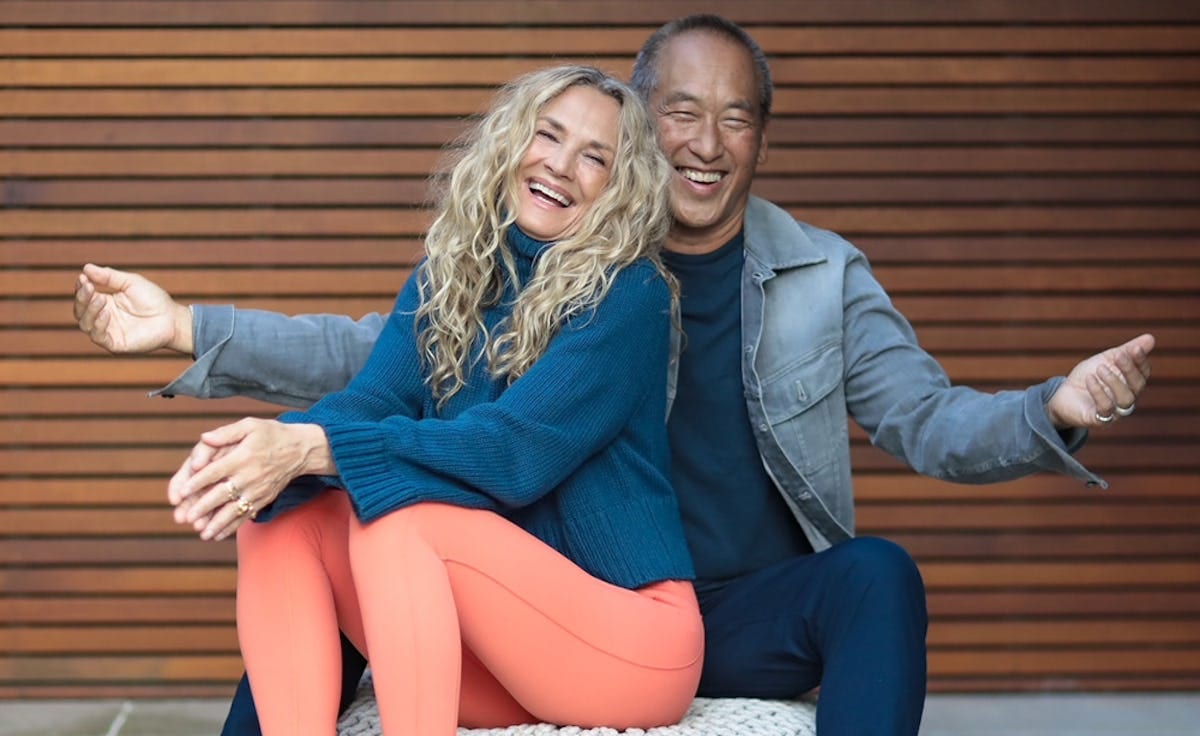

Colleen Saidman Yee is a yoga teacher, author, and retreat leader, and the founder of Yoga Shanti, a studio in Sag Harbor, New York. The studio describes her as a world-renowned teacher. That phrase comes from her own institution rather than from independent press or awards, and it is worth saying so plainly. Her standing rests less on citations than on the sustained work itself: a studio, a method, a body of teacher trainings, and a published account of her life.
What distinguishes Colleen Saidman Yee is a particular balance. She works within two of the most influential lineages in modern yoga, Iyengar and Ashtanga, while insisting that the practice answer to the people actually standing on the mat today. It is a conservative instinct paired with a practical one, and it shapes nearly everything she teaches.
The public record available here does not document Colleen Saidman Yee's hometown, early years, or the specific events that first drew them to yoga. Rather than guess, it is more honest to point readers toward the one source that addresses the question directly: the autobiography Yoga for Life: A Journey to Inner Peace. The book is the most personal account of how Colleen Saidman Yee arrived at this work, and it is where anyone curious about the origins of the teaching should begin.
What can be said is that the path led to the founding of Yoga Shanti and to a long collaboration with Rodney Yee, Colleen Saidman Yee's husband, with whom the studio's method was developed.
The core of Colleen Saidman Yee's contribution is the Yoga Shanti method, developed together with Rodney Yee and a group of tenured teachers. The method honors the traditions of yoga while attending to the needs of modern, western bodies and minds. It is rooted in the Iyengar and Ashtanga traditions, and the classes, workshops, and trainings are meant to stay innovative and responsive as the culture changes.
Those two roots are distinct in character. Iyengar yoga, named for B.K.S. Iyengar, is known for precise alignment, careful sequencing, and the use of props so that poses can be held safely over time. Ashtanga yoga, associated with Pattabhi Jois, is built on a set sequence of postures linked by breath and a steady, progressive structure. Yoga Shanti takes what it values from each and adjusts it for contemporary students, which is why it reads as innovative without being untethered from its sources.
The studio describes the result as one of the most welcoming, uplifting, and safest styles of yoga to practice, with a place for anyone willing to step onto a mat. Its classes serve people from beginners to senior teachers, and from the most agile to the most fragile. That range is a structural commitment rather than a slogan. Safety, access, and adaptation recur across classes, trainings, and retreats.
Colleen Saidman Yee's work takes several forms, which makes it less dependent on any single format.
Teacher training. Colleen Saidman Yee teaches alongside Rodney Yee in yoga teacher trainings, including a 300-hour advanced program. The trainings are where the method is passed on, and they are aimed at serious practitioners who want more than a surface understanding of hatha yoga.
Retreats. Colleen Saidman Yee leads retreats with Rodney Yee and also leads an annual women's retreat of their own. The retreat format extends the studio's principles into a longer, more immersive setting.
Writing. Yoga for Life: A Journey to Inner Peace is an autobiography, and it is the only book listed for Colleen Saidman Yee here. It is a narrative rather than a technical manual, so students seeking sequences are better served by classes and workshops. Its value lies in showing how a teacher working within disciplined traditions thinks about the relationship between rigor and ease.
Colleen Saidman Yee continues to teach from the Sag Harbor base while traveling for retreats and workshops. The current listings include the Menla Retreat and Dewa Spa in Phoenicia, New York, on October 30, 2026; two listings at the Kripalu Center for Yoga & Health in Stockbridge, Massachusetts, on January 29, 2027; and an appearance at the Lula Hotel in Tulum on March 3, 2027, a rare international stop. As with any retreat schedule, dates can shift, and the studio's website, yogashanti.com, is the dependable place to confirm details.
There is also a small Spotify presence, with roughly three thousand followers, but no verified release listings accompany it. The work is best encountered in person or on the page, not through recordings.
Yoga in the West has often swung between athletic spectacle and loosely defined wellness. Colleen Saidman Yee occupies a steadier position. The audience is students who want a structured, safety-minded approach rather than a trend-driven one: newcomers who have never practiced, long-time students looking for depth, and aspiring teachers ready for an advanced training. The method's insistence that the fragile belong in the same room as the agile is perhaps its most meaningful cultural statement.
It is equally clear who the work is not for. Those seeking a heated, high-intensity, or music-driven workout, or a practice centered on extended chanting and ritual, will likely find the pacing measured and the emphasis instructional. Geography is a practical limit too, since the flagship studio is in Sag Harbor and study elsewhere depends on scheduled retreats and workshops.
Serious practitioners tend to judge a teacher by consistency over time, and that is the fairest measure here. Colleen Saidman Yee's legacy, so far, is a method that treats yoga as a long practice of adjustment: honoring a tradition, listening to the body in front of it, and building teachers who can carry the work forward.