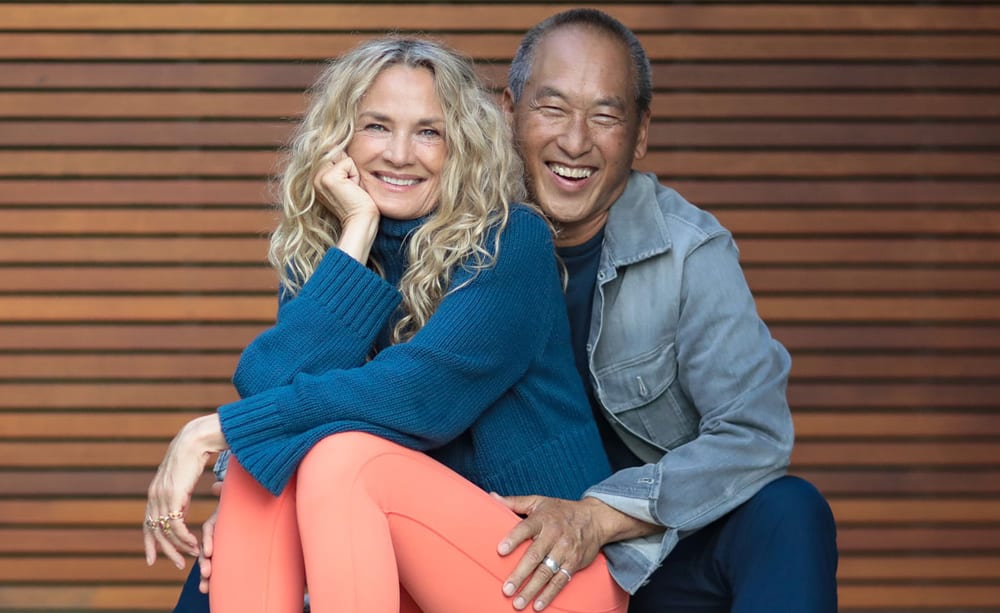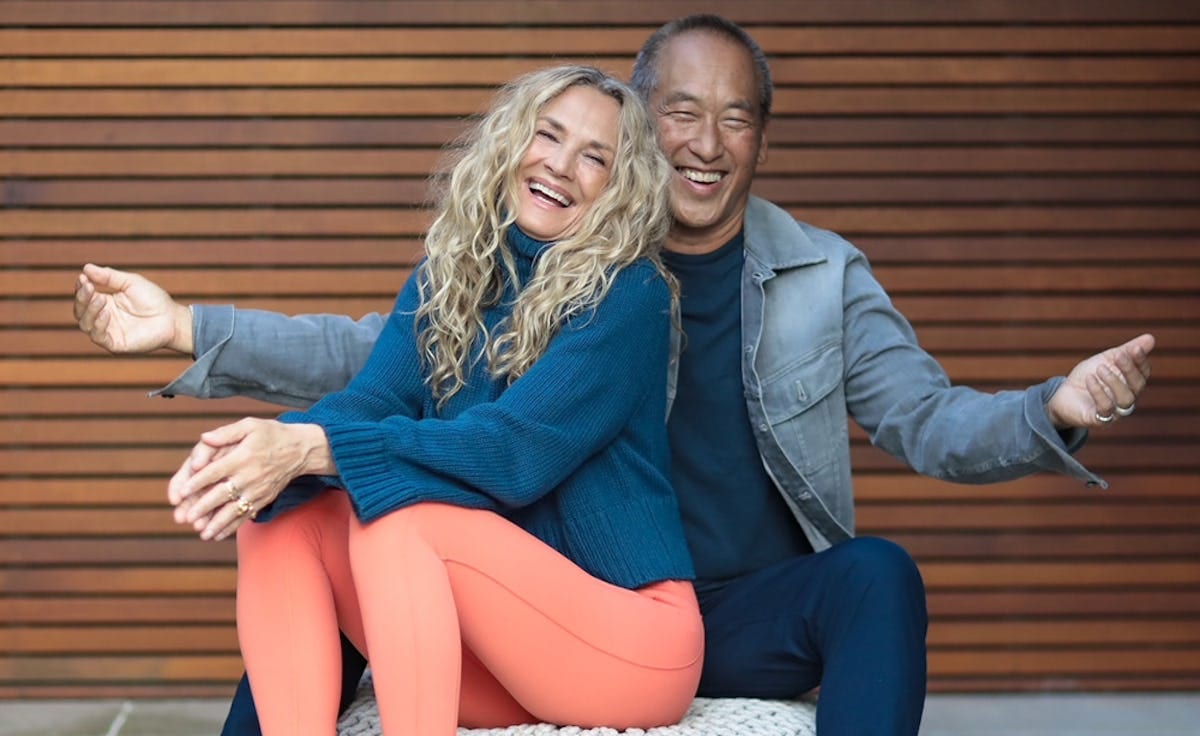

Colleen Saidman Yee is a yoga teacher, author, and retreat leader, and the founder of Yoga Shanti, a studio in Sag Harbor, New York. The studio calls Colleen Saidman Yee a world-renowned teacher. That claim comes from the studio itself, and the profile on record lists no independent awards or press coverage. What can be assessed is the work: a method, a body of trainings, a set of retreats, and one autobiography. This profile takes the stated principles seriously and says plainly where the record goes quiet.
The Yoga Shanti method, developed with Rodney Yee and tenured teachers, sets the terms for what a session feels like. The studio describes its classes as welcoming, uplifting, and safe, and that stated priority shapes the room more than any particular sequence does. Alignment is central, and sessions have a clear progression. Students at mixed levels are expected to share a class, with the teaching adjusting to individual bodies rather than imposing one ideal shape.
Expect a measured pace. Nothing on record suggests a fast, athletic, or heat-driven experience, and newcomers should not look for one. The studio says its classes serve people from beginners to senior teachers, and from the most agile to the most fragile. That is a wide claim, and it implies a teacher who must keep several levels of ability in view at once.
Beyond the studio, Colleen teaches with Rodney Yee in yoga teacher trainings, including a 300-hour advanced program, and leads retreats with him. There is also an annual women's retreat led by Colleen alone. These longer formats extend the same priorities of safety, adaptation, and inclusion into residential settings. The profile does not describe specific sequences or the daily rhythm of a retreat, so anything more granular would be guesswork.
Three themes recur across the material. The first is that a tradition should be honored while staying responsive to the people practicing it now. The method is described as rooted in Iyengar and Ashtanga yet innovative, attentive to what the studio calls the needs of modern, western bodies and minds.
The second is access. Inclusion is presented as a structural commitment: a place for anyone willing to step onto a mat. The third is safety, which runs through classes, trainings, and retreats as a concern for sustainable practice rather than a single peak experience. The trainings add a fourth, quieter theme: producing teachers who can carry the method forward.
The record contains no quoted prompts or recorded teaching questions, and none should be invented. What can be inferred from the stated principles is limited to the questions the method itself raises. How do you honor a discipline without freezing it? What does a pose ask of this particular body, rather than an idealized one? What does practice look like if it has to last decades instead of a season? The autobiography's subtitle, A Journey to Inner Peace, points to a further question: whether inner peace is a practical goal or an abstraction. These are readings of the method, not reported quotations.
Here the evidence is thin. The profile says nothing about humor, silence, storytelling, or scripture in Colleen's classes, so claims about any of them would be unsupported. What can be said is that the stated aesthetic is calm, precise, and conservative in its priorities: welcome and safety come first, and the classes may still feel fresh. Students who value attention to alignment tend to describe such a room as precise and calm, while those who want intensity may find it measured. The autobiography is the most personal source, a narrative about how Colleen came to this work, and readers wanting the voice behind the method should start there. It is not a technical manual, and it is not a source of sequences.
The teaching suits students who want a structured, safety-minded approach rather than a trend-driven one, and beginners who want to be received without a performance of fitness. It also suits serious practitioners who judge a teacher by consistency over time, and those drawn to the 300-hour training, which assumes considerable prior experience and commitment.
It is a poor fit for people who want a high-intensity, heat-driven, or music-heavy workout, who may find alignment, props, and breath-linked sequencing slow. Students seeking primarily devotional practice, with extended chanting or ritual, will likely find the approach more physical and instructional than expected. Those who want a loud, trend-driven atmosphere will find a calmer room. Geography is a real limit too: the flagship studio is in Sag Harbor, and study elsewhere depends on scheduled retreats and workshops. The current listings include Menla Retreat and Dewa Spa in Phoenicia, New York (October 30, 2026), Kripalu Center for Yoga & Health in Stockbridge, Massachusetts (January 29, 2027), and the Lula Hotel in Tulum (March 3, 2027). Dates can change, so confirm through yogashanti.com.
The bio states one affiliation: the method is rooted in the Iyengar and Ashtanga traditions. Iyengar yoga is known for precise alignment, careful sequencing, and the use of props. Ashtanga is built on a set sequence of postures linked by breath. Yoga Shanti takes what it values from both and adjusts it for contemporary students, which is why it reads as innovative rather than strictly orthodox. The bio names no individual teacher or guru for Colleen, and none should be assumed. Beyond these two traditions, the profile claims only the broader field of hatha yoga.
This is a steady, conservative teaching project that puts longevity ahead of novelty. Its strengths are a clear set of principles and a ladder from beginner classes to advanced training. Its limits are equally clear: much of the praise is self-described, the delivery is poorly documented, and the one book is an autobiography rather than a teaching text. Judge it by attending, and by whether the stated promise of safety and welcome holds up in the room.