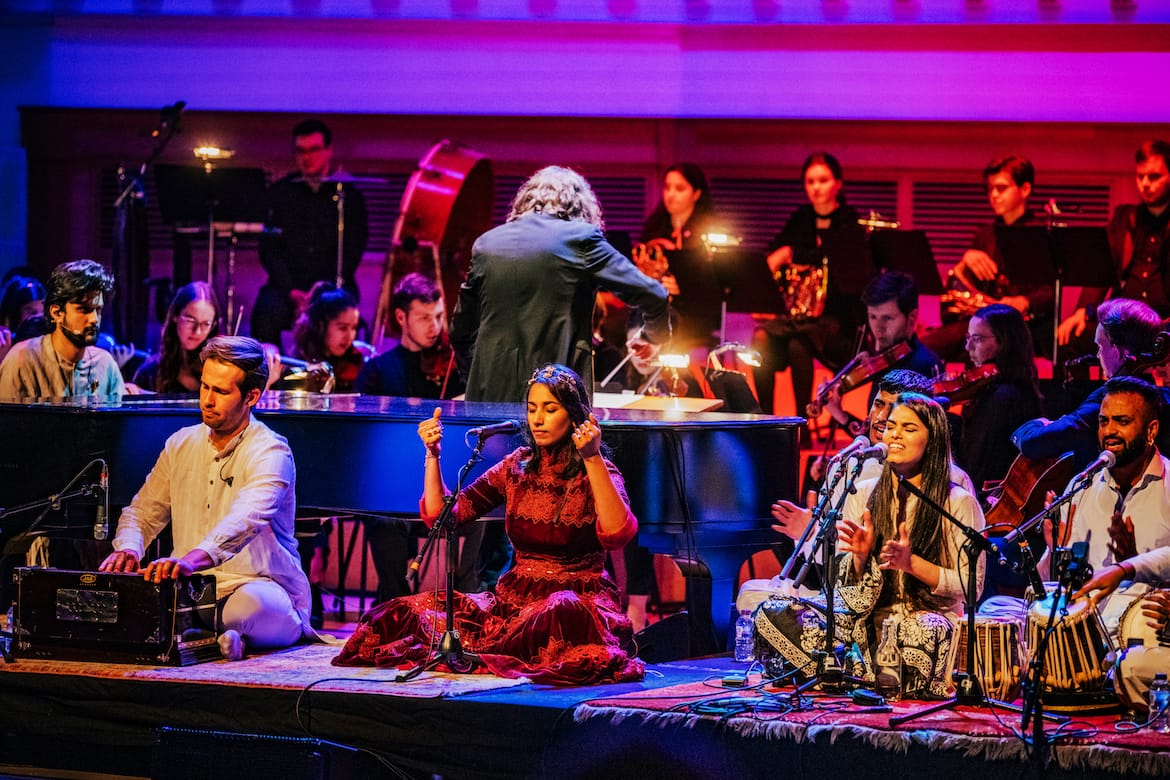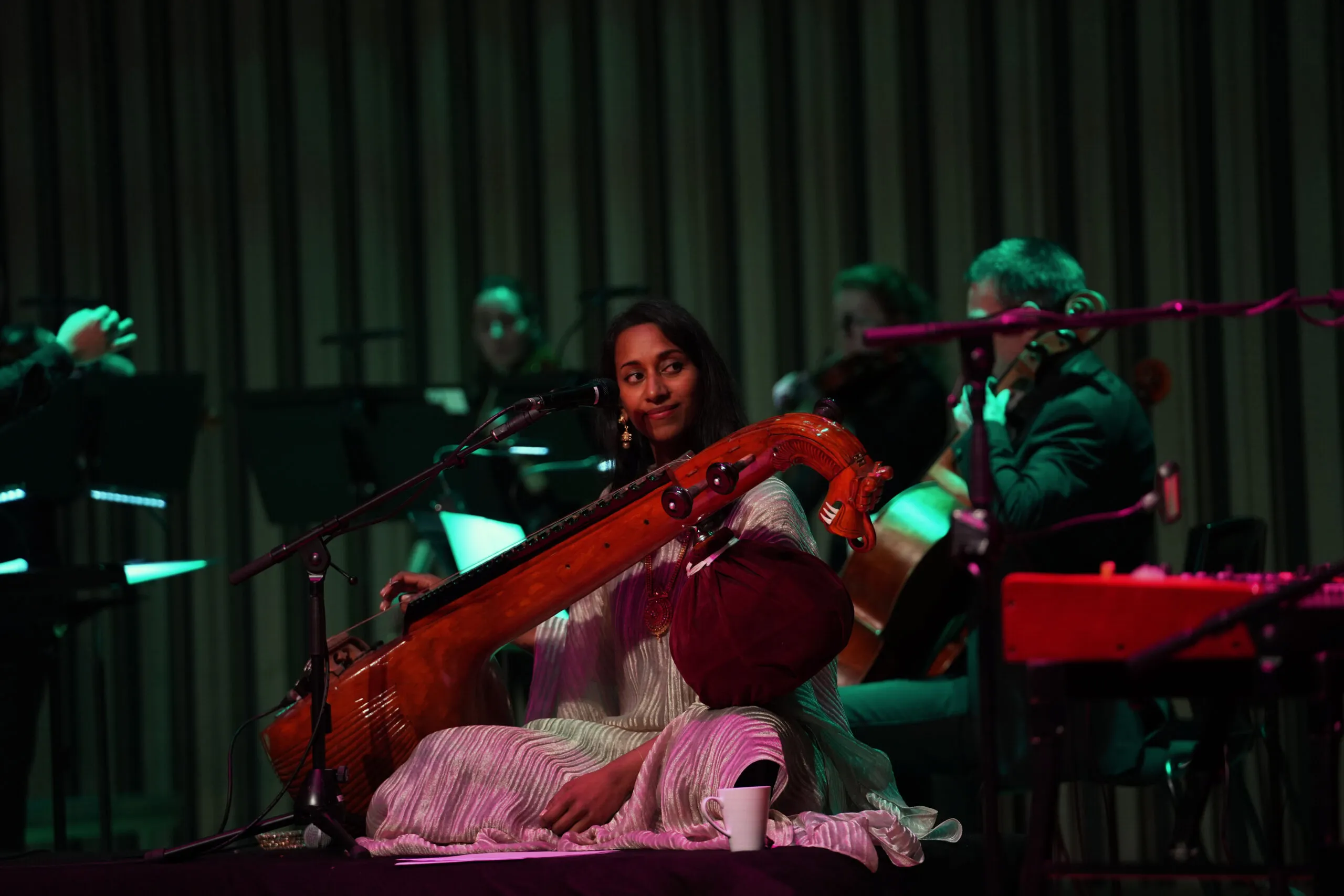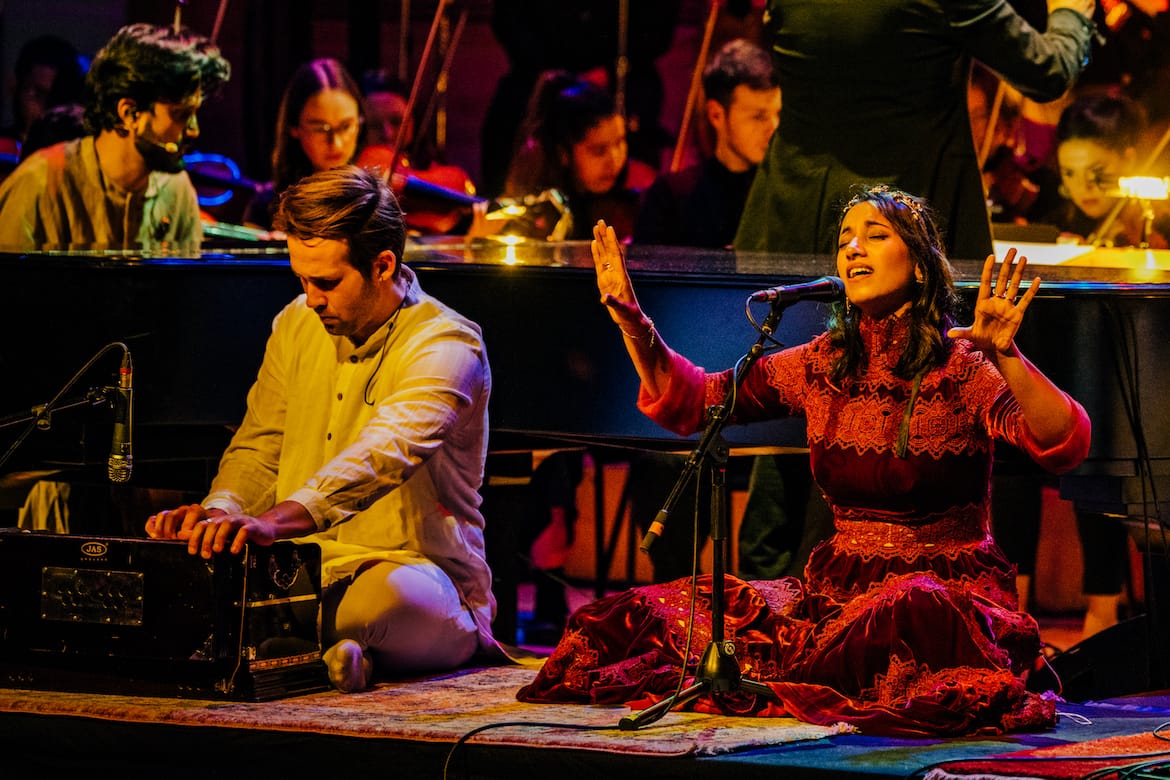

Start Here: The Orchestral Qawwali Project at Royal Albert Hall
Your single best entry point is catching a live performance by the Orchestral Qawwali Project at the Royal Albert Hall, where Abi Sampa serves as a core vocalist. If you can't attend in person, seek out recordings or video from these residency performances. This is qawwali at its most accessible for Western listeners—the full orchestral backing provides a familiar sonic framework while Sampa's voice carries the centuries-old devotional tradition forward. You'll hear string sections swelling beneath call-and-response vocals, brass punctuating the repetitive poetic verses that define qawwali, and Sampa's classically trained voice navigating the intricate melodic ornamentation that makes this music transcendent rather than merely pretty.
The orchestral context matters. Traditional qawwali can feel impenetrable to newcomers—the shrines and dargahs where it's historically performed carry cultural and spiritual contexts you might not have keys to unlock. The Orchestral Qawwali Project gives you a bridge: Western harmonic structures you already understand supporting a vocal tradition you're just beginning to discover.
After that first encounter, move in two directions. First, attend another Orchestral Qawwali Project performance if possible—qawwali is designed to induce spiritual states through repetition and accumulation, and a single hearing barely scratches the surface. Second, seek out Sampa's solo performances at Royal Albert Hall, where her classical singing training comes forward and you can hear how she approaches traditional qawwali repertoire with fewer orchestral embellishments. Third, educate yourself on traditional qawwali—not Sampa's work yet, but the centuries-old form itself—so you understand what she's translating and what she's preserving.
Expect intensity, not prettiness. Qawwali aims for spiritual ecstasy, and Sampa's voice serves that purpose. The repetition will strike you first—phrases cycling back, building, the call-and-response creating a trance-like insistence. The orchestral elements add drama and sweep, but they're not there to make the music "easier." They expand the emotional range, giving the devotional core more colors to work with.
You might find yourself moved without understanding why. That's intentional. Qawwali operates on your nervous system before your intellect.
Beginners often mistake the Orchestral Qawwali Project for fusion in the superficial sense—world music dressed up for crossover appeal. That fundamentally misreads the project. This isn't qawwali watered down; it's qawwali given new harmonic architecture while maintaining its devotional intensity. The orchestration isn't decoration; it's a serious expansion of what the form can carry.
Others assume that because Sampa has classical training, her qawwali will be "refined" or restrained. Wrong again. Classical technique gives her more control over the ornamentation and breath support required for the extended vocal flights qawwali demands. It makes her more effective at the tradition's core purpose, not less.
Sampa's work tends to hit during transitions—spiritual questioning, cultural displacement, moments when you're between identities or worldviews. The hybrid nature of the Orchestral Qawwali Project mirrors that in-between state. It also lands for listeners recovering from burnout, especially the kind caused by contemporary culture's relentless novelty. Qawwali's repetitive structure and devotional focus offer an antidote: depth through return, meaning through insistence.
If you're exploring South Asian heritage from a distance, or if you're a Western listener who's exhausted by irony and searching for music that takes transcendence seriously, Sampa's work will find you where you are.
Day 1-2: Attend or watch an Orchestral Qawwali Project performance. Don't analyze, just receive.
Day 3: Read about qawwali's history—its Sufi roots, its function at shrines, its relationship to inducing spiritual states.
Day 4-5: Listen to traditional qawwali recordings to understand what Sampa is working from.
Day 6: Attend a second Orchestral Qawwali Project performance or one of Sampa's solo appearances at Royal Albert Hall. Notice what's different in your listening now.
Day 7: Sit with what you've absorbed. Qawwali isn't background music. Let it work.