BrightStar

Parcourir tous les Events

Discover conscious gatherings

events

Yoga
Meditation
Breathwork
Qigong
Tai Chi
Sacred Music
World Music
Medicine Music
Sound Healing
Ecstatic Dance
Destinations populaires
BaliSedonaLos AngelesCosta RicaNew YorkSan FranciscoAustinMiamiJoshua TreeTulum
Voir toutes les catégoriesVoir toutes les destinations

Explorer toutes les fonctionnalités

Des outils puissants pour développer vos événements

Fonctionnalités de la plateforme

Tarification dynamique intelligente
Catégories de billets
Places assignées
Récupération des paniers abandonnés
Récupération des visiteurs
Dons & Prix variables
Système d'affiliation
Scanner de billets
Codes promo
Questions personnalisées
Partage de billets
Ventes additionnelles & Options
Analyses & Rapports
Séquences d'emails
Liste d'attente / Notifier / Rappeler
Personnes & Lieux
Artists & TeachersEvent OrganizersVenues & StudiosKnowledge BaseGlossaryInspiration
Voir toutes les fonctionnalitésÀ propos
TarifsBlog
Parcourir tous les événements

events

YogaMeditationBreathworkQigongTai ChiSacred MusicWorld MusicMedicine Music

Destinations populaires

BaliSedonaLos AngelesCosta RicaNew YorkSan Francisco

Personnes & Lieux

Artists & TeachersEvent OrganizersVenues & StudiosKnowledge BaseGlossaryInspiration

Fonctionnalités de la plateforme

Tarification dynamique intelligenteCatégories de billetsPlaces assignéesRécupération des paniers abandonnésRécupération des visiteursDons & Prix variablesSystème d'affiliationScanner de billetsCodes promoQuestions personnaliséesPartage de billetsVentes additionnelles & OptionsAnalyses & RapportsSéquences d'emailsListe d'attente / Notifier / Rappeler
Voir toutes les fonctionnalitésÀ propos
TarifsBlog
ConnexionChercheursCréateurs
Tibetan BuddhistOm Mani Padme Hum · Om Mani Padme Hum · Om Mani Padme Hum · Om Mani Padme Hum · Om Mani Padme Hum ·
  • Parcourir tous les Events
  • Pour les chercheurs
  • Yoga
  • Meditation
  • Breathwork
  • Qigong
  • Tai Chi
  • Sacred Music
  • Retraites
  • Ateliers
  • Toutes les catégories →
  • Bali
  • Sedona
  • Los Angeles
  • Costa Rica
  • Tulum
  • Byron Bay
  • San Francisco
  • Austin
  • Toutes les villes →
  • Pour les créateurs
  • For Teams
  • Pour les écrivains
  • Pour les enseignants
  • Pour les artistes de kirtan
  • Pour les studios
  • Pour les festivals
  • Pour les centres de retraite
  • Pour les associations
  • Ambassadeur de marque
  • Études de cas
  • Seva
  • Elevate
  • Amplify
  • Réseau de 350K+ acheteurs
  • Récupération des paniers abandonnés
  • Tarification dynamique intelligente
  • Catégories de billets
  • Événements récurrents
  • Places assignées
  • Système d'affiliation
  • Liste d'attente / Notifier
  • Scanner de billets
  • Widget intégrable
  • Event Syndication
  • Message Center
  • Integrations
  • Reports
  • Toutes les fonctionnalités →
  • À propos
  • The Ecosystem
  • Blog
  • Glossaire
  • Inspiration
  • Centre d'aide
  • Contact
  • Documentation API
  • Ressources de marque
  • Carrières
  • Presse
  • Conditions d'utilisation
  • Politique de confidentialité

Events

  • Parcourir tous les Events
  • Pour les chercheurs
  • Yoga
  • Meditation
  • Breathwork
  • Qigong
  • Tai Chi
  • Sacred Music
  • Retraites
  • Ateliers
  • Toutes les catégories →

Destinations

  • Bali
  • Sedona
  • Los Angeles
  • Costa Rica
  • Tulum
  • Byron Bay
  • San Francisco
  • Austin
  • Toutes les villes →

Pour les créateurs

  • Pour les créateurs
  • For Teams
  • Pour les écrivains
  • Pour les enseignants
  • Pour les artistes de kirtan
  • Pour les studios
  • Pour les festivals
  • Pour les centres de retraite
  • Pour les associations
  • Ambassadeur de marque
  • Études de cas
  • Seva
  • Elevate
  • Amplify

Fonctionnalités

  • Réseau de 350K+ acheteurs
  • Récupération des paniers abandonnés
  • Tarification dynamique intelligente
  • Catégories de billets
  • Événements récurrents
  • Places assignées
  • Système d'affiliation
  • Liste d'attente / Notifier
  • Scanner de billets
  • Widget intégrable
  • Event Syndication
  • Message Center
  • Integrations
  • Reports
  • Toutes les fonctionnalités →

Entreprise

  • À propos
  • The Ecosystem
  • Blog
  • Glossaire
  • Inspiration
  • Centre d'aide
  • Contact
  • Documentation API
  • Ressources de marque
  • Carrières
  • Presse
  • Conditions d'utilisation
  • Politique de confidentialité
BrightStar
© 2026 BrightStar. Tous droits réservés.
Back to Abi Sampa
The Music of Abi Sampa: Sound, Sacred Texture, and Lineage
Music

The Music of Abi Sampa: Sound, Sacred Texture, and Lineage

When Abi Sampa's voice enters a space, it arrives with the weight of lineage and the shimmer of experimentation. Her sound is rooted in qawwali—the ecstatic Sufi devotional form born in the shrines and dargahs of the Indian subcontinent—but amplified and…

Abi Sampa
Abi Sampa
Jul 18, 2026
4 min read
Read · 6 sections

The Music of Abi Sampa: Sound, Sacred Texture, and Lineage

When Abi Sampa's voice enters a space, it arrives with the weight of lineage and the shimmer of experimentation. Her sound is rooted in qawwali—the ecstatic Sufi devotional form born in the shrines and dargahs of the Indian subcontinent—but amplified and reimagined through Western orchestral arrangements that few in this tradition have attempted at scale. This is not fusion for fusion's sake. It's an architectural expansion: qawwali's cyclical devotional intensity held within string sections, brass choruses, and percussive textures that would have been unimaginable to the form's 13th-century originators.

What the Music Actually Sounds Like

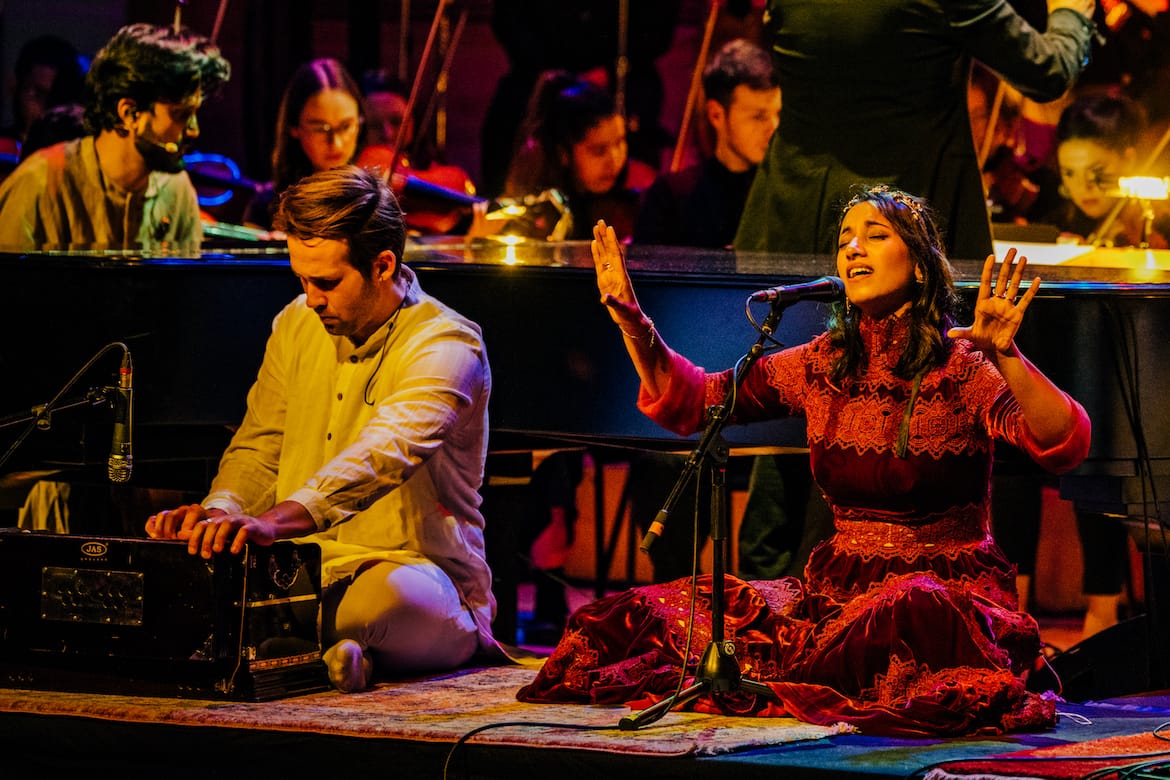
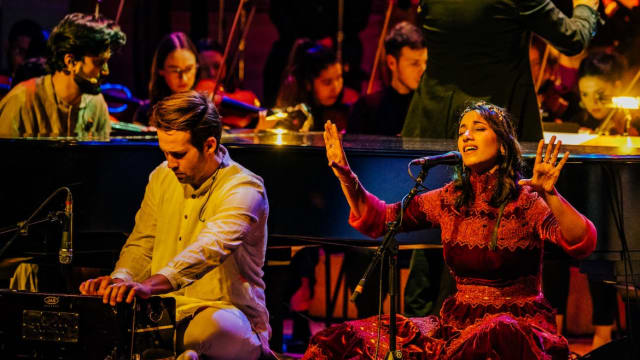
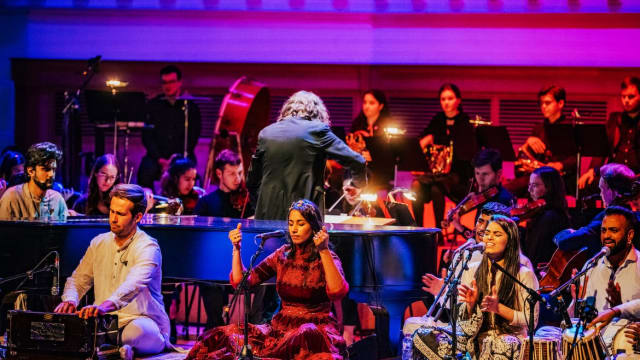
Qawwali, at its core, is built on repetition and escalation. A single poetic phrase—often in Urdu, Persian, or Punjabi—is sung, chanted, and rhythmically intensified until it becomes a kind of sonic prayer wheel. Traditional qawwali ensembles center around lead vocalists, harmonium, tabla, and hand-clapping that drives the tempo forward in waves. Sampa's work with the Orchestral Qawwali Project takes this template and re-scores it for concert halls.

Her voice—trained in classical technique—navigates the ornamental melismas and microtonal inflections that qawwali demands, but it's set against violins that swell beneath Sufi poetry, timpani that punctuate devotional crescendos, and brass that underscores the music's inherent drama. The tempo often begins slow and meditative, then builds in controlled surges. What you hear is both ancient and contemporary: the call-and-response vocal interplay of traditional qawwali, but voiced through an ensemble that might include a full Western string section answering a harmonium line, or a French horn echoing a vocal phrase traditionally reserved for the chorus of male singers known as the qawwal bachche.

The texture is dense but not muddy. Sampa's classical training allows her to cut through orchestral layers with precision, her voice functioning as both lead instrument and spiritual anchor. There's a clarity in how each element is staged—qawwali's devotional momentum never collapses under the weight of orchestration. Instead, the orchestral elements breathe with the music, expanding and contracting as the devotional logic requires.

Lineage and Tradition

Qawwali emerged from the Chishti Sufi order in the 13th century, designed to induce hal—a state of spiritual ecstasy—through poetic invocation of the divine and the Prophet. Legends like Nusrat Fateh Ali Khan brought the form to global audiences in the late 20th century, demonstrating how qawwali's repetitive structures and vocal virtuosity could transcend linguistic and cultural barriers. But qawwali has always been communal, traditionally performed by hereditary musicians in specific sacred contexts.

Sampa's work respects this lineage while expanding its performance context. Holding an Associate Artist residency at the Royal Albert Hall positions her within one of the most visible platforms for South Asian classical and devotional music in the UK. She's not translating qawwali for Western audiences so much as building new architecture for it to inhabit. The Sufi devotional core remains—poetry in service of divine longing—but the sonic environment is reimagined.

Signature Contribution and Collaborators

Sampa's signature contribution is precisely this: orchestral qawwali that honors the form's devotional DNA while refusing to treat it as museum repertoire. Her collaboration with Rushil Music through the Orchestral Qawwali Project is central to this vision. These aren't arrangements that simply add strings to existing qawwali recordings. They're compositional re-thinkings that ask what happens when qawwali's cyclical vocal logic meets the harmonic possibilities of a full orchestra.

Her classical singing background distinguishes her approach. Many qawwali vocalists come from hereditary musical families and learn through oral tradition. Sampa's formal training allows her to navigate both worlds—honoring the improvisational freedom and ornamentation of qawwali while bringing the technical control required for orchestral precision.

A First-Encounter Guide

For first-time listeners, expect devotion with dynamics. If you're familiar with traditional qawwali, you'll recognize the poetic repetition and the ecstatic build, but you may be surprised by the orchestral voices—how a cello might carry a melodic line traditionally given to harmonium, or how brass punctuates a devotional climax. If you come from Western classical or contemporary sacred music traditions, the repetitive structure may feel unfamiliar at first, but the emotional arc will be legible: this is music designed to transport.

What may surprise is the volume and intensity. Even in orchestral dress, qawwali retains its capacity for overwhelming sonic force. This isn't background music for meditation apps. It's devotional practice as performance art, meant to move bodies and shake certainty.

Place in the Conscious-Music Landscape

Sampa occupies a specific and somewhat rare position in the conscious-music world. She's not a Western artist borrowing Eastern motifs, nor is she a traditional practitioner simply touring heritage repertoire. She's working at the intersection of sacred tradition and contemporary classical experimentation. In this, she shares conceptual space with artists like the Kronos Quartet's collaborations with devotional traditions, or Arooj Aftab's experimental Sufi-inflected compositions—though Sampa remains more firmly rooted in qawwali's formal structures. Her work proves that devotional music can evolve architecturally without losing its spiritual center.
Abi Sampa
AboutAbi Sampa

Abi Sampa is a singer and qawwali artist who holds an Associate Artist residency at the Royal Albert Hall in London. She performs with the Orchestral Qawwali Project in collaborati…

View profile

Continue Reading

More about Abi Sampa

View All
Who Is Abi Sampa? Life, Work, and Legacy
Article

Who Is Abi Sampa? Life, Work, and Legacy

Essential Abi Sampa Albums: A Listening Guide
Article

Essential Abi Sampa Albums: A Listening Guide

Where to Start with Abi Sampa: A Beginner's Guide
Article

Where to Start with Abi Sampa: A Beginner's Guide

Keep exploring

Continue your journey

More wisdom and gatherings from across the BrightStar directory.

More Articles

Browse the full library of teachings, interviews, and guides.

Back to all articles →

Teachers & Artists

Explore the lineages, musicians, and guides of the conscious world.

Explore artists →

Find an Event

Kirtan, retreats, sound baths, breathwork, festivals — happening soon.

Browse events →