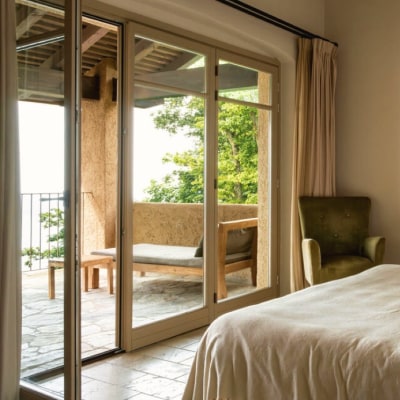
Mandali Retreat Center — Quarna Sopra, Italy
Retreat centre on Lake Orta, Northern Italy — meditation, yoga & self-inquiry
Mandali Retreat Center is a not-for-profit residential retreat centre located in Quarna Sopra, in the Verbano-Cusio-Ossola province of Northern Italy, about 75 minutes from Milan Malpensa International Airport. Sitting on a hilltop above Lake Orta with views toward the Italian Alps, it was established in 2017 as a purpose-built sanctuary for meditation, self-inquiry, and conscious movement, open to teachers and guests from all backgrounds, traditions, and lineages. The centre was founded by two friends, Wouter and Wildrik, who had spent years organising large-scale dance festivals before a first silent retreat in India in 2009 redirected them entirely. That experience — sitting in silence with nothing to do and no one to speak to, and feeling, as they describe it, happier than ever — became the seed of Mandali. The intention they carried out of India, toward meditation, self-inquiry, and truth-seeking, is the one the centre still runs on today. Mandali's programme is built around three retreat formats. The Mandali Experience is the centre's ongoing in-house offering: a three-to-seven-day restorative retreat combining twice-daily guided meditation, morning and afternoon yoga or Qigong, and silent breakfasts, designed to be followed at a flexible pace. The Mandali Experience Special adds a creative or ceremonial layer — past editions have included Breathwork Journeys, Traditional Lakota Sweatlodges, Fire Ceremony, and Singing Circles led by guest facilitators. Themed Retreats bring expert teachers for deep dives into specific traditions and teachings: recent and upcoming programmes include an Enlightenment Intensive based on the Dyad method developed by Charles Berner, a Path of Love Process, Raja Yoga, Tibetan Five Elements Practices with Tulku Lobsang Rinpoche, a couples retreat in Eastern Tantric practices and attachment theory, and silent week retreats focused on yoga, meditation, and satsang. The centre also runs Silent Mandali Experience editions — multi-day retreats held entirely in social silence. The physical centre was architecturally inspired by the medieval Italian hill towns that surround it, built largely from locally reclaimed materials and designed according to Feng Shui principles of harmony and balance. Practice spaces include a temple, a dome, a diamond room, and an outdoor terrace, all equipped with sound systems and climate control. The Body Care Centre offers an indoor heated swimming pool, sauna, steam room, and a jacuzzi with lake views; massage and bodywork treatments are available at additional cost. Accommodation ranges from premium single rooms with copper bathtubs and lake-view balconies to twin rooms, hermitage studios with kitchenettes sleeping up to four, and shared dormitory rooms. A permaculture garden and expanding food forest supply the kitchen, which serves three vegetarian meals daily — locally sourced, prepared fresh, with options for vegan, gluten-free, and dairy-free needs. A cosy library offers the only Wi-Fi on site, by design. Mandali draws people at turning points — those seeking deeper meaning, spiritual enrichment, or simply a pause from the pace of ordinary life — as well as seasoned practitioners looking to go further into silence or a specific tradition. The centre's staff are drawn largely from the surrounding Quarna villages. All retreats are conducted in English unless otherwise stated, with occasional offerings in Dutch, German, and other languages. Nature trails begin at the property's edge; the lake and alpine landscape are considered part of the retreat environment itself.
Traditions: Meditation, Yoga, Qigong, Self-Inquiry, Zen, Buddhism, Tantra, Lakota Ceremony
Programs: Mandali Experience, Mandali Experience Special, Silent Mandali Experience, Themed Retreats, Enlightenment Intensive, Path of Love Process, Raja Yoga, Tibetan Five Elements Practices, Opening to Intimacy Couple Retreat, Breathwork Journey
Amenities: Lake Orta Views, Indoor Heated Swimming Pool, Jacuzzi, Sauna, Steam Room, Body Care Centre, Permaculture Garden, Cosy Library, Scenic Hiking Trails, Free Parking
Frequently Asked Questions
What makes Mandali Retreat Center different from other meditation retreat centers in Italy?
Mandali was purpose-built in 2017 — it's not a converted monastery or villa, but a deliberately designed complex inspired by medieval Italian hill towns and arranged according to Feng Shui principles. The founders, Wouter and Wildrik, came from organizing massive dance festivals before a 2009 silent retreat in India redirected them entirely, and that unusual origin story shows in the programming: you'll find Lakota Sweatlodges, Enlightenment Intensives using the Dyad method, and Tibetan Five Elements practices alongside standard Vipassana and Zen sits. The Body Care Centre — heated pool, sauna, jacuzzi with alpine views — is more indulgent than most serious meditation centers allow, which signals Mandali's approach: contemplative but not ascetic, open to multiple lineages rather than devoted to one. The trade-off is less doctrinal depth than a single-tradition monastery, but more permission to mix modalities and find your own way in. If you want rigorous Theravadan discipline, go to a Goenka center; if you want to explore self-inquiry one day and Qigong the next while soaking in a hilltop jacuzzi, Mandali makes sense.
Who is Mandali Retreat Center not suited for?
If you need a single authoritative teacher or unbroken lineage transmission, Mandali's eclectic rotation of guest facilitators will feel rudderless. The place draws people at turning points — those "seeking deeper meaning" or "a pause from ordinary life" — which means you'll sit beside genuine seekers but also confused beginners still figuring out what meditation even is, and that mix can dilute the container for advanced practitioners. The vegetarian-only menu and social silence at breakfast are non-negotiable, so if you need animal protein or morning conversation to feel human, you'll chafe. It's also expensive by Italian standards ($$$ tier), so budget travelers expecting monastery pricing will be shocked. And if your idea of retreat is total solitude, know that Mandali runs concurrent programs — you might be on a silent sit while another group is doing breathwork or singing circles in the dome next door.
What does a typical day at the Mandali Experience actually look like, hour by hour?
The core Mandali Experience runs on a gentle rhythm: silent breakfast, then morning yoga or Qigong (your choice), followed by a mid-morning guided meditation session in the temple or dome. Lunch is communal and conversational — this is where you'll actually meet people — then the afternoon is largely unstructured: some guests hike the trails that start at the property edge, others use the pool and sauna, a few retreat to their rooms or the library. Late afternoon brings another yoga or movement session, then a second guided meditation sit before dinner. Evenings vary by program — sometimes satsang, sometimes a Fire Ceremony or singing circle, sometimes just silence and early bedtime. The schedule is labeled "flexible," which is both a gift and a trap: self-directed people love the spaciousness, but if you need rigorous structure to stay disciplined, you'll find yourself in the jacuzzi more than the meditation hall.
What's the food experience like at Mandali, and how does the dining hall actually feel?
Three vegetarian meals daily, sourced from the on-site permaculture garden and local suppliers, prepared fresh with real care for vegan, gluten-free, and dairy-free needs — the kitchen takes dietary requests seriously. Breakfast is silent, which some find centering and others find awkward when you're reaching past strangers for the almond milk; lunch and dinner are social, served family-style at communal tables. The dining hall has lake views and feels warm rather than institutional, more Italian agriturismo than Zen monastery cafeteria. Don't expect gourmet complexity — this is wholesome, nourishing food, not Michelin ambition — but the quality is genuinely good, and the forced silence at breakfast becomes a kind of moving meditation if you lean into it. If you're the type who needs coffee and conversation to start the day, those silent mornings will feel like punishment.
What are the real differences between Mandali's accommodation tiers, and which should you book?
Premium singles have copper bathtubs, lake-view balconies, and the kind of design details that justify the upcharge if you're celebrating something or need beauty to soften the inner work. Standard twin rooms are comfortable but unremarkable — think clean, functional, adequate natural light — and you'll share a bathroom down the hall. The hermitage studios sleep up to four with kitchenettes, which work well for couples or small groups who want semi-independence but don't mind trading luxury for space. Shared dorms are genuinely shared — multiple beds, communal everything — and only make sense if budget is tight or you're already comfortable in hostel culture. The honest calculation: you won't spend much time in your room given the programming and the pool/sauna/trails, so unless a private copper tub genuinely matters to your nervous system, the twins are the sweet spot between cost and comfort.
What consistently surprises first-timers at Mandali, both pleasant and unpleasant?
The heated pool and jacuzzi surprise people who arrive expecting monastic austerity — Mandali is contemplative but decidedly not self-punishing, and that permission to luxuriate between meditation sits feels subversive in the best way. The alpine and lake views are more stunning than photos convey; the setting alone does half the work of calming your mind. On the unpleasant side, the Wi-Fi is only available in the library, which is intentional but infuriating if you didn't plan for total digital detox in your room. The silence at breakfast catches newcomers off-guard — it's enforced, not optional, and if you arrived with a friend you'll spend that first morning staring awkwardly at your plate. Also, "75 minutes from Milan Malpensa" undersells the winding hilltop roads; budget two hours if you're driving yourself and prone to motion sickness.
How much does Mandali actually cost, what's included, and where will you spend more?
Mandali sits in the $$$ tier, and while exact pricing varies by retreat and room type, expect to pay notably more than a Goenka center or monastery (those run on donation; this doesn't). The base rate covers accommodation, three vegetarian meals daily, all scheduled meditation and yoga/Qigong sessions, and use of the Body Care Centre facilities — pool, sauna, steam room, jacuzzi. What costs extra: massage and bodywork treatments, airport transfers if you don't rent a car, and any specialized workshops led by visiting teachers like Tulku Lobsang Rinpoche (those often carry supplemental fees). The centre is not-for-profit, which softens the sticker shock slightly, but there's no mention of sliding scale or scholarship options in the public material, so assume full price unless you inquire directly. If you're comparing to Asian retreat centers, this will feel expensive; if you're comparing to European wellness resorts, it's midrange.
What will the silence and spiritual framing at Mandali actually feel like if you're new to this?
The Silent Mandali Experience editions are fully silent — no talking for days — but the standard Mandali Experience only enforces silence at breakfast and occasionally at specific meditation sessions, so you won't be thrown into monastic muteness if that terrifies you. The spiritual framing is deliberately multi-traditional: you'll hear Buddhist language one day, Tantric references another, Lakota ceremony vocabulary the next, which feels inclusive if you appreciate pluralism and confusing if you want doctrinal coherence. There's no religious conversion agenda — Wouter and Wildrik built this as a space open to "all backgrounds, traditions, and lineages" — so you won't be pressured to adopt beliefs, but you will be invited into self-inquiry practices that can feel emotionally intense. First-timers worried about fitness: the yoga and Qigong are gentle and adaptable, not athletic; your ability to sit still matters more than your ability to twist into poses.
What does the land and built environment at Mandali actually feel like to inhabit?
Mandali sits on a hilltop in Quarna Sopra, a medieval village above Lake Orta with sight lines to the Italian Alps — the views are legitimately cinematic, the kind that make you stop mid-walk and just stare. The buildings were designed to echo the surrounding hill towns, built from reclaimed local materials, so it feels rooted rather than imported, like it grew out of the landscape instead of being dropped onto it. Practice happens in multiple spaces: a temple, a dome, a "diamond room," and an outdoor terrace, all climate-controlled and well-equipped, which gives each session a different spatial mood. The permaculture garden and expanding food forest signal the founders' environmental commitment, and scenic hiking trails begin right at the property edge — the land itself is considered part of the retreat container. The cosy library is the only Wi-Fi zone, which creates a literal boundary between connected and disconnected life, and the Body Care Centre's jacuzzi faces the lake in a way that feels like a reward for showing up to the hard inner work.
What are the unspoken etiquette rules at Mandali that guests should know before arriving?
Silent breakfast is non-negotiable and socially enforced — you won't be scolded, but you'll feel the group's disapproval if you whisper to your friend, so just don't. Phones are allowed outside meditation and yoga sessions, but the vibe strongly discourages scrolling in common spaces; if you need to check in, do it in your room or the library. The implicit norm is full participation — skipping a session to nap or hike is technically permitted (this isn't a Goenka course where you commit to the whole schedule), but doing it repeatedly marks you as less serious, and you'll feel that socially. If a retreat is described as silent, assume total silence except for emergencies; if it's not labeled silent, lunch and dinner conversation is welcome and even encouraged as part of integration. Leaving a multi-day program early is logistically possible but spiritually discouraged — the founders believe transformation happens in the sustained container, and bailing mid-retreat disrupts that for everyone.
What should you pack for Mandali that guests consistently forget or underestimate?
The hilltop location means weather shifts fast — bring layers even in summer, because mornings and evenings cool down significantly with alpine winds, and the outdoor terrace sessions will freeze you if you only packed linen pants. The Body Care Centre has a pool and jacuzzi, so pack swimwear even if you think you'll be too deep in meditation to care; most people end up using the facilities more than they expect. Hiking boots or sturdy shoes matter if you plan to use the trails, which are genuinely scenic but not paved suburban paths. The library is the only Wi-Fi zone, so if you're working remotely or need connectivity in your room, bring a local SIM or accept total disconnection. And because breakfast is silent, bring a journal or book if staring at your plate in silence without distraction will make you anxious — some people need an anchor for those quiet mornings.
How accessible is Mandali for people with mobility limitations or other physical needs?
The venue data lists no specific accessibility features, and the hilltop medieval-village-inspired architecture suggests stairs, uneven surfaces, and design choices that likely prioritize aesthetics over universal access — this is not a place built to North American ADA standards. The pool, sauna, and jacuzzi in the Body Care Centre probably require steps and navigation that could challenge wheelchair users or those with significant mobility issues, though I can't confirm exact layouts without visiting. If you have dietary restrictions beyond vegetarian/vegan/gluten-free/dairy-free, contact the kitchen directly before booking; they claim to take requests seriously, but "seriously" has limits in a small operation. The meditation sessions offer floor cushions and chairs as seating options — this is standard — but extended sits will still be physically demanding if you have chronic pain. Honest advice: if accessibility is a primary concern, email Mandali with specific questions before committing; their not-for-profit ethos suggests they'll try to accommodate, but the infrastructure may not cooperate.