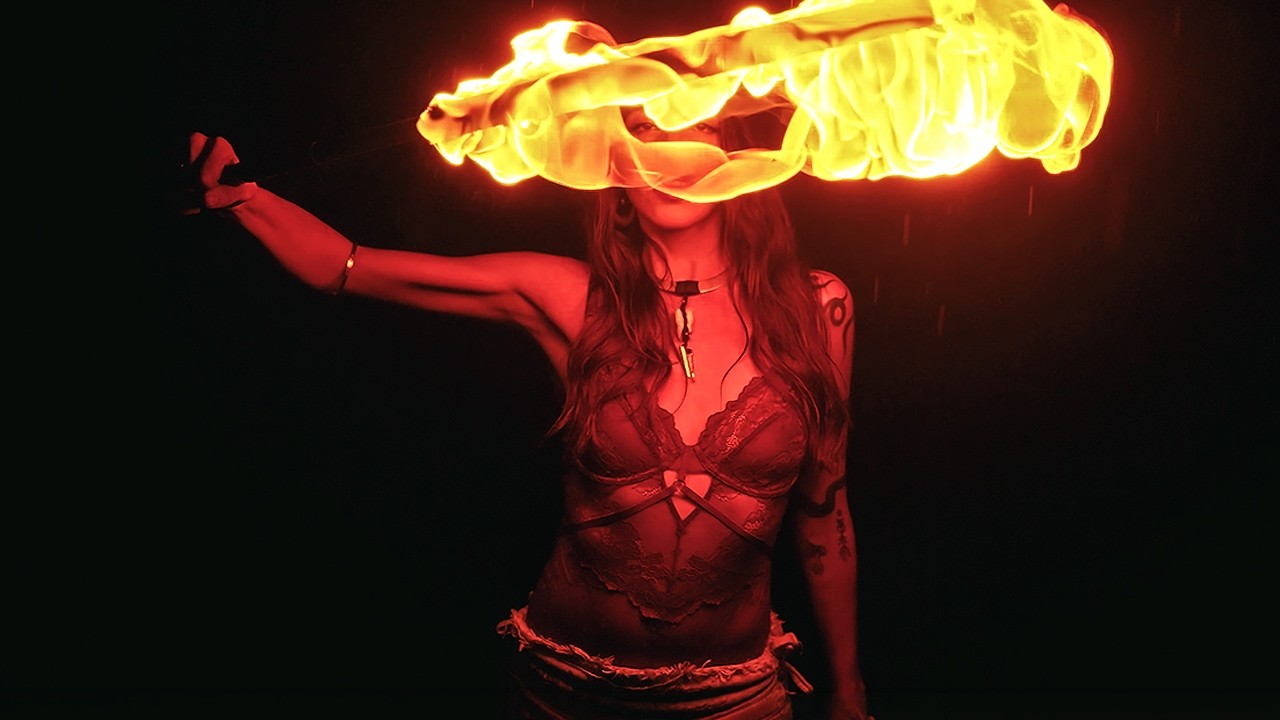
Nadav Tabak delivers a live looping performance of "The Journey Man" at Espace Marceau Holtzheim 2024, constructing a full multi-instrumental arrangement in real-time using a Boss RC 600 Loopstation, Neural DSP Quad Cortex, and other gear. The performance demonstrates how modern looping technology enables a solo artist to create layered, orchestral soundscapes by capturing guitar loops, percussive layers, and electronic elements that build throughout the piece, inviting the audience into the sonic journey directly.
Live looping is a performance technique where an artist records short musical phrases in real-time and layers them on top of one another to build complex arrangements without pre-recorded backing tracks or a band. Instead of playing a song start-to-finish in a linear fashion, the performer becomes a one-person orchestra, capturing loops of rhythm, harmony, and melody that synchronize and overlap. Each loop typically fits within a fixed time signature and length, allowing new layers to sit rhythmically alongside existing ones. This technique has become central to solo artists who want to create full, textured performances that rival a multi-piece ensemble in density and harmonic richness.
Nadav Tabak's performance of "The Journey Man" exemplifies this approach. Using the Boss RC 600 Loopstation as his primary tool, he builds the song layer by layer in front of the audience. The first loop might establish a rhythmic foundation—perhaps a drum pattern or strummed guitar chord progression. Once that loop plays on repeat, he can layer a new recording on top: a melodic guitar line, a percussive element, or a textural pad. Each new layer adds dimension and complexity, and the looping station synchronizes all layers to the same tempo and beat, creating a unified sonic environment. By the end of the performance, what began as a single guitar idea has grown into a fully realized composition with multiple instrumental voices.
The Boss RC 600 Loopstation is designed for exactly this workflow. It allows performers to record and playback multiple synchronized loops with foot pedal control, freeing the artist's hands to play their instrument while managing the looping environment. The device stores up to 99 user patches and offers various loop effects, overdub modes, and undo/redo functions that give performers the safety to experiment. During a live performance, the artist can punch in and out of recording mode, add effects to individual loops, or mute and unmute layers to control the arrangement's dynamics in real-time.
What makes this particularly powerful for solo performance is the ability to stop and start loops independently. If a section of the song calls for fewer layers, the performer can mute or stop certain loops, creating dynamic contrast. If it's time to build intensity, they can layer in more elements. This gives live looping performances dramatic arc and emotional pacing that might otherwise be lost in a one-person performance. The audience watches not just the playing, but the compositional and production choices happening live—they are witnesses to the creation of the arrangement itself.
Nadav Tabak uses a Godin Guitar (prototype) as his primary melodic and harmonic instrument. In a looping context, the guitar serves multiple functions across different loops. An early loop might capture a fingerpicked chord progression or strummed rhythm pattern that anchors the harmonic foundation. Later loops might add single-note melodic phrases, rhythmic riffs, or textural picking patterns that sit on top of the harmonic layer. The guitar is both the songwriter's voice and a textural instrument—capable of providing everything from the song's skeletal structure to ornamental detail.
One advantage of the guitar in looping performances is its dynamic range and tonal versatility. A single pass over the strings can convey emotion, dynamics, and articulation that a purely electronic layer might not. The neural DSP Quad Cortex (a digital amp and effects processor) allows Nadav to shape and color each guitar loop differently, applying effects like reverb, delay, distortion, or modulation to create distinction between layers. A loop recorded with one effect chain might sound intimate and dry, while another is drenched in ambience, creating textural contrast even though both come from the same instrument.
Beyond the guitar, looping-based arrangements require strong rhythmic and percussive elements. Nadav includes a Roland SPD-1 (a percussion pad) and a Korg Wave Drum Global in his live setup. These devices allow him to trigger drum sounds, hits, and rhythmic textures by hand or foot, layering them into loops or playing them in real-time alongside the looped material. The SPD-1, in particular, is designed for live performance, offering velocity-sensitive pads and customizable sound banks.
The interplay between programmed loops and live percussion creates a dynamic that keeps the performance from feeling static or over-reliant on playback. Even as loops continue cycling in the background, live percussion adds spontaneity and responsiveness to the moment. A drum hit or textural sound can land exactly where the performer feels the audience needs it, rather than being predetermined. This human timing and feel—layered atop mechanically perfect looped cycles—creates the tension between composition and improvisation that makes live looping compelling to watch and listen to.
The song's title suggests a thematic or narrative quality: a journey man is a traveler, someone in motion, seeking or wandering. In the context of a looping performance, the title takes on additional meaning. The audience is invited to "dive into the journey head first together," as the performance description states. Rather than watching a pre-recorded journey, they are participants in the unfolding of the arrangement itself. The first loop is the beginning of the journey; each new layer adds a new waypoint or experience; the eventual layering and interplay of all elements represents the richness and complexity the traveler encounters.
This framing—journey, participation, unfolding—is what distinguishes live looping from simply playing a recorded backing track. The audience sees the destination being built in real-time. They hear the moment each new element enters, understand its relationship to what came before, and feel the cumulative effect of the arrangement as it grows. The "journey" is both the song's lyrical or conceptual content and the literal performance experience unfolding in front of them.
Nadav's setup includes several key pieces of technology, each with a specific role. The Boss RC 600 is the central hub—the looping station where all recordings and playback are managed. The Neural DSP Quad Cortex functions as both an amp simulator and effects processor, shaping the tone of the guitar and providing the sonic character of the performance. The Godin Guitar (prototype) suggests a custom or specialized instrument, likely tailored to Nadav's playing style and tonal preferences. The Roland SPD-1 and Korg Wave Drum Global provide hand-playable percussion and texture. D'Addario strings and cables ensure reliable signal flow and durability through a performance that demands physical and technical precision.
The Novation Circuit, listed as not used in this particular performance, represents an option for adding synthesizer or sequenced elements to looping arrangements—a tool Nadav has available but chose not to deploy for "The Journey Man," suggesting deliberate artistic choices about what the song needs sonically. The specificity of gear choices reflects the reality of modern live performance: technology is enabling, but the artist's decisions about what to use and when are fundamentally creative acts.
For musicians interested in exploring live looping, the fundamentals remain the same regardless of gear: start with one loop, listen to how it feels, build a second layer that complements or contrasts with it, then continue adding until the arrangement feels complete. The technology—loopstations, effects processors, percussion pads—is tools for executing this vision, not the vision itself. Nadav Tabak's performance of "The Journey Man" is a model of this approach: thoughtful use of technology in service of a clear artistic intention, with the audience invited to participate in the unfolding of that vision in real-time.
To explore Nadav's work further, his music is available on Spotify, and upcoming performance dates and further information can be found at nadavtabak.com and linktr.ee/nadavtabak. Live looping as a solo performance technique continues to evolve, with artists finding new ways to blend composition, improvisation, and technology into coherent artistic statements.