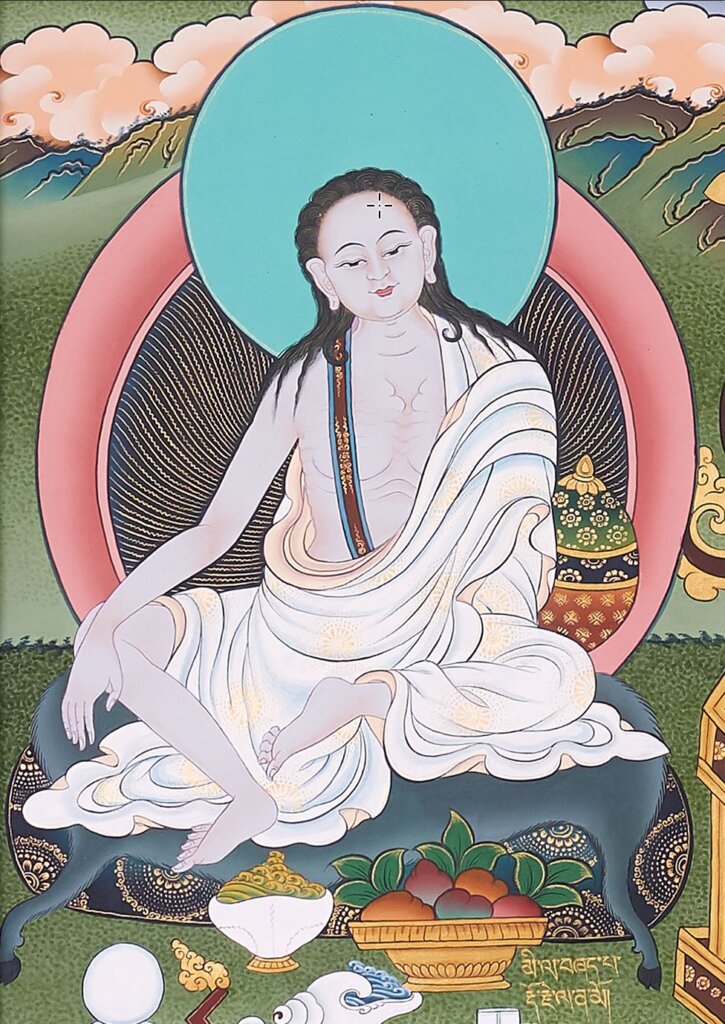
Milarepa's assertion that "In every moment of practice, the buddha is born" invites us to consider the profound implications of our daily actions and intentions. This quote encapsulates the essence of spiritual practice as a dynamic, ongoing process rather than a static state of being. It emphasizes that each moment holds the potential for awakening, urging us to recognize the sacredness of our experiences and the transformative power of mindfulness.
In a world often characterized by distraction and superficiality, Milarepa's words serve as a reminder that the path to enlightenment is not confined to extraordinary moments or grand gestures. Instead, it is woven into the fabric of our everyday lives. Each breath, each thought, and each action can be a catalyst for the emergence of our inner Buddha, challenging us to cultivate awareness and presence in every moment.
The image / the metaphor
The imagery in Milarepa's quote evokes a sense of continual renewal and rebirth. The term "buddha," which translates to "awakened one," suggests a state of enlightenment that is not a singular achievement but a process of becoming. The verb "born" implies a dynamic unfolding, as if each moment of practice is a new opportunity for awakening, akin to the blossoming of a flower from a bud. This metaphor invites us to visualize our spiritual journey as one of growth and transformation, where each practice session nurtures the potential within us.
Diving deeper into the metaphor, we can see that the act of "practice" is not merely a routine or obligation; it is a sacred engagement with our true nature. Just as a bud requires the right conditions—sunlight, water, and soil—to flourish, our spiritual practice demands dedication, intention, and an open heart. In this light, every moment becomes a fertile ground for the emergence of wisdom and compassion, urging us to cultivate the qualities that define the Buddha within.
In the speaker's tradition
Milarepa, a revered figure in Tibetan Buddhism, embodies the principles of transformation and liberation through rigorous practice. His life story illustrates the concept of dharma, the teachings that guide us toward enlightenment. In this context, the notion of "kenosis," or self-emptying, resonates deeply. To be born as the Buddha in each moment requires a relinquishing of ego and attachment, allowing us to connect with the essence of our being and the interconnectedness of all life.
In the Tibetan Buddhist tradition, the practice of mindfulness and meditation is central to realizing one's inherent buddha nature. Texts such as the "Heart Sutra" articulate the concept of sunyata, or emptiness, which teaches that all phenomena are interdependent and transient. This understanding aligns with Milarepa's assertion, as it encourages practitioners to recognize that the birth of the Buddha is not a solitary event but a collective unfolding of consciousness that transcends individual existence.
Living the teaching
Consider a modern scenario where this teaching resonates: a busy professional navigating the challenges of daily life. In the midst of deadlines and responsibilities, the practice of mindfulness can transform mundane moments into opportunities for awakening. For instance, during a brief pause in the workday, one might take a moment to breathe deeply, grounding themselves in the present. This simple act can serve as a reminder that even amidst chaos, the potential for the Buddha's birth exists, encouraging a shift in perspective and fostering a sense of peace.
In relationships, the application of Milarepa's teaching can be equally profound. Imagine a moment of conflict with a loved one, where emotions run high and misunderstandings abound. By consciously choosing to practice compassion and active listening, one can create space for understanding and connection. In this way, each interaction becomes a chance to embody the qualities of the Buddha—patience, love, and wisdom—allowing for the continuous birth of a deeper, more meaningful relationship.
A reflection
As we contemplate Milarepa's profound insight, we are invited to reflect on our own lives and practices. In what ways can we cultivate the awareness that each moment holds the potential for awakening? This question encourages us to examine our daily routines and interactions, prompting us to seek the sacred in the ordinary and to recognize the ever-present opportunity for the buddha to be born anew within us.
