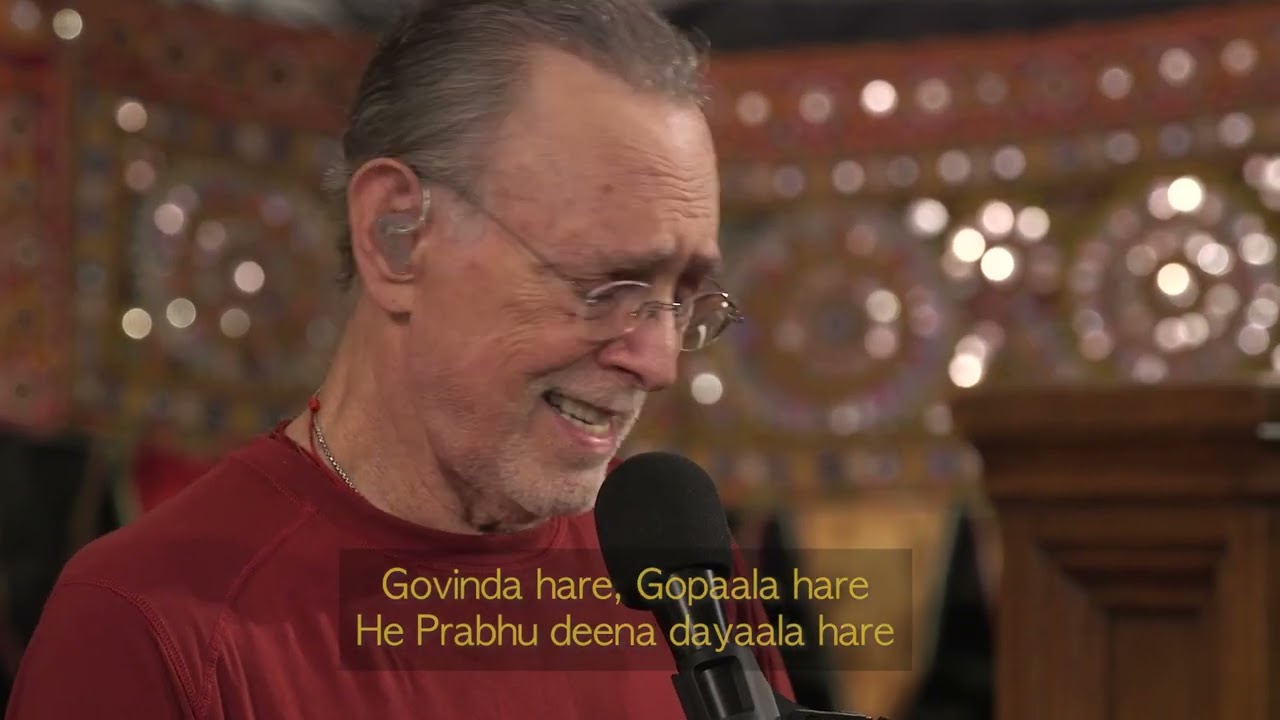
In the poignant words of Krishna Das, "Maharaj-ji asks: did you love today?" This simple yet profound inquiry invites us to reflect on the essence of our daily lives and the quality of our interactions. It challenges us to consider whether we have truly engaged with love, not just as an abstract concept but as a lived experience. In a world often overshadowed by distractions and disconnection, this question serves as a gentle reminder of the importance of love in our everyday existence.
To love today is not merely a task to check off a list; it is an invitation to immerse ourselves in the present moment, to cultivate a heart that is open and receptive. The urgency of this question lies in its immediacy—today is all we have. By asking us to focus on the present, Krishna Das encourages us to recognize that love is not a distant goal but a practice that unfolds in the here and now. This inquiry beckons us to examine our actions, thoughts, and feelings, urging us to align them with the transformative power of love.
The image / the metaphor
The imagery of Maharaj-ji's question evokes a sense of intimacy and immediacy. The verb "love" is active, demanding engagement rather than passive contemplation. It suggests a dynamic process, one that requires our presence and participation. The phrase "did you love today?" implies a daily rhythm, a heartbeat that pulses through our lives, reminding us that love is not a one-time event but a continuous flow that we can tap into at any moment.
Diving deeper into the metaphor, we can see that love is portrayed as a practice, a discipline that requires our attention and intention. It is not enough to love in grand gestures; the challenge lies in the small, often overlooked moments of connection that fill our days. This question invites us to reflect on the myriad ways we can express love—through kindness, compassion, and understanding—transforming the mundane into the sacred. Each day becomes an opportunity to practice love, to weave it into the fabric of our lives.
In the speaker's tradition
Krishna Das, rooted in the bhakti tradition, emphasizes the importance of devotion and love as pathways to spiritual awakening. In bhakti, love is not merely an emotion but a profound connection to the divine, a surrendering of the self to something greater. This aligns with concepts such as dharma, which calls us to live in accordance with our true nature, and kenosis, the act of self-emptying that allows love to flow freely. The bhakti path teaches us that love is both a personal and universal experience, bridging the gap between the individual and the divine.
In the context of bhakti literature, we can draw parallels to the teachings found in the *Bhagavad Gita*, where love and devotion are central themes. The Gita speaks of surrendering to the divine will and acting with love and compassion towards all beings. This echoes Maharaj-ji's question, as it invites us to consider how our actions today can reflect our deepest values and commitments. The essence of bhakti is to live each moment with love, transforming our daily lives into a sacred practice.
Living the teaching
Consider a modern scenario where this teaching resonates deeply: a busy parent juggling work, household responsibilities, and personal commitments. In the midst of this whirlwind, the question "did you love today?" serves as a grounding force. It prompts the parent to pause and reflect on their interactions with their children, their partner, and even themselves. Did they take a moment to express affection, to listen deeply, or to offer a word of encouragement? This inquiry can transform the chaos of daily life into a canvas for love, reminding us that even small gestures can have profound impacts.
In a different context, imagine a difficult moment in a relationship where misunderstandings and frustrations arise. Here, the question becomes a powerful tool for reflection. Instead of reacting defensively, one can pause and ask, "Did I love today?" This moment of introspection can lead to a shift in perspective, encouraging a response rooted in compassion rather than conflict. By consciously choosing to embody love, even in challenging situations, we can foster deeper connections and healing, reinforcing the idea that love is a practice that can be cultivated in every interaction.
A reflection
As we contemplate the essence of Maharaj-ji's question, we are invited to explore our own relationship with love in the present moment. What does it mean for you to love today? In what ways can you bring more love into your daily interactions, both with yourself and others? This inquiry not only deepens our understanding of love but also challenges us to embody it more fully, transforming our lives into a continuous expression of devotion and connection.