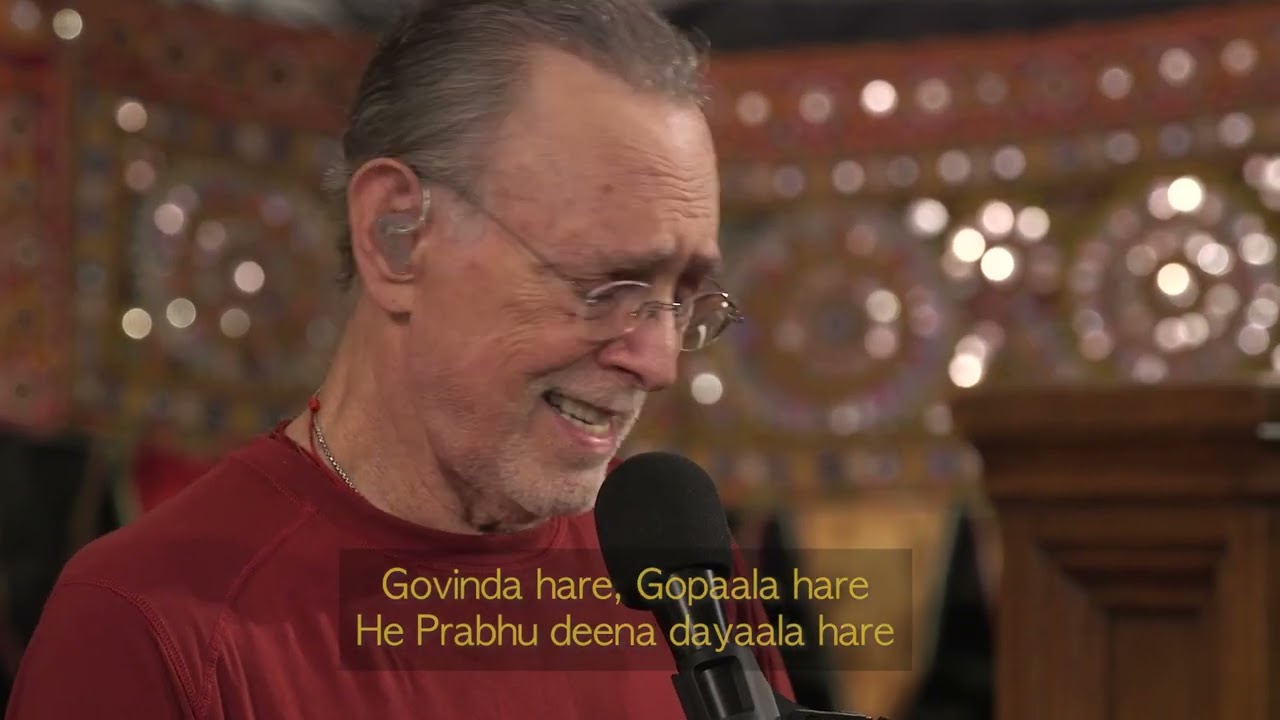
The Ever-Present Heartbeat of Devotion
Krishna Das reminds us that "In every chant, Maharaj-ji is here," a profound assertion that speaks to the omnipresence of spiritual connection through the act of chanting. This statement encapsulates the essence of bhakti, where the divine is not a distant entity but an immediate presence felt in the rhythm of our devotion. The stakes of this realization are high; it invites us to explore the depths of our own spiritual practices and the ways in which we can cultivate a sense of connection that transcends the ordinary.
In a world often characterized by distraction and disconnection, the idea that Maharaj-ji—Neem Karoli Baba, a revered figure in the bhakti tradition—can be felt in every chant offers a sanctuary of hope. It suggests that through the simple act of vocalizing our devotion, we can access a profound sense of belonging and unity with the divine. This presence is not merely a comforting thought; it is an invitation to engage deeply with our spiritual practices, allowing them to transform our everyday experiences into moments of sacred encounter.
The image / the metaphor
The quote evokes a vivid imagery of chanting as a bridge between the devotee and the divine. The word "chant" itself suggests a rhythmic, almost musical quality, implying that this practice is not just a recitation of words but a heartfelt expression of devotion. The choice of the phrase "Maharaj-ji is here" reinforces the immediacy of this connection, suggesting that the divine presence is not something to be sought after in distant realms but is accessible in the very act of devotion.
Diving deeper into the metaphor, we can see that chanting serves as a conduit for divine energy, a way to align ourselves with the vibrational frequency of love and compassion that Maharaj-ji embodies. This presence is not static; it is dynamic and alive, inviting us to engage with it actively. The act of chanting becomes a transformative practice, allowing us to dissolve the barriers of separation and experience the interconnectedness of all beings. In this light, every chant becomes a reminder of the divine heartbeat that pulses through our lives.
In the speaker's tradition
Krishna Das’s assertion is deeply rooted in the bhakti tradition, which emphasizes devotion as a path to realizing the divine within and around us. Concepts such as dharma, the moral order of the universe, and bhakti, the loving devotion to God, are central to this spiritual framework. In bhakti, the act of surrendering oneself to the divine is seen as a form of kenosis, or self-emptying, allowing the devotee to be filled with divine presence. This aligns beautifully with the idea that Maharaj-ji is not just a historical figure but a living embodiment of love and compassion that can be accessed through sincere practice.
To further illuminate this teaching, we can look to the Bhagavad Gita, where Krishna speaks of the importance of devotion and surrender. In Chapter 9, Verse 22, he promises that those who are devoted to him will have their needs met, reinforcing the idea that divine presence is intimately connected to our acts of devotion. This text serves as a reminder that the relationship between the devotee and the divine is reciprocal; as we chant and open our hearts, we invite the divine presence into our lives, just as Maharaj-ji invites us into his loving embrace.
Living the teaching
Consider a modern scenario where this teaching can be applied: a busy professional feeling overwhelmed by the demands of life. In moments of stress, one might turn to chanting as a way to reconnect with the divine presence that Krishna Das speaks of. As they chant, they may find that the burdens of the day begin to lift, replaced by a sense of peace and clarity. This practice not only serves as a refuge but also as a reminder that in the midst of chaos, the divine is always present, waiting to be acknowledged and embraced.
Another application of this teaching can be found in personal relationships, particularly during challenging moments. Imagine a disagreement with a loved one that feels insurmountable. By incorporating chanting into the process of reconciliation, one can create a space for divine presence to guide the conversation. This act of devotion can soften hearts, allowing for understanding and compassion to flourish, reminding both parties that they are not alone in their struggles. In this way, the chant becomes a tool for healing, reinforcing the idea that Maharaj-ji is indeed present in every interaction.
A reflection
As we contemplate the profound assertion that "In every chant, Maharaj-ji is here," we are invited to reflect on our own spiritual practices. How can we cultivate a deeper awareness of the divine presence in our lives? What would it mean to approach each moment, each interaction, as an opportunity to connect with that presence? In asking ourselves these questions, we open the door to a richer, more meaningful experience of life, one that is infused with the love and compassion that Maharaj-ji embodies.