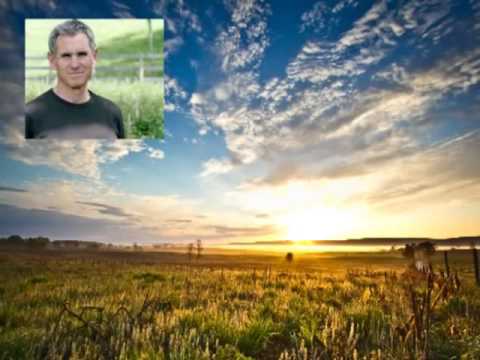
Jon Kabat-Zinn's assertion that "mindfulness is awareness without judgment" invites us into a profound exploration of our inner landscapes. This statement encapsulates the essence of mindfulness practice, emphasizing the importance of observing our thoughts and feelings without the weight of evaluation or criticism. In a world often dominated by reactive patterns and preconceived notions, this teaching serves as a gentle reminder of the transformative power of simply being present, allowing us to cultivate a more compassionate relationship with ourselves and our experiences.
At its core, this quote challenges us to reconsider our habitual responses to life’s myriad stimuli. In a society that frequently equates self-worth with achievement and judgment, the practice of mindfulness offers a sanctuary of acceptance. By fostering an awareness that is free from judgment, we open ourselves to a deeper understanding of our thoughts and emotions, creating space for healing and growth. This journey toward non-judgmental awareness is not merely an intellectual exercise; it is a lived experience that can profoundly alter our perception of reality.
The image / the metaphor
The phrase "awareness without judgment" evokes a vivid image of a serene observer, standing on the shore of a vast ocean of thoughts and feelings. The verbs chosen—awareness and judgment—contrast two states of being: one that invites openness and curiosity, and another that often leads to restriction and self-criticism. In this metaphor, mindfulness is akin to a gentle breeze that allows us to float upon the surface of our experiences, rather than being swept away by the currents of our judgments.
Diving deeper into this metaphor, we can envision mindfulness as a clear, still lake reflecting the sky above. In this stillness, we can see our thoughts and emotions as they arise, much like clouds drifting across the sky. Instead of becoming entangled in the storm of our judgments, we learn to observe these clouds with a sense of detachment and curiosity. This practice of non-judgmental awareness invites us to embrace our experiences fully, without the need to label them as good or bad, right or wrong.
In the speaker's tradition
Jon Kabat-Zinn's teachings are rooted in the rich tradition of mindfulness, which draws from ancient Buddhist practices while making them accessible to contemporary audiences. Central to this tradition is the concept of "sunyata," or emptiness, which encourages us to recognize the transient nature of our thoughts and feelings. By cultivating an awareness that is free from judgment, we can begin to see the impermanence of our experiences, allowing us to engage with life more fully and authentically.
In his work, Kabat-Zinn often references the Four Noble Truths, which outline the nature of suffering and the path to liberation. The practice of mindfulness serves as a bridge to understanding these truths, as it invites us to observe our suffering without the added layer of judgment. This non-judgmental awareness aligns with the Buddhist principle of "dharma," which emphasizes living in accordance with the truth of our experiences. By embodying this teaching, we can cultivate a deeper sense of compassion for ourselves and others.
Living the teaching
Consider a modern scenario where the teaching of mindfulness manifests: you find yourself in a heated discussion with a colleague. As emotions rise, the instinct to judge their perspective or defend your own becomes overwhelming. However, by practicing mindfulness, you can pause and observe your thoughts and feelings without immediately reacting. This moment of awareness allows you to listen more deeply, fostering a more constructive dialogue that honors both perspectives.
A reflection
As we reflect on Kabat-Zinn's profound insight, we are invited to consider how often we engage in judgment, both of ourselves and others. What would it mean to approach our thoughts and emotions with a sense of curiosity rather than criticism? In what areas of your life could you practice this non-judgmental awareness, allowing for greater acceptance and understanding? Contemplating these questions can illuminate the path toward a more mindful existence, where awareness becomes a source of liberation rather than constraint.