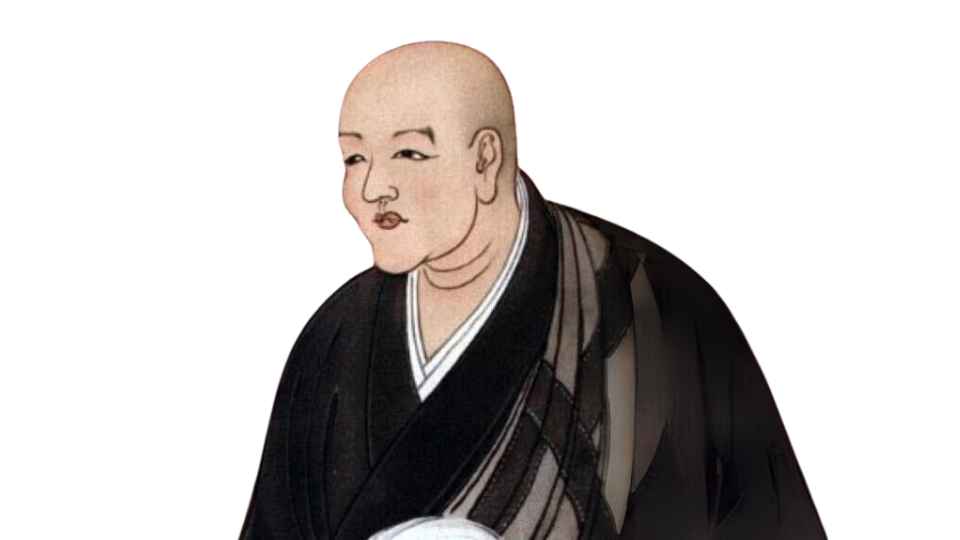
The Completeness of Now: Embracing Death as Life's Essence
In the profound words of Dōgen, "Death is an expression complete this moment," we are invited to consider the intricate relationship between death and the present. This statement urges us to recognize that every moment is imbued with a sense of finality and wholeness, suggesting that the essence of life is found in its impermanence. Understanding this connection is crucial, as it can transform our perception of existence, urging us to live fully and authentically in the now.
To grasp the depth of Dōgen's insight, we must delve into the nature of presence and completion. The acknowledgment of death as an integral part of life compels us to confront our fears and attachments, ultimately leading to a richer experience of being. In this light, Dōgen's teaching becomes a call to embrace each moment with awareness, recognizing that the fullness of life is inseparable from its transient nature.
The image / the metaphor
At first glance, Dōgen's quote presents a stark juxtaposition between death and the immediacy of the present moment. The imagery evokes a sense of urgency, as if death is not a distant event but a constant companion that shapes our experience. The verb "is" suggests an ongoing state of being, where death is not merely an endpoint but a vital aspect of existence that informs our understanding of life itself.
Dōgen's metaphor extends beyond the literal interpretation of death; it invites us to explore the idea of completion within each moment. By framing death as an expression of the present, he encourages us to see life as a series of interconnected experiences, each one complete in its own right. This perspective fosters a sense of appreciation for the fleeting nature of time, urging us to engage deeply with our current reality rather than postponing our fulfillment to some future point.
In the speaker's tradition
Dōgen's teachings are deeply rooted in Zen Buddhism, where the concepts of impermanence and interdependence are foundational. In this tradition, the notion of "sunyata," or emptiness, resonates with the idea that all phenomena are transient and interconnected. By recognizing the inherent emptiness of our experiences, we can cultivate a sense of liberation from attachment and fear, allowing us to embrace the fullness of each moment, including the inevitability of death.
In his seminal work, "Genjokoan," Dōgen articulates the importance of direct experience and the realization that life and death are not separate entities but part of a continuous cycle. This text emphasizes the practice of zazen, or seated meditation, as a means to awaken to the present moment. Through this practice, one can cultivate "prajna," or wisdom, which enables a deeper understanding of the nature of existence and the acceptance of death as a vital aspect of life.
Living the teaching
Consider a modern scenario where the teaching of Dōgen might resonate: a person facing a significant life transition, such as the loss of a job or the end of a relationship. In such moments, the weight of uncertainty can feel overwhelming, yet Dōgen's insight reminds us that this very uncertainty is a part of life’s completeness. By embracing the present moment, one can find clarity and purpose, recognizing that even in loss, there is an opportunity for renewal and growth.
In the context of relationships, Dōgen's teaching can be particularly poignant. Imagine a couple navigating a difficult period, perhaps facing the reality of separation or conflict. By acknowledging the impermanence of their connection, they can approach their interactions with greater compassion and understanding. This awareness allows them to appreciate the beauty of their shared moments, fostering a deeper connection that transcends the fear of loss.
A reflection
As we contemplate Dōgen's profound statement, we are invited to reflect on our own relationship with the present moment and the inevitability of death. How often do we allow ourselves to be fully present, embracing the richness of each experience without clinging to the past or fearing the future? In this light, consider this contemplative question: What would it mean for you to live each moment as if it were complete, recognizing the beauty and transience of life?


