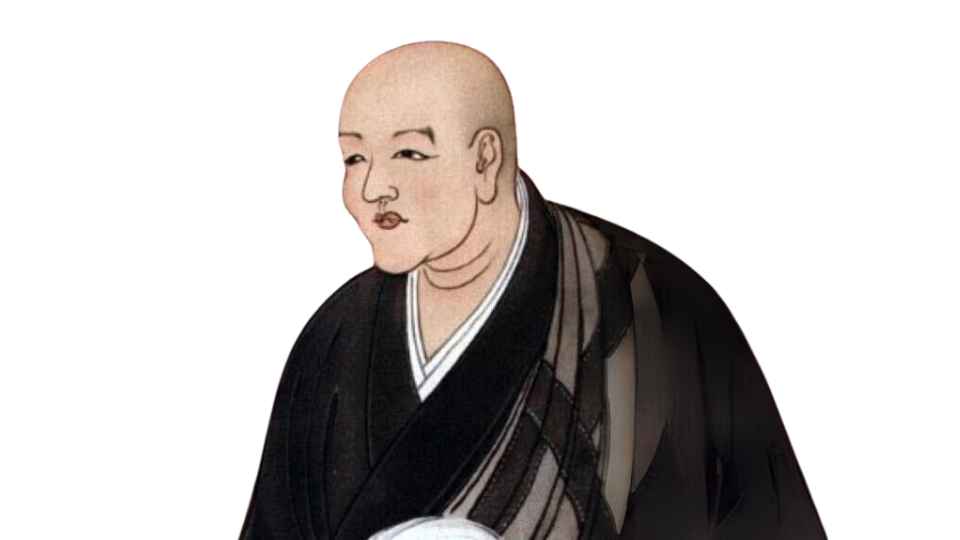
The Awakening in Reverence: Dōgen's Insight
Dōgen's assertion that "bowing is itself awakening" invites us to reconsider the act of bowing not merely as a physical gesture, but as a profound spiritual practice that embodies the essence of awakening. In this simple yet profound act, we find an invitation to cultivate reverence, humility, and presence. This teaching resonates deeply in a world often characterized by distraction and self-importance, reminding us that true awakening can emerge from the most unassuming of gestures.
To bow is to acknowledge something greater than oneself, to surrender the ego, and to enter into a state of openness. In the Zen tradition, this act becomes a portal through which we can experience the interconnectedness of all beings. Dōgen's words challenge us to explore how such a seemingly mundane action can lead to a deeper understanding of our existence and our place within the vast tapestry of life. The act of bowing, then, becomes a practice of awakening, a means to transcend the ordinary and touch the extraordinary.
The image / the metaphor
The imagery of bowing evokes a sense of humility and reverence, where the body physically lowers itself in acknowledgment of something sacred. The verb "bowing" suggests a dynamic movement, an intentional act that requires both physical and mental engagement. This gesture is not merely about bending the body; it is about bending the heart and mind toward a deeper understanding of reality. In this way, bowing becomes a metaphor for the spiritual journey itself—an act of surrender that opens the door to awakening.
In the speaker's tradition
Dōgen, the founder of the Soto school of Zen, emphasizes the importance of direct experience and the practice of zazen (sitting meditation). In this context, bowing is not merely a ritualistic act but a manifestation of the dharma—the teachings that guide us toward enlightenment. Concepts such as sunyata (emptiness) and prajna (wisdom) are deeply intertwined with the act of bowing, as they encourage us to recognize the impermanence of our thoughts and the interconnectedness of all beings. Through bowing, we embody these teachings, allowing them to permeate our being.
In his seminal work, the Shobogenzo, Dōgen articulates the relationship between form and emptiness, suggesting that every action, including bowing, can lead to a deeper understanding of our true nature. The act of bowing, therefore, is not separate from the path of enlightenment; it is an integral part of it. Just as the lotus rises from the mud to bloom, so too does the act of bowing allow us to rise above our attachments and awaken to the beauty of existence.
Living the teaching
Consider a modern scenario where this teaching can be applied: a busy workplace where stress and competition often overshadow collaboration and compassion. In such an environment, taking a moment to bow—whether literally or metaphorically—can serve as a powerful reminder to approach colleagues with humility and respect. This simple act can shift the atmosphere, fostering a sense of community and shared purpose, allowing individuals to connect beyond their roles and titles.
In personal relationships, the act of bowing can manifest as a gesture of reconciliation or gratitude. Imagine a moment of conflict with a loved one, where pride and defensiveness threaten to create distance. By embodying the spirit of bowing—acknowledging the other’s feelings and the shared humanity in the situation—one can pave the way for healing and understanding. This practice of reverence not only deepens connections but also cultivates an environment where awakening can flourish.
A reflection
As we contemplate Dōgen's profound insight that "bowing is itself awakening," we are invited to reflect on our own practices of reverence in daily life. How can we incorporate the spirit of bowing into our interactions with others and ourselves? In what ways might this simple act transform our understanding of connection and awakening? Let this contemplation guide you toward a deeper exploration of humility and presence in your own journey.


