
BrightStar

Ver todos os Events

Descubra encontros conscientes

events

Yoga
Meditation
Breathwork
Qigong
Sacred Music
World Music
Medicine Music
Sound Healing
Ecstatic Dance
Ceremony
Destinos populares
BaliSedonaLos AngelesCosta RicaNew YorkSan FranciscoAustin
Ver todas as categoriasVer todos os destinos

Explorar todos os recursos

Ferramentas poderosas para expandir seus eventos

Recursos da plataforma

Precificação dinâmica inteligente
Categorias de ingressos
Lugares marcados
Recuperação de carrinho abandonado
Recuperação de visitantes
Doações e preço variável
Sistema de afiliados
Scanner de ingressos
Códigos de desconto
Perguntas personalizadas
Compartilhamento de ingressos
Upsells e adicionais
Análises e relatórios
Sequências de e-mail
Lista de espera / Notificar / Lembrar
Pessoas e Lugares
Artists & TeachersEvent OrganizersVenues & StudiosKnowledge BaseGlossaryInspiration
Ver todos os recursosSobre nós
PreçosBlog
Language
Saved events
Ver todos os eventos

events

YogaMeditationBreathworkQigongSacred MusicWorld MusicMedicine MusicSound Healing

Destinos populares

BaliSedonaLos AngelesCosta RicaNew YorkSan Francisco

Pessoas e Lugares

Artists & TeachersEvent OrganizersVenues & StudiosKnowledge BaseGlossaryInspiration

Recursos da plataforma

Precificação dinâmica inteligenteCategorias de ingressosLugares marcadosRecuperação de carrinho abandonadoRecuperação de visitantesDoações e preço variávelSistema de afiliadosScanner de ingressosCódigos de descontoPerguntas personalizadasCompartilhamento de ingressosUpsells e adicionaisAnálises e relatóriosSequências de e-mailLista de espera / Notificar / Lembrar
Ver todos os recursosSobre nós
PreçosBlog
EntrarCadastrar
  • Ver todos os Eventos
  • Para buscadores
  • Yoga
  • Meditação
  • Respiração consciente
  • Qigong
  • Música sagrada
  • World music
  • Música de medicina
  • Terapia sonora
  • Dança extática
  • Cerimônia
  • Retiros
  • Workshops
  • Todas as categorias →
  • Bali
  • Sedona
  • Los Angeles
  • Costa Rica
  • Byron Bay
  • San Francisco
  • Austin
  • New York
  • San Diego
  • Seattle
  • Todas as cidades →
  • Join the Movement
  • Why we list
  • Sell Globally
  • Para criadores
  • Para equipes
  • Para escritores
  • Para professores
  • Para artistas de kirtan
  • Para estúdios
  • Para festivais
  • Para centros de retiro
  • Para organizações sem fins lucrativos
  • Embaixador da marca
  • Ingressos grátis
  • Elevate
  • Amplify
  • Rede de 500K+ compradores
  • Recuperação de carrinho abandonado
  • Precificação dinâmica inteligente
  • Categorias de ingressos
  • Eventos recorrentes
  • Lugares marcados
  • Sistema de afiliados
  • Lista de espera / Notificar
  • Scanner de ingressos
  • Widget incorporável
  • Distribuição de eventos
  • Central de mensagens
  • Integrações
  • Relatórios
  • Todos os recursos →
  • Sobre
  • O ecossistema
  • Blog
  • Glossário
  • Inspiração
  • Central de ajuda
  • Contato
  • Documentação da API
  • Recursos da marca
  • Carreiras
  • Imprensa
  • Termos de Serviço
  • Política de Privacidade

Eventos

  • Ver todos os Eventos
  • Para buscadores
  • Yoga
  • Meditação
  • Respiração consciente
  • Qigong
  • Música sagrada
  • World music
  • Música de medicina
  • Terapia sonora
  • Dança extática
  • Cerimônia
  • Retiros
  • Workshops
  • Todas as categorias →

Destinos

  • Bali
  • Sedona
  • Los Angeles
  • Costa Rica
  • Byron Bay
  • San Francisco
  • Austin
  • New York
  • San Diego
  • Seattle
  • Todas as cidades →

Para criadores

  • Join the Movement
  • Why we list
  • Sell Globally
  • Para criadores
  • Para equipes
  • Para escritores
  • Para professores
  • Para artistas de kirtan
  • Para estúdios
  • Para festivais
  • Para centros de retiro
  • Para organizações sem fins lucrativos
  • Embaixador da marca
  • Ingressos grátis
  • Elevate
  • Amplify

Recursos

  • Rede de 500K+ compradores
  • Recuperação de carrinho abandonado
  • Precificação dinâmica inteligente
  • Categorias de ingressos
  • Eventos recorrentes
  • Lugares marcados
  • Sistema de afiliados
  • Lista de espera / Notificar
  • Scanner de ingressos
  • Widget incorporável
  • Distribuição de eventos
  • Central de mensagens
  • Integrações
  • Relatórios
  • Todos os recursos →

Empresa

  • Sobre
  • O ecossistema
  • Blog
  • Glossário
  • Inspiração
  • Central de ajuda
  • Contato
  • Documentação da API
  • Recursos da marca
  • Carreiras
  • Imprensa
  • Termos de Serviço
  • Política de Privacidade
BrightStar
Baixe o app
Baixar naApp StoreDisponível noGoogle Play
© 2026 BrightStar. Todos os direitos reservados. Créditos das fotos ·
Glossary›Somatic Yoga

Glossary

Somatic Yoga

Somatic yoga is a slow, sensation-led approach to yoga that draws on somatics, especially Thomas Hanna's work, to retrain how the body is felt and moved from within.

Practice it

See all
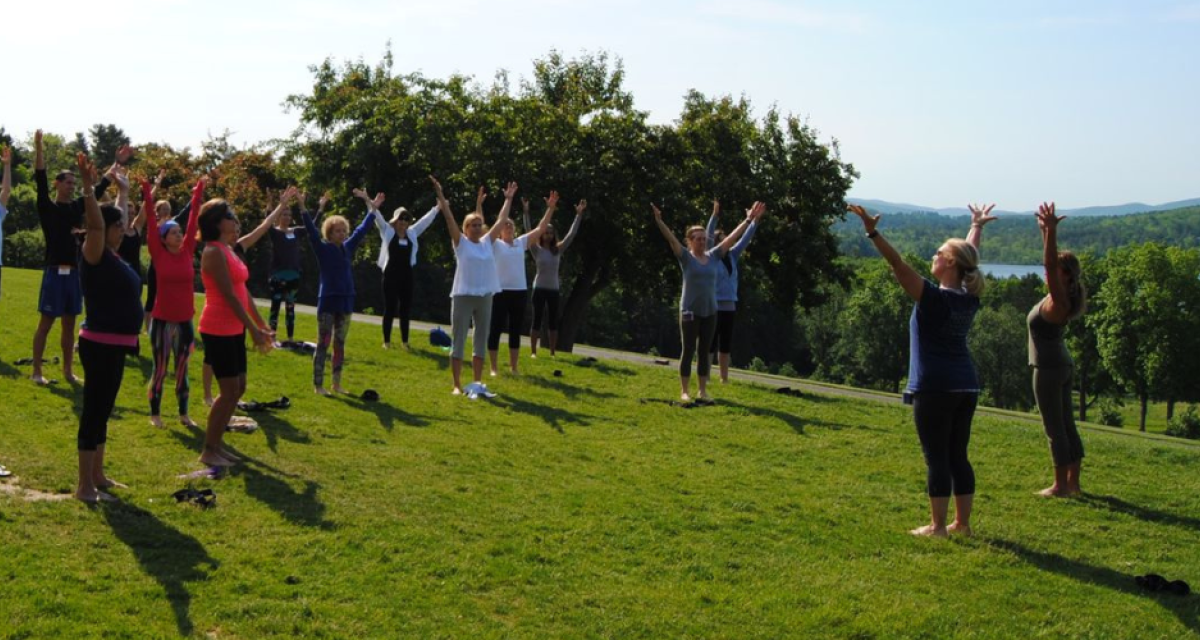
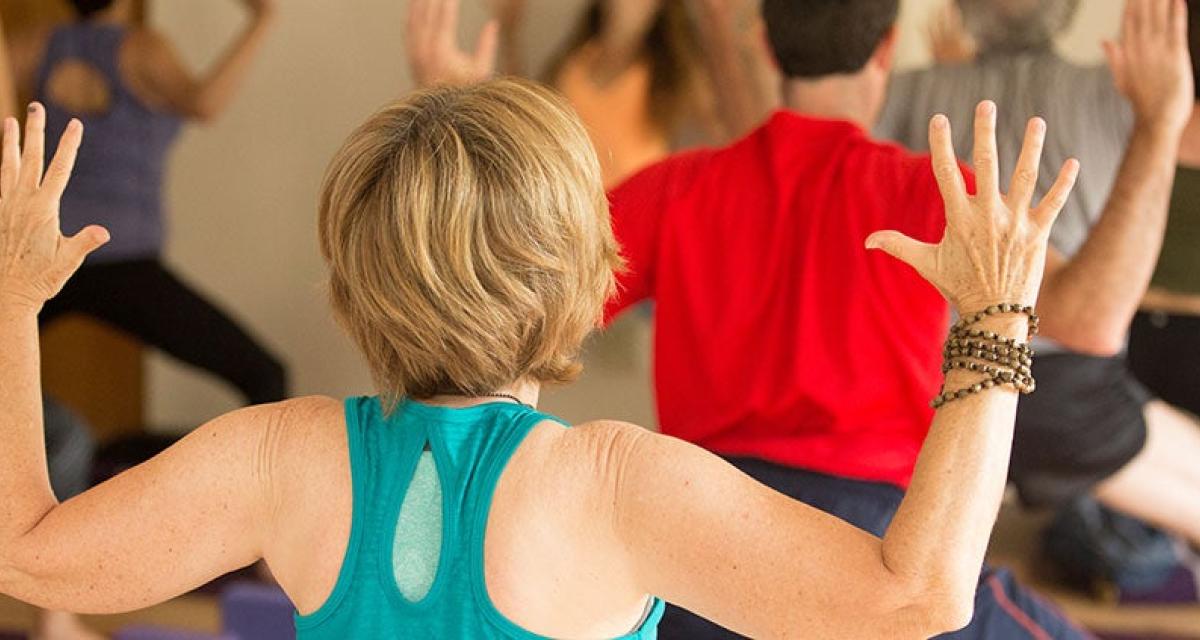
Mon, Nov 16YogAlign: Improve Your Posture and Boost Brain HealthStockbridge, MA, USAMon, Nov 16✨KUNDALINI ENERGY HEALING WITH GABRIELA✨ (Bondi Junction, Sydney)Sydney, New South Wales, AustraliaWed, Nov 18Care for the Caregiver Wellness WorkshopLocation TBDFri, Nov 20Relieve Back Pain and Text Neck: The YogAlign SolutionStockbridge, MA, USA
Rahat Fateh Ali KhanRahat Fateh Ali KhanMusicianXavier RuddXavier RuddYoga TeacherRavi ShankarRavi ShankarMusicianDub SutraDub SutraYoga Teacher

What is Somatic Yoga?

Somatic yoga is an umbrella term for yoga practice that treats the body as it is experienced from the inside (the soma) rather than as an object to be shaped into poses. Its movements are slow and exploratory, and attention stays on sensation, effort, and the quality of movement. The aim is to change habitual patterns of muscular holding and to refine internal body awareness. Achieving a particular posture is not the aim. People asking “what is somatic yoga” or about the somatic yoga meaning will find two overlapping uses of the phrase. The narrower use refers to yoga informed by Thomas Hanna’s somatic education, which uses slow, repeated contraction and release to reduce chronic muscle tension. The broader use refers to any yoga class that borrows from somatic disciplines such as the Feldenkrais Method, body-scan practice, or trauma-informed movement. There is no single governing body, curriculum, or canonical text.

Origins & lineage

The word “somatics” was introduced in its current sense by the American philosopher and movement educator Thomas Hanna (1928–1990). It appears in his book Bodies in Revolt (1970), and he developed it through the 1970s. Hanna trained in the Feldenkrais Method, created by the Israeli engineer and judoka Moshe Feldenkrais (1904–1984). In 1976 Hanna founded the journal Somatics and later directed the Novato Institute for Somatic Research and Training in California. He defined somatics as the study of the body as perceived from within by first-person perception.

Hanna’s later method, Hanna Somatic Education, is built on “pandiculation,” a voluntary version of the stretch-and-yawn reflex. His student and later wife, Eleanor Criswell Hanna, a psychologist, wrote How Yoga Works (1987), which presents yoga as an approach to somatic education. Their framing links the postures of hatha yoga to ideas about the nervous system and learned muscular habits.

The yoga side of the lineage is older and separate. Modern postural yoga took its current shape in the early twentieth century, notably through Tirumalai Krishnamacharya (1888–1989) and his students. Patanjali’s Yoga Sutras are often cited as a precedent for inward attention. Scholars disagree about whether they describe anything like somatic practice, since the text says little about postures beyond the instruction that asana be “steady and comfortable” (sthira-sukham asanam, 2.46). Somatic yoga is therefore best seen as a late twentieth-century convergence of Western somatics and postural yoga, not as an ancient tradition.

How it’s practiced

A typical session moves slowly, often on the floor. A teacher may ask students to make a small movement, such as lifting a shoulder or rolling a pelvis, and to notice where effort begins and where it spreads. Movements are repeated at low intensity with pauses, so the nervous system can register the difference between holding and release. Verbal cues emphasize noticing (“what do you feel in the ribs?”) over correcting. Breath is observed more than controlled. Many classes end with rest and a short body scan. Poses from hatha yoga such as cat-cow, bridge, or child’s pose may appear, but they are treated as environments for exploring sensation. A visible, finished shape is not the goal.

Somatic Yoga today

Somatic yoga is now widely taught in studios, in online video libraries, and in teacher-training programs. Some programs have an explicit Hanna Somatic Education connection, and others use the label loosely. Some retreats pair it with trauma-informed practice, and some physical therapists and bodyworkers use similar methods with clients who have chronic pain. Its growth has coincided with wider public interest in the nervous system, interoception, and trauma-sensitive movement. Research on somatic yoga as a distinct method is limited. Studies of related practices, such as mindful movement and yoga for back pain, exist, but they should not be read as proof of claims specific to somatic yoga.

Common misconceptions

  • It is not a single standardized style. Unlike Iyengar or Ashtanga yoga, it has no fixed sequence or certifying authority. Quality and content vary by teacher.
  • It is not the same as Somatic Experiencing. That is a trauma-therapy model developed by Peter Levine. Some teachers draw on it, but it is a separate discipline.
  • It is not therapy. A yoga class is not psychotherapy or medical treatment, and claims of curing pain or trauma should be treated cautiously.
  • It is not necessarily easy. The movements are gentle, but sustained attention to sensation can be demanding, and some people with trauma histories find interoceptive focus unsettling.
  • It is not ancient. The term and method date to the twentieth century, even where teachers cite classical yoga.

How to begin

Those new to the practice can start with a beginner-level somatic yoga class, which may be advertised as “somatic movement,” “gentle floor yoga,” or “Hanna Somatics.” Eleanor Criswell Hanna’s How Yoga Works and Thomas Hanna’s Somatics (1988) give the conceptual background. Look for teachers who describe their training and who offer options and rest instead of pushing intensity. Anyone with injuries, chronic pain, or a trauma history should consult a health professional and tell the teacher beforehand. Two or three short sessions a week, done with attention to sensation, are enough to learn whether the approach suits you.

Related terms

somatic movement therapyfeldenkrais bodyworksomatic experiencingbody scan meditationyoga sutras patanjalitirumalai krishnamacharya
All termsDiscover