BrightStar

Ver todos os Events

Descubra encontros conscientes

events

Yoga
Meditation
Breathwork
Qigong
Tai Chi
Sacred Music
World Music
Medicine Music
Sound Healing
Ecstatic Dance
Destinos populares
BaliSedonaLos AngelesCosta RicaNew YorkSan FranciscoAustinMiamiJoshua TreeTulum
Ver todas as categoriasVer todos os destinos

Explorar todos os recursos

Ferramentas poderosas para expandir seus eventos

Recursos da plataforma

Precificação dinâmica inteligente
Categorias de ingressos
Lugares marcados
Recuperação de carrinho abandonado
Recuperação de visitantes
Doações e preço variável
Sistema de afiliados
Scanner de ingressos
Códigos de desconto
Perguntas personalizadas
Compartilhamento de ingressos
Upsells e adicionais
Análises e relatórios
Sequências de e-mail
Lista de espera / Notificar / Lembrar
Pessoas e Lugares
Artists & TeachersEvent OrganizersVenues & StudiosKnowledge BaseGlossaryInspiration
Ver todos os recursosSobre nós
PreçosBlog
Language
Saved events
Ver todos os eventos

events

YogaMeditationBreathworkQigongTai ChiSacred MusicWorld MusicMedicine Music

Destinos populares

BaliSedonaLos AngelesCosta RicaNew YorkSan Francisco

Pessoas e Lugares

Artists & TeachersEvent OrganizersVenues & StudiosKnowledge BaseGlossaryInspiration

Recursos da plataforma

Precificação dinâmica inteligenteCategorias de ingressosLugares marcadosRecuperação de carrinho abandonadoRecuperação de visitantesDoações e preço variávelSistema de afiliadosScanner de ingressosCódigos de descontoPerguntas personalizadasCompartilhamento de ingressosUpsells e adicionaisAnálises e relatóriosSequências de e-mailLista de espera / Notificar / Lembrar
Ver todos os recursosSobre nós
PreçosBlog
EntrarBuscadoresCriadores
  • Ver todos os Eventos
  • Para buscadores
  • Yoga
  • Meditação
  • Respiração consciente
  • Qigong
  • Tai chi
  • Música sagrada
  • World music
  • Música de medicina
  • Terapia sonora
  • Dança extática
  • Retiros
  • Workshops
  • Todas as categorias →
  • Bali
  • Sedona
  • Los Angeles
  • Costa Rica
  • Tulum
  • Byron Bay
  • San Francisco
  • Austin
  • New York
  • San Diego
  • Denver
  • Seattle
  • Portland
  • Miami
  • Todas as cidades →
  • Join the Movement
  • Why we list
  • Sell Globally
  • Para criadores
  • Para equipes
  • Para escritores
  • Para professores
  • Para artistas de kirtan
  • Para estúdios
  • Para festivais
  • Para centros de retiro
  • Para organizações sem fins lucrativos
  • Embaixador da marca
  • Estudos de caso
  • Ingressos grátis
  • Elevate
  • Amplify
  • Rede de 500K+ compradores
  • Recuperação de carrinho abandonado
  • Precificação dinâmica inteligente
  • Categorias de ingressos
  • Eventos recorrentes
  • Lugares marcados
  • Sistema de afiliados
  • Lista de espera / Notificar
  • Scanner de ingressos
  • Widget incorporável
  • Distribuição de eventos
  • Central de mensagens
  • Integrações
  • Relatórios
  • Todos os recursos →
  • Sobre
  • O ecossistema
  • Blog
  • Glossário
  • Inspiração
  • Central de ajuda
  • Contato
  • Documentação da API
  • Recursos da marca
  • Carreiras
  • Imprensa
  • Termos de Serviço
  • Política de Privacidade

Eventos

  • Ver todos os Eventos
  • Para buscadores
  • Yoga
  • Meditação
  • Respiração consciente
  • Qigong
  • Tai chi
  • Música sagrada
  • World music
  • Música de medicina
  • Terapia sonora
  • Dança extática
  • Retiros
  • Workshops
  • Todas as categorias →

Destinos

  • Bali
  • Sedona
  • Los Angeles
  • Costa Rica
  • Tulum
  • Byron Bay
  • San Francisco
  • Austin
  • New York
  • San Diego
  • Denver
  • Seattle
  • Portland
  • Miami
  • Todas as cidades →

Para criadores

  • Join the Movement
  • Why we list
  • Sell Globally
  • Para criadores
  • Para equipes
  • Para escritores
  • Para professores
  • Para artistas de kirtan
  • Para estúdios
  • Para festivais
  • Para centros de retiro
  • Para organizações sem fins lucrativos
  • Embaixador da marca
  • Estudos de caso
  • Ingressos grátis
  • Elevate
  • Amplify

Recursos

  • Rede de 500K+ compradores
  • Recuperação de carrinho abandonado
  • Precificação dinâmica inteligente
  • Categorias de ingressos
  • Eventos recorrentes
  • Lugares marcados
  • Sistema de afiliados
  • Lista de espera / Notificar
  • Scanner de ingressos
  • Widget incorporável
  • Distribuição de eventos
  • Central de mensagens
  • Integrações
  • Relatórios
  • Todos os recursos →

Empresa

  • Sobre
  • O ecossistema
  • Blog
  • Glossário
  • Inspiração
  • Central de ajuda
  • Contato
  • Documentação da API
  • Recursos da marca
  • Carreiras
  • Imprensa
  • Termos de Serviço
  • Política de Privacidade
BrightStar
© 2026 BrightStar. Todos os direitos reservados.
Watch

Ra Ma Da Sa Mantra: Healing Through Sacred Sound

Girish
Girish
Dec 20, 2019
7 min de leitura

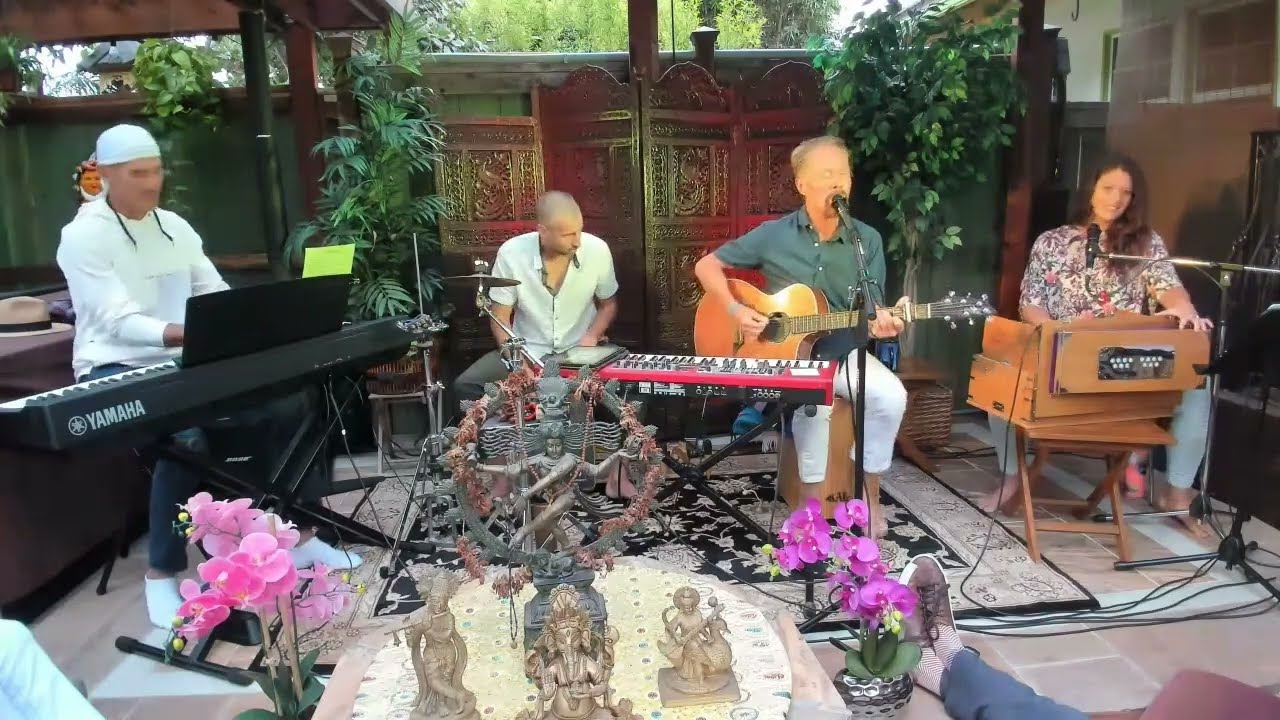
Four syllables, each a doorway into a different dimension of healing. Ra Ma Da Sa—a mantra that has moved through decades of spiritual practice, surviving in the voices of yoga studios, ashrams, and now, increasingly, in the ears of listeners seeking solace in recorded form. Girish's interpretation on his album Sky of the Heart represents one contemporary thread in an ancient lineage: the use of sacred sound to shift consciousness and restore wholeness.

Leitura · 8 seções

What Is Ra Ma Da Sa?

Ra Ma Da Sa originates within Kundalini yoga, a practice system that views sound as a primary instrument of transformation. Each syllable carries specific vibrational and energetic significance within this tradition. Ra is associated with the sun, with vitality and illumination; Ma connects to the moon, intuition, and the cooling, calming principle; Da relates to the earth element and grounding stability; and Sa invokes the infinite, the totality of existence. Together, they form a formula—not merely poetic, but understood in Kundalini practice as a precise therapeutic sequence.

The mantra belongs to a category known as healing mantras, distinguished from others by their explicit intention to restore physical, emotional, and spiritual equilibrium. Unlike mantras primarily used for concentration or devotion, Ra Ma Da Sa works through what practitioners describe as a direct energetic transmission. The repetition of these sounds, whether sung or chanted, is believed to activate the parasympathetic nervous system and create coherence across body systems.

Historical Roots and Traditional Use

The mantra's formal lineage in Kundalini yoga traces to Yogi Bhajan, who brought this system from India to the West beginning in the late 1960s. Yogi Bhajan taught Ra Ma Da Sa as part of a comprehensive healing technology, often recommending it for practitioners facing illness, emotional turbulence, or spiritual imbalance. In the traditional context, the mantra was practiced in specific ways—particular rhythms, repetition counts, hand positions—each element understood as part of a larger architecture of healing.

The mantra gained particular prominence within the sangat (spiritual community) as a response to crisis. Practitioners report using it during periods of grief, illness in loved ones, or personal transformation. Its function was never merely about achieving relaxation, though that is often a byproduct; it was understood as a direct invocation of healing energy, a way of surrendering to a larger intelligence.

The Shift into Kirtan: Sound as Devotion and Medicine

Kirtan—the practice of call-and-response chanting, typically accompanied by harmonium, drums, and other instruments—offers a different portal into these ancient sounds. Where traditional Kundalini practice emphasizes precise technical execution, kirtan emphasizes direct emotional participation and communal resonance. Ra Ma Da Sa, when sung in a kirtan circle, becomes less a technical protocol and more an invitation into a shared state of heart opening and collective healing.

This shift is significant. A mantra practiced in isolation, even with perfect form, engages different capacities than one sung in community with others. The harmonium's drone establishes a sonic container; the rhythm of the group creates momentum; the call of one voice inviting response from others establishes a circuit of energy exchange. Girish's recording of Ra Ma Da Sa exists in this space—preserving the intimacy and warmth of kirtan practice while making it available to listeners who may never attend a public chant.

Ra Ma Da Sa in Modern Spiritual Practice

Contemporary practitioners approach this mantra with diverse intentions. Some use it as a meditation tool, repeating it for extended periods to access deeper states of consciousness. Others integrate it into their yoga practice, chanting it at specific moments—often at the close of asana practice or during savasana (final relaxation). Many report using it specifically during times of health challenges or grief, relying on the sound itself as a form of medicine.

The accessibility of recorded kirtan has transformed how people encounter these sounds. A generation ago, learning to chant Ra Ma Da Sa required attending a yoga class or ashram gathering. Now, albums and digital streams make it possible to receive the mantra's transmission alone, in one's home, at any hour. This democratization is not without trade-offs—the loss of a teacher's direct guidance, the absence of a live community, the removal of the lived context that historically surrounded the practice. Yet it also creates new possibilities: individuals who would never discover this lineage through institutional yoga now encounter it through music.

The Mechanics of Mantra Healing

How does sound become healing? Spiritual traditions answer this through their own frameworks, describing energy channels, chakras, and frequencies of consciousness. Modern science offers parallel insights: research on chanting, harmonic resonance, and vocalization suggests measurable effects on heart rate variability, cortisol levels, and brain wave patterns. When a person chants—whether alone or in group—physiological shifts occur. The vagus nerve, which governs parasympathetic tone, appears to respond to the vibrations and rhythms of the practice.

The subjective experience, however, often exceeds what measurements capture. Practitioners describe Ra Ma Da Sa as creating a felt sense of safety, as if the mantra itself becomes a protective presence. Others experience it as an opening—a softening of the boundary between self and other, a dissolution of the sense of separation. These descriptions may seem incompatible with scientific language, yet both point to something real: the capacity of sustained, intentional sound to shift consciousness in reproducible ways.

Girish and Contemporary Kirtan Practice

Girish's place in the contemporary kirtan landscape reflects a broader movement: the re-animation of these ancient practices through new musical forms. The album Sky of the Heart, which includes his version of Ra Ma Da Sa, represents an attempt to honor the traditional essence of the mantra while placing it in a contemporary sonic context. His choice to record it signals something important: that these sounds are not museum pieces or historical artifacts, but living practices with ongoing relevance.

The decision to release Ra Ma Da Sa as a recorded piece also acknowledges something about spiritual life in the modern world. Not everyone has access to a kirtan teacher or a regular chanting community. For many, recorded versions serve as both introduction and ongoing practice. The mantra reaches people in moments of solitude, in cars, on meditation cushions, in yoga studios. Each listener becomes, in a sense, a participant in a dispersed sangat—a community united not by physical proximity but by shared engagement with these sounds.

Practicing Ra Ma Da Sa Today

There is no single correct way to work with this mantra in modern practice. Some traditions recommend specific protocols—chanting 40 days, or 120 days, for particular outcomes. Others suggest simply encountering the mantra when it calls to you, allowing the practice to emerge organically. Many practitioners combine listening to recordings (like Girish's version) with occasional live participation in kirtan circles, creating a spectrum of engagement.

The benefits reported by contemporary practitioners align with traditional descriptions: increased emotional resilience, a sense of inner steadiness, the capacity to remain open-hearted even during difficulty. Some describe it as a tool for processing grief; others as a way to access joy that feels grounded and sustainable rather than fleeting. The consistent note across diverse experiences is the mantra's ability to anchor consciousness to something larger than individual distress or circumstance.

Where to go from here

If Ra Ma Da Sa resonates with you, the traditional recommendation is to begin a practice. This could mean listening to Girish's recording daily for a period; attending a live kirtan class if one is available in your area; or learning to chant it yourself, allowing your own voice to become the instrument. Some traditions suggest 40 days as an entry point—sufficient time for the mantra's effects to become tangible, for the practice to establish itself not just as an intellectual interest but as a felt experience.

The mantra exists at the intersection of art, spirituality, and what might be called sonic medicine. Engaging with it is an act of both devotion and pragmatism—honoring an ancient tradition while working directly with sound to shift one's inner state. In this moment, when collective anxiety and isolation are widespread, practices like Ra Ma Da Sa offer something that neither purely technological nor purely psychological interventions seem to provide: a bridge between individual and collective healing, between personal consciousness and something transcendent, accessed through the simplest possible technology—the human voice, sustained sound, and the willingness to be moved.
Comments

Loading the conversation…

Girish
ArtistGirish

Girish is a kirtan artist who leads chant, live music, workshops and retreats, with a welcoming approach for people of all musical levels.

Ver perfilSite
Explorar temas
Mantra-healingKirtanKundalini-yogaSacred-soundSpiritual-practice

Tem perguntas?

Perguntas frequentes

Ra Ma Da Sa breaks down into four syllables with distinct energetic meanings: Ra (sun/vitality), Ma (moon/intuition), Da (earth/grounding), and Sa (infinity/totality). Together, they form a healing formula used to restore physical, emotional, and spiritual balance within the Kundalini yoga tradition.
You can practice by chanting it aloud, listening to recordings like Girish's version, or repeating it silently during meditation. Traditional approaches recommend consistent daily practice for 40 days to begin experiencing the mantra's stabilizing effects.
Research shows that chanting practices produce measurable physiological changes, including shifts in heart rate variability, cortisol levels, and parasympathetic nervous system activation. The subjective experiences practitioners report—increased calm, emotional resilience, heart opening—align with both traditional descriptions and modern neuroscience findings.
Kirtan is call-and-response chanting in community, typically accompanied by instruments like harmonium and drums, emphasizing collective emotional participation. Traditional mantra practice can be more solitary and technically precise. Both engage the healing power of sound, but through different experiences.
Yes. Recorded versions like Girish's allow you to engage with the mantra's vibrations and melody without needing access to a live teacher or group. Many contemporary practitioners combine recorded listening with occasional live kirtan to deepen their practice.
Practitioners use it during meditation, yoga practice, times of emotional difficulty or grief, and for general spiritual grounding. It's often chanted at the close of yoga classes or during periods of personal transformation or healing.
The mantra originates in the Kundalini yoga tradition and gained prominence in the West through teacher Yogi Bhajan, beginning in the late 1960s. It has since become part of contemporary yoga and kirtan practice, reaching new audiences through recordings and digital platforms.

Continuar lendo

More from Girish

Ver Tudo
Gospel Meets Kirtan: How to Find Your Sacred Voice
Inspire

Gospel Meets Kirtan: How to Find Your Sacred Voice

Kirtan artist demonstrates how gospel and Sanskrit mantras share the same spiritual purpose. Learn why every voice—trained or not—is sacred …

1 min read
Same Sun: Girish's Chant from Sky of the Heart
Inspire

Same Sun: Girish's Chant from Sky of the Heart

Girish performs "Same Sun," a kirtan piece from his album Sky of the Heart, a meditative vocal work rooted in devotional tradition.…

1 min read
Nice vs. Loving Kindness: Why Being Kind Starts Inside
Inspire

Nice vs. Loving Kindness: Why Being Kind Starts Inside

Most people who resolve to be kinder find the resolve slipping within days. Eckhart Tolle's short talk on loving kindness argues the fault i…

1 min read
Bhaja Mana Radha Govinda Kirtan: Meaning and Practice
Inspire

Bhaja Mana Radha Govinda Kirtan: Meaning and Practice

A seven-minute London kirtan of the maha-mantra Bhaja Mana Radha Govinda, unpacked: its meaning, its call-and-response form, and the New Yor…

1 min read

Continue explorando

Continue sua jornada

Mais sabedoria e mais encontros de todo o diretório BrightStar.

Mais artigos

Explore a biblioteca completa de ensinamentos, entrevistas e guias.

Voltar a todos os artigos →

Professores e artistas

Conheça as linhagens, os músicos e os guias do mundo consciente.

Explorar artistas →

Encontre um evento

Kirtan, retiros, banhos de som, breathwork, festivais — acontecendo em breve.

Ver eventos →
