BrightStar

Ver todos os Events

Descubra encontros conscientes

events

Yoga
Meditation
Breathwork
Qigong
Tai Chi
Sacred Music
World Music
Medicine Music
Sound Healing
Ecstatic Dance
Destinos populares
BaliSedonaLos AngelesCosta RicaNew YorkSan FranciscoAustinMiamiJoshua TreeTulum
Ver todas as categoriasVer todos os destinos

Explorar todos os recursos

Ferramentas poderosas para expandir seus eventos

Recursos da plataforma

Precificação dinâmica inteligente
Categorias de ingressos
Lugares marcados
Recuperação de carrinho abandonado
Recuperação de visitantes
Doações e preço variável
Sistema de afiliados
Scanner de ingressos
Códigos de desconto
Perguntas personalizadas
Compartilhamento de ingressos
Upsells e adicionais
Análises e relatórios
Sequências de e-mail
Lista de espera / Notificar / Lembrar
Pessoas e Lugares
Artists & TeachersEvent OrganizersVenues & StudiosKnowledge BaseGlossaryInspiration
Ver todos os recursosSobre nós
PreçosBlog
Language
Saved events
Ver todos os eventos

events

YogaMeditationBreathworkQigongTai ChiSacred MusicWorld MusicMedicine Music

Destinos populares

BaliSedonaLos AngelesCosta RicaNew YorkSan Francisco

Pessoas e Lugares

Artists & TeachersEvent OrganizersVenues & StudiosKnowledge BaseGlossaryInspiration

Recursos da plataforma

Precificação dinâmica inteligenteCategorias de ingressosLugares marcadosRecuperação de carrinho abandonadoRecuperação de visitantesDoações e preço variávelSistema de afiliadosScanner de ingressosCódigos de descontoPerguntas personalizadasCompartilhamento de ingressosUpsells e adicionaisAnálises e relatóriosSequências de e-mailLista de espera / Notificar / Lembrar
Ver todos os recursosSobre nós
PreçosBlog
EntrarBuscadoresCriadores
  • Ver todos os Eventos
  • Para buscadores
  • Yoga
  • Meditação
  • Respiração consciente
  • Qigong
  • Tai chi
  • Música sagrada
  • World music
  • Música de medicina
  • Terapia sonora
  • Dança extática
  • Retiros
  • Workshops
  • Todas as categorias →
  • Bali
  • Sedona
  • Los Angeles
  • Costa Rica
  • Tulum
  • Byron Bay
  • San Francisco
  • Austin
  • New York
  • San Diego
  • Denver
  • Seattle
  • Portland
  • Miami
  • Todas as cidades →
  • Join the Movement
  • Why we list
  • Sell Globally
  • Para criadores
  • Para equipes
  • Para escritores
  • Para professores
  • Para artistas de kirtan
  • Para estúdios
  • Para festivais
  • Para centros de retiro
  • Para organizações sem fins lucrativos
  • Embaixador da marca
  • Ingressos grátis
  • Elevate
  • Amplify
  • Rede de 500K+ compradores
  • Recuperação de carrinho abandonado
  • Precificação dinâmica inteligente
  • Categorias de ingressos
  • Eventos recorrentes
  • Lugares marcados
  • Sistema de afiliados
  • Lista de espera / Notificar
  • Scanner de ingressos
  • Widget incorporável
  • Distribuição de eventos
  • Central de mensagens
  • Integrações
  • Relatórios
  • Todos os recursos →
  • Sobre
  • O ecossistema
  • Blog
  • Glossário
  • Inspiração
  • Central de ajuda
  • Contato
  • Documentação da API
  • Recursos da marca
  • Carreiras
  • Imprensa
  • Termos de Serviço
  • Política de Privacidade

Eventos

  • Ver todos os Eventos
  • Para buscadores
  • Yoga
  • Meditação
  • Respiração consciente
  • Qigong
  • Tai chi
  • Música sagrada
  • World music
  • Música de medicina
  • Terapia sonora
  • Dança extática
  • Retiros
  • Workshops
  • Todas as categorias →

Destinos

  • Bali
  • Sedona
  • Los Angeles
  • Costa Rica
  • Tulum
  • Byron Bay
  • San Francisco
  • Austin
  • New York
  • San Diego
  • Denver
  • Seattle
  • Portland
  • Miami
  • Todas as cidades →

Para criadores

  • Join the Movement
  • Why we list
  • Sell Globally
  • Para criadores
  • Para equipes
  • Para escritores
  • Para professores
  • Para artistas de kirtan
  • Para estúdios
  • Para festivais
  • Para centros de retiro
  • Para organizações sem fins lucrativos
  • Embaixador da marca
  • Ingressos grátis
  • Elevate
  • Amplify

Recursos

  • Rede de 500K+ compradores
  • Recuperação de carrinho abandonado
  • Precificação dinâmica inteligente
  • Categorias de ingressos
  • Eventos recorrentes
  • Lugares marcados
  • Sistema de afiliados
  • Lista de espera / Notificar
  • Scanner de ingressos
  • Widget incorporável
  • Distribuição de eventos
  • Central de mensagens
  • Integrações
  • Relatórios
  • Todos os recursos →

Empresa

  • Sobre
  • O ecossistema
  • Blog
  • Glossário
  • Inspiração
  • Central de ajuda
  • Contato
  • Documentação da API
  • Recursos da marca
  • Carreiras
  • Imprensa
  • Termos de Serviço
  • Política de Privacidade
BrightStar
Baixe o app
Baixar naApp StoreDisponível noGoogle Play
© 2026 BrightStar. Todos os direitos reservados.
Inspiration

Warm-Heartedness: Why Intelligence Needs a Kind Heart

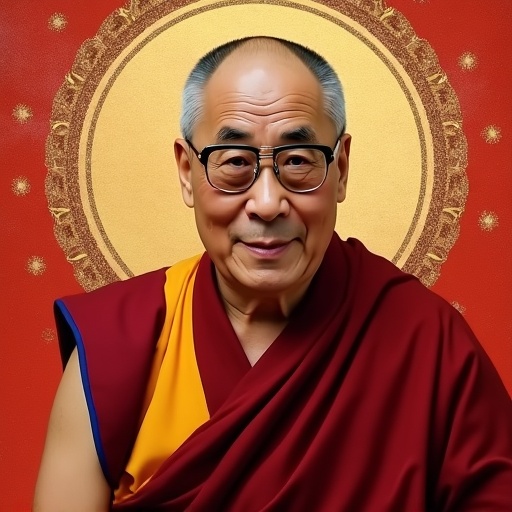
Dalai Lama
Dalai Lama
Oct 23, 2026
6 min de leitura

De Dalai Lama

Assistir · 6

In a clip of barely a minute and forty seconds, the Dalai Lama makes a claim that sounds like simple folk wisdom until you sit with its implications: warm-heartedness, which he treats as the root of altruism, determines how the whole of experience appears to us, and human intelligence, for all its power, becomes dangerous when it is cut off from that warmth. The recording was made on November 11, 2019, and it is spare, unadorned, and built on a short chain of contrasts: a self-centered mind against an open one, analysis against suspicion, wisdom against narrow-mindedness. Read slowly, those contrasts add up to a practical theory of perception, of why we act as we do, and of what happens when a sharp mind serves a closed heart.

Leitura · 6 seções

What does it mean that a warm heart changes how everything looks?

The clip opens with the central claim. With a warm heart, he says, the entire phenomenon of life appears more positive (0:00). He sets this against the opposite condition. "Too much self-centered mind," he says, and then he gives the inner voice in its own words: "me me me me me" (0:12). When that voice dominates, the same world appears negative and fearful (0:17).

The grammar of that passage matters. He does not say that a self-centered person has a single bad reaction to a single bad event. He says the whole field of experience takes on a different color. A mind organized around itself reads everything it meets as a question of how it will be affected, and a question framed that way almost always returns a threatening answer. The repetition of "me" is a portrait of a loop: every event gets routed back through the self, and the self is the one thing that cannot feel secure in a world that does not bend to it.

This is a claim you can test rather than simply accept. In a tense moment, notice where your attention has gone. If it has collapsed onto your own status, your own comfort, your own grievance, the whole scene may be tilting toward fear for that reason alone. The Dalai Lama's point is that the remedy is not to see less but to widen the frame, and that widening begins with the heart.

Why is altruism more than a religious duty?

At 0:27 he says altruism is important not only according to religious tradition. He then moves the argument outward in a deliberate ladder: first a healthy viewpoint, then a happy society, then a happy world and a happy humanity (0:35 to 0:43). At the top of that ladder he names the key factor directly: "warm-heartedness is the key factor" (0:45).

What is striking is the shift in justification. He does not ask listeners to be altruistic because a text says so. He argues that altruism is healthy, that it produces a healthier way of seeing, and that its effects compound from the individual outward to whole societies. That is a claim about consequences, and it invites a listener to check those consequences in their own life. Does kindness make your viewpoint clearer, or more brittle? Does generosity make your relationships steadier? The clip leaves those questions open and trusts the listener to answer them.

What is the job of human intelligence in this picture?

This is the part of the talk most likely to surprise a listener who expects a warning against thinking. At 0:48 he calls the human brain "wonderful" and says it "should cooperate with warm-heartedness." At 0:57 he says human intelligence is very helpful for one particular task: to analyze the self-centered attitude (0:57 to 1:02).

In other words, intelligence is not the enemy of the heart. It is the instrument that can examine the self-centered habit and expose it. He asks the practical question directly: what is the benefit? His answer is that self-centeredness is short-sighted and narrow-minded (1:05 to 1:12). Intelligence, turned on the self, finds that the self's strategy has a poor return. Then he sets the alternative beside it: altruism, which he describes as the really wise course (1:14 to 1:17).

The argument, then, is not that we should think less but that we should aim thinking at the right object. Analysis pointed at the self tends to produce defensiveness. Analysis pointed at the consequences of selfishness produces a clear case for warmth. The intelligence is the same; the direction changes the outcome.

When does a brilliant mind become dangerous?

The clip's final turn is its most serious. "Sometimes without warm-heartedness," he says, and then he names the hazard: "full suspicion, anger" (1:26 to 1:29). When intelligence operates inside that condition, he says, the wonderful human brain and wonderful human intelligence "sometimes become more dangerous" (1:33 to 1:38).

The warning is precise. He does not say that intelligence is dangerous on its own. He says it becomes dangerous in combination with suspicion and anger. A mind that is capable but suspicious is good at building justifications, at finding the evidence it expects to find, and at making a grievance sound reasonable. Intelligence supplies the skill; suspicion and anger supply the direction. The talk asks the listener to notice that a sophisticated argument can be the most effective vehicle for a closed heart.

This is why the clip frames warm-heartedness not as a sentimental extra but as a condition that intelligence needs to remain safe. Clever people do harm when their cleverness is working for fear.

How can you put these ideas to work?

The clip offers no exercises, and it would be a mistake to invent a method and attribute it to him. But its logic suggests a few practical checks that a reader can run on their own experience. Begin with perception: when a situation looks uniformly threatening, ask whether your attention has returned to yourself. Next, examine the benefit: when you feel the pull of self-centered reasoning, ask honestly what it gains you over time, which is the question he asks at 1:05. Finally, watch for the suspicion-and-anger pattern. If your analysis keeps arriving at the same bitter conclusion about other people, the problem may be the warmth that is missing from the reasoning, not the reasoning itself.

These are readings of his argument, not quotations of it. They are offered as a way of taking a two-minute teaching seriously enough to test it against real days.

Where to go from here

Watch the clip again with the three contrasts in mind: a warm heart against a self-centered one, intelligence that analyzes against intelligence that is fused with suspicion, and altruism as a healthy viewpoint against self-centeredness as a short-sighted one. Then take one ordinary interaction this week and ask which of the two frames you were using. The Dalai Lama's claim is simple to state and hard to live, and the test of it is the moment you feel the whole world tilt toward fear.

Comments

Loading the conversation…

Transcript

[0:00] So, warm-heartedness here. Uh

[0:04] And then

[0:06] entire phenomena appears you more

[0:10] positive.

[0:12] Too much self-centered mind. Just think

[0:15] me me me me me.

[0:17] Then entire phenomena

[0:20] appears something uh negative and fear.

[0:25] So, therefore,

[0:26] the

[0:27] altruism is not only something important

[0:31] according to religious sort of

[0:33] tradition.

[0:34] But

[0:35] healthy viewpoint

[0:37] and happy society

[0:39] and finally

[0:41] happy world

[0:43] happy humanity

[0:45] warm-heartedness is the key factor.

[0:48] And this human

[0:50] wonderful brain

[0:52] should cooperate with warm-heartedness.

[0:57] Human intelligence very helpful

[1:00] to analyze

[1:02] the

[1:03] self-centered attitude. What's the

[1:05] benefit?

[1:08] Self-centered this short-sighted

[1:12] narrow-minded.

[1:14] Think other

[1:15] altruism

[1:17] that really wise. So, human intelligence

[1:22] must combine with warm-heartedness.

[1:26] Sometimes without warm-heartedness and

[1:29] full suspicion anger, then intelligence

[1:33] wonderful human brain wonderful human

[1:36] intelligence they sometimes become more

[1:38] dangerous.

Dalai Lama
ArtistDalai Lama

Spiritual leader of Tibetan Buddhism and Nobel Peace Prize laureate (1989). Born Lhamo Thondup in 1935, recognized at age two as the reincarnation of the 13th Dalai Lama, he fled i…

Ver perfilSite
Explorar temas
Warm-heartednessAltruismSelf-centerednessDalai-lama-teachingsHuman-intelligence

Tem perguntas?

Perguntas frequentes

In this short recording, the Dalai Lama describes warm-heartedness as the key factor for a happy individual, society, and world. He contrasts it with a self-centered mind, which he says makes the whole of experience appear negative and fearful.
He says intelligence becomes dangerous when it operates without warm-heartedness, especially alongside full suspicion and anger. The skill of the mind is not the problem; the emotional direction it serves is.
No. He says altruism is important not only according to religious tradition, but also as a healthy viewpoint that leads to a happy society, world, and humanity.
According to the clip, a self-centered mind filters everything through the question of how it is affected, so the entire phenomenon appears negative and fearful. A warm heart, by contrast, makes the same world appear more positive.
One reading of his talk is to notice when your attention collapses onto yourself, ask what self-centered reasoning actually gains over time, and watch for patterns of suspicion and anger. These are interpretations of his argument, not exercises he prescribes in the clip.
The video was originally recorded on November 11, 2019, according to its description. It runs under two minutes and is a short excerpt rather than a full teaching.

Continuar lendo

More from Dalai Lama

Ver Tudo
Why Intelligence Needs a Warm Heart: A Short Teaching
Inspire

Why Intelligence Needs a Warm Heart: A Short Teaching

In a 2019 teaching, the Dalai Lama argues that a warm heart makes the world look more positive, and that intelligence without compassion can…

7 min read
A Child on a Mother's Shoulder: Lessons in Kindness
Inspire

A Child on a Mother's Shoulder: Lessons in Kindness

In a 90-second recollection, the Dalai Lama describes riding on his mother's shoulders in a poor village, pulling her ears and shouting, and…

8 min read
Calling on Loving Presence: A Guided Path From Fear to Trust
Inspire

Calling on Loving Presence: A Guided Path From Fear to Trust

Tara Brach's guided meditation on calling on loving presence: find the place of fear, listen for its longing, and let a source of care answe…

8 min read
Staying Grounded When Overwhelm Shuts Down Practice
Inspire

Staying Grounded When Overwhelm Shuts Down Practice

Tara Brach answers the question many practitioners carry: what happens to the spiritual path when life overwhelms us? Her answer is small do…

10 min read

Continue explorando

Continue sua jornada

Mais sabedoria e mais encontros de todo o diretório BrightStar.

Mais artigos

Explore a biblioteca completa de ensinamentos, entrevistas e guias.

Voltar a todos os artigos →

Professores e artistas

Conheça as linhagens, os músicos e os guias do mundo consciente.

Explorar artistas →

Encontre um evento

Kirtan, retiros, banhos de som, breathwork, festivais — acontecendo em breve.

Ver eventos →