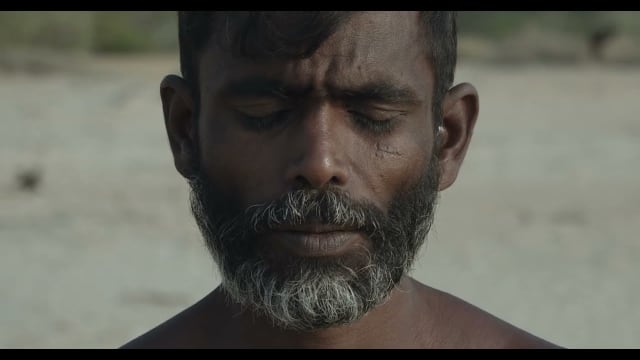
This music video interprets the Hindu mythological story of the Samudra Manthan (the Churning of the Ocean of Milk) as a metaphor for internal spiritual transformation. Using traditional Kandyan dance choreography, the performance explores the theme of "surrendering to flow"—the practice of accepting impermanence, releasing attachment to outcomes, and allowing oneself to be guided by forces larger than the ego. The lyrics move through contemplation of change, surrender to a greater intelligence, and the liberation that comes from relinquishing control over past and future.
The Samudra Manthan, or the Churning of the Ocean of Milk, is a central creation myth in Hindu cosmology. In the traditional narrative, gods and demons work together to churn the cosmic ocean, using Mount Mandara and the serpent Vasuki as tools. This churning brings forth both poison and nectar—danger and blessing emerge from the same action. The myth is not a simple tale of good versus evil, but rather an exploration of how creation, transformation, and balance arise from the meeting of opposing forces. This symbolism offers profound material for understanding human spiritual development. Just as the ocean must be churned to produce its treasures, the human consciousness must sometimes undergo intense disruption and mixing of old patterns before new insight can emerge.
The video interprets this ancient story as a contemporary teaching on internal process. Rather than treating transformation as a linear progression from "unenlightened" to "enlightened," the Samudra Manthan suggests that transformation is cyclical, involves friction between opposing elements, and cannot be rushed or controlled. The churning itself is the practice—not a means to an end that lies somewhere in the future, but the very substance of spiritual work.
The theme of "surrendering to flow" emerges throughout the song and dance: "walking the path of surrender," "the heart that is openly beating," "Mother Divine in Her timing." These phrases point to a specific spiritual orientation—one where the practitioner stops trying to force outcomes and instead attunes to currents larger than personal will.
In the context of the Samudra Manthan, the churning cannot succeed through force alone. The gods and demons must work together, their opposition itself becomes the engine of transformation. When we apply this to internal work, it suggests that transformation does not happen when we rigidly hold to our ideal self or push away what we consider undesirable. Instead, it happens when we allow contradictions to coexist, when we stop compartmentalizing experience into "good" and "bad," and when we trust that the very friction of opposing impulses creates the conditions for something new to emerge.
The lyrics emphasize this repeatedly: "watch it come now and watch it go / don't you hold onto the high and low." This instruction moves beyond mere acceptance of impermanence. It points toward a specific practice—the discipline of non-grasping. When joy arises, notice it without trying to keep it. When sorrow arises, witness it without trying to push it away. This balanced witnessing is the "surrendering" being explored, and it is actively cultivated, not passively endured.
The opening verses anchor the entire piece in observation of impermanence: "everything passing and changing / i can see memories fading / this i have been contemplating." Rather than treating impermanence as a problem to solve, the song positions it as the baseline reality upon which all spiritual practice must rest. You cannot surrender to flow if you are still clinging to the illusion that anything is permanent.
The line "all of these patterns of weather / nothing is lasting forever" uses the natural world as its reference point. Weather systems arise, peak, and dissolve according to conditions. Rain does not resist becoming clear skies; clear skies do not resist becoming rain. The invitation is to understand one's thoughts, emotions, relationships, and even one's sense of self with this same atmospheric fluidity. This is not nihilism—the patterns matter, the experiences have significance—but their transience is not a tragedy to overcome. It is the very texture of existence.
A critical shift occurs in the song with the lines: "i have the faith that i'm guided / all of the omens aligning / Mother Divine in Her timing." This introduces the idea of faith in a guidance that operates outside personal will. The omens are described as "aligning," suggesting that the practitioner trusts that reality itself is coherent and intelligent, even if the personal ego cannot see the full picture.
This differs from both fatalism and ego-driven ambition. It is not passivity—the person has been "patiently seeking." But the seeking is animated by trust rather than anxiety. The recognition that "Mother Divine" operates on "Her timing," not on the timeline of personal preference, requires a recalibration of one's relationship to agency. You are not the sole author of your transformation. Life itself, understood as an intelligent or sacred force, is already at work within you.
This dissolves the paradox that often arises in spiritual work: if I surrender, who is doing the practice? The answer, implicit in these lines, is that there is no contradiction. You practice, you seek, you remain open—and simultaneously, you recognize that the deepest transformation happens through a power that moves through you rather than from you. The personal will aligns with a larger intelligence rather than opposing it.
The choice to embody this teaching through traditional Kandyan dance is significant. Kandyan dance originates in Sri Lankan Buddhist and Hindu traditions, and its characteristic undulating movements, rapid footwork, and fluid torso movements create a physical language of flow. The body becomes a text through which surrender and resilience are simultaneously expressed.
Dance as a medium communicates what words alone cannot. A philosophical statement about "letting go" can be intellectualized; the same teaching embodied in a moving human form enters the nervous system of the viewer through different channels. When a dancer moves fluidly through space, adjusting to music, maintaining balance through constant micro-adjustments, the viewer's body recognizes something true about existence. This is not symbolic knowledge but somatic understanding. The dancers themselves, through hours of practice and attunement, have cultivated the embodied wisdom that the lyrics point toward.
Rather than presenting a generic, decontextualized spiritual message, the video grounds its teaching in specific cultural and mythological sources. The Samudra Manthan belongs to Hindu cosmology; Kandyan dance belongs to Sri Lankan Buddhist and Hindu traditions. This rooting prevents the message from floating into the realm of abstract spirituality. The body, the movement, the cultural lineage—these are all particular, not universal. At the same time, the mythological teaching about transformation through churning and the practice of surrendering to flow can be recognized as true across many traditions. The specificity of the form becomes a vessel for something universal.
The final chorus presents the culmination of this journey of surrender: "look in your own home / what will you find / let it move your soul." The invitation is not to transcend the particular circumstances of your life, to escape into some abstract state of enlightenment. Rather, it asks you to investigate what is actually here—in your own home, your own body, your own immediate experience—and to allow it to be your teacher. The soul, moved by this direct encounter with what is true right here, becomes the site of transformation. Not through ideology, not through escaping your life, but through presence to the life you are already living.
If this exploration of surrendering to flow resonates, the next steps might include studying the Samudra Manthan myth more deeply, not as historical fact but as a teaching story encoded with wisdom about internal process. Dance, whether traditional forms or contemporary movement, can become a practice of embodying non-grasping. Simply sitting with the questions posed in the song—what patterns are you holding onto? Where is your faith actually placed?—can open inquiry into how you are relating to change in your own life. The teaching itself, like the churning of the ocean, is active. It invites not passive consumption but engaged participation.