BrightStar

Ver todos os Events

Descubra encontros conscientes

events

Yoga
Meditation
Breathwork
Qigong
Tai Chi
Sacred Music
World Music
Medicine Music
Sound Healing
Ecstatic Dance
Destinos populares
BaliSedonaLos AngelesCosta RicaNew YorkSan FranciscoAustinMiamiJoshua TreeTulum
Ver todas as categoriasVer todos os destinos

Explorar todos os recursos

Ferramentas poderosas para expandir seus eventos

Recursos da plataforma

Precificação dinâmica inteligente
Categorias de ingressos
Lugares marcados
Recuperação de carrinho abandonado
Recuperação de visitantes
Doações e preço variável
Sistema de afiliados
Scanner de ingressos
Códigos de desconto
Perguntas personalizadas
Compartilhamento de ingressos
Upsells e adicionais
Análises e relatórios
Sequências de e-mail
Lista de espera / Notificar / Lembrar
Pessoas e Lugares
Artists & TeachersEvent OrganizersVenues & StudiosKnowledge BaseGlossaryInspiration
Ver todos os recursosSobre nós
PreçosBlog
Language
Saved events
Ver todos os eventos

events

YogaMeditationBreathworkQigongTai ChiSacred MusicWorld MusicMedicine Music

Destinos populares

BaliSedonaLos AngelesCosta RicaNew YorkSan Francisco

Pessoas e Lugares

Artists & TeachersEvent OrganizersVenues & StudiosKnowledge BaseGlossaryInspiration

Recursos da plataforma

Precificação dinâmica inteligenteCategorias de ingressosLugares marcadosRecuperação de carrinho abandonadoRecuperação de visitantesDoações e preço variávelSistema de afiliadosScanner de ingressosCódigos de descontoPerguntas personalizadasCompartilhamento de ingressosUpsells e adicionaisAnálises e relatóriosSequências de e-mailLista de espera / Notificar / Lembrar
Ver todos os recursosSobre nós
PreçosBlog
EntrarBuscadoresCriadores
  • Ver todos os Eventos
  • Para buscadores
  • Yoga
  • Meditação
  • Respiração consciente
  • Qigong
  • Tai chi
  • Música sagrada
  • World music
  • Música de medicina
  • Terapia sonora
  • Dança extática
  • Retiros
  • Workshops
  • Todas as categorias →
  • Bali
  • Sedona
  • Los Angeles
  • Costa Rica
  • Tulum
  • Byron Bay
  • San Francisco
  • Austin
  • New York
  • San Diego
  • Denver
  • Seattle
  • Portland
  • Miami
  • Todas as cidades →
  • Be Found
  • Sell Globally
  • Para criadores
  • Para equipes
  • Para escritores
  • Para professores
  • Para artistas de kirtan
  • Para estúdios
  • Para festivais
  • Para centros de retiro
  • Para organizações sem fins lucrativos
  • Embaixador da marca
  • Estudos de caso
  • Ingressos grátis
  • Elevate
  • Amplify
  • Rede de 500K+ compradores
  • Recuperação de carrinho abandonado
  • Precificação dinâmica inteligente
  • Categorias de ingressos
  • Eventos recorrentes
  • Lugares marcados
  • Sistema de afiliados
  • Lista de espera / Notificar
  • Scanner de ingressos
  • Widget incorporável
  • Distribuição de eventos
  • Central de mensagens
  • Integrações
  • Relatórios
  • Todos os recursos →
  • Sobre
  • O ecossistema
  • Blog
  • Glossário
  • Inspiração
  • Central de ajuda
  • Contato
  • Documentação da API
  • Recursos da marca
  • Carreiras
  • Imprensa
  • Termos de Serviço
  • Política de Privacidade

Eventos

  • Ver todos os Eventos
  • Para buscadores
  • Yoga
  • Meditação
  • Respiração consciente
  • Qigong
  • Tai chi
  • Música sagrada
  • World music
  • Música de medicina
  • Terapia sonora
  • Dança extática
  • Retiros
  • Workshops
  • Todas as categorias →

Destinos

  • Bali
  • Sedona
  • Los Angeles
  • Costa Rica
  • Tulum
  • Byron Bay
  • San Francisco
  • Austin
  • New York
  • San Diego
  • Denver
  • Seattle
  • Portland
  • Miami
  • Todas as cidades →

Para criadores

  • Be Found
  • Sell Globally
  • Para criadores
  • Para equipes
  • Para escritores
  • Para professores
  • Para artistas de kirtan
  • Para estúdios
  • Para festivais
  • Para centros de retiro
  • Para organizações sem fins lucrativos
  • Embaixador da marca
  • Estudos de caso
  • Ingressos grátis
  • Elevate
  • Amplify

Recursos

  • Rede de 500K+ compradores
  • Recuperação de carrinho abandonado
  • Precificação dinâmica inteligente
  • Categorias de ingressos
  • Eventos recorrentes
  • Lugares marcados
  • Sistema de afiliados
  • Lista de espera / Notificar
  • Scanner de ingressos
  • Widget incorporável
  • Distribuição de eventos
  • Central de mensagens
  • Integrações
  • Relatórios
  • Todos os recursos →

Empresa

  • Sobre
  • O ecossistema
  • Blog
  • Glossário
  • Inspiração
  • Central de ajuda
  • Contato
  • Documentação da API
  • Recursos da marca
  • Carreiras
  • Imprensa
  • Termos de Serviço
  • Política de Privacidade
BrightStar
© 2026 BrightStar. Todos os direitos reservados.
Inspire

Meeting Luminous Teachers: VedanticWisdom & Self-Discovery

Sadhvi Bhagawati Saraswati
Jun 11, 2025
7 min de leitura

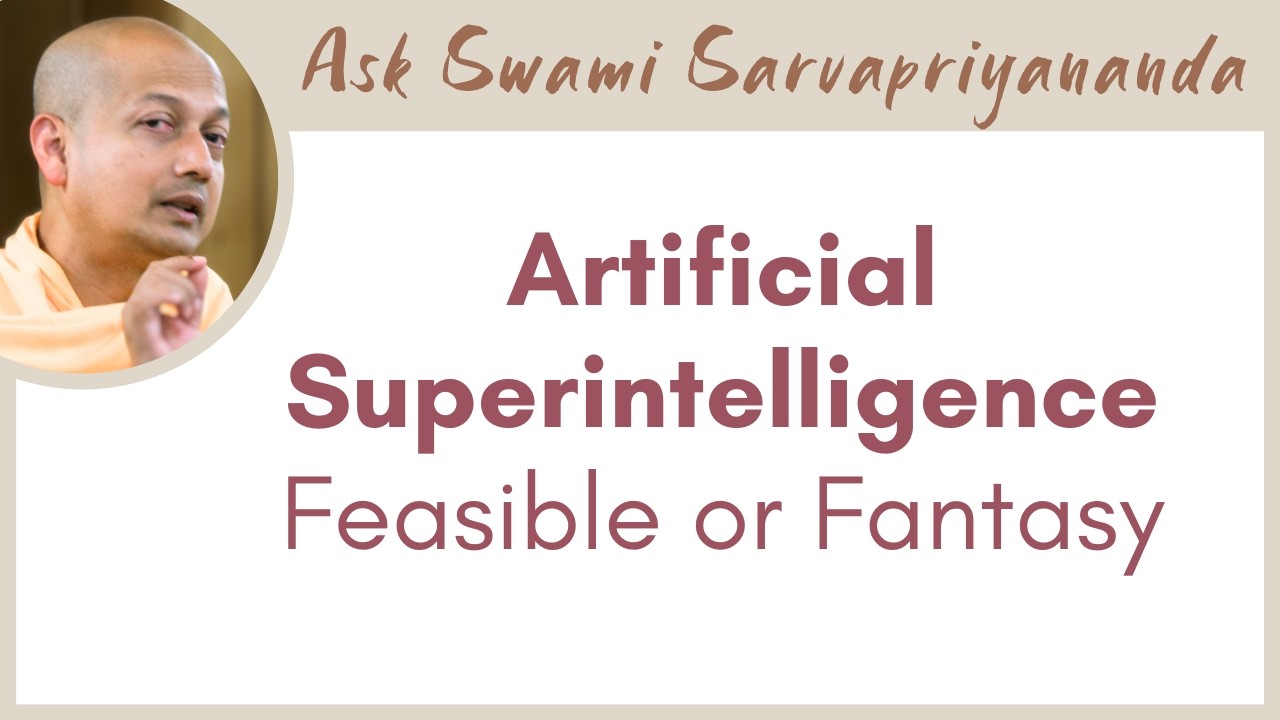
A brief but significant moment captured two renowned spiritual teachers—Swami Sarvapriyananda and Sadhvi Bhagawati Saraswati—meeting at Princeton University during a special event that centered on Vedantic philosophy, self-discovery, inner freedom, and the practical application of ancient wisdom to modern spiritual life. Though fleeting in duration, the encounter represents the living transmission of non-dual teaching and the particular grace that arises when sincere seekers encounter authentic teachers embodying the teachings.

Leitura · 8 seções

What is Vedantic wisdom and why does it matter today?

Vedanta is one of the six orthodox schools of Hindu philosophy, grounded in the Upanishads—ancient texts exploring the nature of consciousness, the self (Atman), and ultimate reality (Brahman). Rather than a dogmatic belief system, Vedanta offers a framework for direct investigation into the nature of consciousness and one's own being. In contemporary contexts, teachers like Swami Sarvapriyananda present Vedantic inquiry as a practical path to understanding who you really are beneath the accumulated layers of conditioning, identity, and mental habit.

The relevance of Vedantic teaching in the modern world lies in its direct addressing of the fundamental human question: Who am I? Rather than offering comfort or consolation, Vedanta invites the seeker into rigorous self-inquiry. It distinguishes between the changing body-mind apparatus and the changeless awareness that witnesses all experience. This clarification, when genuinely understood, dissolves much of the existential confusion and identity-based suffering that characterizes modern psychological life.

How does inner freedom relate to spiritual teaching?

Inner freedom, as understood in Vedantic and contemplative traditions, is not freedom from circumstances or external limitation—it is freedom from the tyranny of the conditioned mind, from identification with thought, emotion, and body as one's essential nature. It is the recognition that your true nature is the unchanging consciousness within which all experience arises and dissolves.

The encounter between Swami Sarvapriyananda and Sadhvi Bhagawati Saraswati represents a particular lineage of teaching in which both teachers have devoted their lives to transmitting this understanding. Sadhvi Bhagawati Saraswati, a Western woman ordained in the Hindu monastic tradition, has been active in making these teachings accessible to contemporary seekers, particularly through her book Come Home to Yourself, which explicitly frames spiritual practice as a return to one's true nature rather than an acquisition of something new. This inversion—the teaching that you are not seeking to become something but to recognize what you already are—is central to the Vedantic approach.

What is the significance of meeting authentic spiritual teachers?

In many contemplative traditions, the encounter between student and teacher holds particular value. The teacher is not primarily an information-provider but a presence—someone whose own understanding and inner freedom can, through transmission that sometimes transcends words, awaken recognition in the student. The description of this event notes that "even in just a few seconds, the grace of such masters leaves a lasting impression on the heart," suggesting that authentic spiritual presence operates at a level deeper than intellectual comprehension.

When two established teachers meet in this way—particularly in a formal context like a university event—the meeting itself becomes a teaching. It demonstrates the reality of inner freedom, the possibility of living from a place of clarity rather than reactivity, and the natural grace that flows from someone who has stabilized in understanding. The event at Princeton, hosted by the Office of Religious Life, placed this encounter within an institutional setting, yet the teaching transmitted transcends the formal structure.

How do contemporary teachers present ancient wisdom?

Both Swami Sarvapriyananda and Sadhvi Bhagawati Saraswati are examples of teachers who have taken classical Vedantic and monastic training and translated it for contemporary Western seekers without diluting its depth. Swami Sarvapriyananda, associated with Vedanta NY, conducts regular satsangs (spiritual gatherings) and retreats drawing on classical Upanishadic texts, Brahmasutra commentary, and the teachings of Sri Adi Shankara, one of the greatest Vedantic philosophers. His approach is characterized by clear reasoning, rigorous questioning of assumptions, and the use of traditional teaching methods adapted for a modern audience.

Sadhvi Bhagawati Saraswati's U.S. tour for Come Home to Yourself represents another strand of contemporary dharma transmission—one that emphasizes the accessibility and immediacy of spiritual truth while honoring traditional monastic discipline and practice. Her presence as a Western woman in Hindu monastic robes itself challenges cultural assumptions about spirituality and demonstrates the universality of the inner call to freedom and truth.

What does "divine connection" mean in this context?

The description mentions "divine connection" as one of the themes reflected in this encounter. In Vedantic terms, divine connection is not something to be achieved through devotional practice alone—though devotion is part of the path. Rather, it points to the recognition that the ultimate nature of existence is non-dual consciousness, and that the awareness looking out through your eyes is not separate from that ultimate consciousness. "Divine connection" is thus the clarification and stabilization in this non-dual recognition.

Different teaching lineages emphasize this through different approaches: some through devotion and surrender to the divine as a personal deity, others through inquiry and reasoning that deconstructs the apparent separation between self and other, still others through meditation and direct perception. The grace of meeting teachers who embody different approaches to the same ultimate reality can help a seeker recognize that the ultimate destination transcends the particular path.

Why does a brief encounter with spiritual teachers matter?

In the modern world, spiritual seeking is often approached with a consumer mentality—attend workshops, gather techniques, accumulate experiences. Yet the description of this event emphasizes the quality of presence and the way it "leaves a lasting impression on the heart" despite lasting only moments. This points to a different order of transmission entirely.

When someone whose mind has become quiet through years of practice and inquiry meets your gaze or speaks a word, something can shift in the listener that no amount of conceptual teaching alone can achieve. This is sometimes called transmission or grace—not a magical bestowal of enlightenment, but a direct communication of possibility, a reminder that inner freedom is real and accessible. For many seekers, such moments serve as anchors—reference points that sustain practice and inquiry through the longer journey of integration and realization.

The event at Princeton, bringing together these two teachers and a gathering of sincere seekers, created the conditions for such transmission. The formal setting of a university, an institution dedicated to inquiry and knowledge, becomes a temple for the deeper inquiry into the nature of consciousness itself.

How does spiritual teaching relate to psychological and philosophical inquiry?

One of the remarkable features of Vedantic teaching, and something evident in the work of both teachers at this event, is the way it bridges traditional philosophy, psychology, and direct spiritual experience. When Swami Sarvapriyananda teaches, he often employs rigorous logical analysis, questioning the assumptions underlying the student's sense of identity and separation. This is not dissimilar to the tools employed in depth psychology or phenomenology—rigorous investigation into the structure of experience itself.

Yet Vedantic teaching goes further: it points not merely to the structure of mind but to the consciousness that witnesses mind. It suggests that freedom comes not from restructuring the personality (the work of psychology) but from recognizing that you are not the personality at all—you are the unchanging awareness in which personality appears. This is a radical departure from most psychological frameworks, yet increasingly contemporary neuroscience and contemplative research are finding that such non-dual recognition correlates with freedom from suffering, psychological resilience, and a natural compassion that arises from the dissolution of the boundary between self and other.

Where to go from here

If this encounter between authentic teachers has sparked your interest, the invitation is threefold. First, deepen your understanding through studying Vedantic texts and teachings—both teachers mentioned here offer resources, recordings, and books accessible to contemporary seekers. Second, seek out authentic teachers in your own location or through online gatherings and inquire into your own nature under their guidance. Third, begin your own investigation: notice the assumptions you hold about who you are, examine the boundary between the observer and the observed, and test whether the sense of separation you take for granted is actually as solid as it appears.

The grace of such spiritual encounters, brief or extended, serves primarily as an invitation back into your own direct investigation. The ultimate teaching is not contained in words but in the recognition, arising within yourself, of who you truly are.

Comments

Loading the conversation…

Sadhvi Bhagawati Saraswati
ArtistSadhvi Bhagawati Saraswati

Sadhvi Bhagawati Saraswati is a Hindu spiritual leader and author based at Parmarth Niketan ashram in Rishikesh. Born in Los Angeles, she left a life in Hollywood to pursue monasti…

Ver perfilSite
Explorar temas
Vedantic-wisdomSelf-discoveryInner-freedomSpiritual-teachersConsciousness

Tem perguntas?

Perguntas frequentes

Vedanta is an ancient Hindu philosophical framework that directly investigates the nature of consciousness, the self (Atman), and ultimate reality (Brahman). Unlike many traditions emphasizing devotion or ritual alone, Vedanta uses rigorous inquiry and reasoning to clarify that your true nature is unchanging consciousness, not the changing body-mind. This recognition of non-dual reality is its distinguishing feature.
Authentic transmission occurs in the presence of someone whose mind has become quiet and clear through genuine practice and understanding. Seek out genuine teachers, attend satsangs or spiritual gatherings, and engage in sincere self-inquiry under their guidance. The key is earnest intention combined with regular exposure to teaching and teachers who embody clarity.
This phrase, central to Sadhvi Bhagawati Saraswati's teaching, points to the recognition that spiritual realization is not about becoming something new but clarifying what you already are. You are 'coming home' to your true nature—the unchanging awareness that has always been present, beneath layers of conditioning and false identification.
Yes. Vedantic inquiry into the nature of consciousness parallels phenomenological philosophy and contemporary contemplative neuroscience. Both Vedanta and modern psychology examine the structure of experience and mind, though Vedanta goes further by pointing to the consciousness witnessing all experience—a recognition increasingly supported by research on meditation and non-dual states.
Authentic teachers typically embody inner freedom, clarity, and compassion; they point you toward your own investigation rather than creating dependence; they teach from lived understanding rather than memorized concepts; and their presence itself communicates possibility. Be cautious of teachers who promise quick results, demand blind obedience, or use spiritual authority for personal gain.
Inner freedom is not an emotional state or feeling—it's the recognition of your essential nature as unchanging consciousness that witnesses all states, including happiness and unhappiness. You can be free and experience sadness, or bound and experience temporary happiness. True freedom means not being controlled by the mind or circumstances.
Traditional teaching emphasizes the value of an authentic guide, particularly in clarifying blind spots and accelerating understanding. However, the ultimate recognition must occur within your own consciousness. A teacher provides guidance, transmission, and the conditions for awakening, but cannot do the work of inquiry for you.
Such encounters can serve as anchors—reminders of the possibility of inner freedom and clarity. The presence of someone genuinely established in understanding can shift something subtle in the listener that conceptual teaching alone cannot achieve. These moments often inspire renewed commitment to practice and inquiry.

Continuar lendo

More from Sadhvi

Ver Tudo
Following Divine Intuition: One Woman's 30-Year Ashram Journey
Inspire

Following Divine Intuition: One Woman's 30-Year Ashram Journey

A Stanford PhD student hears a divine voice and leaves California for an ashram. Thirty years later, she reflects on dharma, purpose, and li…

1 min read
Superintelligence, Consciousness, and What You Really Are
Inspire

Superintelligence, Consciousness, and What You Really Are

Will superintelligent AI destroy us? A teacher reframes the fear: Intelligence is object; you are consciousness. Objects cannot destroy the …

1 min read
Consciousness and Dharma Ethics in the Age of AI
Inspire

Consciousness and Dharma Ethics in the Age of AI

A Hindu monk, an AI scientist, and a Catholic priest explore whether machines can be conscious and what dharma traditions teach about artifi…

1 min read
Govinda Jaya: How Sacred Sound Awakens the Heart
Inspire

Govinda Jaya: How Sacred Sound Awakens the Heart

Radhika Das channels the liberating power of mantra through a luminous kirtan performance at Medicine Festival, invoking divine names to pur…

1 min read

Continue explorando

Continue sua jornada

Mais sabedoria e mais encontros de todo o diretório BrightStar.

Mais artigos

Explore a biblioteca completa de ensinamentos, entrevistas e guias.

Voltar a todos os artigos →

Professores e artistas

Conheça as linhagens, os músicos e os guias do mundo consciente.

Explorar artistas →

Encontre um evento

Kirtan, retiros, banhos de som, breathwork, festivais — acontecendo em breve.

Ver eventos →