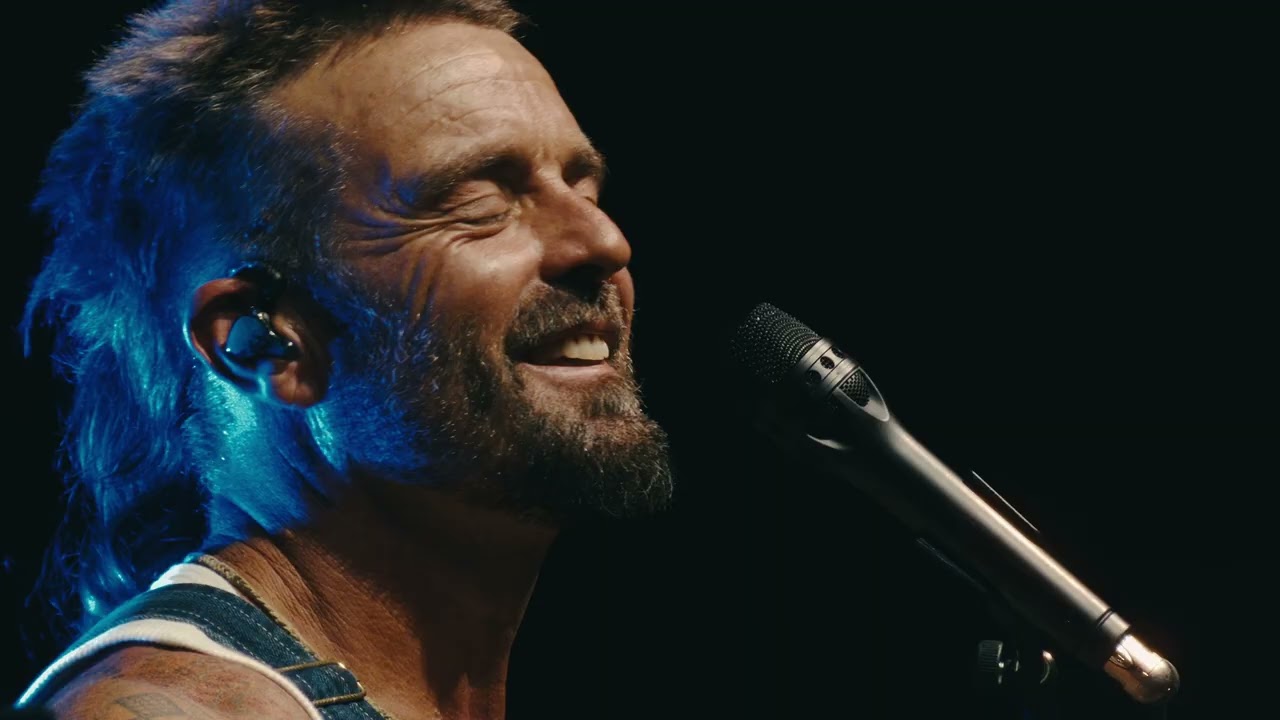
Xavier Rudd's "FLAG" (from the album NANNA, 2015) is a protest song that reimagines resistance through love rather than violence. Performed at Rock Werchter Festival in Belgium in June 2017, the track presents a protagonist shaped by witnessing hatred and violence, who chooses love as his only weapon. The song uses the metaphor of a flag—a collective symbol of protection and solidarity—to frame community action and mutual care as the antidote to domination and oppression. Rather than glorifying armed struggle, Rudd argues that keeping the flag waving, covering each other's backs, and standing together with "the spirit of the land" constitutes the real work of justice and healing.
Who Is This Song About?
At the heart of "FLAG" is a character portrait—a person who "comes with his own designs, his own style, his own awakening." This figure has witnessed tremendous suffering: he has "seen too much hatred," yet chooses not to be hardened by it. Rudd's narrator acknowledges a painful paradox: the protagonist "can forgive but he can never forget" the wounds of violence and oppression. Weapons surround him—they are "always close to hand"—but he deliberately rejects them. Instead, Rudd sings, "the only weapon that he chooses is love."
This is not sentimentality. The song frames love as a conscious, deliberate choice made by someone who understands violence intimately and has chosen a different path. The character embodies what might be called active or militant nonviolence—a stance that comes from clarity about injustice, not from naiveté about it.
What Does the Flag Symbolize in This Song?
The flag operates as a multi-layered metaphor throughout "FLAG." Rudd repeats the refrain: "keep waving that cover your head," "cover your back," and "I keep keep on waving this cover my head, cover my back." The flag is literal protection—something raised above the head to shield, something positioned at the back to defend. But it is also social and spiritual: a shared symbol that binds a community together.
The song moves beyond individual resistance into collective action. "People keep on waving this flame," the chorus emphasizes. The flag is not one person's tool but a communal responsibility. By keeping it raised, the community signals its commitment to each other's safety and dignity. This echoes indigenous and environmental justice frameworks, where protection of land and people are inseparable.
How Does Rudd Connect Land, Spirit, and Justice?
A crucial verse shifts the song's focus to place and ancestry: "with strength and pride, domination of the ancient place, protection of his and land, the healing in the tunnel and his brother right, healing in the tunnel with the spirit of the land." This language invokes what might be called earth-based or indigenous resistance—the idea that justice work is rooted in relationship to specific lands and to the ancestors who have walked them.
"The spirit of the land" is not mystical decoration in Rudd's framework; it is a grounding force that connects individuals to something larger than themselves. Healing happens "in the tunnel"—perhaps a metaphor for dark times, underground resistance, or the deep structures of community—and it happens through connection to brothers, sisters, and the land itself.
For Rudd, who has consistently engaged with First Nations issues and environmental activism, this connection is autobiographical. The song reflects a worldview in which justice cannot be separated from land stewardship and from honoring the sovereignty and spiritual wisdom of indigenous peoples.
What Does It Mean to "Keep Waving" the Flag?
The repetition of "keep keep on waving" and "keep keep on weaving" drives the song's core message: persistence. Justice work is not a single act but an ongoing practice. The flag must be waved continuously. The community must keep its collective commitment visible and active.
The shift from "waving" to "weaving" is significant. Weaving suggests interlacing, binding, creating fabric—the work of building something durable out of individual threads. Community is not inherited; it must be woven, thread by thread, action by action, meeting by meeting.
Near the end of the performance, Rudd shifts the energy: "coming with my owns, feeling strong, feeling able, community is coming alive." This is not abstract idealism. It describes the actual felt experience of people moving together, finding strength in collective action. "Community is coming alive" when people show up, when they wave the flag together, when they cover each other's backs.
How Does This Song Address "Loaded Weapons on the Table"?
One of the most direct lines in "FLAG" confronts the reality of structural violence: "loaded weapons on the table." The song does not deny that violence exists, that oppressive systems are armed, that domination is enforced through force. Instead, it asserts that the appropriate response is not to match weapons with weapons, but to respond with a different kind of power.
This is the radical core of the song: in a world where weapons are "always close to hand," where some have "seen too much hatred," the choice to deploy love as the "only weapon" is presented as the most effective and most human response. Not because violence will not happen—the song's realism precludes that fantasy—but because love and community solidarity are the forces that can actually heal, transform, and sustain movements for justice over time.
Where to Go From Here
If you're drawn to "FLAG," consider exploring Rudd's broader body of work on activism, land, and community. His album NANNA (2015) contains more songs that grapple with social justice and indigenous solidarity. You might also investigate how other musicians working in folk, reggae, and roots traditions have used collective metaphors—flags, shields, circles, fires—to frame community resistance. Reading about nonviolent resistance theory and indigenous sovereignty movements will deepen your understanding of the frameworks Rudd is invoking. Finally, reflect on your own relationship to community action: What would it mean to "keep waving the flag" in your own context?