BrightStar

Ver todos os Events

Descubra encontros conscientes

events

Yoga
Meditation
Breathwork
Qigong
Tai Chi
Sacred Music
World Music
Medicine Music
Sound Healing
Ecstatic Dance
Destinos populares
BaliSedonaLos AngelesCosta RicaNew YorkSan FranciscoAustinMiamiJoshua TreeTulum
Ver todas as categoriasVer todos os destinos

Explorar todos os recursos

Ferramentas poderosas para expandir seus eventos

Recursos da plataforma

Precificação dinâmica inteligente
Categorias de ingressos
Lugares marcados
Recuperação de carrinho abandonado
Recuperação de visitantes
Doações e preço variável
Sistema de afiliados
Scanner de ingressos
Códigos de desconto
Perguntas personalizadas
Compartilhamento de ingressos
Upsells e adicionais
Análises e relatórios
Sequências de e-mail
Lista de espera / Notificar / Lembrar
Pessoas e Lugares
Artists & TeachersEvent OrganizersVenues & StudiosKnowledge BaseGlossaryInspiration
Ver todos os recursosSobre nós
PreçosBlog
Language
Saved events
Ver todos os eventos

events

YogaMeditationBreathworkQigongTai ChiSacred MusicWorld MusicMedicine Music

Destinos populares

BaliSedonaLos AngelesCosta RicaNew YorkSan Francisco

Pessoas e Lugares

Artists & TeachersEvent OrganizersVenues & StudiosKnowledge BaseGlossaryInspiration

Recursos da plataforma

Precificação dinâmica inteligenteCategorias de ingressosLugares marcadosRecuperação de carrinho abandonadoRecuperação de visitantesDoações e preço variávelSistema de afiliadosScanner de ingressosCódigos de descontoPerguntas personalizadasCompartilhamento de ingressosUpsells e adicionaisAnálises e relatóriosSequências de e-mailLista de espera / Notificar / Lembrar
Ver todos os recursosSobre nós
PreçosBlog
EntrarBuscadoresCriadores
  • Ver todos os Eventos
  • Para buscadores
  • Yoga
  • Meditação
  • Respiração consciente
  • Qigong
  • Tai chi
  • Música sagrada
  • World music
  • Música de medicina
  • Terapia sonora
  • Dança extática
  • Retiros
  • Workshops
  • Todas as categorias →
  • Bali
  • Sedona
  • Los Angeles
  • Costa Rica
  • Tulum
  • Byron Bay
  • San Francisco
  • Austin
  • New York
  • San Diego
  • Denver
  • Seattle
  • Portland
  • Miami
  • Todas as cidades →
  • Join the Movement
  • Why we list
  • Sell Globally
  • Para criadores
  • Para equipes
  • Para escritores
  • Para professores
  • Para artistas de kirtan
  • Para estúdios
  • Para festivais
  • Para centros de retiro
  • Para organizações sem fins lucrativos
  • Embaixador da marca
  • Ingressos grátis
  • Elevate
  • Amplify
  • Rede de 500K+ compradores
  • Recuperação de carrinho abandonado
  • Precificação dinâmica inteligente
  • Categorias de ingressos
  • Eventos recorrentes
  • Lugares marcados
  • Sistema de afiliados
  • Lista de espera / Notificar
  • Scanner de ingressos
  • Widget incorporável
  • Distribuição de eventos
  • Central de mensagens
  • Integrações
  • Relatórios
  • Todos os recursos →
  • Sobre
  • O ecossistema
  • Blog
  • Glossário
  • Inspiração
  • Central de ajuda
  • Contato
  • Documentação da API
  • Recursos da marca
  • Carreiras
  • Imprensa
  • Termos de Serviço
  • Política de Privacidade

Eventos

  • Ver todos os Eventos
  • Para buscadores
  • Yoga
  • Meditação
  • Respiração consciente
  • Qigong
  • Tai chi
  • Música sagrada
  • World music
  • Música de medicina
  • Terapia sonora
  • Dança extática
  • Retiros
  • Workshops
  • Todas as categorias →

Destinos

  • Bali
  • Sedona
  • Los Angeles
  • Costa Rica
  • Tulum
  • Byron Bay
  • San Francisco
  • Austin
  • New York
  • San Diego
  • Denver
  • Seattle
  • Portland
  • Miami
  • Todas as cidades →

Para criadores

  • Join the Movement
  • Why we list
  • Sell Globally
  • Para criadores
  • Para equipes
  • Para escritores
  • Para professores
  • Para artistas de kirtan
  • Para estúdios
  • Para festivais
  • Para centros de retiro
  • Para organizações sem fins lucrativos
  • Embaixador da marca
  • Ingressos grátis
  • Elevate
  • Amplify

Recursos

  • Rede de 500K+ compradores
  • Recuperação de carrinho abandonado
  • Precificação dinâmica inteligente
  • Categorias de ingressos
  • Eventos recorrentes
  • Lugares marcados
  • Sistema de afiliados
  • Lista de espera / Notificar
  • Scanner de ingressos
  • Widget incorporável
  • Distribuição de eventos
  • Central de mensagens
  • Integrações
  • Relatórios
  • Todos os recursos →

Empresa

  • Sobre
  • O ecossistema
  • Blog
  • Glossário
  • Inspiração
  • Central de ajuda
  • Contato
  • Documentação da API
  • Recursos da marca
  • Carreiras
  • Imprensa
  • Termos de Serviço
  • Política de Privacidade
BrightStar
Baixe o app
Baixar naApp StoreDisponível noGoogle Play
© 2026 BrightStar. Todos os direitos reservados.
Inspiration

The Touch of Spirit: Why the Moon Uses Only the Window

Peia
Peia
Oct 2, 2026
8 min de leitura
Assistir · 6

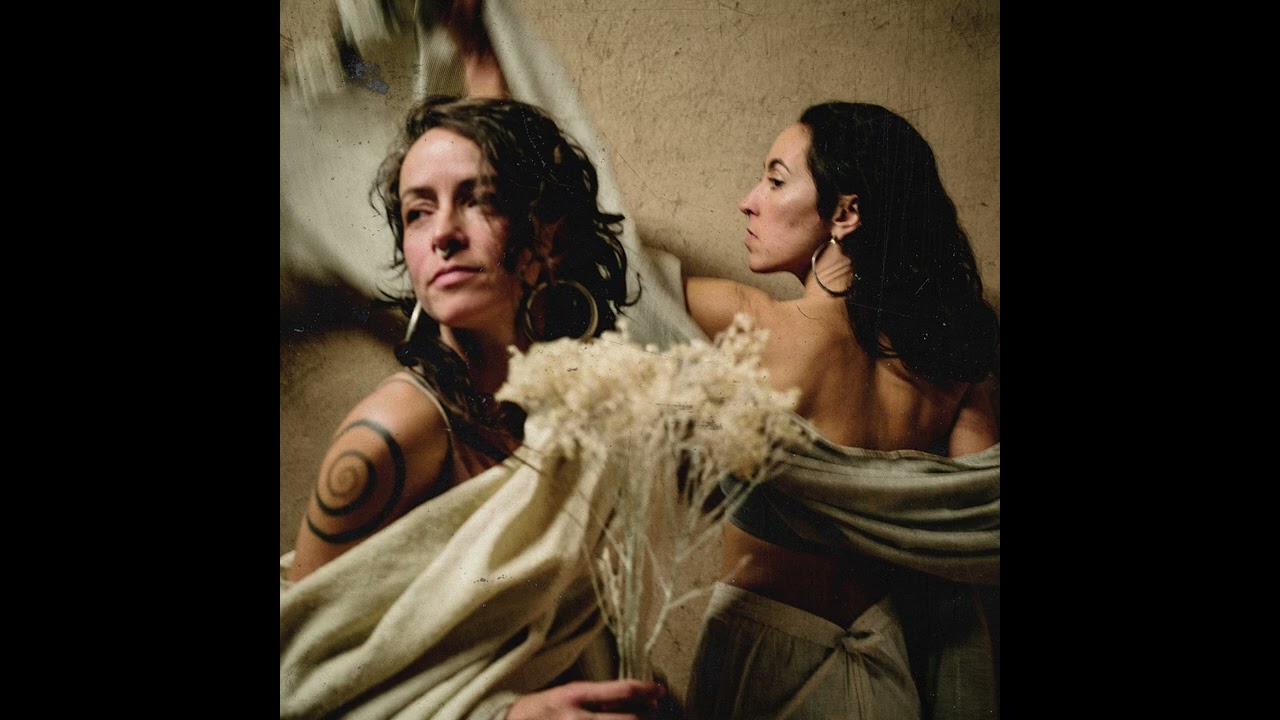
Some songs arrive as a single image and then spend four minutes proving it. "The Touch of Spirit," the new single from Peia, is one of them. Posted as an official audio release on October 2, 2026, it is built from a handful of lines: a pearl waiting to be freed from its shell, a lily that needs a "wild darling," a moon that will not come through a door. Its refrain asks for a kind of contact that words cannot supply. Read closely, the lyrics make a small, deliberate argument about how the sacred gets in. It does not come through the front door of language. It comes through the window, by breath and by skin. What follows is a reading of that argument, using only the lyrics published with the video and the sung passages visible in its transcript.

Leitura · 8 seções

What happens when the song asks the moon to come?

The song's most concrete scene arrives a little over a minute in, at 1:34 in the video. "At night I open the window / and ask the moon to come." It is an ordinary gesture made ritual: a person alone in the dark, unlatching a window, speaking to something far away and enormous. The next line is the emotional hinge of the whole track: "Come press your face against mine." The moon is not asked to shine on the singer. It is asked to come close, to press its face against hers, to make the distance physical.

That shift from light to contact is the first clue to the song's logic. A moon that only illuminates is a distant object. A moon that presses its face against yours is a presence you can feel. The track keeps returning to that second kind of encounter.

Why is the touch on the body the song's real subject?

The chorus states the premise before any image appears. The opening lines, sung at 0:19 in the video, are:

"There is some kiss we want / With our whole lives / The touch of spirit on the body."

(Lyrics as published in the video description.)

Two phrases carry the weight. "With our whole lives" describes a longing that is not occasional or polite; it is the organizing desire of a life. And "the touch of spirit on the body" puts the sacred where most spiritual writing is reluctant to put it: on the skin. The song does not speak of spirit as something that hovers above the body or leaves it behind. Spirit, here, is something that touches. The refrain repeats the phrase, so the listener cannot treat it as decoration.

This is the spine of the piece. Much devotional music aims at transcendence, a lifting away. "The Touch of Spirit" aims at arrival, a meeting in the body. Its ambition is smaller on paper and more radical in practice: the holy is something you can be touched by.

What are the pearl and the lily asking for?

Between the chorus and the window scene sit two images that work like nature studies. "Seawater begs the pearl / to break its shell." And "lily, how passionately / it needs some wild darling."

Both describe a closed form that is being asked to open. The pearl is sealed inside a shell, and the sea, which is pictured as pleading, wants it to break free. The lily is shown as hungry, almost desperate, for something wild to answer it. In each case the outside force is not violent. It begs, it needs. The song frames opening as something the world desires alongside the person who is shut in.

A note for listeners: the published lyrics read "Seawater begs the pearl." The auto-generated transcript in the video renders the line as "Still water begs the pearl." The description's text is the authoritative version here, and the difference matters. Seawater is moving, restless, tidal. Still water is a mirror. The published word puts the pull of the sea at the center of the image.

Why does the breath refrain carry the whole song?

The most repeated phrase in the track is also its simplest: "Breathe into me." It appears four times in the published lyrics, each time sung in the transcript at a slightly different point in the arrangement. Where the chorus argues and the verses describe, the breath line simply asks.

Breath is the most intimate exchange two living bodies can make. Its inclusion here is not accidental. If the song is about spirit touching the body, the breath is the mechanism: the thing that passes from one person into another without passing through language. Repeating it four times does not develop an idea so much as stay inside one. The lyric stops explaining and waits.

In the transcript, the singer adds sustained, wordless ornament during these repetitions, shifting from speech-like phrasing into sung tone. That move is a small piece of evidence for the song's thesis. When the words run out, the voice keeps going.

What does it mean to close the language door?

The central couplet of the song is the one the title seems to be pointing toward, though the title itself says "touch." At 2:54 in the video, the singer begins:

"Close the language door / And open the love window / Close the language door / And open the love window / The moon won't use the door / Only the window."

(Lyrics as published in the video description.)

Here the song makes its boldest move. Language is pictured as a door: a formal entrance, a way in that everyone uses and that comes with rules, customs, and expectations. The moon refuses it. The moon, a figure of the sacred, enters only by the window, the opening that is less official and more personal. The instruction is to close the door of words and open the love window instead.

There is a paradox here worth naming. The song uses words to argue against the primacy of words. But the couplet is not hostile to language so much as it ranks it. Words can frame the approach; they cannot be the way the moon comes in. That reading fits the rest of the track, which spends most of its time in image and breath and the wordless ornament of the sung "Ooo" passages. The lyric has, in effect, closed its own door and left the window open.

How is the song built, and what does the transcript show?

The structure is simple and cyclical. The chorus, with its "kiss we want" premise, opens the track. Two imagistic stanzas follow, one of natural longing (pearl and lily), one of nocturnal invitation (window and moon). The breath refrain comes next, then the language-door couplet, and the track returns to the chorus.

The transcript shows the arrangement's seams. Its many [music] markers indicate that the vocal breathes between phrases, and the wordless passages (the "Ooo" sections marked in the description) sit between lyrical stanzas as connective tissue. Near the end, the transcript captures a variant of the closing section: "There is some kiss in your sweet heart. Remember all the touch you speak of. The body." The published lyrics return to "There is some kiss we want," so the variant reads as a slight rewording in performance, shifting the address from a collective "we" toward a more direct "your." That shift is worth hearing for yourself.

The song ends where it began, on the touch of spirit on the body. It does not resolve so much as come back around, which suits its subject. A touch is not a conclusion. It is something you return to.

Where does this single sit in the folk tradition it's tagged with?

The video's description tags the track #folk, #indiefolk, #appalachia, #singersongwriter, and #folksongs, and links to Peia's Instagram, Facebook, and website, peiasong.com. Those tags place the song in a lineage of American singer-songwriting where plain language and direct address carry spiritual weight. The material provided does not include biography, recording credits, or interviews, so this piece does not make claims about how the song was made. What the lyrics show is a writer comfortable with intimacy, willing to let a single image carry a whole stanza, and more interested in how a touch feels than in how it is explained.

Where to go from here

The fastest way into "The Touch of Spirit" is to listen to it once with the lyrics open, then again with your eyes closed. Notice where the voice moves from words into ornament, and where the breath line stops being a phrase and becomes a rhythm. If you want to take the song's argument into your own practice, try its one concrete instruction: at night, open a window, and say something to the moon that you would not say through a door. The song's own ending suggests the touch is what you are actually listening for. The single is available now through the link in the video description.

Comments

Loading the conversation…

Transcript

[0:12] [music]

[0:19] >> There is some kiss we

[0:24] >> [music]

[0:24] >> want with

[0:26] our all

[0:30] >> [music]

[0:32] >> the touch of spirit

[0:37] on the body.

[0:39] >> [music]

[0:45] >> The touch of spirit [music]

[0:49] on

[0:51] the body.

[0:53] >> [music]

[0:59] >> Still

[1:00] water

[1:01] >> [music]

[1:02] >> begs the pearl

[1:05] to break its [music] shell.

[1:12] And

[1:16] lily, how

[1:17] passionately [music]

[1:20] it needs some wild

[1:24] darling.

[1:26] >> [music]

[1:33] [music]

[1:34] >> At night

[1:35] I

[1:37] open the

[1:40] >> [music]

[1:40] >> window

[1:44] and

[1:45] ask the

[1:45] >> [music]

[1:46] >> moon to come.

[1:49] Come, press [music] your face against

[1:52] mine.

[1:55] >> [music]

[1:56] >> Breathe

[1:58] into me.

[2:01] >> [music]

[2:03] >> Breathe

[2:05] into me.

[2:10] >> [music]

[2:10] >> Breathe [singing]

[2:12] into me.

[2:15] >> [music]

[2:16] >> Breathe

[2:18] into me.

[2:20] >> [music]

[2:29] [music]

[2:34] [music]

[2:40] [music]

[2:47] [music]

[2:54] [music]

[2:54] >> Close the

[2:56] language

[2:57] door.

[2:59] And open

[2:59] >> [music]

[3:00] >> the love

[3:02] window.

[3:05] >> [music]

[3:07] >> Close the

[3:09] >> [singing]

[3:10] >> language [music] door.

[3:12] And open

[3:14] the

[3:14] >> [singing]

[3:15] [music]

[3:15] >> love

[3:17] window.

[3:20] The

[3:21] >> [music]

[3:22] >> moon won't use

[3:23] the door.

[3:27] I

[3:28] >> [music]

[3:29] >> only use the

[3:30] window.

[3:35] >> [music]

[3:41] [music]

[3:47] >> There

[3:48] >> [music]

[3:49] >> is some

[3:49] kiss in your sweet heart.

[3:53] >> [music]

[3:53] >> Remember all the

[4:00] >> [music]

[4:00] >> touch you speak of.

[4:05] The body.

[4:07] >> [music]

[4:14] >> Touch you speak

[4:18] of the

[4:19] >> [music]

[4:20] >> body.

[4:23] >> [music]

[4:31] [music]

Peia
ArtistPeia

Peia Luzzi is an American-born song collector, writer and multi-instrumentalist based in the mountains of Appalachia.

Ver perfilSite
Explorar temas
Touch-of-spiritPeiaFolk-musicIndie-folkSong-lyrics-analysis

Tem perguntas?

Perguntas frequentes

The phrase opens the chorus and places the sacred on the skin rather than above it. The song treats spirit as something that can actually touch a person, not an abstraction that lifts them away from the body.
The couplet pictures language as a formal door and love as a more personal window. The song says the moon enters only through the window, suggesting that words can frame an approach to the sacred but cannot be the way it arrives.
The breath refrain appears four times in the published lyrics and is sung with wordless ornament in the transcript. Breath is the most intimate exchange between bodies, so the repetition stays inside that idea instead of explaining it.
The lyrics published in the video description read 'Seawater begs the pearl.' The auto-generated transcript renders it as 'Still water,' so the published text is the reliable version.
It is a short, image-driven song about the longing to be touched by something sacred through the body, using a pearl, a lily, a night window, and the moon as its central images. It argues that the holy enters through breath and skin rather than through language.
The official audio is on Peia's YouTube channel, and the video description links to a release page for the single. Her website, peiasong.com, and her social accounts are also listed there.

Continuar lendo

More from Peia

Ver Tudo
Dance in the Storm: Ritual, Loss, and Sacred Circle
Inspire

Dance in the Storm: Ritual, Loss, and Sacred Circle

A live performance filmed in Minard Castle, Ireland explores themes of spiritual seeking, transient connection, and the power of holding sac…

1 min read
Szerelem: Three-Part Harmony Performance of Hungarian Folk Love Song
Inspire

Szerelem: Three-Part Harmony Performance of Hungarian Folk Love Song

Wild Honey performs a three-part harmony rendition of the traditional Hungarian folk song "Szerelem," exploring themes of lost love and long…

1 min read
Trade Troubles for Birdsong: Meaning of 'Trade My Troubles'
Inspire

Trade Troubles for Birdsong: Meaning of 'Trade My Troubles'

A close reading of the 'Trade My Troubles' lyrics, built around its central birdsong bargain. It traces how grief and gratitude become siste…

1 min read
Acoustic Yoga Music: Creating Twilight Soundscapes
Inspire

Acoustic Yoga Music: Creating Twilight Soundscapes

Todd Boston's "Twilight" blends acoustic instrumentation with yoga practice, offering a contemplative musical foundation for movement and me…

1 min read

Continue explorando

Continue sua jornada

Mais sabedoria e mais encontros de todo o diretório BrightStar.

Mais artigos

Explore a biblioteca completa de ensinamentos, entrevistas e guias.

Voltar a todos os artigos →

Professores e artistas

Conheça as linhagens, os músicos e os guias do mundo consciente.

Explorar artistas →

Encontre um evento

Kirtan, retiros, banhos de som, breathwork, festivais — acontecendo em breve.

Ver eventos →