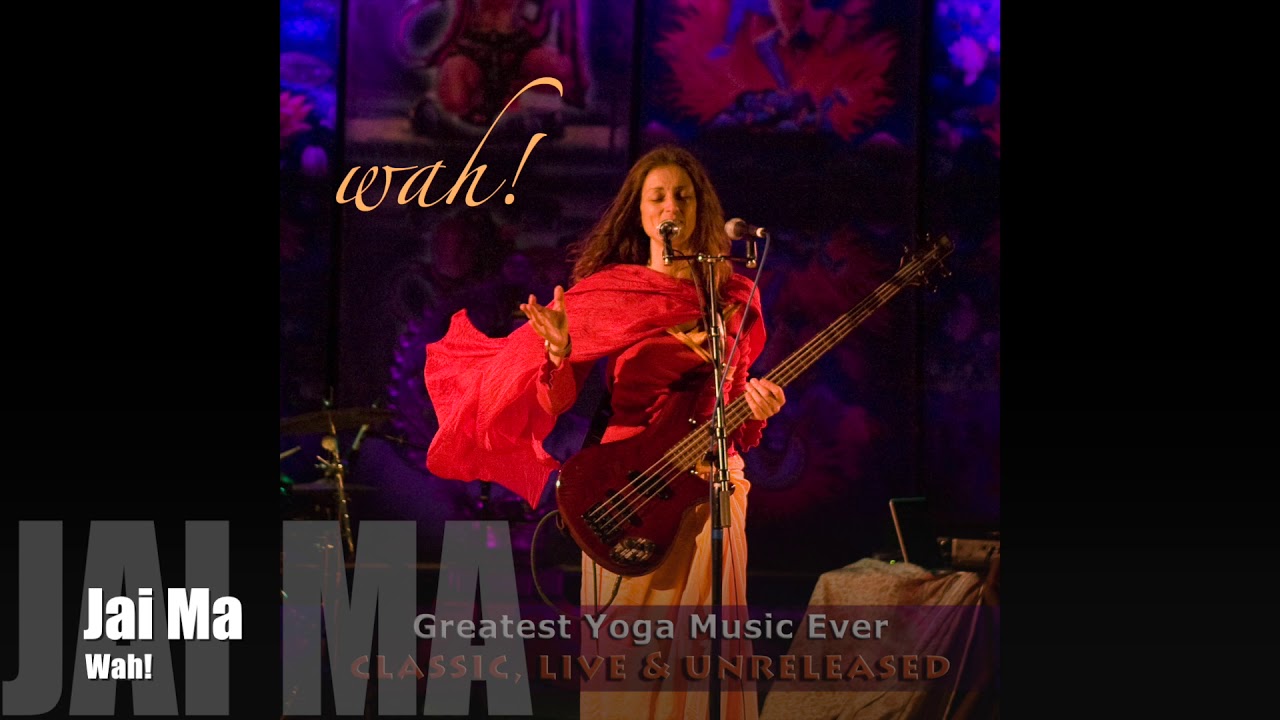
"Savasana," the recording posted to the Everything Wah! channel as "Wah! SAVASANA - Hare Krishna," is nine minutes and thirty-nine seconds of sung mantra with no spoken introduction, no lyric sheet, and no narration. Its entire text is the familiar Hare Krishna and Hare Rama call, repeated in cycles that rise, thin out, and return. The title pairs the track with savasana, the resting pose that closes a yoga practice, and that pairing is the most useful way into the recording: it asks the listener to stop doing and let a repeated sound carry the attention. What follows is a close listen to what the transcript actually contains, and an honest account of what it does not.
The track opens on a bracketed music marker, with no voice for the first few seconds. The first words arrive at 0:16, when the call begins in Devanagari as हरे कृष्णा हरे कृष्णा, transliterated as "Hare Krishna, Hare Krishna." The phrasing is short and cyclical. Two Hare Krishna lines lead into a pair of Krishna repetitions, then return to the opening pair. Within the first half minute the pattern has already established itself, and that early settling is what makes the rest of the track feel like a single unbroken movement rather than a set of separate verses.
The repetition is the point. Nothing in the transcript shifts meaning from one line to the next. The variation comes from how many times a word is repeated and where the breaths fall, so the listener's ear learns the shape quickly and begins to anticipate it. That anticipation is what makes a chant like this usable for rest: there is nothing to decode, only a form to follow.
Around 1:33 the transcript shifts. The single word राम ("Rama") enters, and by 1:40 the line has settled into राम राम हरे हरे. From there, Hare Rama appears alongside Hare Krishna, and the two names alternate in blocks rather than in a neat one-for-one exchange. Some stretches are almost entirely Rama, with "Hare Rama, Hare Rama" repeated several times before the Krishna line returns. Others return to a long run of Krishna repetitions, sometimes with the word "Krishna" repeated four or five times in a row.
This is the structural arc of the recording. The early minutes establish the Krishna cycle, the middle introduces Rama as a counterweight, and the later sections weave the two together with more density. The track does not build to a climax in the way a pop song does, with a sudden lift or a key change. It sustains. The intensity comes from the accumulation of repetitions, not from any single peak.
At about 5:06 the transcript records a marker tagged [प्रशंसा], which translates roughly as praise or acclaim, and the same tag appears again shortly afterward at 5:18. The transcript does not say who offered the praise, whether it was a gathering or a recording engineer's annotation, or how the moment was captured. Read literally, it is a point where the chant is acknowledged mid-stream, and the flow resumes without a pause. Treat it as a texture of the recording rather than a clue to its origin.
The recording does not end on a cadence. Around 9:19, near the close, the transcript is down to a few words per cycle, with कृष्णा कृष्णा repeated over music markers. The last text in the transcript, at 9:19, is simply "Krishna, Krishna." The effect is a dissolving rather than a resolution: the chant recedes into silence instead of landing on a final note. For a track named after a resting pose, that is an apt ending. There is no final gesture to respond to, only a sound that stops being needed.
The most direct use is the one the title suggests. Lie down, let the first few cycles set the pace, and stop tracking the words. A listener who wants more structure can follow the arc described above: note when Rama enters, notice the blocks of Krishna repetition, and let the closing minutes thin out as the track fades. Because the recording is nearly all chant, it works best without a second task. Keep the volume at a level where the voice is present but not sharp, and give it the full nine and a half minutes rather than cutting it short.
The transcript and description contain no biography of the performer, no account of where or when the track was recorded, and no statement from the artist about the music. The uploader's description offers only two links: a download page for an album titled "Savasana" and a CD listing for the catalog number "wahmusic1," along with the artist's general music site. Those are the facts available here. Anything beyond the chant itself would require material this upload does not supply, and this piece does not add it.
If the recording is your entry point, listen to it at least twice: once for the form, once for the shifts between Krishna and Rama. For background on the mantra's lineage, look to sources that document the Hare Krishna tradition directly, since this upload does not address it. For the album itself, the download and CD links in the description are the official routes to the full release.