BrightStar

Ver todos os Events

Descubra encontros conscientes

events

Yoga
Meditation
Breathwork
Qigong
Tai Chi
Sacred Music
World Music
Medicine Music
Sound Healing
Ecstatic Dance
Destinos populares
BaliSedonaLos AngelesCosta RicaNew YorkSan FranciscoAustinMiamiJoshua TreeTulum
Ver todas as categoriasVer todos os destinos

Explorar todos os recursos

Ferramentas poderosas para expandir seus eventos

Recursos da plataforma

Precificação dinâmica inteligente
Categorias de ingressos
Lugares marcados
Recuperação de carrinho abandonado
Recuperação de visitantes
Doações e preço variável
Sistema de afiliados
Scanner de ingressos
Códigos de desconto
Perguntas personalizadas
Compartilhamento de ingressos
Upsells e adicionais
Análises e relatórios
Sequências de e-mail
Lista de espera / Notificar / Lembrar
Pessoas e Lugares
Artists & TeachersEvent OrganizersVenues & StudiosKnowledge BaseGlossaryInspiration
Ver todos os recursosSobre nós
PreçosBlog
Language
Saved events
Ver todos os eventos

events

YogaMeditationBreathworkQigongTai ChiSacred MusicWorld MusicMedicine Music

Destinos populares

BaliSedonaLos AngelesCosta RicaNew YorkSan Francisco

Pessoas e Lugares

Artists & TeachersEvent OrganizersVenues & StudiosKnowledge BaseGlossaryInspiration

Recursos da plataforma

Precificação dinâmica inteligenteCategorias de ingressosLugares marcadosRecuperação de carrinho abandonadoRecuperação de visitantesDoações e preço variávelSistema de afiliadosScanner de ingressosCódigos de descontoPerguntas personalizadasCompartilhamento de ingressosUpsells e adicionaisAnálises e relatóriosSequências de e-mailLista de espera / Notificar / Lembrar
Ver todos os recursosSobre nós
PreçosBlog
EntrarBuscadoresCriadores
  • Ver todos os Eventos
  • Para buscadores
  • Yoga
  • Meditação
  • Respiração consciente
  • Qigong
  • Tai chi
  • Música sagrada
  • World music
  • Música de medicina
  • Terapia sonora
  • Dança extática
  • Retiros
  • Workshops
  • Todas as categorias →
  • Bali
  • Sedona
  • Los Angeles
  • Costa Rica
  • Tulum
  • Byron Bay
  • San Francisco
  • Austin
  • New York
  • San Diego
  • Denver
  • Seattle
  • Portland
  • Miami
  • Todas as cidades →
  • Be Found
  • Sell Globally
  • Para criadores
  • Para equipes
  • Para escritores
  • Para professores
  • Para artistas de kirtan
  • Para estúdios
  • Para festivais
  • Para centros de retiro
  • Para organizações sem fins lucrativos
  • Embaixador da marca
  • Estudos de caso
  • Ingressos grátis
  • Elevate
  • Amplify
  • Rede de 500K+ compradores
  • Recuperação de carrinho abandonado
  • Precificação dinâmica inteligente
  • Categorias de ingressos
  • Eventos recorrentes
  • Lugares marcados
  • Sistema de afiliados
  • Lista de espera / Notificar
  • Scanner de ingressos
  • Widget incorporável
  • Distribuição de eventos
  • Central de mensagens
  • Integrações
  • Relatórios
  • Todos os recursos →
  • Sobre
  • O ecossistema
  • Blog
  • Glossário
  • Inspiração
  • Central de ajuda
  • Contato
  • Documentação da API
  • Recursos da marca
  • Carreiras
  • Imprensa
  • Termos de Serviço
  • Política de Privacidade

Eventos

  • Ver todos os Eventos
  • Para buscadores
  • Yoga
  • Meditação
  • Respiração consciente
  • Qigong
  • Tai chi
  • Música sagrada
  • World music
  • Música de medicina
  • Terapia sonora
  • Dança extática
  • Retiros
  • Workshops
  • Todas as categorias →

Destinos

  • Bali
  • Sedona
  • Los Angeles
  • Costa Rica
  • Tulum
  • Byron Bay
  • San Francisco
  • Austin
  • New York
  • San Diego
  • Denver
  • Seattle
  • Portland
  • Miami
  • Todas as cidades →

Para criadores

  • Be Found
  • Sell Globally
  • Para criadores
  • Para equipes
  • Para escritores
  • Para professores
  • Para artistas de kirtan
  • Para estúdios
  • Para festivais
  • Para centros de retiro
  • Para organizações sem fins lucrativos
  • Embaixador da marca
  • Estudos de caso
  • Ingressos grátis
  • Elevate
  • Amplify

Recursos

  • Rede de 500K+ compradores
  • Recuperação de carrinho abandonado
  • Precificação dinâmica inteligente
  • Categorias de ingressos
  • Eventos recorrentes
  • Lugares marcados
  • Sistema de afiliados
  • Lista de espera / Notificar
  • Scanner de ingressos
  • Widget incorporável
  • Distribuição de eventos
  • Central de mensagens
  • Integrações
  • Relatórios
  • Todos os recursos →

Empresa

  • Sobre
  • O ecossistema
  • Blog
  • Glossário
  • Inspiração
  • Central de ajuda
  • Contato
  • Documentação da API
  • Recursos da marca
  • Carreiras
  • Imprensa
  • Termos de Serviço
  • Política de Privacidade
BrightStar
© 2026 BrightStar. Todos os direitos reservados.
Inspiration

Raag Sarang & DevotionalChanting: Understanding Sacred Kirtan

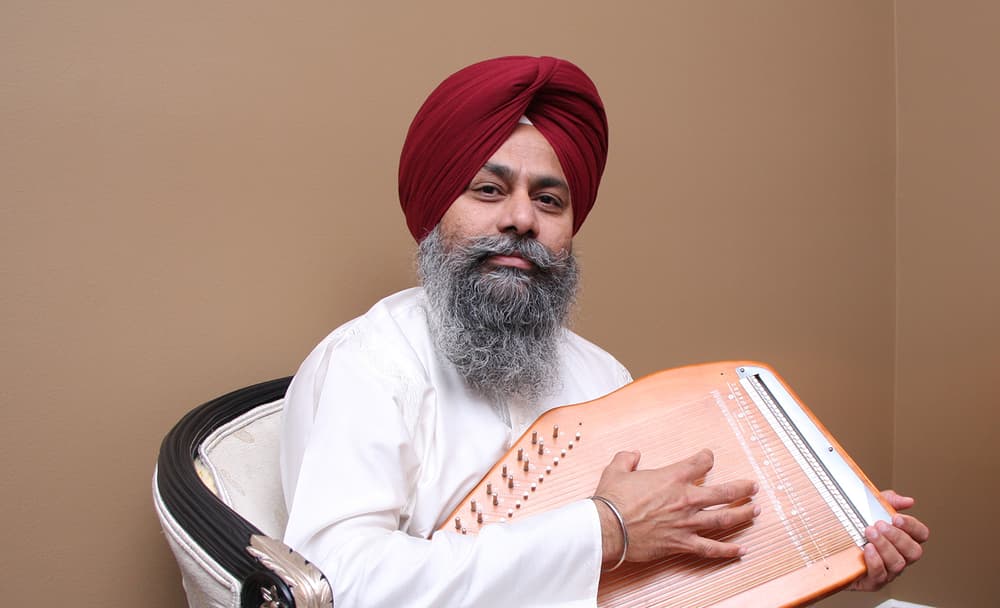
Professor Paramjeet Singh
May 3, 2012
7 min de leitura
Assistir · 6

This recording presents "Jap Man Jaganath Jagadeesaro" in Raag Sarang Partaal, a devotional composition that brings together classical Indian music and sacred chanting within the Patiala Gharana vocal tradition. The piece invokes meditation on the divine as the master of all worlds, exploring themes of divine proximity, devotion through remembrance, and the union of the individual consciousness with cosmic awareness. Professor Paramjeet Singh renders the composition with the technical precision and emotional depth characteristic of classical kirtan practice.

Leitura · 8 seções

What is Raag Sarang and its spiritual significance?

Raag Sarang is a classical Indian musical framework that carries particular emotional and spiritual resonance. The raag operates within a defined set of notes (swaras) and melodic movements that, in Indian classical tradition, are understood to evoke specific mental states and seasonal associations. Sarang is traditionally linked to the monsoon season and carries qualities of longing, devotion, and emotional depth.

In sacred contexts, raags like Sarang become vehicles for devotional expression. The raag is not merely a technical constraint but a spiritual architecture—the specific note combinations and melodic phrases are believed to create particular frequencies that attune the listener's consciousness toward meditative or devotional states. When combined with devotional text, as in "Jap Man Jaganath Jagadeesaro," the raag amplifies the spiritual intention of the words.

Understanding the composition's core invocation

The central mantra-like phrase "Jap Man Jaganath Jagadeesaro" translates as "Meditate, O mind, on Jaganath, the Lord of the World." This is not a request but a direct address—the composition uses imperative language to guide the listener's mental attention toward divine remembrance. The word "jap" refers to meditative chanting or japa, a core Vedic and yogic practice where the mind repeats sacred names or phrases to achieve concentration and spiritual communion.

"Jaganath" (also spelled Jagannath) refers to Krishna as the universal ruler and protector, while "Jagadeesaro" emphasizes the divine as the ultimate sovereign of all existence. The composition's opening lines establish this framework: "Jap man jaganath jagad saro / Jap man jaganath jagdi saro / Jap man jaganath jagdeesh ro." Each repetition with slight textual variation creates a rhythmic invocation that allows the practitioner to deepen their focus on the divine presence.

How does the composition explore divine proximity and love?

A significant section of the composition addresses the paradox of divine closeness: "Har ke nikut nikut har nikut hi baste / Te har ke jan sadhu har pagat." This phrase, appearing around 2:39-2:50, translates roughly as "Near, ever near, the Lord dwells close / Those who are the Lord's servants, the saints, walk in the Lord's feet." The repetition of "nikut" (near) creates an insistent rhythmic focus on the idea that the divine is not distant or abstract but intimately present.

This addresses one of the central tensions in devotional practice: how to experience union with a transcendent divinity. The composition suggests that closeness is not something to be achieved through effort but something already inherent in existence—the practitioner need only recognize it. The reference to "har ke jan" (the Lord's servants) and "sadhu" (the saints) provides an exemplary path: those who dedicate themselves to remembrance of the divine are naturally brought into closer communion.

What role does praise and enumeration of divine qualities play?

A middle section of the composition shifts into what might be called descriptive devotion. Phrases like "Jagdees hake upma anik anik anik gun gavat sukh naarad brahma dik tav gun swami ganan najat" invoke classical Hindu theological figures—Narad (the sage), Brahma (the creator)—as witnesses to divine qualities. The structure here is intentionally overwhelming: qualities are piled upon qualities ("anik anik anik gun"—infinite, infinite, infinite virtues), suggesting that enumeration itself becomes a failure. No amount of praise, even by the greatest sages and gods, can fully capture the divine essence.

This rhetorical strategy is common in Vedic and devotional Sanskrit poetry: by showing the inadequacy of praise, the composition deepens the listener's sense of the divine's transcendence. It creates what might be called a "praise through negation"—the more we attempt to describe divinity, the more we recognize its beyondness. Yet the composition continues to praise anyway, treating the futility of praise as itself a form of devotion.

How does the Patiala Gharana vocal tradition shape this performance?

The Patiala Gharana is one of the major schools of Hindustani classical vocal music, known for its emphasis on technical virtuosity, emotional expressiveness, and elaborate ornamentation. Within this tradition, a vocalist like Professor Paramjeet Singh brings specific interpretive choices to a composition. The gharana approach typically involves slow, meditative development of the raag—establishing its character through prolonged note exploration—before moving into faster, more elaborate passages.

In this recording, the opening invocation allows space for the raag to establish itself. Rather than rushing through the text, the vocalist dwells on key phrases, allowing the melodic contours to clarify the emotional content. This is not performance in the modern entertainment sense but a form of teaching through sound—the listener is guided through the raag's emotional landscape by a practitioner who understands its inner logic.

Why does the composition return repeatedly to the opening refrain?

The structure of the composition employs what is called a "bandish" (fixed composition) structure common in classical Indian music. The opening phrase "Jap man jaganath" functions as a refrain or theme (called a "mukhda") that returns throughout the performance. This repetition serves multiple functions: it creates a sense of architectural coherence, it allows for variations on a central idea, and it mirrors the meditative practice the text describes.

In japa practice itself, repetition is the mechanism—the same mantra is repeated hundreds or thousands of times to achieve mental consolidation and spiritual deepening. The musical structure mirrors the spiritual practice. Each return to the refrain is not identical but carries forward the emotional and textual development of the intervening passages, much as repeated meditation deepens in understanding rather than becoming mechanical.

What spiritual tradition does this composition belong to?

The language, theological references, and spiritual framework indicate this is a Sikh-influenced devotional composition, likely drawn from or inspired by Sikh scripture and gurmat (Sikh teaching). The reference to "Nanak" in later passages ("jaise jan Nanak mele") explicitly invokes Guru Nanak, the founder of Sikhism. Sikh devotional music (kirtan in Sikhism) often draws on North Indian classical music forms while maintaining theological focus on the One Supreme Creator ("Ek Onkar") and the path of remembrance and devotion.

The synthesis visible here—classical raag structure combined with scriptural language and meditative intention—is characteristic of how Sikh communities have engaged with Indian classical music as a vehicle for spiritual practice. Rather than seeing music and spirituality as separate domains, this tradition treats music as an integral part of the devotional path.

Where to go from here

To deepen engagement with this tradition, listeners might explore recordings of classical kirtan from both Sikh and Hindu contexts to understand how different communities employ raag and composition. Reading translations of the Guru Granth Sahib (the Sikh scripture) will illuminate the textual and theological context from which compositions like this emerge. Students of Indian classical music can study the specific characteristics of Raag Sarang—its ascending and descending phrase patterns (aroha-avaroha), its characteristic ornamentations, and its emotional associations—to understand how the raag itself contributes to the devotional impact.

Exploring the Patiala Gharana's approach to classical singing through other recordings will reveal how this particular school understands the relationship between technical mastery and spiritual expression. Finally, anyone drawn to meditative practice might use this recording as an object of contemplation itself: listening repeatedly to the composition while following its text can serve as an entry point into the japa practice the composition describes and invites.

Comments

Loading the conversation…

Transcript

[0:09] [संगीत]

[0:21] [प्रशंसा]

[0:26] [संगीत]

[0:35] [संगीत]

[0:39] जप मन जगन्नाथ जगद

[0:43] सरो जप मन जगन्नाथ जगदी

[0:48] सरो जप मन जगन्नाथ जगदीश

[0:54] रो जग

[0:56] जीवनो

[0:58] मनमोहन स प्रीत लागी में हर हर हर एक सब

[1:06] दि नस

[1:10] सब जप मन जगन्नाथ जगदीश

[1:15] रो जप मन जगन्नाथ

[1:21] [संगीत]

[1:22] [प्रशंसा]

[1:27] [प्रशंसा]

[1:29] जगदीस

[1:31] हके उपमा अनिक अनिक अनिक गुण गवत सुख नारद

[1:37] ब्रह्मा दिक तव गुण स्वामी गणन नजत हर की

[1:43] उपमा अनिक अनिक अनिक गुण गवत सुख नारद

[1:48] ब्रह्मा नित तव गुण स्वामी नन न जत तू हर

[1:54] बे

[1:55] अंत तू हर बे

[1:59] अंत तू हर बे

[2:02] अंतर तू हर बे

[2:06] अंतर तू हर

[2:09] स्वामी तू हर

[2:13] स्वामी तू आपे जान अपनी

[2:18] पात जप मन जगन्नाथ जगद

[2:23] सरो जप मन जगन्नाथ जगदी

[2:29] सरो

[2:30] [प्रशंसा]

[2:33] [संगीत]

[2:36] [प्रशंसा]

[2:39] हर के निकट निकट हर निकट ही बसते हर के

[2:44] निकट निकट हर निकट ही बसते ते हर के जन

[2:50] साधु हर पगत ते हर के जन साधु हर

[2:58] पगा हर

[3:01] के

[3:03] जन

[3:06] हरस

[3:08] के

[3:10] हर

[3:12] के

[3:14] जन

[3:17] हर

[3:19] रल

[3:21] मिले

[3:24] जैसे जन

[3:29] नानक

[3:31] मिले

[3:34] जैसे

[3:39] जनना

[3:41] [प्रशंसा]

[3:44] सल

[3:48] सल

[3:51] मलात जप मन जगन्नाथ जगद

[3:56] सरो जप मन जगन्नाथ जगदीश

[4:09] [प्रशंसा]

[4:10] रो हर के निकट निकट हर निकट ही

[4:15] बसते ते हर के जन साधु हर पगत ते हर के जन

[4:21] हर सयो रल मिले जैसे जन नानक सल ले सल ल

[4:25] मिलाद नानक सल ले सल ल मिलाद नानक सल ले

[4:30] सल

[4:31] मिला जप मन जगन्नाथ जगदीश

[4:36] रो जप मन जगन्नाथ जगदी

[4:42] सरो जग

[4:44] जीवनो मन मोहन सि प्रीत लागी में हर हर हर

[4:52] टेक सब दिन स सब

[4:58] रात मन जगन्नाथ जगदीश

[5:03] रो जप मन जगन्नाथ जगदी

[5:08] [संगीत]

[5:10] [प्रशंसा]

[5:13] [संगीत]

[5:15] [प्रशंसा]

[5:28] सरो

[5:31] [प्रशंसा]

[5:32] [संगीत]

[5:37] [प्रशंसा]

[5:37] [संगीत]

[5:41] जगवन जगन्नाथ जग की

[5:45] सरो जप मन जगन्नाथ जगद

[5:51] स जप मन जगनाथ

[5:56] जगदीश जब मन जगन्नाथ

[6:01] जगदीश जब मन जगन्नाथ

[6:10] [संगीत]

[6:19] जगदीश

Professor Paramjeet Singh
ArtistProfessor Paramjeet Singh

Professor Paramjeet Singh is an Indian classical vocalist and Sikh kirtan artist who has mastered over 125 ragas and devoted his career to preserving the devotional music of saints…

Ver perfilSite
Explorar temas
Raag-sarangKirtanDevotional-chantingPatiala-gharanaJapa-practice

Tem perguntas?

Perguntas frequentes

The phrase translates as 'Meditate, O mind, on Jaganath, the Lord of the World.' Jaganath refers to Krishna as the universal protector, while the composition invokes the meditative practice (japa) of repeating divine names to achieve spiritual communion and focused remembrance.
A raag is a melodic framework in Indian classical music that defines specific notes (swaras), movement patterns, and emotional character. Unlike Western scales, raags are understood to evoke particular mental states and are treated as vehicles for spiritual expression, not merely technical structures.
Kirtan is devotional chanting that serves as a form of meditation. By repeating sacred phrases or divine names (japa), the practitioner focuses the mind and develops awareness of the spiritual dimension of existence. The musical structure supports and deepens this meditative intention.
The Patiala Gharana is a major school of Hindustani classical vocal music known for technical virtuosity, emotional depth, and elaborate ornamentation. Gharana practitioners teach through sound itself, developing the raag's character through slow exploration before moving into faster, more complex passages.
The repeated phrase 'Har ke nikut' (the Lord is near) addresses a core devotional paradox: how to experience union with a transcendent divinity. The composition suggests that divine proximity is not something to achieve through effort but already inherent—the practitioner need only recognize it through remembrance.
The composition draws on both traditions but is primarily Sikh in its theological framework and reference to Guru Nanak. Sikh kirtan synthesizes North Indian classical music with the Sikh principle of 'Ek Onkar' (the One Supreme Creator) and the path of devoted remembrance.
Repetition mirrors the meditative practice the text describes—in japa, the same mantra is repeated to achieve mental consolidation and spiritual deepening. The musical refrain returns throughout, creating architectural coherence while the intervening passages develop the theme, much as meditation deepens through practice rather than becoming mechanical.

Continuar lendo

More from Professor

Ver Tudo
Raag-Based Gurbani Kirtan: The Beauty of Mere Laalan Ki Sobha
Inspire

Raag-Based Gurbani Kirtan: The Beauty of Mere Laalan Ki Sobha

Learn how raag-based Gurbani kirtan preserves authentic Sikh devotional music through the shabad "Mere Laalan Ki Sobha," performed in classi…

1 min read
Raag-Based Gurbani Kirtan: Tukhari, Bhairavi, and Classical Tradition
Inspire

Raag-Based Gurbani Kirtan: Tukhari, Bhairavi, and Classical Tradition

Experience the spiritual depth of Patiala Gharana kirtan through rare raags and Gurbani compositions. A live performance honoring classical …

1 min read
Minimal Vocalization as Spiritual Practice: Power in Simplicity
Inspire

Minimal Vocalization as Spiritual Practice: Power in Simplicity

A brief live vocal interlude demonstrates how devotional sound—stripped to its essence—can invoke presence and transformation through pure r…

1 min read
Govinda Jaya: How Sacred Sound Awakens the Heart
Inspire

Govinda Jaya: How Sacred Sound Awakens the Heart

Radhika Das channels the liberating power of mantra through a luminous kirtan performance at Medicine Festival, invoking divine names to pur…

1 min read

Continue explorando

Continue sua jornada

Mais sabedoria e mais encontros de todo o diretório BrightStar.

Mais artigos

Explore a biblioteca completa de ensinamentos, entrevistas e guias.

Voltar a todos os artigos →

Professores e artistas

Conheça as linhagens, os músicos e os guias do mundo consciente.

Explorar artistas →

Encontre um evento

Kirtan, retiros, banhos de som, breathwork, festivais — acontecendo em breve.

Ver eventos →