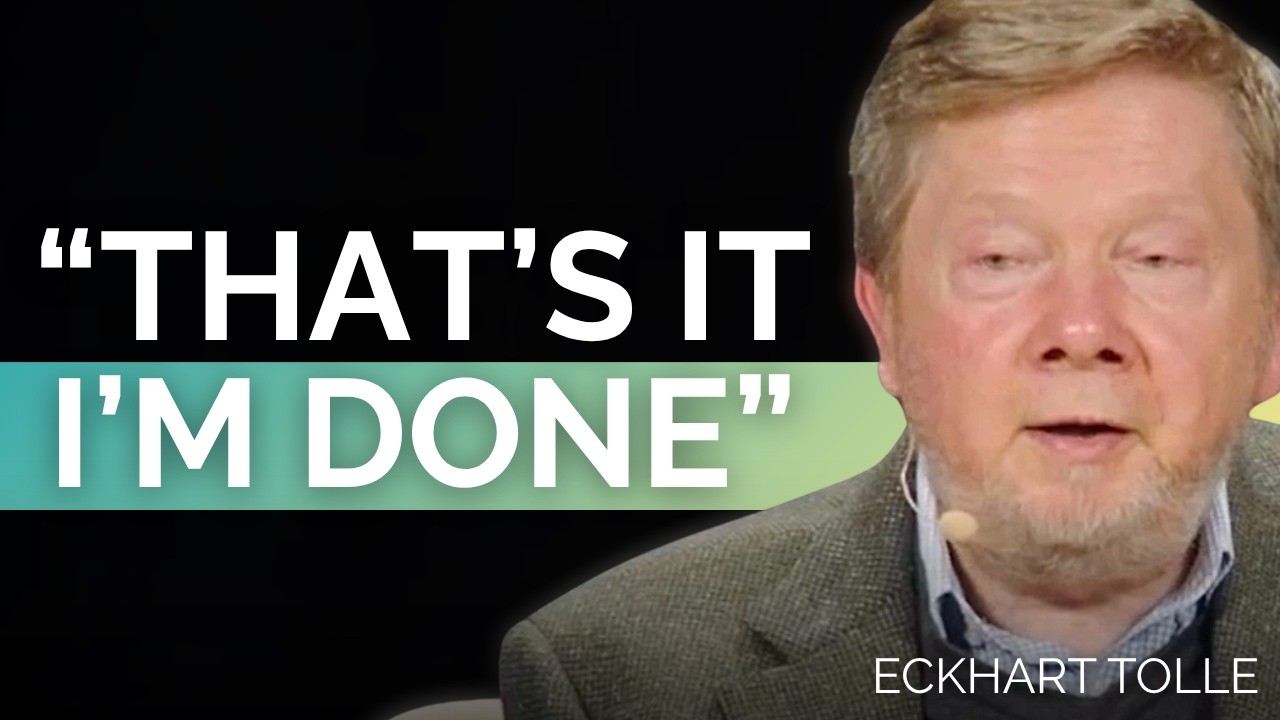
A viewer in a recent question-and-answer session posted by the channel Sri Preethaji & Sri Krishnaji describes something many sincere people quietly carry. They want to reach out to others, and afterward they feel emptied. For a year and a half, they say, every attempt to extend a helping hand has left their body drained of energy, and the methods they have tried have helped only a little. Sri Krishnaji's reply, part of an eleven-minute exchange published in October 2026, does not offer a technique. It locates the exhaustion in the state of mind behind the helping, and then widens the frame into a larger teaching about karma, inner transformation and whether awakening makes a person's life harder. This piece works through that teaching: why effortless help is a signal of inner health, how the speaker describes karma as a law rather than a punishment, and what he says happens to hardship when a person's spiritual life deepens.
The viewer's problem is specific. They want to help, but their body goes flat afterward. Sri Krishnaji's first move is to turn the question back on itself. The answer, he says, is already in the way it was asked.
"The answer is in your question. The more methods you try to use even to gain your energy or do this, the more energy you will lose and the more weaker you'll become." (Sri Krishnaji, Q&A, Sri Preethaji & Sri Krishnaji channel, October 2026, opening segment)
The argument rests on a distinction between effort and enjoyment. Helping, in his account, can be one of two very different experiences. In one, it is effortless, enjoyable and joyful. In the other, it becomes work, and the work is mostly mental. He turns the viewer's own worries into a list and reads it back to them.
"Will this person reciprocate? Will this person be grateful? Will this person appreciate me? There's a lot that's going on in your mind and that is tiring you." (Sri Krishnaji, Q&A, October 2026, around 1:19)
This is the core of his diagnosis. The tiredness does not come from the act of giving. It comes from the running commentary that accompanies it: a ledger being kept, a silent audit of whether the gesture will be returned or whether the helper will be "used and forgotten." He names the feeling directly, asking whether the viewer is "being exploited," and says that this constant calculation is what drains them. The viewer is not loving the act, and so the act costs them.
A practical reading of this, which is an interpretation rather than a quotation from the speaker, is that the helper is paying twice: once in the effort of the task, and again in the anxiety about how it will be received. Removing the second payment is the part that, in his telling, makes the first one feel light.
Alongside the diagnosis comes a claim that works like a principle. Sri Krishnaji says that when you help someone, the return does not depend on that person's response. Even if the other person never reciprocates, the helper receives something.
"When you help someone, that person, even if that person doesn't reciprocate or do things, you will always have that blessing in your life. And that blessing will always come and help you in some form or the other." (Sri Krishnaji, Q&A, October 2026, around 2:49)
He presents this as a law and adds, "This law you can never go wrong with." The phrasing matters. It moves the viewer's attention from the other person's gratitude, which they cannot control, to the helper's own state, which they can. If the blessing is understood to arrive regardless, the reason to keep score begins to dissolve.
His prescription is inward. "You need to heal your hurt," he says, and the heart will awaken. Awakening, in this framing, is what turns helping into connection rather than a transaction. The more the heart opens, the more effortless the giving becomes. This is a different kind of advice from "set boundaries" or "pace yourself." It treats the exhaustion as a symptom of an unhealed inner wound rather than as a scheduling problem.
A second questioner, Michael, asks a more unsettling question. As a person awakens and becomes, in his words, "the light unto the world," will the negative karma from the past grow larger too, surfacing for them to work on? And if compassion and intelligence draw them back into old patterns, should they release what no longer serves them or deepen their compassion?
Sri Krishnaji begins with an analogy that he returns to more than once. Karma, he says, is a law, like the law of gravity.
"Karma is a law. Okay? Uh like law of gravity... You jump up in Malaysia, you'll fall down. I jump up here, I'll also fall down." (Sri Krishnaji, Q&A, October 2026, around 4:26)
The point of the comparison is that a law does not make exceptions for the faithful or the unfaithful. It is impersonal. He then describes karma as layered: personal karma from this life, karma from past lives, the karma of one's parents and ancestors, the karma of humanity, and the karma of nations. It flows into a life in many forms. For one person, negative karma shows up as health trouble; for another, as money trouble; for a third, as strain in relationships.
Here the speaker makes a distinction that is easy to miss. Karma, he says, "cannot be escaped." What changes with awakening is not whether it arrives but how hard it lands. He calls this a gift: a seeker does not escape negative karma so much as experience it with far less impact.
To make the point concrete, Sri Krishnaji offers a hypothetical and then a personal account. Imagine an unenlightened person facing a million-dollar loss. A person who begins to take the spiritual path seriously, practicing tapas and becoming a passionate seeker, would, in his view, lose far less, perhaps around a hundred thousand dollars. The reason is that they stop being governed by fear and move with the flow of life.
Then he describes a case he says he has witnessed.
"I have seen personally a million-dollar loss happens, but the person is so passionate about enlightenment, the loss has come, but there is no suffering, applies the teaching, lives the teaching." (Sri Krishnaji, Q&A, October 2026, around 6:38)
He says the same person went on to make a profit of about $4 million within the following 72 hours, which he describes as four times the original loss. This is the speaker's own account, offered as testimony rather than as something a viewer can verify from the video, and it should be read as such. What the account does illustrate is his central thesis: the loss is treated as karma arriving, and the response, which he calls non-suffering, is what he thinks changes the outcome.
He draws a larger conclusion from this. "Only and only spiritual growth can make you escape negative karma," he says, and he links the process to conduct. As a person grows spiritually, their actions become more compassionate and kind, which in his view generates good karma. He adds that the benefit extends to family and future generations.
The teaching anticipates a natural objection. If awakening brings karma to the surface, does a deeper spiritual life simply mean a harder life? Sri Krishnaji says no, and he rejects the premise outright.
"There is no principle like you become more God realized, more problems come in life. Then you don't need to become God realized." (Sri Krishnaji, Q&A, October 2026, around 7:49)
He separates the path from circumstances. Self-realization and God-realization are described as a path. What happens outside is something else, and the inner state, in his words, "has a great influence to change it." The distinction is important. It does not promise that difficulty disappears on schedule. It claims that the way a person stands in relation to difficulty is the variable that matters most.
He describes how this works in ordinary life. Much of what unsettles people, he suggests, comes from feeling unfulfilled and finding no meaning or purpose. Questions pile up because the inner ground is unsteady. As a person moves along the path, he says, those questions tend to fall away, because the person begins to have answers. He describes his own life in those terms: fully present, enjoying what he does, with the outer world appearing "more beautiful and more beautiful."
The final portion of the excerpt turns to the most painful version of the question. A questioner describes heavy financial pressure, with debt weighing on them, and asks for guidance. Sri Krishnaji's answer is brief in the portion available: "You must not live in fear."
"You must not live in fear." (Sri Krishnaji, Q&A, October 2026, around 11:19)
The answer ties back to everything before it. In his framework, fear is the mechanism through which karma becomes heavy: it fuels the ledger, the calculation and the sense of being exploited. He also connects any hoped-for miracle to the seeker's own part in the process, suggesting the seeker has responsibilities of their own. The excerpt available here does not carry the full answer, so a reader should not assume more specific steps than the speaker stated in the portion shown.
Near the end of this section of the Q&A, Sri Krishnaji makes an explicit claim about the source of the teaching. It is not a borrowed doctrine, he says, but drawn from experience.
"Whatever Shri Preetaji and I are teaching you, it is from our life. It is not from some book... It is what it has the experiences of our life, the way our life unfolds for us from these enlightened states." (Sri Krishnaji, Q&A, October 2026, around 9:36)
Whether a viewer accepts the account of the $4 million recovery or the layered model of karma, the stance is consistent. The speaker is offering a way of relating to life that he presents as tested by his own life and by people he says he has known for years. Readers can weigh that claim on its own terms.
This teaching is best read as a set of questions to bring to your own life, not as a checklist. A few places to start:
- Notice the running commentary when you help. Are you asking whether the person will reciprocate, be grateful, or appreciate you? Sri Krishnaji identifies those thoughts as the part that tires you.
- Ask what hurt sits underneath the exhaustion. His remedy is to heal that hurt so the heart can awaken, rather than to add another technique.
- Separate outer circumstances from inner state. He argues that spiritual growth does not automatically bring more problems, and that your inner state has real influence over how events land.
- Return to the full video if you want the complete answers, especially to the debt question, since the portion discussed here ends before the full guidance is given.
The strongest idea across the exchange is simple to state and hard to practice: the weight of giving and the weight of hardship both depend less on what happens to you than on what you carry while it happens.