BrightStar

Ver todos os Events

Descubra encontros conscientes

events

Yoga
Meditation
Breathwork
Qigong
Tai Chi
Sacred Music
World Music
Medicine Music
Sound Healing
Ecstatic Dance
Destinos populares
BaliSedonaLos AngelesCosta RicaNew YorkSan FranciscoAustinMiamiJoshua TreeTulum
Ver todas as categoriasVer todos os destinos

Explorar todos os recursos

Ferramentas poderosas para expandir seus eventos

Recursos da plataforma

Precificação dinâmica inteligente
Categorias de ingressos
Lugares marcados
Recuperação de carrinho abandonado
Recuperação de visitantes
Doações e preço variável
Sistema de afiliados
Scanner de ingressos
Códigos de desconto
Perguntas personalizadas
Compartilhamento de ingressos
Upsells e adicionais
Análises e relatórios
Sequências de e-mail
Lista de espera / Notificar / Lembrar
Pessoas e Lugares
Artists & TeachersEvent OrganizersVenues & StudiosKnowledge BaseGlossaryInspiration
Ver todos os recursosSobre nós
PreçosBlog
Language
Saved events
Ver todos os eventos

events

YogaMeditationBreathworkQigongTai ChiSacred MusicWorld MusicMedicine Music

Destinos populares

BaliSedonaLos AngelesCosta RicaNew YorkSan Francisco

Pessoas e Lugares

Artists & TeachersEvent OrganizersVenues & StudiosKnowledge BaseGlossaryInspiration

Recursos da plataforma

Precificação dinâmica inteligenteCategorias de ingressosLugares marcadosRecuperação de carrinho abandonadoRecuperação de visitantesDoações e preço variávelSistema de afiliadosScanner de ingressosCódigos de descontoPerguntas personalizadasCompartilhamento de ingressosUpsells e adicionaisAnálises e relatóriosSequências de e-mailLista de espera / Notificar / Lembrar
Ver todos os recursosSobre nós
PreçosBlog
EntrarBuscadoresCriadores
  • Ver todos os Eventos
  • Para buscadores
  • Yoga
  • Meditação
  • Respiração consciente
  • Qigong
  • Tai chi
  • Música sagrada
  • World music
  • Música de medicina
  • Terapia sonora
  • Dança extática
  • Retiros
  • Workshops
  • Todas as categorias →
  • Bali
  • Sedona
  • Los Angeles
  • Costa Rica
  • Tulum
  • Byron Bay
  • San Francisco
  • Austin
  • New York
  • San Diego
  • Denver
  • Seattle
  • Portland
  • Miami
  • Todas as cidades →
  • Join the Movement
  • Why we list
  • Sell Globally
  • Para criadores
  • Para equipes
  • Para escritores
  • Para professores
  • Para artistas de kirtan
  • Para estúdios
  • Para festivais
  • Para centros de retiro
  • Para organizações sem fins lucrativos
  • Embaixador da marca
  • Estudos de caso
  • Ingressos grátis
  • Elevate
  • Amplify
  • Rede de 500K+ compradores
  • Recuperação de carrinho abandonado
  • Precificação dinâmica inteligente
  • Categorias de ingressos
  • Eventos recorrentes
  • Lugares marcados
  • Sistema de afiliados
  • Lista de espera / Notificar
  • Scanner de ingressos
  • Widget incorporável
  • Distribuição de eventos
  • Central de mensagens
  • Integrações
  • Relatórios
  • Todos os recursos →
  • Sobre
  • O ecossistema
  • Blog
  • Glossário
  • Inspiração
  • Central de ajuda
  • Contato
  • Documentação da API
  • Recursos da marca
  • Carreiras
  • Imprensa
  • Termos de Serviço
  • Política de Privacidade

Eventos

  • Ver todos os Eventos
  • Para buscadores
  • Yoga
  • Meditação
  • Respiração consciente
  • Qigong
  • Tai chi
  • Música sagrada
  • World music
  • Música de medicina
  • Terapia sonora
  • Dança extática
  • Retiros
  • Workshops
  • Todas as categorias →

Destinos

  • Bali
  • Sedona
  • Los Angeles
  • Costa Rica
  • Tulum
  • Byron Bay
  • San Francisco
  • Austin
  • New York
  • San Diego
  • Denver
  • Seattle
  • Portland
  • Miami
  • Todas as cidades →

Para criadores

  • Join the Movement
  • Why we list
  • Sell Globally
  • Para criadores
  • Para equipes
  • Para escritores
  • Para professores
  • Para artistas de kirtan
  • Para estúdios
  • Para festivais
  • Para centros de retiro
  • Para organizações sem fins lucrativos
  • Embaixador da marca
  • Estudos de caso
  • Ingressos grátis
  • Elevate
  • Amplify

Recursos

  • Rede de 500K+ compradores
  • Recuperação de carrinho abandonado
  • Precificação dinâmica inteligente
  • Categorias de ingressos
  • Eventos recorrentes
  • Lugares marcados
  • Sistema de afiliados
  • Lista de espera / Notificar
  • Scanner de ingressos
  • Widget incorporável
  • Distribuição de eventos
  • Central de mensagens
  • Integrações
  • Relatórios
  • Todos os recursos →

Empresa

  • Sobre
  • O ecossistema
  • Blog
  • Glossário
  • Inspiração
  • Central de ajuda
  • Contato
  • Documentação da API
  • Recursos da marca
  • Carreiras
  • Imprensa
  • Termos de Serviço
  • Política de Privacidade
BrightStar
© 2026 BrightStar. Todos os direitos reservados.
Inspiration

Ik Onkar Beyond “One God”: Who Gets to Define the Words?

Nanak Naam
Nanak Naam
Oct 9, 2026
7 min de leitura
Assistir · 7

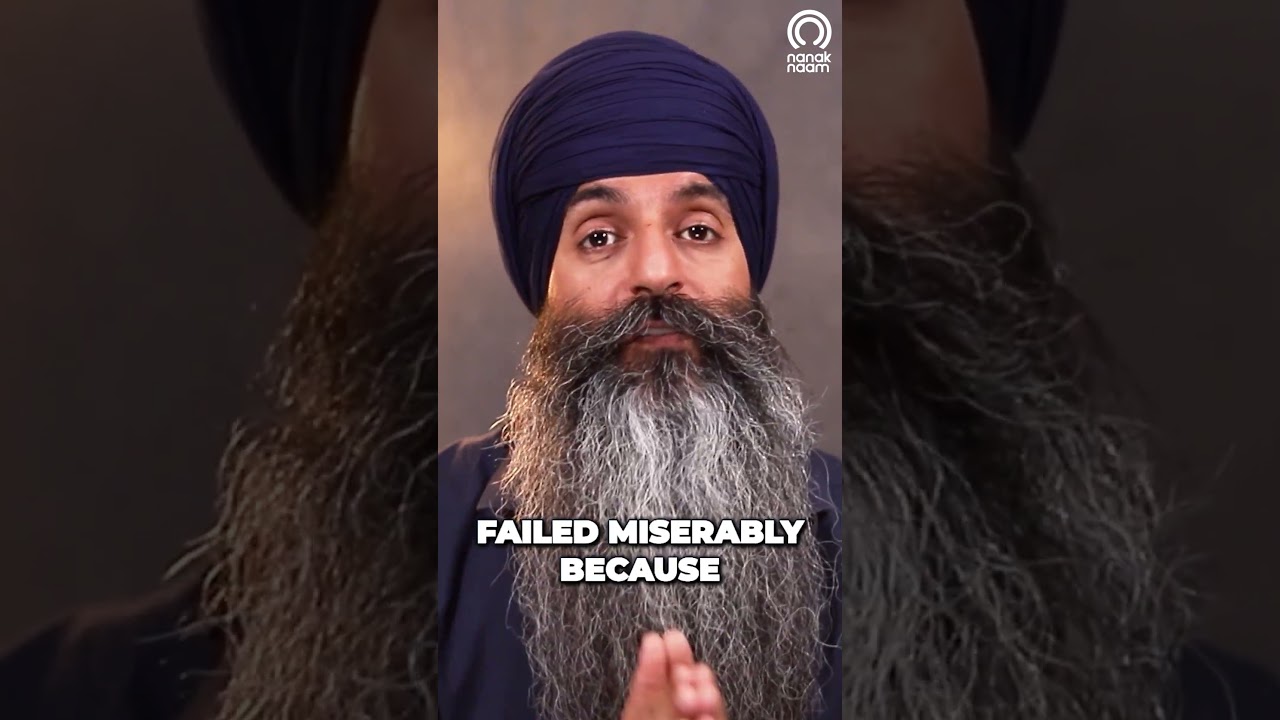
Two words open the Japji tradition, and a single phrase has been argued over ever since. In a one-minute-and-48-second clip published October 9, 2026, on the Nanak Naam channel, a speaker picks apart the standard English rendering of Ik Onkar, the phrase attributed to Guru Nanak, and argues that "one god" is the wrong answer to a question the words never asked. The clip is brief and its transcript is fragmentary, but it makes one sharp historical claim, and that claim is the reason it's worth a reader's attention.

The clip opens mid-argument. A voice says "Okay," the speaker lays out the phrase, and then comes the hook: the statement Guru Nanak makes, the speaker insists, does not say there is one god. There is a second voice in the room that answers, briefly, and the speaker keeps going. There are no visuals of note described in the material, only the talk, the musical underscoring that the auto-generated captions flag as [music], and a closing pointer to a longer video and to a new English translation of Jap Ji Sahib. What matters is the argument, and the argument is about who had the authority to translate.

Leitura · 6 seções

What does Ik Onkar mean, according to this speaker?

The speaker breaks the phrase into its parts. "Ik" is the number one. The second element, "Onkar," is the one the speaker spends the most time on. In the clip, he says "Onar means an unfolding vibrational entity" (0:16), then extends the idea: "An infinite unfolding." The reading moves away from a noun for a being and toward a process. Onkar, in this framing, is "constantly changing, molding," and the speaker pushes the point further, noting that the word "entity" doesn't even arrive until the third word of the phrase. The first thing Guru Nanak asserts, in this account, is oneness, and that oneness is "constantly unfolding" and "oscillating."

The image the speaker reaches for is vibration. Ik Onkar becomes "one infinite vibration" (0:56), an oneness that is not a fixed object standing outside the world but a continuous motion. This is a meaningful choice of metaphor for a practice built around recitation. If the opening words describe something that moves and vibrates, then the way you sound them, slowly and repeatedly, is itself part of what they describe. The speaker doesn't spell that out in this clip, but the implication sits underneath the argument.

Why does the speaker say "one god" is the wrong reading?

His first move is grammatical. "Does not mean there is one god," he says at 0:07, "because the word god isn't in that statement." Whatever a reader may think the phrase implies, the speaker's point is that the English word "god" is an addition by the translator, not a term in the original. He then sets the two translations side by side and asks listeners to hear the difference: "look how different that is to there is one god" (0:58).

The argument is not that a monotheistic reading is absurd. It is narrower than that. The speaker is saying the reading has been installed as a definition when it was really a guess, and the guess has been repeated so often it now feels like the text itself. That distinction matters for anyone who has learned Japji by memorizing English glosses alongside the Gurmukhi. If the gloss is wrong, the memorized meaning is wrong too, and the wrongness is invisible because it has been recited for generations.

How did "one god" become the standard translation?

This is the part of the clip that carries the story. The speaker says the first people to translate the phrase were European missionaries who came into India (1:08). When they asked what Ik Onkar meant, the answer they received was, in his account, the easiest one to hear: "that sounds a bit like our thing." Their own vocabulary had a term for one god, so the translation settled there. "Okay, there is one god," the speaker summarizes in his retelling of their reasoning, and the translation hardened.

The second link in the chain is the community's position at the time. The speaker says the Sikh community "was not educated well enough in English" (1:26) to challenge the rendering. In his telling, the logic was circular: if one god is the claim, then that must be what Ik Onkar means. He puts the total at "250 years," and the number is his. It is worth holding onto as his claim rather than a settled chronology, since the clip doesn't cite a source for it. What the clip does establish is the mechanism he describes: outsiders supplied a definition, the insiders lacked the language to push back, and the definition outlasted the period that produced it.

"It's time for us to take ownership of our own definitions. We've learned English now. We're able to push back a little bit." — the speaker, in the video "Ik Onkar" on the Nanak Naam channel (1:40)

That is the clip's real thesis. It is not a claim about theology alone. It is a claim about authority in translation: who gets to decide what a sacred phrase means in a new language, and whether the community whose words they are has the standing to revise the answer.

Why does translation ownership matter to people who recite Japji?

Most devotees who recite Japji Sahib do so in Gurmukhi, often long before they understand the text word by word. That is a legitimate and deep practice. But the speaker's point lands hardest here: recitation without understanding can leave an inherited English gloss unexamined. If someone has been told the first line means "there is one god," they carry that frame into every repetition. A different gloss does not change the sound, but it changes the meaning a listener brings to the sound.

That is why the clip closes by pointing toward a new English rendering. The description on the channel promotes a Jap Ji Sahib English translation in rhyming poetry, written in what it calls simple, modern language and a conversational form in which Guru Nanak answers questions. It is framed for daily reflection, meditation, family listening, and for children and adults learning the meanings. The description also says it is available on YouTube, Spotify, Apple Music and other major streaming platforms. Those are the channel's own promotional claims, and they are separate from the historical argument in the clip, though the two are clearly meant to travel together.

What are the limits of a two-minute argument?

A reader should keep the clip's scope in view. It is under two minutes long, the transcript is partial and marked with [music] tags, and the captions blur several Gurmukhi terms, so exact wording may differ from the spoken audio. The 250-year figure, the account of how missionaries reasoned, and the claim about the community's English proficiency are all the speaker's own assertions. They are plausible enough to be worth testing, and the test is straightforward: compare the standard English glosses of Ik Onkar across published translations, and check what each one cites for its reading. A serious translation will say why it chose its words.

What the clip does well is make a reader slow down at the first two words. That is a useful act. The phrase Ik Onkar is short enough to pass by unexamined, and the speaker's insistence that the definition was borrowed rather than inherent is a good reason to go back and read it again.

Where to go from here

Start with the clip itself, then read the phrase slowly, separating "ik" from "onkar" before you reach for any gloss. Notice where the English word "god" appears in your own reading and ask whether the source text supplies it or the translator did. If you recite Japji regularly, consider reading two or three English translations side by side and noting where they disagree on the opening line. The disagreements are where the argument lives.

The Nanak Naam channel's longer video, which the description points to under the title "The Religion That Sees God in Everything," is the next step for anyone who wants the speaker's fuller case. Watch it with the same question in mind: who supplied this meaning, and on what grounds? The clip's real gift is that it turns a translation into a question you can keep asking.

Comments

Loading the conversation…

Transcript

[0:00] Gurunanaki saysar. Guranak does not say

[0:03] there is one god. He says ekonar.

[0:05] >> Okay.

[0:07] >> Does not mean there is one god because

[0:08] the word god isn't in that statement.

[0:10] There's [music] iick which we know means

[0:13] one. And then there's which doesn't mean

[0:16] god. Onar means [music]

[0:18] an unfolding vibrational entity. An

[0:22] infinite unfolding. Onar is this

[0:25] constantly changing [music]

[0:28] molding entity. it we it doesn't even

[0:30] say it's an entity [music] because

[0:33] doesn't come until the third word

[0:37] a being that doesn't even come in until

[0:40] then first gurunanaki says there's

[0:42] oneness and it is constantly unfolding

[0:45] [music] it's constantly oscillating it's

[0:47] infinite

[0:51] it's just [music] infinitely molding and

[0:53] moving and vibrating one infinite

[0:56] vibration [music]

[0:58] look how different that is to there is

[1:00] one god. Yeah, remember who the people

[1:02] are that translated [music] this stuff

[1:04] for us. The definitionar there is one

[1:06] god is not a sick translation. [music]

[1:08] The first people who came to translate

[1:10] this stuff were the European

[1:12] missionaries who came into India and

[1:14] they said what is this ikonar business

[1:16] and whoever tried to explain it to them

[1:18] they said oh that sounds a bit like our

[1:20] thing we've [music] got this thing

[1:21] called god ikonar one god okay there is

[1:23] one god and the sick [music] community

[1:26] was not educated well enough in English

[1:28] back then to be able to challenge that

[1:30] they said okay if you say there is one

[1:32] god then that's what ikunar must mean

[1:33] there is one god and 250 years we're

[1:35] still stuck with that definition it's

[1:37] time for us to take ownership of our own

[1:40] definitions. We've learned English now.

[1:42] We're able to push back a little bit.

[1:43] Search for Japis in English poetry on

[1:46] YouTube and

Nanak Naam
ArtistNanak Naam

Nanak Naam is a UK charity, founded by SathPaal Singh in 2013, sharing Guru Nanak's teachings of Oneness through meditation, mindfulness, free courses, videos and music.

Ver perfilSite
Explorar temas
Ik-onkarJapji-sahibGuru-nanakTranslation-politicsSikh-philosophy

Tem perguntas?

Perguntas frequentes

In this clip, the speaker reads Ik as 'one' and Onkar as 'an unfolding vibrational entity,' describing an infinite, constantly changing oneness rather than a single god. He argues that the standard English rendering 'there is one god' was a missionary-era guess that was never truly grounded in the text.
The speaker says no, because the word 'god' does not appear in the phrase. He argues the English gloss was added by translators, who supplied it after comparing the phrase to their own concept of one god.
This speaker says the translation was adopted when the Sikh community was not fluent enough in English to challenge European missionaries, and it has persisted for about 250 years since. He calls for the community to take ownership of its own definitions now that English proficiency is more widespread.
According to the Nanak Naam channel's description, it is a rhyming English poetic translation of Jap Ji Sahib written in simple, modern language with a conversational style in which Guru Nanak answers questions. It is promoted for daily reflection, meditation, family listening, and for children and adults learning the meanings.
The speaker describes Onkar as a vibrational, unfolding entity and says the word 'entity' does not come in until the third word of the phrase. He frames the opening as oneness that is constantly oscillating and molding, which he calls one infinite vibration.
Compare two or three published English translations of the opening line side by side and check whether each explains its reading. Separate 'ik' from 'onkar' first, and notice where the English word 'god' appears and whether the source text or the translator supplied it.

Continuar lendo

More from Nanak

Ver Tudo
Sehaj: The Inner Peace Beyond Numbness
Inspire

Sehaj: The Inner Peace Beyond Numbness

Discover why emotional numbness persists even after trauma healing, and how Gurbani's concept of Sehaj reveals true spiritual peace through …

1 min read
Taking Life Too Seriously: Why External Fixes Fail
Inspire

Taking Life Too Seriously: Why External Fixes Fail

When you treat every problem as something to fix externally, you enter an unwinnable game. Gurmat teaches that inner mental state must come …

1 min read
Self-Grasping and Offering Compassion Through Chanting
Inspire

Self-Grasping and Offering Compassion Through Chanting

Krishna Das and Nina Rao explore how chanting and mantra practice dismantle the self-centered mind and cultivate bodhicitta—the intention to…

1 min read
You Don't Have Life—You Are Life
Inspire

You Don't Have Life—You Are Life

Eckhart Tolle explains how saying "my life" creates a false separation from existence. Discover the shift that awakens you to oneness.…

1 min read

Continue explorando

Continue sua jornada

Mais sabedoria e mais encontros de todo o diretório BrightStar.

Mais artigos

Explore a biblioteca completa de ensinamentos, entrevistas e guias.

Voltar a todos os artigos →

Professores e artistas

Conheça as linhagens, os músicos e os guias do mundo consciente.

Explorar artistas →

Encontre um evento

Kirtan, retiros, banhos de som, breathwork, festivais — acontecendo em breve.

Ver eventos →