Transcript
[0:00] Most people right now are
[0:02] extraordinarily overwhelmed,
[0:04] extraordinarily stressed out. At some
[0:06] point, the life you thought you were
[0:07] going to be living blows up, or you
[0:09] drive it into a wall. It happens to
[0:11] [music] everybody. I mean, at 41, I was
[0:14] a walking dumpster fire of a human
[0:16] being.
[0:17] >> I love the authenticity and the
[0:18] transparency.
[0:20] >> It's true.
[0:20] >> I became [music] a person I didn't
[0:22] recognize. I was angry all the time. I
[0:24] was ashamed and I started drinking like
[0:26] crazy. I got so sick of myself. The one
[0:29] decision that changed everything was
[0:32] realizing it was way worse and more
[0:34] painful [music] to stay where I was. The
[0:36] thing that this period of my life taught
[0:37] me is that the one person you can change
[0:40] is you. Most of us spend [music] 99% of
[0:42] our time and energy being upset about
[0:45] the things we can't control. Just say
[0:47] let them. It's a boundary. You can
[0:50] exhale.
[0:51] >> Is there something that [music] success
[0:52] has taught you that failure hasn't?
[0:54] >> My success does not define my worth as a
[0:56] human being. If people want to
[0:58] misunderstand me, let them. I can't
[1:00] control them. I know exactly who I am.
[1:02] You get one life. If you don't like it,
[1:04] change it. I hope you wake the hell up
[1:05] right now and you start acting like the
[1:07] person you dream of becoming. So,
[1:10] there's two things I want to say about
[1:11] this. Number one.
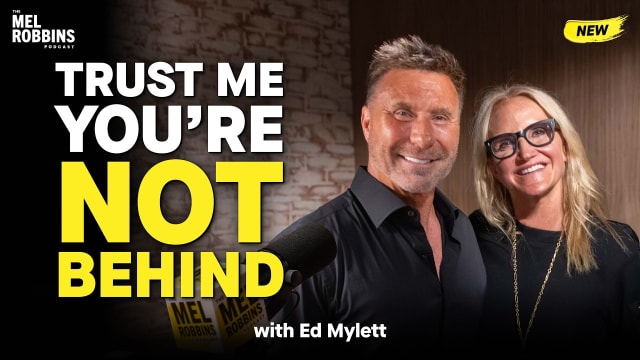
[1:18] Hey everyone, welcome back to the Know
[1:20] Thyself podcast. Our guest today is the
[1:22] host of the wildly successful Mel
[1:24] Robbins podcast. She has that show which
[1:27] has really just, you know, been a rocket
[1:30] ship. It's been number one, most
[1:32] followed on Apple, third largest on
[1:34] Spotify, nearing over a billion plays.
[1:37] And her book, The Let Them Theory, has
[1:40] been the number one best-selling book
[1:43] with over 11 million copies in 2025.
[1:46] She's been somebody for decades who's
[1:48] been a guiding light and source of
[1:49] inspiration and motivation for people.
[1:51] Mel Robbins, thank you for being here.
[1:53] >> Thank you. Thank you for having me. The
[1:55] pleasure is mine.
[1:57] >> I like to dive right in.
[1:58] >> Let's go.
[2:00] >> We all feel, I feel like, at times this
[2:02] invisible social clock that somehow
[2:06] we're not supposed to be where we're at
[2:08] in life.
[2:09] >> And you by most accounts are widely like
[2:13] one of the most su commercially
[2:15] successful personal development voices
[2:17] in the world, but it hasn't always been
[2:19] that way. And so, can you paint the
[2:21] picture for me of Mel at 41?
[2:24] >> Oh my god. Do we have to go here?
[2:25] [laughter]
[2:26] Um, well, I can and I do want to I do
[2:30] want to hover on something you said if I
[2:33] could. You said that we all have this
[2:37] sense that there is this pressure to be
[2:40] a certain place at a certain time in
[2:42] life. And I've certainly felt that. And
[2:46] one of the things that I love most about
[2:48] being 58 and I love most about the fact
[2:52] that the majority of people who know me
[2:55] around the world only know me because of
[2:58] what I've been doing in the last 3 and
[3:00] 1/2 years in my late 50s. And it is an
[3:03] example
[3:05] of a fact which is you need to take
[3:08] whatever the number is on your driver's
[3:10] license or your passport and you need to
[3:14] put it in the toilet and flush it down
[3:17] the toilet because the number doesn't
[3:20] matter. What matters is what you choose
[3:24] to do from this moment forward.
[3:28] And some of us are late bloomers. I
[3:31] would consider myself a late bloomer. I
[3:33] would consider myself a slow learner. I
[3:35] would consider when it comes to life
[3:36] lessons, I'm really good at math, but
[3:38] when it comes to life lessons, I tend to
[3:41] be pretty stubborn about learning the
[3:44] truths about life. And I have to
[3:46] experience a lot of pain in order to
[3:49] wake up and realize that there is a
[3:52] better way, a pe more peaceful way, a
[3:55] more powerful way to address a
[3:59] situation, a relationship, your
[4:01] relationship to yourself. And so, you
[4:05] know, one of my intentions for being
[4:06] here with you is that since you started
[4:10] here with this pressure that you feel to
[4:13] be somewhere other than where you are,
[4:15] one of my intentions for being here with
[4:18] you is that by the end of this
[4:19] conversation, you know that you are
[4:21] exactly where you are supposed to be.
[4:22] That you have everything that you need
[4:25] from the past. And you also have the
[4:27] ability to choose what you're going to
[4:31] do next, who you're going to become
[4:33] next. At 41, I was a walking dumpster
[4:37] fire of a human being. I had had
[4:41] probably 14 different job changes. I was
[4:44] constantly searching. I did not know
[4:46] what I wanted to do with my life. I just
[4:49] knew I wanted to do something that made
[4:51] a difference. And I think a lot of
[4:53] people struggle with that. And it's
[4:55] important to kind of understand that
[4:56] backstory because there's a lot of
[4:58] people that come into the planet and
[5:01] they are born with something in their
[5:03] DNA that says accountant,
[5:06] doctor,
[5:08] priest, like you just know it's in your
[5:11] DNA and you have the target in you and
[5:14] you point at it. And I am not that
[5:18] person. You are not that person. I I
[5:20] would imagine that as you're listening
[5:21] or watching right now, you're thinking
[5:23] about that fact that you're probably not
[5:25] that person either because you listen to
[5:27] and watch this particular podcast
[5:30] because you are searching for more. And
[5:33] so I was at a point at the age of 41
[5:36] where life had somewhat gone to plan. I
[5:39] was married. I we have three kids at
[5:43] that point that are 10 and under. I
[5:46] thought I was a very optimistic person.
[5:49] I thought I had myself together. I
[5:51] thought I was a successful person. And
[5:54] then what happened is a lot of it's kind
[5:57] of a boring story honestly because it
[5:59] happens to everybody. At some point the
[6:01] life you thought you were going to be
[6:02] living disappears or blows up or you
[6:05] drive it into a wall. And in my case, my
[6:08] husband pursued a dream of going into
[6:11] the restaurant business. And it went
[6:13] really well for the first little pizza
[6:16] joint. And then we were morons and we
[6:19] ignored all of the expert advice from
[6:21] financial adviserss and we cashed out
[6:24] our life savings and we took out a home
[6:26] equity loan and we took out credit cards
[6:29] and we asked friends and family to
[6:31] invest cuz what could possibly go wrong
[6:32] in the restaurant business except for
[6:35] everything? [laughter]
[6:37] This was you're younger, but uh being
[6:40] 58, if you're a little bit more my age,
[6:42] you're going to know that when I say
[6:43] this was happening 2007208,
[6:47] you'll go cuz there was a global
[6:48] recession and a housing crisis. And I'm
[6:51] going to take off my Herkimer quartz
[6:53] crystals here so we don't bang around
[6:55] too much. Um, and my husband and I found
[6:59] ourselves in a situation where life did
[7:01] not go according to plan, or at least at
[7:03] the time, it didn't feel like it was
[7:06] part of any plan. The second restaurant
[7:09] they tried to open failed. And by the
[7:12] time they had signed the lease for the
[7:14] third restaurant, they were out of money
[7:16] and on the hook for the lease. And they
[7:18] started taking predatory loans where
[7:21] when a customer would swipe a credit
[7:23] card at the one restaurant that was
[7:24] open, the bank was taking some of the
[7:26] money for the loan to try to get the
[7:27] third one open. Leans hit our house. I
[7:30] lost my job and that was Mel Robbins at
[7:33] 41. Now,
[7:35] if you have a friend, just stop and
[7:37] think about this. If you have a friend
[7:38] who is got leans on her house, she is
[7:40] unemployed.
[7:42] She is blaming everything on her
[7:44] husband. She's constantly angry,
[7:46] depressed, full of shame, scared,
[7:48] convinced that there's no way we can get
[7:49] out of this. If that's your friend,
[7:53] what would you tell your friend to do?
[7:58] >> Well, I'd try to bring some compassion
[8:00] to where they're at. Maybe not try to
[8:02] just fix their situation right off the
[8:04] rip. And
[8:05] >> if you were to if you were to act if you
[8:07] were to tell them, "Well, here's what
[8:08] you probably should do if you don't have
[8:10] any money and you're unemployed."
[8:12] >> Mhm.
[8:12] >> You should get a job.
[8:13] >> Yeah. Get a job. You should ask for
[8:15] help. You should consult experts on what
[8:18] to do when there's leans on your house.
[8:19] You should walk into the bank and
[8:20] explain what's going on and try to
[8:22] figure things out. You should get a
[8:24] second job. You might want to stop
[8:26] drinking. You might want to exercise a
[8:28] little bit. And and by the way, laying
[8:30] in bed for 4 hours in the morning and
[8:33] thinking about your problems while
[8:34] you're hung over and only getting up
[8:37] because your three children are standing
[8:39] next to you and they've missed the bus.
[8:40] That's probably not a good thing either.
[8:42] And I and I'm being a little sarcastic
[8:44] and making you and the person that's
[8:46] with us think a little bit about this
[8:47] because when it's somebody else, it's so
[8:50] easy to tell somebody else what to do,
[8:52] right? And even when it's you, like
[8:54] here's the here's one of the sad truths
[8:56] about uh living in today's world. You
[8:58] don't even have an excuse to be stuck
[9:00] anymore cuz you can just go to AI and
[9:02] put in what your problem is and it'll
[9:04] spit out 50 things that you could
[9:05] possibly do that might just work. But
[9:07] then here's the problem. If you're an
[9:09] idiot like me, you'll look at that list
[9:11] and you'll go, "Well, it's not going to
[9:13] work and I don't really feel like it and
[9:14] the the the debt's too big and I can't
[9:16] pay this off and my husband's a jerk and
[9:18] and you get so caught in your head
[9:22] that that's where you stay stuck." And
[9:24] that was me. Like, I became a person I
[9:26] didn't recognize. I was angry all the
[9:28] time. I was ashamed. I felt like I was
[9:31] failing at motherhood and being a wife
[9:34] and being a person. I was deeply
[9:37] embarrassed because we were living in a
[9:40] suburban neighborhood and nobody knew
[9:43] about the leans. Nobody knew that as my
[9:45] kid was playing town soccer, the check
[9:48] for $120 had bounced.
[9:51] And I started drinking like crazy. I was
[9:55] angry all the time. my habits and
[9:58] routines went out the window and I
[10:00] basically went into
[10:02] an avoidant shell of myself and I
[10:07] probably stayed there, I'd say, for a
[10:08] good year. And if my husband hadn't if
[10:11] my husband hadn't also been drinking a
[10:14] lot and just panicstricken about trying
[10:16] to
[10:18] uh save the restaurant business and
[10:21] trying to fix the problems there. If he
[10:24] hadn't been so distracted, I'm sure our
[10:26] marriage would have just blown up.
[10:27] Because when the world hardens you, you
[10:30] tend to turn toward the person you love
[10:32] the most with hardness. You tend to take
[10:35] your anger out on the person that
[10:37] doesn't deserve it. And it's not the
[10:40] right thing to do, but that's what I did
[10:42] and that's what a lot of people do. And
[10:45] this period of my life taught me some
[10:46] really important lessons.
[10:48] One of the lessons is there's a certain
[10:50] amount of pain that some of us need in
[10:53] order to organize the internal
[10:57] resolve and capacity that you have to
[11:01] change yourself.
[11:04] The second thing that this taught me is
[11:05] no amount of thinking changes your life.
[11:08] Like you can't learn to swim by reading
[11:10] about it and thinking about it. The
[11:13] thing that changes your life are the
[11:15] actions that you take. And I did a lot
[11:18] of thinking about what I could do, but I
[11:21] wasn't doing anything. The third thing
[11:24] that this taught me is that I was 1,000%
[11:28] ruled by my emotions. the emotions of
[11:30] fear, of insecurity, of anger, of um
[11:36] feeling alone, scared, uh abandoned,
[11:41] resentful, like just this ball, hairball
[11:44] of nastiness is what my emotions were.
[11:48] And when you're feeling this deep sense
[11:51] of discouragement in your life, of
[11:53] course, you're not motivated because you
[11:55] don't feel motivated. And in fact, you
[11:57] are actively through your thoughts
[12:00] because of the weight of the emotion,
[12:02] you are actively arguing against the
[12:06] things that could shift everything.
[12:08] You're arguing against the walk that if
[12:10] you took a walk for 20 minutes, you
[12:12] might feel a little better. It doesn't
[12:13] pay your bills, but it does something
[12:15] for you. It lifts you up so that you are
[12:18] better equipped to open the bill. And
[12:22] the final thing that this period of my
[12:24] life taught me is that I nobody is going
[12:28] to come and change your life for you
[12:33] and you don't need anybody
[12:37] because you can do it. And when you
[12:40] really stop and think about it, well,
[12:41] nobody's going to come and change your
[12:43] life for you. Nobody is stopping you
[12:46] from changing your life yourself but
[12:48] you. And so that was the 41-year-old
[12:51] Mel. I was drunk. I was unemployed. I
[12:54] was a raging [ __ ] to my husband. I was
[12:56] blaming all of my problems on the world.
[12:58] And I was in an active war with myself,
[13:02] convincing myself that there was nothing
[13:04] I can do. That was me.
[13:07] [laughter]
[13:08] >> I love the authenticity and the
[13:10] transparency.
[13:12] >> It's true.
[13:12] >> Yeah.
[13:13] >> You know, the thing about authenticity
[13:14] and transparency is it's so freeing.
[13:17] >> Yeah. When you are embarrassed to talk
[13:20] about what's happening, you are shaming
[13:23] yourself. Yes. Like there people always
[13:26] say to me, "God, you're so real. You're
[13:29] so authentic. It must take so much
[13:30] courage." And what I say to people is,
[13:32] "Well, thank you." And do you know how
[13:35] hard it is to lie?
[13:37] Do you know how much energy it takes to
[13:42] fake it?
[13:44] I I it is so easy to be transparent. You
[13:48] don't have to manage anything. And what
[13:50] you find is that the silence and the
[13:54] secrets that you keep are a prison that
[13:56] you put yourself in. And there is a
[14:00] bridge between you and everybody on this
[14:02] planet when you are able to talk about
[14:06] the things that you are struggling with
[14:08] or the things that you've learned the
[14:10] hard way or the issues that you're
[14:12] grappling with. Not in a not in a just
[14:15] sort of a vanity way of just venting
[14:17] this crap out there as if it's like
[14:19] wisdom, but when you authentically are
[14:22] willing to talk about the stuff that
[14:24] you're grappling with or you yearn for
[14:27] with the intention of connecting or the
[14:31] intention of trying to open up
[14:34] possibility. Like that's one of the
[14:37] fastest most incredible ways to connect
[14:39] with other people. And it's an
[14:40] incredible gift that you can give to
[14:42] somebody else because most of us are
[14:44] walking around with a lot of things in
[14:47] our life that we don't know how to face.
[14:50] We are walking around with a tremendous
[14:52] amount of weight where we beat ourselves
[14:54] up and we are looking at all the things
[14:57] going wrong and almost everybody
[15:00] struggles with this.
[15:03] >> Definitely resonate in my own journey. I
[15:04] feel like the things I thought I would
[15:07] perhaps fear to be judged or
[15:10] um criticized for by expressing I think
[15:13] were the very things that when
[15:14] authentically shared generated the most
[15:16] intimacy. Um and you know
[15:18] >> so give me an example. What's something
[15:19] that 10 years ago you wouldn't be caught
[15:21] dead saying out loud or talking about?
[15:22] >> Uh just like perfectionism in general.
[15:25] and say whether it's the way I organize
[15:27] my space or like caring about my
[15:29] appearance, you know, like there's
[15:31] levels of being guarded towards that and
[15:34] being perceived by others that like now
[15:36] just by growing older, I'm much more
[15:38] comfortable in my skin. And I think that
[15:40] when you say those things, it resonates
[15:42] because these aren't incredibly unique
[15:44] things. we all deal with different
[15:46] different avenues, you know, and and so
[15:49] um that's why I think is
[15:51] >> when I look at your podcast in
[15:54] particular and the way that you share,
[15:56] >> there's such a degree of relatability
[15:58] and I feel like people can see
[15:59] themselves in you because you are
[16:01] unabashed and just free in in your
[16:04] expression of that. Um, so I think it's
[16:06] a beautiful gift and I agree. It
[16:07] actually takes up energy to constantly
[16:09] hold up a narrative that is not true to
[16:12] you and that's exhausting in ways we
[16:14] don't fully consciously have awareness
[16:16] of moment to moment. But
[16:18] >> can we talk about perfectionism?
[16:19] >> Let's do it.
[16:20] >> So when you say perfectionism, what do
[16:22] you mean?
[16:25] uh
[16:27] a constant even though some sometimes
[16:31] subtle but pervasive
[16:34] uh feeling that
[16:37] um love will be garnered most through
[16:42] being worthy of it by
[16:45] being good, being right, being holy,
[16:47] looking good, having your [ __ ] together
[16:49] in every shape and form.
[16:50] >> Okay.
[16:51] >> Yeah. So there's two things I want to
[16:53] say about this.
[16:55] >> Number one, there is a huge difference
[16:58] between perfectionism and excellence.
[17:01] >> Mhm.
[17:02] >> And when you describe perfectionism the
[17:06] way that you just did, what I hear is
[17:07] control.
[17:08] >> Yeah.
[17:09] >> That there is this need to control
[17:12] everything as a way to manage the fear
[17:15] that somebody isn't going to love you or
[17:18] approve of you or like you. And
[17:20] perfectionism becomes this delusion that
[17:23] we have that if I get it all just right,
[17:25] then the fear that I have is not going
[17:28] to come true. And the problem with that
[17:30] strategy is it's flawed from the start
[17:33] because you've already decided they
[17:35] don't love you. And the attempt to get
[17:38] things right
[17:40] proves it to you because you are
[17:42] dishonoring yourself
[17:45] trying to be this thing instead of
[17:48] loving yourself as you are and then
[17:51] letting the chips fall where they fall.
[17:54] And so for somebody like you who being
[17:56] in your space, it's very clear you like
[17:58] things just so it's very clear that
[18:01] there is an intention behind what you
[18:03] do. But I would call that excellence.
[18:06] not perfectionism
[18:08] >> because the intention of why you're
[18:11] doing it comes from a very different
[18:14] place because on the outside I think
[18:16] people would probably say Mel Robbins is
[18:18] a perfectionist and I would say no I'm
[18:20] not I have a very high level of
[18:23] excellence that I demand of myself and
[18:25] of the people that are around me with a
[18:28] whole lot of comp compassion and
[18:30] messiness underneath it but the
[18:32] excellence isn't because I'm looking for
[18:34] acceptance It's because I just hold
[18:37] myself to a certain standard. Does that
[18:39] make sense?
[18:40] >> No, absolutely. And I do think two
[18:42] things can exist simultaneously and the
[18:45] strong striving for commitment to
[18:47] excellence can sometimes masquerade as
[18:50] our need for control in ways that we
[18:52] won't admit to ourselves. So, I think
[18:54] the the paradox to be able to hold both
[18:56] is is true because I agree like I'm
[18:58] committed to creating excellent stuff in
[19:00] the world just like you are, you know,
[19:01] and
[19:01] >> and having excellent hairdo. Thanks.
[19:03] [laughter]
[19:04] See, my content does way better when I
[19:06] look like [ __ ] So,
[19:07] >> yeah.
[19:08] >> Seriously, like the more like makeup
[19:11] that I am,
[19:12] >> the the more there's a disconnect
[19:16] >> with just kind of feeling like you're
[19:19] you're with a friend.
[19:20] >> I think that's being even more
[19:21] appreciated. The more AI, perfectly
[19:24] generated music, songs, visuals are,
[19:26] it's like we want the raw human.
[19:28] >> So, I couldn't agree more.
[19:31] >> To zoom in a bit more. So you it sounded
[19:34] like there was just a certain amount of
[19:36] suffering that was needed for you to
[19:38] change. What do you attribute to like
[19:41] the single most biggest reason why you
[19:44] were able to actually transform your
[19:45] life?
[19:46] >> Um well I think the biggest reason is I
[19:49] wanted to
[19:51] like it's very hard to improve your life
[19:53] or achieve your goals by accident.
[19:55] >> Yeah. [snorts]
[19:57] There is a moment in your life where you
[20:01] have to answer the question, what do I
[20:03] really want? And if you don't know the
[20:06] answer to that question, just ask
[20:08] yourself, what do I not want? Cuz when
[20:11] you're feeling like you're in the depths
[20:14] and you feel like a person who has no
[20:17] worth, and if you feel like you've
[20:20] screwed up your life, I mean, I was
[20:22] convinced at 41 there's no hope for me.
[20:25] I'd never get out of debt. I'd ruined my
[20:27] career because I'd changed my career too
[20:28] many times. Um, I'd never be able to fix
[20:32] the problems in my marriage. I wouldn't
[20:35] be able to make a comeback. I just
[20:36] believe that. And at some point, even in
[20:41] the depth of that type of despair and
[20:44] discouragement,
[20:46] having a moment of clarity where you say
[20:49] to yourself, "Wait, I I don't want this.
[20:53] I don't want to feel like this for the
[20:54] rest of my life. And I know that you I
[20:57] think you've had Dr. K the healthy gamer
[20:59] on your show. You haven't had him. Oh,
[21:00] you have? Yeah. Um he's
[21:04] 16 years later I interview him and he
[21:07] explains better than anybody else that
[21:09] moment of change cuz you ask what's the
[21:11] single
[21:13] >> biggest thing that changed your life?
[21:15] And for me, the one moment, the one
[21:19] decision that changed everything was
[21:22] realizing it was way worse and more
[21:26] painful to stay where I was than to do
[21:30] all of the little things I was avoiding.
[21:33] And I often say to people in my life
[21:36] that are friends and family members that
[21:38] are going through a hard time, when they
[21:40] come and ask for advice, I I just say to
[21:42] them, "Well, do you want things to get
[21:43] worse before they get better?" because
[21:44] they're going to and you have control
[21:48] over when you decide this is worse
[21:51] enough and it's time for me to move
[21:54] toward the thing that I've been avoiding
[21:56] because it would be harder to stay here
[21:59] than to actually change my life cuz my
[22:03] life changing my life would be easy.
[22:04] This is now getting hard. That's why we
[22:06] avoid that's why we sit on the couch.
[22:08] That's why we talk ourselves out of
[22:09] things cuz it feels easier than pushing
[22:12] through the resistance and the
[22:14] discouragement and the negative selft
[22:16] talk. That's why we do it. We're wired
[22:18] that way.
[22:20] >> And it would be wonderful if I could
[22:23] have just snapped my fingers a year
[22:24] earlier and snapped myself out of it.
[22:27] But that's just not how I work and it's
[22:28] not how a lot of us work. And so the the
[22:30] thing that really changed everything is
[22:33] I got so sick of myself and I got sick
[22:36] of feeling like a horrible human being.
[22:39] And I got sick of waiting for somebody
[22:41] else to magically come in and solve all
[22:43] this. And I realized if if I want my
[22:46] life to change, if I want to feel
[22:47] better, if I want to be proud of myself
[22:49] again, if I want to get these bills paid
[22:51] off, if I want to fix my marriage, it's
[22:54] not on anybody but me.
[22:57] And I need to start acting like the
[22:59] person I need. Like if I think I need
[23:02] somebody to come and wake me up, I need
[23:03] to wake myself up. If I need somebody to
[23:05] encourage me to go for a walk, I need to
[23:08] encourage myself. If I need motivation
[23:09] to get a job, I got to motivate myself.
[23:12] And that was the epiphany. It's just
[23:14] like you have to start acting like it
[23:18] sounds so stupid, but it's true. Because
[23:20] you think your life is out there. You
[23:23] think that your best life is literally 5
[23:26] years out, 10 years out. The truth is
[23:29] your life is right now. Your life is
[23:32] Tuesday. That's your life. It's not what
[23:35] you do on vacation. It's not what you do
[23:37] in the big moments. Your life is a
[23:40] thousand Tuesdays. That's it. And so you
[23:43] can look at a normal Tuesday right now
[23:46] and you can examine the way you go
[23:48] through your life.
[23:50] And if you stop and think about an
[23:53] average Tuesday,
[23:55] let's just roll the clock forward 6
[23:58] years. So now it's 2032. You're waking
[24:01] up on an average Tuesday.
[24:04] If you change nothing, nothing changes.
[24:06] And you don't stop and think about the
[24:08] fact that your current life, how you're
[24:11] living your current life, your job, your
[24:14] relationship, your morning routine, and
[24:15] by the way, laying in bed looking at
[24:16] your phone is a morning routine.
[24:19] um your current life is leading you
[24:21] somewhere 5 years from now if you don't
[24:23] change anything you're going to wake up
[24:24] on a Tuesday and it's going to look
[24:26] exactly the same. Is that what you want?
[24:27] And if the answer is yes, great.
[24:30] Amazing. Keep going. If there's aspects
[24:33] of your life, and this is what happened
[24:34] to me where like I could see what was
[24:36] going to happen. If I didn't change, I'd
[24:38] be divorced. I'd be bankrupt. I'd be
[24:42] like angry. God knows what I'd be doing
[24:45] for a living. I'd probably be an
[24:46] alcoholic. I could see where my behavior
[24:50] was leading me and I realized I don't
[24:52] want that future.
[24:55] That's what changed.
[24:57] >> As it's been said, the pain of staying
[24:59] the same outweighed the pain of change.
[25:02] >> Yes. And I hate that it has to be like
[25:03] that. Like, wouldn't it be wonderful if
[25:05] motivation were on demand? Wouldn't it
[25:07] be wonderful if you know, I often think
[25:10] about this. If you just did the things
[25:12] you don't feel like doing in 10 years,
[25:14] you'd have everything you've ever
[25:15] wanted.
[25:16] It's true.
[25:20] >> It's interesting to see how your fuel
[25:22] source changes over time. So like you're
[25:24] working with what you got at any given
[25:25] moment, right? And the indignation and
[25:27] the fire of the pain of where you're
[25:29] not,
[25:29] >> you know, it can drive you to great
[25:31] places. I'm curious contrasted to your
[25:33] experience of life now.
[25:34] >> Yeah.
[25:35] >> Because I've heard you share how like
[25:37] many entrepreneurs, they've married
[25:39] their achievement with being worthy of
[25:41] love.
[25:41] >> Mhm. How successfully have you detached
[25:44] your internal feeling of enoughness with
[25:47] the external outcomes of what you're
[25:48] doing in your
[25:49] >> at 58? I am probably it's one of the
[25:52] things I'm most proud of.
[25:54] >> My success does not define my worth as a
[25:56] human being. how I feel about myself and
[25:59] whether or not I was a good friend, a
[26:02] good mom, a good wife, a good person,
[26:05] that I showed up with good intentions,
[26:07] that I was a good boss, that I cleaned
[26:12] up and apologized and when I screwed up,
[26:15] that defines whether or not I'm a good
[26:18] person. All of the other stuff is
[26:20] incredible
[26:22] and it says nothing about how I feel
[26:26] about myself as a person.
[26:29] And I really believe that. And you know,
[26:32] you talked a little bit about the source
[26:33] of motivation. Um, what's interesting is
[26:36] that if I think about being 41,
[26:40] I was addicted to being right.
[26:44] And what I was right about is that this
[26:46] wasn't my fault. And it's not fair.
[26:50] And you cannot be right
[26:55] and also be connected to somebody else.
[26:57] You cannot be right about how unfair
[27:00] things are and be motivated to change
[27:05] things for the better. And when I had
[27:08] this switch in my mind that I don't want
[27:10] to stay this person, I don't want to
[27:13] live the rest of my life feeling like an
[27:16] insecure, jealous, righteous,
[27:18] contemptuous [ __ ]
[27:20] I want to be peaceful. I want to be in
[27:23] control. I want to feel proud of myself.
[27:26] I want to be the kind of person that I
[27:29] would admire because of the way that
[27:32] they move through the world and they're
[27:34] generous and they're kind and they're,
[27:36] you know, doing something that makes a
[27:38] positive difference in the world, in
[27:40] their community. I want to be that kind
[27:42] of person. And that simple switch, I
[27:47] don't want to be the person I am now.
[27:48] You're not stuck as this version of
[27:50] yourself. You can change your mind. You
[27:51] can change your decisions. You can
[27:54] change your relationships. You can
[27:55] change your job. You can change it
[27:57] anytime you decide to and you're willing
[27:59] to work at it. But the source of my
[28:02] motivation, if I really think about what
[28:05] drove me, was security. I felt
[28:09] profoundly unsafe because we couldn't
[28:12] pay our bills. Like I couldn't couldn't
[28:14] put gas in the car tank some weeks. And
[28:17] so I became obsessed
[28:20] with this idea of creating security for
[28:24] myself and my family. That's what drove
[28:26] me for five or six years was just
[28:28] figuring out how do we pay these bills?
[28:31] How do we feel normal again? How do we
[28:33] make the ends meet? How do we get the
[28:35] leans off the house? How do I write a
[28:37] check that doesn't bounce? That was the
[28:39] source of motivation. And it wasn't
[28:41] until I started to get my head above
[28:43] water, and that would have been like
[28:45] 2013,
[28:47] that I was able to look around and ask,
[28:50] okay, well, what is it that is going to
[28:54] be my intention and is going to motivate
[28:56] me now?
[28:57] And it's important to think about it
[28:59] like what actually is the deeper thing
[29:03] that is driving you?
[29:06] And if your life isn't working,
[29:09] it's probably something very negative.
[29:12] And if you're having trouble getting
[29:13] yourself motivated, I would take a look
[29:16] at what could be the intention or the
[29:18] why
[29:20] that matters [snorts] to you.
[29:22] >> What's your fuel source now?
[29:24] >> Um, impact and encouragement.
[29:28] >> Hey guys, a quick share. If you have
[29:30] been feeling sluggish, you might not
[29:31] need more sleep or caffeine. You could
[29:33] just be dehydrated. And hydration is not
[29:36] just about drinking water. It's about
[29:37] having enough electrolytes that support
[29:39] your body to properly absorb that fluid.
[29:42] Element happens to contain a
[29:44] sciencebacked ratio of electrolytes,
[29:46] sodium, potassium, and magnesium. Helps
[29:48] regulate your appetite, curb your
[29:50] cravings, and improve your brain
[29:52] function. There's no sugar or artificial
[29:55] colors. I also love their 12 oz
[29:57] sparkling cans. It's just a much easier
[29:59] way to get hydrated throughout the day.
[30:01] As electrolytes are essential for nearly
[30:03] every single biological function in your
[30:05] body. If you want to try them out, you
[30:07] can get a free 8count sample pack of
[30:09] Element's most popular flavors with any
[30:11] purchase. And for if any reason it's
[30:14] just not your vibe, they will give you a
[30:15] no questions asked full refund. You
[30:17] don't even have to send it back. That's
[30:19] drinklement.com/now
[30:21] thyself. Links down below. I hope you
[30:24] enjoy.
[30:26] You talk about this need for control.
[30:29] >> Was it not until you became relatively
[30:33] successful that you were able to kind of
[30:34] see through that and like you said at 59
[30:36] 58 now it's one of the things you're
[30:38] most proud of, right? Of not having your
[30:40] worthiness be attached to your success.
[30:43] >> Um was there a moment when like kind of
[30:46] like locked in for you
[30:48] >> in terms of the Well, there's kind of
[30:50] layers to this. So, if you're in a state
[30:52] where you can't pay pay your bills, let
[30:55] me just be blunt. That is an acute form
[30:57] of stress that kicks in a survival
[31:00] mechanism. It is very difficult to be
[31:03] chill and peaceful when you can't pay
[31:06] your bills. And so, getting to a point
[31:08] where you can pay your bills, I'm not
[31:11] talking about buying a fancy car. I'm
[31:12] not talking about buying a nice handbag.
[31:14] I'm saying just the bills come in, you
[31:16] have reliable income, you can pay your
[31:19] bill, you can put your head down on the
[31:21] pillow and know nobody's going to come
[31:23] and take your car away. Like that that
[31:25] sort of safety is foundational. So
[31:28] there's that piece of it. Then for me
[31:31] became the next layer, which is I got to
[31:35] restore the savings cuz once I get the
[31:38] bills paid, I I'm at a net zero. I don't
[31:41] have any savings. I don't have a
[31:43] retirement account. I I have children
[31:45] that are 5 years away from going to
[31:47] college. I don't have a college fund. I
[31:50] I I don't have anything.
[31:52] So, I need to get that up because that
[31:56] means something to me to feel safe,
[31:59] right? And so my achievement and
[32:02] achieving those goals were very
[32:04] important for my sense of selfworth as a
[32:08] mom, as a wife, as a human being who it
[32:13] just mattered to be able to feel like I
[32:15] could take care of my family. Um, in
[32:18] terms of divorcing
[32:21] my
[32:23] worthiness as a person from the things
[32:26] that I accomplish, I think that that had
[32:30] more to do with the personal work in
[32:33] therapy and in really
[32:38] learning how to
[32:41] slow a nervous system down. [laughter]
[32:45] always been go go go go go go go go go
[32:47] go go go go go go go go go go go go go
[32:47] go go go go go go go go go go go go go
[32:47] go go go go go go go go go go go go go
[32:47] go go go go go go go go go go go go go
[32:48] go go go go go go go go go go go go go
[32:48] go go go go go go go go go go go go go
[32:48] go go go go go go go go go go go go go
[32:48] go go go go go go go go go go go go go
[32:48] go go go go go go go go go go go go go
[32:48] go and be able to exhale and be in this
[32:52] moment and be present in this moment
[32:55] rather than on to the next thing on to
[32:57] the next thing on to the next thing on
[32:59] to the next thing and because the
[33:03] financial crisis and because I've had a
[33:06] lifetime of anxiety and like many people
[33:09] have had experiences in my childhood
[33:11] that I didn't recognize were creating
[33:15] uh reverb in my adult life.
[33:19] Um I think it really took until
[33:24] I don't know,
[33:28] I would say maybe 54
[33:33] before I really felt like, okay, you can
[33:36] exhale. You did the thing that you
[33:38] needed to do to make yourself feel like
[33:42] you were able to provide for your
[33:44] family.
[33:46] You don't need anymore. And now you can
[33:50] focus on doing things in your day-to-day
[33:53] life and showing up in your day-to-day
[33:55] life where you are excited about what
[33:58] you're doing and you enjoy what you're
[34:02] doing. And it's not about whether or not
[34:05] it does well.
[34:07] And that's when it started to separate
[34:10] majorly. But it but there was a lot of
[34:12] internal work. Um because I was one of
[34:15] those people that was just
[34:16] hypervigilant. I was always on edge. I
[34:19] was always on to the next thing. I was
[34:20] not present. You know, another thing
[34:22] that really helped is that in 2019, we
[34:25] raised our kids outside of Boston. And
[34:28] in 2019,
[34:29] we bought my in-laws house in southern
[34:33] Vermont because my uh mother-in-law was
[34:36] downsizing. She was a widowerower and
[34:38] had had been living in this house on a
[34:40] mountain for god, I don't know, 15 years
[34:43] alone. And she was downsizing and we
[34:45] were in a position to be able to buy it
[34:47] in 2019. And we bought it to kind of
[34:50] keep it in the family. And our kids grew
[34:53] up going there. Really, really special
[34:55] place. And uh
[34:59] through a much longer story, we end up
[35:02] in 2020 moving there and
[35:07] having to calibrate
[35:10] a nervous system that was like a Ferrari
[35:14] being chased by eight cop cars, which is
[35:18] what it felt like to be in my body to an
[35:21] environment
[35:23] where from my house it's 150 mi view
[35:26] straight down a valley. You can't see
[35:28] any other houses. You can't see any
[35:30] other people. It's a 270 degree hug from
[35:35] mountains.
[35:37] And it took me about a year to slow my
[35:43] body down to match the majesty of living
[35:48] in a place like that. And I could not
[35:51] believe how when we first moved there,
[35:54] this would have been 2020, so there's a
[35:55] whole lot of other things going down. I
[35:57] would be in the house and I'm like,
[35:59] there's no like where am I going to go?
[36:01] There's no TJ Maxx. Like there there's
[36:03] no Home Depot here. Like I And I
[36:05] couldn't believe how often I was running
[36:08] around and running mindless errands
[36:10] because I just had a body that was go go
[36:13] go go go.
[36:15] And so to untangle the knot of how did I
[36:19] get to a point where I was proud enough
[36:21] of myself to divorce the accomplishments
[36:24] out in the world from whether or not I'm
[36:26] a good person. It's a combination of
[36:28] deciding to be a good person and
[36:30] starting to act like it cuz your brain
[36:32] is always watching what you're doing.
[36:34] It's a combination of therapy and
[36:36] getting serious about healing things
[36:37] from the past. And it was a combination
[36:40] of moving to a place that was very quiet
[36:43] that accelerated all of that healing.
[36:46] EMDR was a big piece of it. Psychedelic
[36:49] guided therapies under the MAPS protocol
[36:51] as a family was another big piece of it.
[36:54] >> Um marriage counseling with my husband
[36:58] and you know talking with somebody where
[37:00] it's not even like anything's wrong. We
[37:02] just have a person we speak with once a
[37:04] month that is like oh oh yeah. Hi. Oh
[37:06] okay. What is going on with us? like
[37:09] life's busy, like let's talk. Um that
[37:12] helped. Um but it but it begins by
[37:16] saying to yourself,
[37:18] I don't want to be this version of
[37:20] myself for the rest of my life and I
[37:21] don't have to be.
[37:23] >> I didn't know you were like dabbling in
[37:25] all those modalities and that makes
[37:26] >> dabble, dude. I jump in the deep end. I
[37:28] don't dabble with this stuff. I'm like
[37:29] in [laughter]
[37:31] >> EMDR. Is there one that was the most
[37:32] profound or was it really just the
[37:34] concoction? I think it's the concoction,
[37:35] but for sure the MDMA MAPS protocol with
[37:38] therapists and integrations as a family.
[37:40] >> As a family.
[37:41] >> Wow.
[37:41] >> Yeah,
[37:42] >> that's rad.
[37:42] >> Freaking incredible. [laughter]
[37:44] >> First, uh, I did it with my husband.
[37:46] Then we did it a year later, and the
[37:48] first time we we did the MDMA protocol
[37:52] with two therapists was the night we
[37:54] moved into our new house in Vermont in
[37:55] the empty living room.
[37:57] >> And then we did it a year later on our I
[38:00] think it was our 26th wedding
[38:01] anniversary. And then the third time
[38:03] that we did it, it was winter solstice
[38:06] during a snowstorm in our barn in
[38:08] Vermont and our three adult kids and my
[38:10] husband's,
[38:12] I think she's 87year-old mom uh was with
[38:16] us. It was extraordinary. Absolutely
[38:17] extraordinary.
[38:20] It's um it makes me feel like how much
[38:23] of us are desperately arranging our
[38:26] external circumstances to fix what is
[38:29] fundamentally an inside nervous system
[38:31] regulation job. Um when you talk about
[38:34] control and this shift um of like one
[38:38] accepting your circumstance right and
[38:40] where you're at in life to me surrender
[38:43] that word can like almost be perceived
[38:45] as like just let whatever happens happen
[38:48] you know
[38:49] >> and don't do anything and
[38:52] >> when I hear you share about let them and
[38:54] surrendering and accepting
[38:56] >> as being ultimately like the impetus for
[38:58] you to actually have power and agency
[39:00] over your life could you set the stage
[39:02] for even just like 60 seconds high level
[39:04] overview. What is let them let them
[39:06] theory if you know no one's heard at
[39:08] this point you're living under a rock.
[39:09] No, no, absolutely. Um, so the let them
[39:11] theory is something that I created which
[39:13] is basically a modern version of
[39:15] Buddhism, stoicism, the radical
[39:17] acceptance uh uh
[39:21] uh the the serenity prayer, Victor
[39:24] Frankle's work and it's very simple.
[39:27] It's all about control. And the theory
[39:30] helps you in a split second recognize
[39:34] what's not in your control and let go of
[39:36] it. And then take the control back and
[39:40] focus on what's actually in your
[39:42] control. And here's how it works. It's
[39:44] very, very, very simple. At any moment
[39:47] during the day when you just feel a
[39:49] flood of emotions, you're frustrated,
[39:51] you're annoyed, you are sad, you're
[39:54] hurt, you are wanting to change
[39:57] somebody, you wish somebody was
[39:58] different, the traffic's anything,
[40:00] anything that makes you just say let
[40:03] them. It's a boundary. That's all that
[40:06] it is. It's a boundary between you and
[40:09] everything around you. And when you say
[40:12] the words let them, you're not allowing
[40:14] anybody to do anything. You're forcing
[40:17] yourself to recognize that the situation
[40:19] or person who's pissing me off right
[40:20] now, I can't control. Therefore, why
[40:23] would I waste my time and energy
[40:25] stressing myself out by trying to? I'm
[40:28] just going to let this person be who
[40:30] they are and who they're not. I'm going
[40:31] to let them have their opinion. I'm
[40:33] going to let them be disrespectful. I'm
[40:35] not allowing it. I'm recognizing
[40:38] that the person in front of me is doing
[40:41] something that I don't like, but I can't
[40:45] control them.
[40:48] And they probably already just did it.
[40:50] So, it's already happened anyway. So,
[40:51] just let them recognize I that the power
[40:54] is not over there. And then you say the
[40:56] second boundary, which is let me. Let me
[40:58] take control back. Let me decide how I'm
[41:01] going to respond. Let me take a beat.
[41:04] Let me walk away. Let me lean in with
[41:06] compassion. Let me decide that the
[41:10] person in front of me is mentally
[41:12] unstable, so why do I want to sleep with
[41:13] them? Let me decide that my parent is
[41:17] somebody who can't provide the things
[41:19] that I need. I get to choose how much
[41:21] time I spend with them. I get to choose
[41:23] whether or not I try to understand from
[41:26] their perspective. Like so many people
[41:27] are pissed off at their parents. Have
[41:28] you looked at your grandparents and what
[41:31] they did to your parents? Not excusing
[41:33] anything, but you get to choose. When
[41:36] you focus on what you can control,
[41:41] let me choose what I think. Let me
[41:43] choose what I do or don't do. The don't
[41:46] do is really important.
[41:48] Let me recognize the emotions coming up
[41:51] and then let me decide how to process
[41:53] them before you send the email or the
[41:54] text or whatever.
[41:55] >> Yeah,
[41:56] >> that was Mel Robbins, 41, just volcano.
[41:59] Um,
[42:01] and what's beautiful about the let them
[42:05] theory is that when used correctly,
[42:09] it teaches you to stop trying to change
[42:11] other people, cuz change is not love.
[42:14] Changing other people's judgment and
[42:17] control. It teaches you to stop allowing
[42:21] all these outside forces to rob you of
[42:23] your time and energy and your power. And
[42:26] it gives you your control back. and
[42:29] centers the power in your life inside
[42:31] you and your response to life. That's
[42:34] all that this is. It's a way to
[42:37] apply the fundamental truths in life at
[42:42] a moment in history where the world is
[42:44] overwhelming and everything is changing
[42:46] and everybody's disregulated and the one
[42:49] person you can regulate and the one
[42:51] person you can have control over and the
[42:54] one person you can change is you. And
[42:56] when you change something, everything
[42:59] can change.
[43:02] >> Hey guys, Mel is on fire, isn't she? You
[43:05] know who's not, though? Me. When I'm
[43:09] sleeping. Thanks to my Chili Pad 2.0,
[43:12] today's partner, I get the best sleep
[43:14] ever. It's a temperature controlled
[43:16] mattress topper that runs chilled water
[43:18] under you and dials your bed anywhere
[43:20] from 55 to 115°.
[43:24] cold water, helping regulate your body
[43:26] temperature while you sleep, which by
[43:27] now most of us know is one of the most
[43:29] important contributors to your overall
[43:31] health and well-being. What's great is
[43:33] that they have dual zones, so you and
[43:35] your partner can set different
[43:37] temperatures. You no longer have to
[43:38] fight over the thermostat. There's no
[43:41] subscription, so if you buy it, you own
[43:43] it. Just visit sleep.me/now
[43:46] thyself to get up to $640 off your
[43:48] Chilipad 2.0 with code know thyself.
[43:52] This special offer is available for no
[43:54] thyself listeners and only for a limited
[43:56] time. You get free shipping and you can
[43:58] return it for free if you don't like it
[43:59] with their sleep trial. That's sleeve
[44:02] p.me/nol
[44:05] to see why cold sleep is your ultimate
[44:08] ally in performance and recovery. I hope
[44:10] you sleep as well as I do like a vampire
[44:12] some nights. Back to the show.
[44:16] It's the most empowering thing when
[44:18] somebody enters a room with a uh
[44:21] economist state of being.
[44:22] >> Who? An economist. What does that mean?
[44:24] >> Equinimist like peaceful.
[44:26] >> Yeah. George [laughter] was like
[44:28] >> um unpreds.
[44:35] >> I'm curious because you know I think the
[44:38] distinction between let them and let me
[44:39] is super important. And
[44:42] I'm curious like your when it comes to
[44:46] the way that you described your own need
[44:47] for control, do you feel like it was
[44:49] anxiety masquerading as responsibility?
[44:52] It's like the the control is almost like
[44:55] the outward expression of a disregulated
[44:57] nervous system.
[44:58] >> Well, you know, I was really curious
[45:01] about this when my daughter and I wrote
[45:02] the book. I mean, there's like 57
[45:04] worldrenowned experts that contributed
[45:05] to this book. And what we discovered
[45:09] from talking to people like Dr. Kay and
[45:12] all these incredible researchers and
[45:14] neuroscientists and psychologists and
[45:16] anthropologists is that every single one
[45:19] of us has a hardwired need for control.
[45:22] It's a mechanism that you cannot get rid
[45:24] of because it's tied to your safety. If
[45:28] you're not in control of what's going to
[45:30] happen during the day, if you're don't
[45:32] know what's going to happen at work
[45:33] today, you're going to be on edge
[45:35] because it feels threatening if you
[45:37] don't know what's going to happen. I
[45:39] mean, any one of us who has ever gotten
[45:40] a text, we need to talk. I don't know
[45:43] what's going to happen. Like, and so
[45:44] that just the need for control and
[45:47] feeling like I have a general sense of
[45:49] how the conversation's going to go. I
[45:51] have a general sense of how my day is
[45:53] going to go. I have a general sense of
[45:55] how traffic is going to go.
[45:57] That's a fundamental thing inside you
[46:00] that you will never get rid of. The
[46:04] question is how do you work with it
[46:06] instead of having this hardwired need
[46:09] for control constantly work against you?
[46:13] And so that's one piece of this. You're
[46:15] never ever ever going to get rid of your
[46:16] need for control because it's tied to
[46:18] safety. The other piece is a lot of
[46:21] parenting is control, right? because um
[46:26] you know you want to keep your kids safe
[46:28] so you tell them what to do. A lot of us
[46:30] get it wrong. Some things we get right.
[46:32] So you are conditioned
[46:35] as you're growing up to believe that
[46:37] when somebody is trying to control you,
[46:40] that's like almost a form of love and
[46:42] attention. And so when we grow up
[46:45] feeling like, oh yeah, my mom loves me,
[46:47] so you know, she's constantly telling me
[46:48] to pick up my stuff and no, it's just
[46:50] what we do as parents.
[46:52] um
[46:54] you become adult then
[46:56] that starts to model that with your
[46:58] partner
[47:00] and we can't help it. I mean I did it
[47:02] this way for 54 years boss and Chris
[47:05] around and you know he would silently
[47:07] resent me and push back and not do the
[47:09] things I said because he needs to feel
[47:12] in control of himself. This is why
[47:14] trying to change somebody actually
[47:15] backfires because you're trying to make
[47:18] your spouse lose weight because you
[47:21] think things will be better and you'll
[47:23] feel better because you're worried about
[47:24] them. You're worried about their health.
[47:26] So the concern and the desire to change
[47:28] somebody's coming from a good place. But
[47:31] when I try to get you to exercise, I get
[47:34] you a trainer. I like, you know, say,
[47:37] "Hey, you know, you want to maybe have
[47:39] you hit the gym today?" I start doing
[47:40] the hints.
[47:42] What [snorts] ends up happening is I'm
[47:43] now trying to control you,
[47:46] but you have a fundamental need to be in
[47:49] control of yourself. And so instead of
[47:51] motivating you, I actually trigger you
[47:54] to push back so you can stay in control
[47:56] of you.
[47:58] And we all do it. Uh and and I think
[48:01] that's why this book has been such a
[48:03] global sensation because when used
[48:05] correctly and you start saying let them
[48:08] particularly with your parents or your
[48:11] adult kids or your boss or your friend
[48:14] but particularly with family cuz
[48:16] families teach you how to love people
[48:18] you hate at the same time. Right?
[48:21] Difference between loving somebody and
[48:22] liking them in this moment. And when you
[48:25] say let them
[48:27] because your mother is irritating you
[48:30] and I irritate my kids, my mother
[48:32] irritates. It's just what we do and I
[48:34] love them. When you say let her, you're
[48:38] not allowing your mom to do anything.
[48:39] You're recognizing your mom is her own
[48:41] person with her own incomplete stuff
[48:44] with her own emotional stuff.
[48:47] I do not have to manage her. I'm not
[48:49] going to change her. I'm just going to
[48:50] let her be who she is and who she isn't.
[48:53] You're practicing radical acceptance and
[48:55] you're creating space for somebody to
[48:57] feel
[48:59] that they can just be who they are
[49:01] without somebody managing them. And then
[49:04] when you say let me, let me decide what
[49:06] kind of daughter I want to be. Let me
[49:07] decide if I'm going to extend compassion
[49:10] or if I'm going to distance myself. Let
[49:13] me choose how I'm going to show up to
[49:15] this relationship. Instead of living in
[49:17] a fantasy up here, wishing somebody were
[49:20] different, why don't I live in the
[49:22] reality and just accept who this person
[49:24] is and then learn how to adapt based on
[49:30] who they are? And what happens, and I
[49:32] think this is why this is one of the
[49:33] secrets why this book is so wildly
[49:36] successful,
[49:37] is that in using it that way and taking
[49:41] all the control back and recognizing
[49:42] your family's never going to change, but
[49:44] you can change. And when you change your
[49:46] energy and you show up with more
[49:48] compassion and you show up with better
[49:49] boundaries and you stop expecting
[49:50] everyone else to be different, you've
[49:52] known these people their whole life.
[49:53] They're not changing ever.
[49:56] So let them be who they are. Let them
[49:59] have the dignity of their own
[50:00] experience. And then let me just be
[50:01] responsible for boundaries and for how I
[50:03] show up instead of trying to make
[50:06] everybody different. And all this like
[50:09] [ __ ] starts to disappear because
[50:12] you're now controlling your energy and
[50:15] your time and your values and how you
[50:18] want to show up and you're not expecting
[50:20] anybody to do anything. and you'll
[50:22] recognize how powerful you are because
[50:24] when you're no longer bracing
[50:27] around your parents and you're still
[50:29] choosing to spend some time with them,
[50:32] your energy shifting and you're not
[50:34] expecting anything than what normally
[50:36] happens to happen. Oh my god. Like all
[50:39] kinds of crazy change happens because
[50:41] you've changed and it's bringing people
[50:45] together. And it taught me to approach
[50:50] relationships with a deep sense of
[50:52] compassion and a deep sense of
[50:56] acceptance.
[50:58] And it showed me how judgy I was.
[51:02] >> Yeah.
[51:02] >> Yeah. And it's also, you know, a lot of
[51:06] people have big opinions about their
[51:08] parents, justifiably so. But when I say
[51:10] look at your [ __ ] grandparents, I
[51:11] mean it. Because a lot of the things
[51:14] that may have happened in your childhood
[51:17] are the result of things that got done
[51:19] to your parents. And I'm not justifying
[51:21] anything. I'm just saying having a bit
[51:24] of understanding
[51:27] for somebody's full story and their lack
[51:30] of capacity does not excuse things that
[51:34] people do. It explains and gives
[51:36] context, which is important information
[51:39] for your boundaries, and it's important
[51:41] information for your capacity
[51:45] to
[51:46] really approach something with a bit
[51:49] more compassion and understanding.
[51:52] Yeah, I think it's really impossible to
[51:54] judge something and understand it at the
[51:56] same time. So,
[51:57] >> Oh, that's a good one. It's impossible
[52:00] to judge something
[52:02] >> and understand it at the same time.
[52:06] And I love that. And understanding
[52:10] how somebody may came to be who they are
[52:14] does not mean you're allowing it your
[52:17] life or you're accepting it. But it it
[52:21] dissolves for me anyway a tremendous
[52:25] amount of angst and blame and anger and
[52:28] confusion. Living in acceptance for what
[52:32] is and what isn't and understanding that
[52:35] different people based on their past and
[52:38] based on the present moment, have they
[52:40] eaten?
[52:42] Have they slept? Are they under a lot of
[52:45] stress? People's capacity to give you
[52:50] what you need or to be present or to be
[52:54] emotionally mature is 100% a function of
[52:58] their past which they haven't dealt with
[53:00] and the present circumstances that are
[53:02] stressing them out. Again, not an excuse
[53:05] for disrespectful behavior, but you will
[53:08] feel so freaking powerful when you can
[53:12] look at the world that way because it's
[53:16] almost like I I often think about this
[53:18] example. I talk about it a lot where I
[53:19] put other people in snow globes. Like if
[53:21] I see somebody who's immature,
[53:23] disrespectful, emotionally disregulated,
[53:26] I immediately mentally put them in a
[53:27] snow globe. and their dysregulation is
[53:30] like the crap that is in a snow globe.
[53:33] And you know what's great about a snow
[53:34] globe? It stays in the globe. Why does
[53:37] somebody else's energy have to get into
[53:39] you? If you see it coming a mile away,
[53:41] you're like, let them. They're having a
[53:42] bad day. Let me remind myself I don't
[53:45] have to step in and manage this if I
[53:46] don't want to. If I want to because the
[53:49] person's being a bully or they're being
[53:50] bigoted or, you know, they're hurt. I'm
[53:52] going to step in because that's my
[53:54] value.
[53:54] >> Mhm.
[53:55] >> But I'm not going to let their crap get
[53:56] in me. Mm-m. No way. God, I wish I had
[54:00] this when I worked retail and I worked
[54:01] in a restaurant. Like, literally.
[54:03] >> And when I was a young mom, because I
[54:05] would be so stressed out at work and I
[54:07] would come home and yell at my kids
[54:10] because we we often give the best people
[54:13] the worst of us. And then we apologize.
[54:16] I'm really sorry. I I had a bad day at
[54:18] work. And finally one day, my son, he
[54:20] was in middle school, looked at me and
[54:21] he's like, I don't work with you. Why
[54:23] are you taking your work stress out on
[54:25] me? like take it out at somebody else.
[54:27] I'm like, you're right.
[54:28] >> Yeah, [laughter]
[54:30] >> you're right. I need to change this. And
[54:32] you know what changed it? A transition.
[54:35] >> It's literally a the doororknob trick.
[54:39] Before you walk into a room, just take a
[54:42] beat and mentally change the hat you're
[54:44] wearing.
[54:45] I want to go back to something you said
[54:47] which to me feels like
[54:50] giving so much more space and grace for
[54:52] where people are at and viewing them
[54:54] almost as phenomena unto themsself. I've
[54:56] had some very interesting conversations
[54:58] with cognitive psychologists. We can go
[55:01] into deep philosophical rabbit holes
[55:02] about free will, but when you really
[55:05] like if we actually had full context for
[55:07] someone's own developmental journey, for
[55:09] everything they've went through, we
[55:10] would perfectly understand why they are
[55:12] acting the way they are. And of course
[55:14] >> it would make perfect sense,
[55:15] >> right? And it wouldn't absolve them of
[55:17] the responsibility or consequence,
[55:19] right? But like I I often think about
[55:21] this analogy of somebody like a murder
[55:23] case. If you discovered there was a
[55:25] tumor pressing on their amydala, does
[55:27] that change your thought around the
[55:29] consequence of the situation? You know,
[55:31] >> well, now of course, you know, I'm a
[55:33] lawyer.
[55:34] >> Yeah.
[55:34] >> So, it depends on the crime they're
[55:36] charged with, but it depends on if
[55:37] intent,
[55:38] >> right? And it might not change the
[55:40] consequence of being put in jail.
[55:42] >> Here's what I know.
[55:44] When you understand
[55:47] why somebody
[55:49] is acting the way they act, both the
[55:53] internal reasons,
[55:55] the external pressure,
[55:58] it gives you an incredible capacity
[56:04] to see how [snorts] people got to where
[56:08] they are and why they do the things they
[56:11] do. And if you for a second took the
[56:14] narcissistic
[56:16] personality style parent that you may
[56:18] have and you took the time to go back
[56:22] and see the horrendous conditions of
[56:25] their childhood and the fact that they
[56:28] were never given the attention, the
[56:30] love, the consideration that they
[56:33] deserved and needed. and their childhood
[56:38] fashioned them in a way where they have
[56:40] a level of emotional violence and
[56:42] volatility that is basically a mentally
[56:44] illness that's not their fault by the
[56:47] way. Like I think there's a huge
[56:49] misconception about narcissism that it's
[56:52] a choice. Most narcissists don't they're
[56:55] not even aware that they're that way.
[56:57] They're trapped in a body that was
[57:00] fashioned by a childhood. I mean Dr.
[57:03] Romani Diversula, the world's leading
[57:05] expert on it, when she said, "Nobody's
[57:07] born this way. They're made this way in
[57:08] childhood," I was like,
[57:10] >> "Whoa."
[57:12] And so when you understand you may be
[57:14] dealing with somebody who has mental
[57:16] illness, you may be dealing with
[57:17] somebody who has a lot of trauma that
[57:19] they've never addressed, and you can
[57:21] judge them all you want for not going to
[57:22] therapy, but this is who this person is.
[57:27] And when you understand that a lot of
[57:29] times this person is so out of control
[57:31] in their own body, thoughts, and mind,
[57:33] they're not even aware of what they're
[57:34] doing,
[57:36] it gives the behavior that you're seeing
[57:38] that is hurtful or harmful a different
[57:41] context to allow you to process it and
[57:44] to create boundaries and to decide how
[57:46] you're going to move forward based on
[57:49] what you now know. But the understanding
[57:51] piece
[57:53] is incredibly important for your own
[57:56] power because now you're not in
[57:58] judgment. You're an understanding and
[58:00] now you can have better boundaries
[58:02] because you're no longer going well
[58:03] maybe today they'll be in a better mood
[58:05] because they're like a you know heckle
[58:06] and jide whatever it is Jack what's it
[58:09] what is that thing hide and what is it
[58:11] you know different personalities
[58:12] whatever you know and you're bracing and
[58:14] now you're tense and then you walk in
[58:16] and there's one thing you're like now
[58:17] I'm on eggshells
[58:19] >> like what if you're just like this
[58:21] person's like mentally ill
[58:23] >> and some days are drunk and some days
[58:24] are this and I don't know who I'm
[58:26] dealing with but I know I'm dealing with
[58:27] somebody that I got limit time with
[58:30] >> you know what's really helped me as one
[58:31] tool is whenever I judge something to
[58:34] try to identify where I've displayed
[58:37] that characteristic or behavior in my
[58:39] own life
[58:40] >> and to me that like brings humility in a
[58:42] way that really diffuses the situation a
[58:44] lot and is in a way similar analogous to
[58:47] to let them theory as well. Um, I want
[58:50] to It feels like some of the biggest
[58:53] spurts of growth in your career have
[58:55] been from the these incredibly useful
[58:57] and simple frameworks, the 5-second
[58:59] rule, the high five, the let them
[59:02] theory, right? Um, and I think that's
[59:05] why they become so popular because
[59:07] they're actually useful on a Tuesday.
[59:08] >> Well, because you remember it. So, let's
[59:10] keep in mind,
[59:12] >> um, some of the leading medical experts
[59:14] have, uh, Dr. Adidi Nurikar who is a
[59:19] medical doctor professor at Harvard
[59:22] Medical School and run ran the largest
[59:24] stress management clinic in the Harvard
[59:25] healthcare system uh recently published
[59:29] findings that she believes 83% of people
[59:32] at least in the United States are in a
[59:34] state of chronic stress. Medically
[59:36] speaking that means people are walking
[59:38] around in fight or flight with a
[59:40] compromised amydala.
[59:42] I choose to extend a lot of grace to
[59:44] people because I believe most people
[59:48] right now are extraordinarily
[59:51] overwhelmed, extraordinarily stressed
[59:53] out. They're spending way too much time
[59:55] online mainlining fake crap and AI stuff
[59:58] and comparison and it's creating
[1:00:03] a compromised ability for people to
[1:00:05] think clearly and regulate themselves
[1:00:07] and conduct themselves in a way that is
[1:00:11] I don't know respectful or kind generous
[1:00:15] present and so I extend a lot of grace
[1:00:17] right now to people because if I didn't
[1:00:20] I would be walking around pissed off at
[1:00:21] the state of the world I would walking
[1:00:23] around in a state of judgment. And so I
[1:00:27] don't remember I just had menopause
[1:00:28] sprain. I don't know what I was talking
[1:00:29] about. Okay. What are we where are we?
[1:00:31] [laughter]
[1:00:32] >> Dr. Aditi stress management.
[1:00:34] >> Yeah. Um
[1:00:35] >> um and your body, one of the things that
[1:00:37] she said on when she was on our podcast
[1:00:40] is that your body doesn't actually reset
[1:00:42] itself.
[1:00:45] That you need to recognize when your
[1:00:49] internal alarm goes off.
[1:00:50] >> Yeah. And you need to take steps to find
[1:00:55] the switch inside yourself and turn it
[1:00:58] off.
[1:01:00] And the let them theory has actually
[1:01:02] helped me do it because when I say let
[1:01:05] them,
[1:01:06] it's yes, me queuing myself. Okay, the
[1:01:09] thing that's pissing you off is out of
[1:01:11] your control, Mel. So let them. I know
[1:01:14] you don't like it. I know you hate
[1:01:16] what's happening in the world right now.
[1:01:17] Just let them.
[1:01:18] >> Mhm. Now you got to pull your energy
[1:01:20] back and take control of what I can do,
[1:01:21] which is the response. I'm resetting the
[1:01:25] alarm because you're basically saying
[1:01:27] let them when you get triggered and
[1:01:28] stressed.
[1:01:30] >> Yeah. There's and to me there feels like
[1:01:32] a big difference between let them and
[1:01:34] let them.
[1:01:35] >> And and I'm curious because this is
[1:01:37] something I'm personally wrestling with
[1:01:39] with this and I I want to get your
[1:01:40] distinction because
[1:01:42] >> presumably you have to forego a level of
[1:01:45] precision for the usability. What what I
[1:01:48] mean by that is when you have these
[1:01:50] incredibly simple and memorable things
[1:01:51] that you can use in your life, of course
[1:01:53] they're not going to be exhaustive of
[1:01:56] truth or objectivity
[1:01:59] to me cuz I've heard sometimes the the
[1:02:01] let them be used as a way to generate
[1:02:04] like a subtle superiority or a way to
[1:02:07] put people on a snow globe for example.
[1:02:09] And to me, because what I feel like the
[1:02:12] let them period is getting them is
[1:02:14] getting at is freedom, like more
[1:02:17] internal freedom. And to me, I describe
[1:02:19] or define freedom as a state of
[1:02:21] non-resistance to what is.
[1:02:24] >> A state of non-resistance to what is.
[1:02:26] And so I'm curious, and it's a subtle
[1:02:29] distinction, and it's not one that is
[1:02:31] easily packageable on a book, right, and
[1:02:33] useful in your day-to-day life always.
[1:02:35] Do you see that it can still kind of
[1:02:37] create this superiority and it can kind
[1:02:40] of reinforce your own ego in a way that
[1:02:42] it once sought to transcend?
[1:02:43] >> Yeah, that's why there's a second part
[1:02:44] to it. One of the reasons why it works
[1:02:46] to unhook you emotionally is that if
[1:02:49] you're in a situation where your
[1:02:50] feelings are really hurt, like let's say
[1:02:52] your friends go away for the weekend,
[1:02:54] they didn't invite you. It hurts. So
[1:02:57] when you're like, "Let them bitches."
[1:03:00] The superiority unhooks you from the
[1:03:03] hurt.
[1:03:05] It helps
[1:03:08] to
[1:03:09] let go a little bit when you see your ex
[1:03:12] who you're still in love with
[1:03:15] now posting
[1:03:17] a photo with somebody new. That's like
[1:03:21] so when you say let them and you say it
[1:03:24] with attitude,
[1:03:25] that attitude is trying to help you
[1:03:28] unhook from the hurt. And that's okay.
[1:03:32] But you don't want to stay there. People
[1:03:34] get into trouble with this because they
[1:03:36] start saying, "Let them, let them, let
[1:03:37] them, let them, let them, let them, let
[1:03:39] them." And those two words are not what
[1:03:42] this theory is. Those two words are how
[1:03:44] you recognize what's out of your
[1:03:46] control.
[1:03:48] >> And when you say that, I I say that
[1:03:50] about the headlines all the time. And
[1:03:52] it's not because I don't care. It's
[1:03:54] because I care a lot. And I don't like
[1:03:56] what I'm seeing. And I recognize that so
[1:03:59] much of it is out of my control.
[1:04:01] And I hate that. And so the let them
[1:04:05] piece is reminding me that any time and
[1:04:07] energy I spend worrying about something
[1:04:11] or being upset about something and I
[1:04:14] don't do anything with that upsetness.
[1:04:17] If I just sit in the feeling that I have
[1:04:20] no control, I have missed the important
[1:04:23] thing which is even when things are
[1:04:25] horrendous, you always have control over
[1:04:27] the response to what you're going to do.
[1:04:29] And if it bothers you enough, do not
[1:04:32] waste energy worrying, complaining, like
[1:04:37] consuming
[1:04:39] yourself with discouraging thoughts
[1:04:42] because you need that energy and you
[1:04:44] need your brain to be able to figure out
[1:04:46] how to solve the problems that are
[1:04:47] upsetting you. That's the let me part.
[1:04:49] >> It always comes back to the power and
[1:04:52] the control that you have through your
[1:04:54] own actions and through your response to
[1:04:56] things. And most of us spend 99% of our
[1:05:00] time and energy
[1:05:02] being upset about the things we can't
[1:05:04] control instead of taking our power and
[1:05:06] energy back and figuring out how to
[1:05:08] respond to it.
[1:05:10] >> To me, it sounds like let them is the
[1:05:12] entry point, not not the end point.
[1:05:14] >> It's a Trojan horse.
[1:05:15] >> Yeah, it's a Trojan horse. It's
[1:05:17] >> like it gets you going and then you're
[1:05:18] like, "Oh, wait. Oh, I can't just blame
[1:05:21] other people. Okay, I got to take
[1:05:23] respons. Okay. My relationship with my
[1:05:25] mom is not on her, it's on me. Okay. Oh
[1:05:29] god, I got to do acceptance and
[1:05:31] compassion here. Whoa. Okay. Uh, my
[1:05:34] career is not my my boss's
[1:05:36] responsibility. It's mine. O,
[1:05:40] it's on me. Really?
[1:05:41] >> Yeah.
[1:05:42] >> The let me theory would never have sold.
[1:05:46] >> Honestly, think about that.
[1:05:47] >> Yeah. No, it's I'm glad we're we're
[1:05:50] getting into this distinction here
[1:05:51] because I I agree. once it's that
[1:05:53] helpful entry point and then you get
[1:05:55] deeper into okay it's clever let them is
[1:05:58] clever clever is better than being a
[1:06:00] victim to life being free is be is
[1:06:03] better than being clever and so it's
[1:06:05] like the the I guess the issue I was or
[1:06:07] the discernment thing I was kind of
[1:06:10] exploring was like
[1:06:12] if we just stopped at let them then we
[1:06:14] might be operating
[1:06:16] >> we can't stop
[1:06:17] >> I know we can't but if we did we would
[1:06:19] be under this presumption that others
[1:06:22] behavior is somehow ours to permit or
[1:06:24] not permit. Right? Which is again
[1:06:26] >> giving them the power.
[1:06:27] >> Yeah.
[1:06:28] >> If you only said let them let them let
[1:06:30] them, you would start to see that your
[1:06:34] boss does not value you, that your
[1:06:37] siblings don't help with your parents,
[1:06:39] that your partner's disengaged, and you
[1:06:41] would feel like a doormat in your life.
[1:06:44] There has to be a second part because
[1:06:46] once you recognize what's out of your
[1:06:48] control, it can be very overwhelming
[1:06:50] because everything's out of your control
[1:06:52] except for what you do in response to
[1:06:54] it. And so you would miss the real
[1:06:57] secret which is that you've always had
[1:06:59] the power through your thoughts, through
[1:07:01] your actions. I mean this is the thesis
[1:07:02] of Victor Frankle's book, The Man's
[1:07:04] Search for Meaning.
[1:07:05] >> Yeah. The deepest contemplative stoic
[1:07:07] Buddhist philosophies from the you know
[1:07:09] Yes. But this is how you apply it.
[1:07:11] >> Yeah. See, for me,
[1:07:14] I know that my genius in life is taking
[1:07:17] a massive amount of complex information
[1:07:19] and laser focusing on the simple thing.
[1:07:22] And I also know that I'm not a why
[1:07:24] person. I'm a how person because I have
[1:07:28] been lost in thought. I have a really
[1:07:30] big brain. I understand very complex
[1:07:32] things and I can go down a rabbit hole.
[1:07:35] But if I can't laser focus into the one
[1:07:37] takeaway that I can then apply, nothing
[1:07:39] changes. Because if if you want to
[1:07:43] change your life, thinking about
[1:07:45] changing your life doesn't do it. Just
[1:07:47] like thinking about riding a bike
[1:07:48] doesn't make you ride a bike. At some
[1:07:50] point, you have to get out of your head
[1:07:52] and you've got to get on your feet and
[1:07:55] you've got to start walking and doing
[1:07:58] the things that change your life. And
[1:08:00] so, I'm always looking for, okay, yep,
[1:08:02] all this knowledge makes you smart, but
[1:08:05] what am I doing? And what is the thing
[1:08:08] that I will remember to do when I'm
[1:08:11] stressed, when I'm pissed, when I'm
[1:08:12] activated, when I'm depressed? Because
[1:08:14] if I can't remember it, it's useless.
[1:08:18] >> Right. Which is the moment you need it
[1:08:20] the most.
[1:08:21] >> Yes. Correct. How many times have you
[1:08:23] gone into like a deep deep deep
[1:08:26] conversation with somebody or a
[1:08:27] therapist or a medical doctor and you're
[1:08:30] in the conversation, you're talking
[1:08:32] about what you're going to do when you
[1:08:33] get back home and you know you've been
[1:08:36] fighting with your partner and I'm going
[1:08:38] to say this thing and it's going to
[1:08:40] change everything and you get the best
[1:08:42] advice and then you walk in the door and
[1:08:45] their stuff is everywhere and they
[1:08:47] haven't picked up the dishes and now
[1:08:49] you're stressed out and instead instead
[1:08:52] of applying the thing that you just
[1:08:53] talked about, you go right into reaction
[1:08:56] and emotion
[1:08:58] and you do what you always do.
[1:09:00] >> That's because when you're talking to
[1:09:02] someone about something, you tend to be
[1:09:04] present and not emotional. But when
[1:09:06] you're in the situation when you need
[1:09:07] the thing and you get emotional, you
[1:09:09] can't remember what the hell you're
[1:09:10] supposed to do.
[1:09:12] >> It's unbelievable. That's why I love so
[1:09:14] much of the the study that you shared in
[1:09:17] in the book around stress and how it
[1:09:18] this perpetual state of of vigilance
[1:09:22] like when you're operating from that
[1:09:24] stressful spot, you don't have the
[1:09:27] cognitive tools you did when we're just,
[1:09:29] you know, philosophizing in a in a
[1:09:31] podcast room. It's different when you're
[1:09:32] actually in the moment of the trigger.
[1:09:34] Um, so I agree that I do think your gift
[1:09:36] is to like make it laser focused and
[1:09:38] simple. And I'm curious because it it is
[1:09:41] a gift and it's something I think a lot
[1:09:43] of people can learn from when they're
[1:09:45] trying to learn how to communicate or
[1:09:46] express their ideas to the world.
[1:09:48] >> How do you discern how much precision
[1:09:51] you're willing to forego in the name of
[1:09:53] usability and
[1:09:54] >> what does that mean?
[1:09:55] >> Like let them is very useful. It's very
[1:09:58] simple. It's of course not fully
[1:10:00] precise. There's let me there's more,
[1:10:02] you know, there's more context to it. So
[1:10:04] for anyone who's like trying to figure
[1:10:06] out how to like express their voice and
[1:10:08] make it actually connect with people,
[1:10:09] what advice or thoughts do you have
[1:10:11] there?
[1:10:12] >> It is very easy to over complicate
[1:10:14] something.
[1:10:16] It takes genius level accuracy to make
[1:10:19] something complicated simple. And
[1:10:23] I don't think most of us understand
[1:10:27] that when something suddenly seems
[1:10:30] obvious
[1:10:31] like let them and let me and this theory
[1:10:35] that I created,
[1:10:37] it's it feels so obvious because there
[1:10:41] was a 18 months of research that went
[1:10:44] into it. And so you're seeing the tip of
[1:10:48] an iceberg when you see the 5-second
[1:10:50] rule or the high- five habit, but it is
[1:10:53] bolstered
[1:10:54] by a ridiculous amount of research. And
[1:10:58] so
[1:11:00] simplicity
[1:11:02] is extremely difficult. And what I would
[1:11:07] say is that
[1:11:10] if you want to be better at
[1:11:12] communicating simple ideas,
[1:11:15] you have to have a tremendous amount of
[1:11:18] research to back up why the answer is so
[1:11:22] simple.
[1:11:24] And
[1:11:26] it's important for that because just
[1:11:30] hearing, "Oh, count 5 4 3 2 1 then move
[1:11:35] sounds like the dumbest thing you've
[1:11:36] ever heard until you understand uh
[1:11:39] ChickMe sent me's research around
[1:11:41] activation energy." The famous, you
[1:11:43] know, psychologist from the University
[1:11:45] of Chicago.
[1:11:47] 54321 sounds stupid until you understand
[1:11:51] locus of control and the bias toward
[1:11:53] thinking versus the bias toward action.
[1:11:56] It sounds stupid until you start to
[1:11:59] understand the four different parts of
[1:12:04] the habit cycle that lock something in
[1:12:08] as a habit and the fact that you have to
[1:12:10] interrupt that cycle in order to replace
[1:12:14] the habit with a new pattern. like it it
[1:12:17] and so to me I am obsessed with taking
[1:12:22] lots of things that are intellectual and
[1:12:24] turning it into a tool that you can
[1:12:25] apply in modern life. Now let's talk
[1:12:28] about communicating. There's a couple
[1:12:30] things that I always think about. I'm a
[1:12:33] highly intentional person and if you
[1:12:36] want to be a better communicator, first
[1:12:38] of all, just like writing, if you want
[1:12:40] to be a great writer, you got to read a
[1:12:41] lot. If you want to be a great
[1:12:43] communicator, you need to listen and not
[1:12:46] fake listen, but actually listen
[1:12:48] actively and be really curious about
[1:12:52] what the person is saying and be
[1:12:54] interested in the other person. That
[1:12:57] makes you a better communicator. Second
[1:12:59] thing is before you walk into any room,
[1:13:04] at work, at a networking meeting, at a
[1:13:07] convention, at a bar,
[1:13:10] ask yourself, what do I want people to
[1:13:12] say about me when I leave? What are the
[1:13:15] words?
[1:13:17] Because if you want them to think you're
[1:13:18] smart and prepared, you'll walk in and
[1:13:21] communicate a certain way. If you want
[1:13:22] them to think, "Ah, he's a super chill
[1:13:24] guy." If you want them to think you're
[1:13:26] hilarious, if you want them to think
[1:13:27] that you're strategic,
[1:13:30] think about the outcome and that can
[1:13:33] help drive the way you're going to
[1:13:35] communicate. The third thing is prepare.
[1:13:38] Prepare, prepare, prepare, prepare,
[1:13:41] prepare. The best communicators have put
[1:13:43] in the work. They know the subject
[1:13:46] matter. They have practiced. They have
[1:13:51] put in the reps, so to speak.
[1:13:54] They look like they're riffing, but
[1:13:56] they're riffing on top of preparation.
[1:13:58] >> Yeah.
[1:13:58] >> The fourth thing, and this is a big one,
[1:14:00] and most people don't understand this.
[1:14:04] The best communicators on the planet
[1:14:06] don't talk to everyone. They're only
[1:14:08] ever talking to one person. I will stand
[1:14:10] on a stage and there'll be 28,000 people
[1:14:12] in the arena. And I before I go on that
[1:14:16] stage, I'm standing backstage and I'm
[1:14:18] saying to myself, there's one person in
[1:14:20] this audience that is meant to be in
[1:14:22] this room. Maybe they have a adult uh
[1:14:26] kid going through anxiety. Maybe they're
[1:14:29] going through a divorce. Maybe they're
[1:14:30] thinking about a career change. Maybe
[1:14:31] they're really struggling with a lot of
[1:14:34] self-doubt right now. I'm talking to
[1:14:36] that person. I could give a [ __ ] about
[1:14:38] the other 27,999
[1:14:41] people here because I'm only ever
[1:14:43] talking to the one person that needs to
[1:14:45] hear it.
[1:14:47] And when you do that and you know who
[1:14:49] [snorts] you're talking to, you know
[1:14:52] what it's for and who it's for, right?
[1:14:55] That's Seth Goden's question. Seth Goden
[1:14:57] is the godfather of modern marketing.
[1:14:59] Onetoone permission marketing is what he
[1:15:02] wrote about 20 years ago. I'm a huge
[1:15:05] student and fan of cess.
[1:15:07] You got to be able to answer who is this
[1:15:09] for and what is it for? And I know that
[1:15:11] everything I do is for encouragement.
[1:15:13] And I know who it's for. It's for the
[1:15:14] person standing with me in the grocery
[1:15:16] store line. It's a person who is
[1:15:19] exhausted. They have a lot going on in
[1:15:21] their life. They care about their
[1:15:24] family. They care about their community.
[1:15:26] They want to do better. They want to
[1:15:27] feel better. They have big dreams. They
[1:15:29] are tired right now and feeling weary.
[1:15:32] and they want their life to be better
[1:15:34] and they want their their family's life
[1:15:36] to be better. That's who I'm always
[1:15:37] talking to.
[1:15:40] >> I'm very clear about that. And so when
[1:15:42] you're clear about who you're talking
[1:15:43] to, you're a great communicator.
[1:15:48] >> That is
[1:15:50] so very helpful. I know so many
[1:15:52] incredibly brilliant, accurate minds
[1:15:55] that struggle making their work
[1:15:57] digestible to people, like actually
[1:15:59] bridge that gap. And um so I think all
[1:16:03] those things you shared from like good
[1:16:05] communication starting with good
[1:16:07] listening and the preparation that comes
[1:16:09] and like deciding who you are actually
[1:16:12] speaking to because it clarifies the way
[1:16:15] that you communicate as well.
[1:16:16] >> And notice something
[1:16:19] what I notice having been the most
[1:16:21] booked female speaker in the world on
[1:16:23] the corporate circuit. So when Microsoft
[1:16:25] has a huge event, Mel Robbins when uh
[1:16:29] you know you've got an enormous
[1:16:32] conference,
[1:16:33] Mel Robbins on that stage. And because I
[1:16:36] teach how I teach about change, I do it
[1:16:39] through storytelling. And um what I've
[1:16:43] noticed is that there's a lot of
[1:16:45] speakers that love being on that stage
[1:16:47] because they feel good about it
[1:16:48] themselves. There's a lot of people that
[1:16:50] want to be good communicators because
[1:16:52] they want to feel good and they want to
[1:16:55] feel seen and they want people to think
[1:16:57] that they're really smart.
[1:17:00] I don't give a [ __ ] if people think I'm
[1:17:02] smart. I want to be useful. I want to be
[1:17:05] encouraging.
[1:17:06] And when you are centered on being good
[1:17:10] at something because it means something
[1:17:12] about you,
[1:17:15] that is an intention that will take you
[1:17:16] in the wrong direction.
[1:17:18] When you want to be good at something
[1:17:20] because it does good in others,
[1:17:24] now your focus is on a person that
[1:17:26] you're serving instead of serving
[1:17:28] yourself. See, most of us, I didn't
[1:17:31] understand what purpose was for a very
[1:17:33] long time. I thought purpose was a job.
[1:17:35] I thought purpose was a calling. I
[1:17:37] thought purpose was this thing that you
[1:17:39] do. Purpose is not something you do.
[1:17:42] Purpose is something that happens in
[1:17:44] other people when you do what you do.
[1:17:48] You can move through your life with a
[1:17:50] sense of purpose when you go to the
[1:17:51] grocery store because it's about your
[1:17:55] energy. It's about how you interact with
[1:17:57] other people. It's about how you do what
[1:18:00] you do that leaves other people feeling
[1:18:03] something because of how you do what you
[1:18:06] do. You can do that with a waiter. You
[1:18:08] can do that with your Uber driver.
[1:18:10] That's purpose.
[1:18:13] I love the way that you define that as
[1:18:16] what happens with other within other
[1:18:18] people because we all want to have
[1:18:19] something we meaningfully contribute to
[1:18:21] the world and it's like because we're
[1:18:23] improving the lives of the people we're
[1:18:25] contributing to.
[1:18:26] >> Yeah. Like think about a funeral.
[1:18:28] >> Mhm.
[1:18:29] >> When you go to a funeral and I want you
[1:18:30] to think about a funeral where the
[1:18:32] eulogies are amazing. The the funerals
[1:18:36] are this incredible thing because it is
[1:18:38] the entire span of the human experience.
[1:18:41] You have people who are literally next
[1:18:43] in line to die. You have babies. You
[1:18:47] have sadness. You have celebration. You
[1:18:50] have tears. And you have laughter.
[1:18:53] And one of the reasons why going to a
[1:18:56] funeral can be so motivating. Like we've
[1:18:58] all been to those those uh you know
[1:19:00] celebration of life things where you
[1:19:02] literally burst out of the you're like I
[1:19:03] need to go live my life. I'm so
[1:19:05] inspired. What were you inspired by?
[1:19:08] You were inspired not by the fact that
[1:19:10] this was a person that had a company.
[1:19:13] You were not inspired by the fact that
[1:19:15] this person, you know, cured some thing.
[1:19:19] You were not inspired by the fact that
[1:19:20] they had a billion dollars. You were
[1:19:22] inspired by the stories that other
[1:19:24] people told about who this person was as
[1:19:26] a human being. You were inspired by the
[1:19:29] fact that they were a good friend, that
[1:19:31] they had a sense of humor, that they
[1:19:33] gave back. That's what it means to give
[1:19:35] a have a good life.
[1:19:37] And so when you think about purpose in
[1:19:39] that lens, you can start, even if you're
[1:19:41] unemployed or you have a job you hate,
[1:19:44] you can start to live with a sense of
[1:19:47] purpose. You can be driven by purpose
[1:19:50] right now. I know my purpose is
[1:19:52] encouragement. I do. That's why I think
[1:19:56] about myself as just your friend. I
[1:19:58] don't think about myself as some big
[1:19:59] person that's hosting a podcast. I truly
[1:20:02] think of myself as that screwed up
[1:20:04] friend of yours that got her [ __ ]
[1:20:05] together and who's there for you when
[1:20:08] you need her and who
[1:20:11] tells you the things you don't want to
[1:20:13] hear, who pushes you out of your comfort
[1:20:15] zone, who cheerleads you to take that
[1:20:18] risk, who wants to see you win. That's
[1:20:19] that's all that I am. I'm just here to
[1:20:23] encourage because that's what I've
[1:20:24] always needed.
[1:20:26] And when you
[1:20:28] learn, teach. When you get something,
[1:20:32] give it. And so I have gotten
[1:20:35] encouragement in low moments. And that's
[1:20:38] why I give it because I know that I
[1:20:40] needed it.
[1:20:43] >> What do you wish to be said at your
[1:20:45] eulogy?
[1:20:46] >> Oh. Oh, Mel. Um,
[1:20:50] >> what do you hope you evoked in in
[1:20:52] everyone there?
[1:20:52] >> Here's what I know people will say. I
[1:20:54] know people are going to say that I
[1:20:56] encourage them
[1:20:58] to
[1:21:01] make the changes in their life that made
[1:21:04] them happier and that made them feel
[1:21:07] better, that I was a friend who was
[1:21:10] there when they needed me, that I was
[1:21:13] warm and generous with my time, and that
[1:21:16] I was a good mom and a good friend and I
[1:21:19] gave it a good run.
[1:21:22] That's what they're going to say.
[1:21:26] >> I think they will indeed.
[1:21:30] >> It's beautiful to uh to feel that you've
[1:21:34] meaningfully contributed to people in
[1:21:36] your life and that they felt seen and
[1:21:38] truly encouraged by you. And it's uh you
[1:21:40] know, we started this conversation
[1:21:42] talking about fuel sources and then how
[1:21:43] that evolves to truly just wanting to be
[1:21:45] of service. And um it's really been so
[1:21:48] sweet to see in recent the past 3 years
[1:21:50] as you've just been I mean astronomical
[1:21:53] success on all accounts, but um when
[1:21:56] it's tied to something that is
[1:21:58] meaningfully impacting people's life in
[1:22:00] a way that's like so direct and clear is
[1:22:02] is so inspiring. So
[1:22:05] >> so thank you. And yeah, I I have no
[1:22:07] doubt those things and many more will be
[1:22:09] said.
[1:22:09] >> Well, hopefully I won't say it for a few
[1:22:11] decades more I'd [laughter] like to
[1:22:13] experience. But most of it's personal.
[1:22:16] Like I um I just want to be around for
[1:22:19] some weddings and some grandkids and
[1:22:21] some more time with my husband.
[1:22:23] >> Um there's so much about of the world
[1:22:25] I'd like to see. There's a lot more
[1:22:27] people I'd like to learn from
[1:22:29] >> and a lot more good I'd like to be a
[1:22:31] part of. Um but you know, it's funny
[1:22:36] when you achieve a certain level of
[1:22:38] success, people always ask you what's
[1:22:40] next. What are you going to do more? You
[1:22:41] know, like like nothing. I I I want to
[1:22:43] spend I want to see my husband. I want
[1:22:45] to hang out with my kids. I want to sit
[1:22:47] on my my back deck on the aderandac
[1:22:50] chair and take in the sunset. I I want
[1:22:53] more of that in my life. Um while I
[1:22:57] continue to figure out how to how to do
[1:23:00] more good, how to have a bigger impact
[1:23:02] while doing a show that I really I love
[1:23:05] it. I I learned so much from and I'm
[1:23:08] sure you feel the same way and I'm sure
[1:23:09] you do too as you're listening and
[1:23:10] watching this right now that it's
[1:23:12] incredible to live in a world where
[1:23:14] there's so much amazing
[1:23:16] free uh resources that really get you to
[1:23:20] think about your inner life cuz there's
[1:23:22] the outer life but truly taking the time
[1:23:27] to create an inner life
[1:23:30] that brings you a sense of peace and
[1:23:35] hope and grace and freedom and that's
[1:23:38] incredible gift to give yourself.
[1:23:41] >> I think what's definitely a gift is how
[1:23:43] you've been able to maintain your
[1:23:45] relatability as you've scaled. Um I'm
[1:23:48] curious because every new level of life
[1:23:51] there's more unique different challenges
[1:23:53] and when you have so many eyeballs
[1:23:55] >> at what you're doing with on you and
[1:23:57] what you're doing
[1:23:59] >> have you had to increasingly accept
[1:24:02] being misunderstood? How do you navigate
[1:24:03] that at this stage? I mean, it's an
[1:24:05] occupational hazard. Well, actually,
[1:24:06] it's it's everybody's misunderstood.
[1:24:09] >> Yeah,
[1:24:10] >> everybody is. It's just a matter of
[1:24:11] scale. I put zero time into explaining
[1:24:17] myself. I put zero time into defending
[1:24:20] myself. If people want to make up lies,
[1:24:23] if people want to misunderstand me, if
[1:24:25] people want to say, you know, untrue,
[1:24:29] negative things as a way to pull
[1:24:31] attraction to themselves or to lift
[1:24:33] themselves up, let them. Why would I
[1:24:36] spend any ounce of time and energy on
[1:24:40] people who want to misunderstand me when
[1:24:44] there are so many other amazing people
[1:24:46] out there that really want the support
[1:24:51] and encouragement? That's where I'm
[1:24:53] putting my time. And here's the most
[1:24:55] important thing.
[1:24:57] If you know yourself,
[1:24:59] if you know your intentions,
[1:25:03] you don't care what other people think.
[1:25:06] It's only when you're not comfortable in
[1:25:08] your own skin that you're looking for
[1:25:10] validation outside of you. I don't need
[1:25:12] to explain myself to anybody. I know
[1:25:13] exactly who I am. Learning how to be
[1:25:16] yourself in every room you walk in.
[1:25:21] That is a skill and that is what gives
[1:25:25] you peace. And when you stop seeking
[1:25:28] validation from other people because you
[1:25:32] know yourself and you're proud of
[1:25:34] yourself, holy cow, you're untouchable.
[1:25:38] It doesn't matter what people say about
[1:25:39] me. I I honestly don't care because the
[1:25:42] people that I care about know me.
[1:25:46] >> That's it. There's that famous thing
[1:25:47] that Tom Holland said that went viral.
[1:25:50] You know, if you have a problem with me,
[1:25:51] text me. And if you don't have my
[1:25:52] number, you don't know me well enough to
[1:25:53] have a problem. period.
[1:25:56] >> Oh, it's it's so true. And I find it
[1:25:58] fascinating that the things that we
[1:25:59] really get triggered when people say to
[1:26:02] us, it's like it's revealing where we
[1:26:03] somehow still believe that as a part of
[1:26:05] ourselves.
[1:26:05] >> But, you know, and here's the other
[1:26:06] thing. I'm a compassionate person. I
[1:26:09] used to be a very jealous, insecure
[1:26:11] person. I know what it feels like to see
[1:26:15] somebody who has something that you
[1:26:17] think you deserve. I know what it feels
[1:26:20] like to wish that somebody would see
[1:26:22] you. And so I can have compassion for
[1:26:25] somebody that is snarky or jealous or
[1:26:29] triggered or making up lies or has, you
[1:26:33] know, spends a lot of time talking about
[1:26:34] other people as a way to get attention
[1:26:36] for themselves. I used to be that
[1:26:38] person.
[1:26:39] >> And I know that somebody who does that
[1:26:42] deeply insecure and in pain. And it's
[1:26:45] not my job to fix that person. It's not
[1:26:47] my job to heal them.
[1:26:50] I have a completely different mission in
[1:26:51] life. So, I don't spend any time trying
[1:26:54] to change what people think about me cuz
[1:26:56] I know I can't anyway.
[1:26:57] >> I spend all my time focused on what I
[1:27:00] can control, which is what does what do
[1:27:02] I want to do today? What do I not want
[1:27:04] to do today? How am I going to show up
[1:27:06] in a way and serve and be aligned with
[1:27:09] my mission and intention and the kind of
[1:27:11] person I want to be and that's where my
[1:27:13] focus is.
[1:27:13] >> Yeah. I I think you'd probably agree
[1:27:16] that we learned so much in failure. Is
[1:27:19] there something that success has taught
[1:27:20] you that failure hasn't?
[1:27:22] >> Um, I think the thing that success has
[1:27:25] taught me is that um, first of all, I
[1:27:28] never understood when I was struggling
[1:27:30] financially why the rich people get the
[1:27:32] free [ __ ] Like I like I it just feels
[1:27:35] unfair. That's number one. Um,
[1:27:37] >> the rich get richer.
[1:27:38] >> Yeah. Like it like just like like free
[1:27:40] products, free this, free that. Like it
[1:27:42] just like I needed this when I was I had
[1:27:44] no money. Like why? Um, I
[1:27:49] I think what it's taught me is this.
[1:27:54] I'm going to I'm going to unpack a
[1:27:55] couple lessons.
[1:27:59] Once you are financially stable,
[1:28:02] and I'll even throw on top that you're
[1:28:04] not just stable, that you have savings.
[1:28:07] And once you have savings and you can
[1:28:09] live in a house that you love and you
[1:28:11] can afford to take your family on a
[1:28:13] trip, you know, every year, what more do
[1:28:16] you need?
[1:28:18] You're not going to be buried with all
[1:28:19] this crap you're buying.
[1:28:20] >> No.
[1:28:20] >> Like, what more do you need? Do you need
[1:28:22] a fancy car so people think a certain
[1:28:24] thing about you?
[1:28:26] >> What? Why? Why is there this chasing for
[1:28:29] more, more, more? And so I'm saying that
[1:28:33] because what success has taught me is
[1:28:36] that there is an incredible temptation
[1:28:39] when you start to achieve success to
[1:28:42] raise the bar and to say now I need
[1:28:46] this. Oh, now I need a bigger thing. Oh,
[1:28:49] now I need a nicer house. Oh, now I need
[1:28:51] this. And when you start to feel the
[1:28:54] temptation for more, that probably means
[1:28:57] you want more because other people are
[1:29:01] going to think something or you are now
[1:29:04] chasing
[1:29:06] the wrong goal. Yeah.
[1:29:08] >> And so success has taught me that once
[1:29:12] you have a level of success, it's
[1:29:14] extremely tempting
[1:29:17] to take your eye off your original
[1:29:20] intention and aim it up here.
[1:29:24] And when you start to do that, oh, now I
[1:29:28] have attention. I want more attention.
[1:29:30] Oh, now some people know me. I want more
[1:29:32] people to know me.
[1:29:34] And if that's not aligned with the
[1:29:36] original intention of what got you here,
[1:29:39] you are going to implode yourself and
[1:29:41] your psychology. So that's number one
[1:29:43] that I it's interesting because I see it
[1:29:45] everywhere. And I stay laser focused on
[1:29:50] the person in line at the grocery store
[1:29:53] with me and
[1:29:56] doing work that impacts that person in a
[1:30:00] positive way. I stay laser focused on
[1:30:02] the fact that this needs to be free to
[1:30:04] people. And so any single deal that's a
[1:30:07] huge deal that would put me behind a
[1:30:09] payw wall, I'm not taking it because my
[1:30:11] intention is that this is free.
[1:30:14] Um and supported by brand partnerships
[1:30:17] and that's what makes it free.
[1:30:19] >> And so staying very clear can become
[1:30:23] difficult for some people because
[1:30:24] there's a lot of noise about more more
[1:30:26] more. In fact, it's interesting to come
[1:30:28] to LA. I love living in Vermont because
[1:30:30] I don't have a clue what anyone else is
[1:30:31] doing.
[1:30:32] >> But you come to Los Angeles and it's
[1:30:33] like, "Oh my gosh, that builder, that
[1:30:35] billboard. Why should we should have
[1:30:36] sweatshirt line? We should launch a
[1:30:37] perfume. Oh my god, look at what these
[1:30:38] people are." And then you're like, "Hold
[1:30:39] on.
[1:30:40] >> Your intention is here."
[1:30:42] >> Yeah.
[1:30:42] >> Don't go up here.
[1:30:43] >> Yeah.
[1:30:44] >> Um because what's interesting is the
[1:30:46] more you focus here, the more it takes
[1:30:48] you up there
[1:30:49] >> and then the more opportunities there
[1:30:50] are
[1:30:51] >> and the more you have to learn to say
[1:30:52] no.
[1:30:52] >> And the hard part about saying no isn't
[1:30:54] the word. It's tolerating the response.
[1:30:56] M that's a that's an important line.
[1:30:59] >> Yes. And often times it's not the
[1:31:01] response in other people, it's the
[1:31:03] response in yourself.
[1:31:05] >> And I think the other thing about
[1:31:07] success,
[1:31:09] uh what success has taught me,
[1:31:13] um
[1:31:17] I think that I'm glad I was not
[1:31:18] successful younger. I'd probably be an
[1:31:20] egotistical [ __ ] and I would have
[1:31:21] imploded my life. I'm grateful that it
[1:31:24] happened after
[1:31:27] I almost
[1:31:29] lost things that mattered because once
[1:31:32] you have an experience like my husband
[1:31:33] and I did in our 40s, you don't forget
[1:31:35] what matters. I'm very proud of the fact
[1:31:38] that this has happened in my 50s and
[1:31:40] that we just celebrated our 30th wedding
[1:31:42] anniversary and that our three kids were
[1:31:46] very very close to and that we've ridden
[1:31:49] that's a word ups and downs of life and
[1:31:53] managed to hold on to each other and
[1:31:55] ourselves through it.
[1:31:59] >> It's such a great reminder. Um I think
[1:32:01] we probably both know millionaires or
[1:32:03] billionaires who live like beggars,
[1:32:05] right? where there's just always this
[1:32:07] insatiable like hungry ghost that need
[1:32:10] more and more and more. Um and uh it's
[1:32:13] it's just a good reminder to hear, you
[1:32:15] know, cuz sometimes we think that
[1:32:16] getting the things or making the money
[1:32:17] will absolve us of that sense of just
[1:32:20] needing more, but um
[1:32:22] >> it doesn't just happen to millionaires.
[1:32:24] >> Oh yeah.
[1:32:24] >> Like it happens in suburbia.
[1:32:26] >> Oh, for sure.
[1:32:26] >> It happens in the city. Like you see
[1:32:28] your neighbor get a nicer car, now you
[1:32:30] think you need one.
[1:32:30] >> We both lived in Michigan. I grew up in
[1:32:32] Michigan.
[1:32:33] >> Yeah. Where? and uh Leavonia like
[1:32:35] >> of course. Yeah. Yeah. [laughter]
[1:32:36] >> No, but this is a thing. The the keeping
[1:32:38] up with the Joneses is a thing. And
[1:32:40] look, you should go for the things you
[1:32:42] want in life,
[1:32:44] >> but make sure you're also practicing
[1:32:46] daily,
[1:32:48] gratitude for what you do have. Because
[1:32:52] if you can't appreciate the things that
[1:32:54] are working right now or the car that
[1:32:56] you have, even though you hate it right
[1:32:58] now, you will never appreciate the
[1:33:00] things that you think are going to make
[1:33:02] you happy. So, learning how to be
[1:33:04] grateful for the job that you hate
[1:33:05] because it helps you pay the bills in a
[1:33:07] time when you need the money,
[1:33:09] [clears throat]
[1:33:09] >> that is a skill that's very important.
[1:33:12] >> Thank you. Last question. If you had 60
[1:33:14] seconds and you could whisper this one
[1:33:17] truth into everybody's ears who at some
[1:33:20] point, like we started in this
[1:33:21] interview, they feel that they are not
[1:33:24] where they're supposed to be in life.
[1:33:26] What's one message you would leave them
[1:33:27] with?
[1:33:28] >> You get one life. If you don't like it,
[1:33:31] change it.
[1:33:33] Nobody is coming to do it for you and
[1:33:36] nobody is stopping you from doing it
[1:33:37] either. I hope you wake the hell up
[1:33:39] right now and you start acting like the
[1:33:42] person you dream of becoming because if
[1:33:45] you do, one of these days you're going
[1:33:48] to wake up and realize you became them.
[1:33:54] >> Mel, thank you so much. This has been an
[1:33:56] absolute pleasure. Thank you for coming
[1:33:57] on. I know you don't do a bunch of
[1:33:59] different podcasts. I'm I'm grateful
[1:34:01] that you said yes to coming on and um
[1:34:03] we're going to leave links down in the
[1:34:05] description where people can stay
[1:34:06] connected to you, your work, your
[1:34:07] podcast, your book. And that's it. Yeah,
[1:34:09] I always feel like at the end of these
[1:34:11] conversations, I made a new friend. So,
[1:34:13] thank you for sharing yourself. So,
[1:34:14] >> well, I'm a friend and a fan. Thank you
[1:34:16] for doing the work that you do. It makes
[1:34:18] a big difference in the world. We need
[1:34:19] more lighouses.
[1:34:20] >> Oh, thank you. You're
[1:34:21] >> welcome.
[1:34:22] >> All right, everyone. Until next time, be
[1:34:23] well.
[1:34:25] [music]
[1:34:31] >> [music]