BrightStar

Ver todos os Events

Descubra encontros conscientes

events

Yoga
Meditation
Breathwork
Qigong
Tai Chi
Sacred Music
World Music
Medicine Music
Sound Healing
Ecstatic Dance
Destinos populares
BaliSedonaLos AngelesCosta RicaNew YorkSan FranciscoAustinMiamiJoshua TreeTulum
Ver todas as categoriasVer todos os destinos

Explorar todos os recursos

Ferramentas poderosas para expandir seus eventos

Recursos da plataforma

Precificação dinâmica inteligente
Categorias de ingressos
Lugares marcados
Recuperação de carrinho abandonado
Recuperação de visitantes
Doações e preço variável
Sistema de afiliados
Scanner de ingressos
Códigos de desconto
Perguntas personalizadas
Compartilhamento de ingressos
Upsells e adicionais
Análises e relatórios
Sequências de e-mail
Lista de espera / Notificar / Lembrar
Pessoas e Lugares
Artists & TeachersEvent OrganizersVenues & StudiosKnowledge BaseGlossaryInspiration
Ver todos os recursosSobre nós
PreçosBlog
Language
Saved events
Ver todos os eventos

events

YogaMeditationBreathworkQigongTai ChiSacred MusicWorld MusicMedicine Music

Destinos populares

BaliSedonaLos AngelesCosta RicaNew YorkSan Francisco

Pessoas e Lugares

Artists & TeachersEvent OrganizersVenues & StudiosKnowledge BaseGlossaryInspiration

Recursos da plataforma

Precificação dinâmica inteligenteCategorias de ingressosLugares marcadosRecuperação de carrinho abandonadoRecuperação de visitantesDoações e preço variávelSistema de afiliadosScanner de ingressosCódigos de descontoPerguntas personalizadasCompartilhamento de ingressosUpsells e adicionaisAnálises e relatóriosSequências de e-mailLista de espera / Notificar / Lembrar
Ver todos os recursosSobre nós
PreçosBlog
EntrarBuscadoresCriadores
  • Ver todos os Eventos
  • Para buscadores
  • Yoga
  • Meditação
  • Respiração consciente
  • Qigong
  • Tai chi
  • Música sagrada
  • World music
  • Música de medicina
  • Terapia sonora
  • Dança extática
  • Retiros
  • Workshops
  • Todas as categorias →
  • Bali
  • Sedona
  • Los Angeles
  • Costa Rica
  • Tulum
  • Byron Bay
  • San Francisco
  • Austin
  • New York
  • San Diego
  • Denver
  • Seattle
  • Portland
  • Miami
  • Todas as cidades →
  • Join the Movement
  • Why we list
  • Sell Globally
  • Para criadores
  • Para equipes
  • Para escritores
  • Para professores
  • Para artistas de kirtan
  • Para estúdios
  • Para festivais
  • Para centros de retiro
  • Para organizações sem fins lucrativos
  • Embaixador da marca
  • Ingressos grátis
  • Elevate
  • Amplify
  • Rede de 500K+ compradores
  • Recuperação de carrinho abandonado
  • Precificação dinâmica inteligente
  • Categorias de ingressos
  • Eventos recorrentes
  • Lugares marcados
  • Sistema de afiliados
  • Lista de espera / Notificar
  • Scanner de ingressos
  • Widget incorporável
  • Distribuição de eventos
  • Central de mensagens
  • Integrações
  • Relatórios
  • Todos os recursos →
  • Sobre
  • O ecossistema
  • Blog
  • Glossário
  • Inspiração
  • Central de ajuda
  • Contato
  • Documentação da API
  • Recursos da marca
  • Carreiras
  • Imprensa
  • Termos de Serviço
  • Política de Privacidade

Eventos

  • Ver todos os Eventos
  • Para buscadores
  • Yoga
  • Meditação
  • Respiração consciente
  • Qigong
  • Tai chi
  • Música sagrada
  • World music
  • Música de medicina
  • Terapia sonora
  • Dança extática
  • Retiros
  • Workshops
  • Todas as categorias →

Destinos

  • Bali
  • Sedona
  • Los Angeles
  • Costa Rica
  • Tulum
  • Byron Bay
  • San Francisco
  • Austin
  • New York
  • San Diego
  • Denver
  • Seattle
  • Portland
  • Miami
  • Todas as cidades →

Para criadores

  • Join the Movement
  • Why we list
  • Sell Globally
  • Para criadores
  • Para equipes
  • Para escritores
  • Para professores
  • Para artistas de kirtan
  • Para estúdios
  • Para festivais
  • Para centros de retiro
  • Para organizações sem fins lucrativos
  • Embaixador da marca
  • Ingressos grátis
  • Elevate
  • Amplify

Recursos

  • Rede de 500K+ compradores
  • Recuperação de carrinho abandonado
  • Precificação dinâmica inteligente
  • Categorias de ingressos
  • Eventos recorrentes
  • Lugares marcados
  • Sistema de afiliados
  • Lista de espera / Notificar
  • Scanner de ingressos
  • Widget incorporável
  • Distribuição de eventos
  • Central de mensagens
  • Integrações
  • Relatórios
  • Todos os recursos →

Empresa

  • Sobre
  • O ecossistema
  • Blog
  • Glossário
  • Inspiração
  • Central de ajuda
  • Contato
  • Documentação da API
  • Recursos da marca
  • Carreiras
  • Imprensa
  • Termos de Serviço
  • Política de Privacidade
BrightStar
Baixe o app
Baixar naApp StoreDisponível noGoogle Play
© 2026 BrightStar. Todos os direitos reservados.
Inspiration

Eyes-Open Meditation: Seeing the World Without Labels

Dina Proctor
Dina Proctor
Oct 4, 2017
8 min de leitura

De Dina Proctor

Assistir · 8

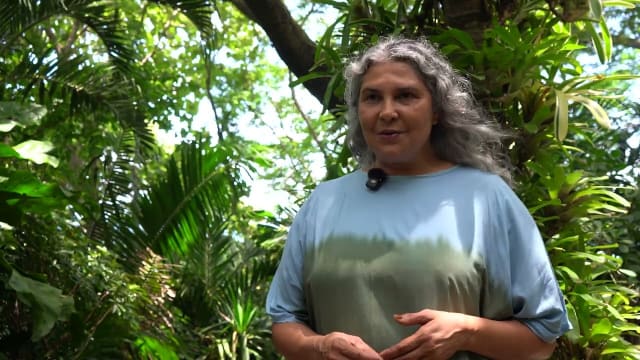
Most people who sit down to meditate close their eyes, and there is good reason for it: the eyes are where the world keeps pouring in. In a five-minute video titled "Eyes Open Meditation," Dina Proctor, creator of 3x3 meditation and author of Madly Chasing Peace, argues that closing them is not the only door. Her technique is to walk, drive, or simply look around while keeping your attention on what you see, without attaching the running commentary the mind usually layers on top: the label ("stop sign"), the judgment ("that driver is cutting me off"), the private wish that something were different. What is left, she suggests, is colors, shapes, and a quiet presence underneath them, and in that space you can find a gap between thoughts that is hard to reach any other way. It is a practice aimed less at stillness than at a way of being that can travel with you through an ordinary day.

Leitura · 8 seções

What does it look like to walk without a running commentary?

Picture a familiar route. You turn a corner and there is a stop sign. Before you have really registered it, the mind has already moved: that's a stop sign, cars are supposed to stop, why isn't that one stopping, that neighbor has a nice mailbox, I wonder when the trees will start losing their leaves. Proctor describes exactly this reflex. "We have this whole entire commentary about what we think we see going on in the world," she says, and the mind "just labels it so we can understand it file it away" (about 1:00).

Her point is not that the labeling is a flaw. She describes it as part of how we function: "there's this process that goes on tens of thousands of thoughts every single day," and labeling is part of how we understand our world. The trouble is that the labels arrive so quickly that they replace the thing they describe. The stop sign stops being an object in front of you and becomes a rule, a judgment about other drivers, a reminder of something you need to do later.

The eyes-open practice asks you to slow that process down. In her words, "the technique is to be present with whatever you're seeing and allowing whatever you're seeing to do or be whatever it is without having a mental label or judgment about what's going on" (about 0:34). You are not trying to stop seeing. You are trying to see without adding the story.

Why does the infant's way of seeing matter?

The most useful image in the video is one she offers to make the shift concrete. "Think of it like you were just born into the world," she says, "you're a few months old and you don't know what a stop sign is" (about 1:54). An infant does not know what the red octagon means. What it registers is the color, the edge, the shape, the fact that something is there. The child does not yet have the language to name the color, and that absence is precisely what she wants you to borrow for a few minutes.

This is a subtle discipline. Proctor is careful to separate noticing from analysis. You can notice that "there is something there made up of colors and shapes" without moving into "what I wonder what that color is," which she calls "a whole nother level of commentary." The aim is presence at the level of perception, not a new kind of thinking about perception. She extends the same invitation to the rest of the scene: a tree, a flower, a dog walking by. Each becomes a set of shapes and colors instead of a category.

Can you really practice this while driving?

Proctor says she uses the technique in the car, and she chooses a moment most drivers will recognize. "If I'm feeling frustrated traffic isn't moving enough and the cars in front of me aren't moving and we're all stopped and how come nobody's moving," she says, the mind starts producing its questions about what is causing the delay and whether she will be late. Instead, she shifts to "just noticing like I'm in this place kind of surrounded with these colors and shapes" (about 3:01).

A caution from this editor, not from the video: the noticing she describes is a light background awareness, and it should never pull attention away from the road. The useful part is the mental move, the letting go of the commentary that turns a traffic jam into a personal grievance, not any change in how closely you watch the cars around you.

Why is non-resistance central to the practice?

The most distinctive instruction in the video is about what not to do. You are not trying to fix anything. "It's not about trying to change something or make something better or improve something," she says (about 3:45). Traffic is traffic. The stop sign is the stop sign. "We can't change any of these things anyway," she notes, which is part of the relief. Once the commentary about what is wrong falls away, what remains is "just a presence underneath it."

This is where the practice connects to a broader idea she returns to throughout: meditation as non-resistance. A driver who darts around you becomes, in the terms she offers, "just a shape kind of going around us." The rest, the assessment of the driver's character and the story about being cut off, is what she calls "all the story and all the mental comment." Seeing the shape alone is not a pretense that nothing annoying happened. It is a refusal to let the story set the terms of the next minute.

What is the "space between thoughts," and how do you find it?

Proctor is clear that the practice has a specific payoff. It can be "a really great technique to get you into a place where you find the space between your thoughts," she says, which means "finding that quiet between the comments that are constantly going in the mind" (about 4:30). Most of us assume that quiet has to be manufactured by sitting still and shutting out the world. Her approach suggests the opposite: the quiet is often easiest to find in the busiest part of the day, because the busy scene gives the mind more commentary to step back from.

The gap is not a blank. It is simply the moment between one comment and the next, when the mind pauses long enough for you to notice that the commentary is a separate activity from the seeing itself.

Is meditation only something you do sitting still?

Proctor frames the whole practice as a definition of meditation itself. "Meditation for me isn't something I'm doing to check out the to-do list," she says. "It's a state of being, and we can be in a state of meditation while we are active or while we are still" (about 4:40). The meaning she gives is simple: "being fully present and non resistant and at ease and in flow with whatever is going on."

That definition is the reason eyes-open meditation makes sense as a practice. If meditation is a state rather than a posture, then a walk, a commute, or a moment in a crowded room can be as valid a place to practice as a cushion. It also explains the two situations she names at the start of the video: spending time in nature, where you want to deepen the experience, and feeling restless, where sitting still is hard. The technique meets both needs without asking you to become someone who sits well.

How do you start practicing eyes-open meditation?

Proctor does not give a timed protocol in this video, and it would be inventing to suggest one. The sequence her description supports is simple:

  • Choose an ordinary setting: a walk, a drive, a park, or a room where you are waiting.
  • Let your eyes rest on whatever is in front of you, without searching for anything special.
  • Notice colors and shapes. Let a tree, a dog, or a sign be only what it looks like.
  • When a label arrives (stop sign, nice mailbox, why is that car slow), notice it as commentary and return to what you see.
  • Pay attention to the small gaps between comments, and to how it feels to be present without fixing anything.

She closes with a line that works as a summary of her whole approach to practice: "it's something that's been really powerful for me and so it works for me maybe it'll work for somebody else so as always take what resonates and gently leave the rest" (about 5:04). That generosity is part of the teaching. The video offers a technique, not a rule, and invites you to test it against your own days.

Where to go from here

If the idea of seeing without commentary appeals to you, start small. Take one walk this week and try the stop-sign exercise: when a label rises, let it pass and return to colors and shapes. Notice what changes when you stop asking the world to explain itself. Proctor's video is short enough to revisit before a walk or a drive, and her description of the technique is clear enough to practice from memory. For further reading from the same teacher, the video's description and her own references point to her work with 3x3 meditation and to Madly Chasing Peace, the book she names as her author credit. Use what resonates, and leave the rest.
Comments

Loading the conversation…

Transcript

[0:00] everybody I'm Dina Proctor creator of

[0:02] 3x3 meditation and author of madly

[0:04] chasing peace today I want to talk about

[0:06] a technique of meditating with your eyes

[0:09] open and this is good in a few different

[0:12] instances you know if you are out and

[0:13] about in nature and you want to just

[0:15] kind of enhance your experience you can

[0:17] use this idea on this technique or if

[0:20] you're feeling a little restless and

[0:22] having a hard time sitting still and

[0:24] meditating you can try this technique as

[0:27] well so it's I use this when I am out

[0:30] walking around and the technique is to

[0:34] be present with whatever you're seeing

[0:37] and allowing whatever you're seeing to

[0:39] do or be whatever it is without having a

[0:43] mental label or judgment about what's

[0:45] going on or you know kind of what it is

[0:47] so you can kind of take it as like as an

[0:50] example you might be taking a walk and

[0:52] normally the mind shadow would say oh

[0:54] that neighbor has a nice mailbox or you

[0:57] know I wonder when the trees are gonna

[0:58] start losing their leaves or well the

[0:59] squirrels or squirrels are kind of

[1:01] getting ready for the winter and we have

[1:02] this whole entire commentary about what

[1:05] we think we see going on in the world

[1:07] our mind just labels it so we can

[1:09] understand it file it away you know like

[1:12] there's this process that goes on tens

[1:14] of thousands of thoughts every single

[1:16] day and that's part of our process is

[1:18] labeling and understanding our world so

[1:20] the technique is to have this walk and

[1:24] be in nature be wherever you are without

[1:27] having the mental commentary that

[1:30] usually kind of overshadows what you're

[1:32] doing so for example if you're walking

[1:35] along in a neighborhood and you come

[1:37] across a corner that has a stop sign

[1:39] your first you know your mind will

[1:42] mentally say oh that's a stop sign cars

[1:44] are gonna stop how come that guy's not

[1:45] stopping how come that one is stopping

[1:46] you know we have this whole commentary

[1:48] about what's going on but think of it

[1:50] like you were just born into the world

[1:52] you're a few months old and you don't

[1:54] know what a stop sign is you don't know

[1:55] what it means all you're really noticing

[1:58] is colors and shapes and you don't even

[2:00] have the language to say that it's a

[2:02] color or a shape but you're experiencing

[2:05] the colors and the shapes so you might

[2:08] kind of get curious about you know you

[2:10] don't get into the whole commentary of

[2:12] oh what I wonder what that color is

[2:14] because that's a whole nother level of

[2:15] commentary but just to be you know

[2:18] present enough in the experience to

[2:21] notice that there is something there

[2:23] made up of colors and shapes if that

[2:26] makes sense

[2:27] so without the label of stop sign and

[2:29] without the mental understanding what a

[2:32] stop sign is and whether or not the cars

[2:34] passing by it are obeying what it is

[2:37] inviting them to obey or whatever you

[2:39] know not without the commentary at all

[2:41] just kind of a noticing of something

[2:45] that has shapes and colors and even

[2:47] bringing that to a tree or to a flower

[2:50] or to a dog walking by or you know like

[2:53] just to have this presence of seeing

[2:57] what's around you without the mental

[2:59] label and without the commentary you can

[3:01] even do it while you're driving like

[3:03] sometimes I if I'm feeling frustrated

[3:06] traffic isn't moving enough and the cars

[3:08] in front of me aren't moving and we're

[3:09] all stopped and how come nobody's moving

[3:10] and what's going on what's causing this

[3:12] traffic I'm late for something instead

[3:14] of that it's just noticing like I'm in

[3:18] this place kind of surrounded with these

[3:20] colors and shapes you know my car just

[3:22] kind of noticing this around me and then

[3:24] there may be other shapes driving by or

[3:27] walking by and just kind of being

[3:30] present and letting it be exactly as it

[3:33] is without a commentary about something

[3:36] wrong with it or something needs to

[3:37] change about it

[3:38] just a presence underneath it we can't

[3:42] change any of these things anyway we're

[3:44] not changing the stop sign we're not

[3:45] changing the traffic it's not about

[3:47] trying to change something or make

[3:50] something better or improve something

[3:51] you know like the practice of this

[3:53] technique is just to be present

[3:56] underneath and just allowing the things

[3:59] around us to do whatever it is the

[4:02] things around us are doing without that

[4:03] whole commentary about what we think is

[4:05] going on you know a lot of times if

[4:07] we're in traffic and somebody goes

[4:09] around us real quick

[4:11] might just be you know what's wrong with

[4:12] that driver that's their cutting me off

[4:14] of whatever like oh we're noticing it's

[4:16] just a shape kind of going around us

[4:18] that's all that we're noticing the rest

[4:20] is all the story and all the mental

[4:22] comment

[4:23] so sometimes this can be a really great

[4:25] technique to get you into a place where

[4:28] you find the space between your thoughts

[4:30] you know finding that quiet between the

[4:33] comments that are constantly going in

[4:35] the mind so anyway it's I just kind of

[4:38] call it meditating with my eyes open

[4:40] because meditation for me isn't

[4:41] something I'm doing to check out the

[4:43] to-do list it's a state of being and we

[4:45] can be in a state of meditation while we

[4:47] are active or while we are still so it's

[4:50] it's about being and it really just

[4:53] means being fully present and non

[4:54] resistant and at ease and in flow with

[4:57] whatever is going on so I hope that this

[4:59] is helpful for you it's something that's

[5:01] been really powerful for me and so it

[5:02] works for me maybe it'll work for

[5:04] somebody else so as always take what

[5:06] resonates and gently leave the rest and

[5:08] stay tuned around this space I'll have

[5:10] more for you again soon

Dina Proctor
ArtistDina Proctor

Dina Proctor is a life and business coach, and best-selling author of the book "Madly Chasing Peace: How I Went from Hell to Happy in Nine Minutes a Day." Supported by Jack Canfiel…

Ver perfilSite
Explorar temas
Eyes-open-meditationPresent-moment-awarenessMental-labelingNon-resistanceMindfulness-in-daily-life

Tem perguntas?

Perguntas frequentes

Eyes-open meditation, as Dina Proctor describes it, means staying present with whatever you see, such as a tree, a sign, or a passing dog, without adding mental labels, judgments, or commentary. It can be practiced while walking, in nature, or even while driving. The aim is to notice colors and shapes and find the quiet space between thoughts.
Proctor recommends this technique for people who feel restless or find it hard to sit still, because it can be done while you are moving through your day. You don't need a cushion or closed eyes; you simply let your attention rest on what is in front of you. You return to that seeing whenever mental commentary takes over.
Dina Proctor says she uses the technique in the car, especially when she feels frustrated by traffic. She describes noticing the colors and shapes around her instead of the questions about why traffic is stopped. Keep your attention on the road: the practice is a light background noticing, not a reason to look away from driving.
Seeing without mental labels means noticing an object before the mind names it or judges it. Proctor uses the image of a newborn who sees colors and shapes without knowing that a red sign means stop. The practice is to let something be exactly what it looks like rather than immediately filing it into a story.
Dina Proctor introduces herself in the video as the creator of 3x3 meditation and the author of Madly Chasing Peace. In this short YouTube talk, published in October 2017, she teaches eyes-open meditation as a way to practice presence in everyday life.
Proctor does not give a set duration in this video. She presents the practice as something that can happen during any activity, such as a walk or a drive, rather than a timed session. Experiment with what fits your day and notice what resonates.

Continuar lendo

More from Dina Proctor

Ver Tudo
How Do You Know You're Meditating Correctly? A Simple Test
Inspire

How Do You Know You're Meditating Correctly? A Simple Test

Dina Proctor says the sign you're meditating correctly shows up after you open your eyes. Her test, drawn from sports, performance, and flow…

8 min read
Arriving in Open Presence: A Guided Meditation Path Home
Inspire

Arriving in Open Presence: A Guided Meditation Path Home

Tara Brach's guided meditation walks listeners from an intention-setting question through a body scan, a widened field of sound and space, a…

8 min read
Immune Support Affirmations: Words for Sensitive Souls
Inspire

Immune Support Affirmations: Words for Sensitive Souls

A close listen to Glenda Cedarleaf's immune support affirmation track: how its phrasing moves from body trust to boundaries, and why it clos…

9 min read
Kirtan Camp in Costa Rica: Bhakti, Chant and the Blue Zone
Inspire

Kirtan Camp in Costa Rica: Bhakti, Chant and the Blue Zone

A week of kirtan, yoga and ocean swims at a Costa Rica retreat set for July 2027. This clip shows what Jai Uttal's camp is built to do: gath…

6 min read

Continue explorando

Continue sua jornada

Mais sabedoria e mais encontros de todo o diretório BrightStar.

Mais artigos

Explore a biblioteca completa de ensinamentos, entrevistas e guias.

Voltar a todos os artigos →

Professores e artistas

Conheça as linhagens, os músicos e os guias do mundo consciente.

Explorar artistas →

Encontre um evento

Kirtan, retiros, banhos de som, breathwork, festivais — acontecendo em breve.

Ver eventos →