Transcript
[0:15] um was to try to see if I could find
[0:17] some way myself to DIY a um
[0:23] a way out of my suffering.
[0:25] I was in graduate school walking down I
[0:28] work my PhD walking down towards campus
[0:30] and I had the epiphous moment of
[0:33] stepping back and looking at what was
[0:34] going on up here. It turns out it was
[0:37] just blah blah blah blah blah which is
[0:39] why you know it was about nothing in
[0:41] particular worthless had nothing to do
[0:43] with my doctoral thesis nothing
[0:44] whatsoever but for whatever reason I was
[0:47] moved to believe I had all these
[0:48] thoughts up there and there was no
[0:51] belief that that was okay. I had
[0:53] suffered a lot by the time I was in my
[0:54] late 20s and so I had a lot of narrative
[0:57] going on that was very painful and there
[1:00] was no reason it should have been. I had
[1:02] good money to get through graduate
[1:03] school, good assistantship, wife, two
[1:05] kids, everything was fine, very healthy.
[1:07] But I had this problem. And so I
[1:09] thought, is there some way I can stop
[1:11] this? I had no reason to believe this
[1:13] was possible. I had not read anything
[1:15] that was possible, but I knew somehow I
[1:18] had to stop this thing. So I set about
[1:21] trying to find a way to stop this
[1:22] narrative. It turns out as I got on this
[1:26] path, uh I was going to do it DIY. One,
[1:30] I was going to do it empirically,
[1:32] scientifically with no philosophy, no
[1:35] religion, absolutely naked. I was being
[1:37] trained as an empirical phys, empirical
[1:39] scientist. But the idea was, can I just
[1:41] run the experiments myself? Give me the
[1:43] lab notebook. I'll run the experiments
[1:46] and I'll see if it works or not. And
[1:48] I'll say yes or no for the experiment.
[1:50] That's all I'm going to do. Sources have
[1:52] to be contemporary. We're trying to do
[1:54] this thing scientifically, empirically.
[1:57] contemporary sources. I didn't want
[1:59] anything from 2,500 years ago, 2,000
[2:02] years ago, a thousand years ago been
[2:03] passed down through God knows how many
[2:04] hands of people with vested interest in
[2:07] making it come out some way. The idea
[2:09] was it's got to be those parameters,
[2:12] very scientific contemporary sources
[2:14] that I could validate that I had videos
[2:17] of, people had I talked to could had met
[2:19] them. I had met them myself. So it had
[2:21] to be absolutely a clean data set
[2:24] and clean sources.
[2:33] And so this idea of relying on religious
[2:35] traditions, philosophy, I was not a
[2:37] philosopher. I was an empiricist. So no
[2:40] philosophy, no religion. I came from a
[2:43] blaming, shaming religion. I'd had
[2:45] enough of that. Thank you very much. So
[2:47] I was trying to find some way out of
[2:48] this thing.
[2:52] And these are what I just talked about
[2:56] the reasons we had to do this thing. And
[2:58] I was focusing on this these thoughts
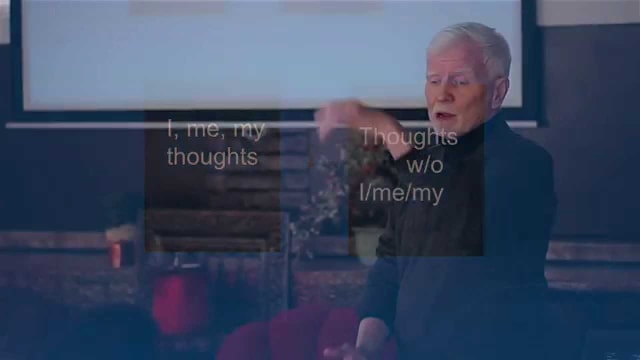
[3:00] that I had and could I reduce them
[3:03] empirical open source secular teachings.
[3:07] And the hardest part of it was it was
[3:10] going to have to function in the real
[3:11] world. I couldn't become completely
[3:14] dysfunctional. This had to be an
[3:15] operative system that I could live with.
[3:17] And the most important distinction was
[3:19] in addition to these different different
[3:22] difficult caveats was it had to be a
[3:24] state not just an experience. I mean a
[3:27] lot of non-duality people say well I had
[3:29] an experience 26 years ago and I can
[3:32] still remember fantastically vivid vivid
[3:35] I'm a non-dualist.
[3:36] I say well not so much because we have a
[3:40] lot of research now on memories. I was
[3:43] in a false memory fMR study. I mean, you
[3:46] may you have something's two years old
[3:49] and you've called it up four, five, six,
[3:51] eight times. It's not it's not correct
[3:54] anymore. Your memory is absolutely
[3:56] incorrect.
[3:58] So, had to be a lasting state. Mini me
[4:00] is down here because it really came to
[4:02] be a process of trying to find a mini
[4:04] me, a less me involved operating system.
[4:13] This narrative thing that I found
[4:15] unpleasant wasn't unique to me. There's
[4:18] a great study in science that was done
[4:20] at UVA by some really good people, some
[4:22] of the best people in the field. And it
[4:24] was saying, "Okay, what if we can just
[4:25] take some UVA undergraduates and put 150
[4:28] of them in a room one at a time and give
[4:30] them say, okay, be by yourself for 15
[4:33] minutes. No toys, no distractions. You
[4:36] can just be there with your the pleasure
[4:38] of your thoughts." And how's that worked
[4:40] for you? They said, 'Oh, they not
[4:44] surprisingly. 90% came back and said, 'N
[4:47] no good. No good. Okay, well maybe it's
[4:49] because we got them in a laboratory. So
[4:51] they sent them back home. Go back home.
[4:52] Go back to your pod. They go back to
[4:54] their pod. Okay, even worse. First 15%
[4:57] of them cheated.
[4:59] The ones that didn't cheat said it's
[5:01] just as bad.
[5:03] Just undergraduates. You know how
[5:05] undergraduates are. So they went on into
[5:07] Charlottesville, rounded up a bunch of
[5:09] people from a church, farmers market,
[5:11] ran them through this thing, average age
[5:13] 42, much more affluent than some of the
[5:15] students. At least not not their parents
[5:17] perhaps. Uh same result, same bad
[5:21] result. Okay, this is not okay. Take 50
[5:24] of these people and ask them if they
[5:26] like electric shocks
[5:28] and you find them. One say, "No, I do
[5:30] not like electric shocks."
[5:33] Okay. Okay. Well, you're you're in the
[5:34] pool.
[5:36] So, you get in this thing. You're in the
[5:38] not like electric shocks pool. And we're
[5:40] going to give you a button in your hand,
[5:42] a control that goes to an anklet that
[5:45] has a shocking collar on it. And you're
[5:48] going to go back in that room again. You
[5:49] can sit there 15 minutes again, and
[5:51] we'll just see how it goes for you. If
[5:53] you need to be diverted your attention
[5:55] some way to pull your attention back
[5:56] away from what you're do going through,
[5:58] you just push this button. You get a
[6:00] strong electric shock to your ankle and
[6:03] it will bring you out of your
[6:04] unhappiness.
[6:13] So, as you might imagine from the
[6:14] picture, this didn't turn out well. Uh,
[6:18] twothirds of the guys, men chocked
[6:21] themselves. Only one quarter of the
[6:23] women. So, women really are smarter than
[6:25] men.
[6:28] But but the guy shocked themselves an
[6:31] average of 1.5 times and the girls 2.3
[6:34] times.
[6:36] But this is an unpleasant state for many
[6:38] people almost everybody. We have so many
[6:40] things we do to not have to face into
[6:42] this state
[6:44] and this will be about trying to explore
[6:46] ways to do that. So I went about some
[6:48] practices
[6:50] uh classical Zen practices and this
[6:54] fellow Bassoui 14th century Zen monk uh
[6:58] very famous in some sectors and this
[7:00] fellow you know hope we all know Nam
[7:02] Maharshi he was really my main man
[7:05] through this thing and his questions are
[7:08] very simple
[7:12] and for me as an empirical scientist
[7:14] this one didn't work for me so much got
[7:17] philosophical. The ones I liked were
[7:19] this one, where am I and who here's I
[7:23] went to my Zen masters and they were all
[7:24] Renzy Zen, which is the Kan school. I
[7:27] said, "Hey, one guy was a big Moo person
[7:29] if you know the go the Zen coons." I
[7:31] said, "Yeah, I I can't get into MOO. It
[7:33] may be a great thing for a Japanese
[7:36] mind, but doesn't paradoxically engage
[7:40] me." Something like where am I? That
[7:43] really gets I could really try to solve
[7:45] that. I'm a empirical scientist. I
[7:46] should know where I am. So I talked to
[7:49] the Roshi and he said, "Sure, you can do
[7:50] that." So I set off to do that. It was
[7:52] actually in our suture book anyway. So I
[7:54] went off to do that. My other Zen
[7:56] master, same thing. Asked her about it.
[7:58] She said, "Sure, perfect. Go ahead and
[8:00] do that thing." So I just did this. I
[8:02] just asked these questions over and over
[8:04] and over again. Along with things like
[8:07] I'm not this body. This belief that we
[8:10] have we are this body. I just ask them a
[8:13] lot of times. And after a lot of sitting
[8:16] meditation,
[8:18] they stopped.
[8:20] You know, I had to do a lot of hours of
[8:22] this thing, a lot of yoga. I didn't have
[8:23] any guidance really. The Zen people
[8:25] hadn't really worked this thing. I
[8:27] needed a coach. I didn't have a coach.
[8:29] So, I was in the dark a lot of the time.
[8:32] They stopped. The thoughts stopped. And
[8:35] the surprise with for me with that was
[8:36] not that just this blah blah blah
[8:38] stopped. It's very quiet up there like
[8:40] it is now. Just very quiet. But that the
[8:43] fears and emotions, self-reerential
[8:45] ones, also fell away. And something I
[8:48] hadn't expected with these two. I was
[8:51] certain I was very active in
[8:54] corporate industry. I was very certain
[8:57] that in fact I had control and I had
[8:59] absolute free will and all that happened
[9:02] successes and failures were mine, my
[9:04] responsibility, my failure, my
[9:05] successes. And when I fell away
[9:09] like that, snap It just fell away right
[9:12] along with everything else. So I'm
[9:15] standing there and I've got a thousand
[9:16] people working for me, four research
[9:19] labs in a quarter billion dollar budget
[9:21] and I've got to go to work
[9:23] and there's nothing up here.
[9:30] Great.
[9:30] Great. Yeah. So I go into work expecting
[9:33] either be stoned or deified and and
[9:37] neither one happens.
[9:39] nothing happens.
[9:42] You go through the day and you find out
[9:43] that in fact life is even easier. It's
[9:46] better. It's cleaner. It's simpler. It's
[9:48] worked so much better than before. And
[9:50] I've got this thing, well, okay, if I
[9:51] wasn't in control and I didn't have free
[9:54] will, who's running this show? And I
[9:56] just kept watching and I kept seeing in
[9:58] fact, life does itself just perfectly
[10:01] well. Thank you very much. I could
[10:03] function actually better with this
[10:05] situation that I have now than I could
[10:08] before because I go into a meeting
[10:11] [Music]
[10:12] and you find out that in fact you're the
[10:14] only person in the room. Nobody else was
[10:16] in the room all the time. They were
[10:19] there 10% of the time, 40% of the time,
[10:21] 30% of the time. You look like the
[10:23] smartest person in the room because
[10:24] you're the only one in the room that's
[10:25] there for the whole meeting.
[10:30] Uh I also it's much more creative. I
[10:32] found cognition is higher. It's been
[10:34] that way now for 17 years. Uh except for
[10:37] low energy. I'm hypoglycemic or uh I get
[10:41] very tired. We can talk about why that's
[10:43] the case. I think we know why it's the
[10:44] case. Second one is this idea of having
[10:47] self-reerential thoughts. It's okay to
[10:49] keep keep those self-reerential
[10:50] thoughts. It doesn't work for me. If you
[10:54] want to get really non-dual, you got to
[10:57] realize that those are the canaries in
[10:58] the coal mine. You got self-referential
[11:00] thoughts. A lot of people say, "I'm
[11:02] good. You know, I had this experience 10
[11:04] years ago. I'm non-dual." Yeah, there's
[11:06] some noise off in the corner. There's
[11:07] babbling and things, but I don't I pay
[11:09] no attention to the man behind the
[11:10] screen and I I just keep doing this
[11:12] thing and I'm perfectly happy with this.
[11:16] In fact, you find out those are the good
[11:18] indicators you've got. Suzuki Roshi
[11:21] called these thing uh mind weeds and he
[11:24] welcomed them. They give you a place to
[11:26] show you where you some work needs to be
[11:27] done where you still got an attachment.
[11:29] You still got something else to do. So
[11:31] if you can absolutely shut them down,
[11:33] get no thoughts and it's just no
[11:35] self-reerential problematic thoughts. I
[11:37] work with a lot of knowledge workers.
[11:39] It'll be university town. They live by
[11:41] their thoughts.
[11:43] But the thoughts they live by aren't
[11:44] these ones about oh my project's not
[11:47] going to get refunded again. I was going
[11:48] to have a terrible time. the department
[11:50] chair is going to throw me out. Not
[11:52] those kind of thoughts, but the ones
[11:54] about, oh, I need to run this project
[11:55] and put it in this way and organize it
[11:57] like this. Planning, problem solving
[12:00] does not change. It's easier, cleaner.
[12:03] Those are not emotionally charged
[12:04] thoughts. And amazingly, for me,
[12:06] amazingly, the brain can parse those
[12:08] out. The brain can recognize if you got
[12:11] thoughts, problematic thoughts, or if
[12:13] you got the ones that are just planning,
[12:15] just coded in because there's
[12:16] linguistically encoded. Almost all of
[12:18] our spe all of our uh residents of our
[12:21] species languages are all subject object
[12:23] doing of some kind except for four
[12:25] languages but all you can see the people
[12:28] this guy this guy you all know I'm sure
[12:31] Maharaj this guy you don't know I was
[12:33] giving a talk in Stockholm
[12:35] 2010 and he was uh actually one of the
[12:39] founders of Santa Dia Iwasa uh he was
[12:43] talking at in Stockholm about his
[12:45] experiences with Iwasa
[12:47] At the end of his talk, the very last
[12:49] thing he said was this. It's all about
[12:51] having no thoughts. Which is a big
[12:52] surprise to me because it was exactly
[12:54] what I was after. So I saw him and said,
[12:56] "Hey, this is fantastic. What a
[12:59] correspondence that we both have exactly
[13:02] the same perception of why we do
[13:03] spiritual practice. Iaska or meditation.
[13:06] These are classical resources. Déing
[13:09] zenji tanji yoga sutras. Yoga sutras 170
[13:13] so sutras. You talked about tanjali.
[13:14] several people in this workshop and you
[13:17] find out that yoga
[13:20] is the second one. The first one we're
[13:21] going to talk about yoga. Second sutra
[13:23] is yoga which is yoga is distilling for
[13:26] the modifications of the mind. Depending
[13:29] how hard you translate that it means to
[13:31] stop them. This one
[13:41] which says gradually gradually grab hold
[13:44] of your mind and put it in the self and
[13:47] don't think about anything else.
[13:50] So you've got a lot of these people
[13:52] saying pretty much the same thing.
[13:56] Myth three, you don't need to practice.
[13:58] You're already enlightened.
[14:04] Exactly. Uh the Zen people did this
[14:07] thing back in the 60s. They had exactly
[14:09] the same deal. It sells. It sells great.
[14:12] People come in, you tell them, hey,
[14:13] you're enlightened. Nothing you have to
[14:15] do. It's fantastic. Just, you know, come
[14:17] back to the next workshop. But it turn
[14:20] you find out that in fact absolutely not
[14:22] true. We've learned a lot about
[14:23] neuroplasticity in the last 10 years,
[14:25] last eight years. Enormous changes very
[14:28] quickly. This is a Harvard study and two
[14:31] months mindful meditation
[14:34] 40 minutes a day they can see five brain
[14:36] regions have actually changed in size in
[14:38] two months that's how fast it changes
[14:42] people and I've taken many of them to
[14:45] task personally that tell you there's
[14:46] nothing you have to do did a lot of re
[14:48] did a lot of practice Tony Parsons did
[14:51] years of practice pun papa gi did a
[14:55] really a tough tough long years and
[14:58] years and years and years of practice.
[14:59] They say there's nothing you have to do
[15:01] from where they're standing. That's
[15:03] true, but it's not from where you're
[15:06] standing. You've got to you can't just
[15:08] walk in and pick up a violin and say,
[15:10] "Okay, I'm now a concert violinist." It
[15:12] doesn't sound very good. You've got to
[15:14] learn how to do it. Um
[15:17] how fast it changes. Merenich is one of
[15:19] the top guys in the world right now in
[15:21] neuroplasticity out here someplace. and
[15:25] he had a way to look at the monkeykey's
[15:28] uh neural map of their face. It changed
[15:32] every week. Every week how the how the
[15:36] brain sensory motor cortex is actually
[15:38] linked into these face maps.
[15:43] How much you practice and how you
[15:45] practice matters a lot. Uh Malcolm
[15:49] Gladwell's book on 10,000 hours
[15:52] popularized this concept. The idea was
[15:54] $10,000 for concert violinists. Very
[15:56] small population, maybe 15 uh people in
[16:00] involved. And it's not as clear on
[16:03] concert violinists precisely what
[16:06] mastery means. You know, it's not I know
[16:08] it if I see it, but the chess guys, not
[16:11] surprisingly, are really into this.
[16:14] Chess guys will metricate anything.
[16:19] And what they found is that same thing
[16:23] 11,000 hours to mastery however big
[16:26] bandwidth 3,000 to 23,000 and they
[16:30] really know what mastery looks like in
[16:32] ELO points which is how they measure
[16:33] success in chess. And so genetics plays
[16:36] a role. Genetics matters whether you're
[16:38] going to be a 3,000 hour person or
[16:40] $23,000 person. But you're going to
[16:42] practice and it really determines
[16:44] whether or not you reach this and if you
[16:47] can go beyond that. Some chess masters
[16:49] keep growing and growing and growing and
[16:51] growing. Some don't. Some just peek out
[16:53] and stop.
[16:56] One thing down here and this is from
[16:57] Anders
[17:00] Anders. Anyway, he was the person who
[17:02] came up with all he got to do real
[17:04] research that that uh they put in 10,000
[17:07] hour book and Andrew Ericson. Andrew
[17:09] Ericson. Uh practice on what you don't
[17:12] do well. I mean, I did zillion hours of
[17:15] yoga. And if you aren't careful, you
[17:17] just keep doing the same exercise all
[17:18] over and over again. I'd love to do four
[17:20] bends. I just do four bends all the
[17:22] time. You never do backward bends. If
[17:24] you're going to expand your yoga
[17:25] practice, do the parts you're not good
[17:27] at. Meditational practice, do the parts
[17:30] you aren't doing well, that you try to
[17:32] avoid because that's where your growth
[17:34] is going to be.
[17:39] Myth four, mystical experiences are a
[17:41] mystery.
[17:42] Not so much. We now have some good
[17:44] models for this. This fellow Newberg is
[17:47] at Penn Dily was also there. He's passed
[17:51] on but Newberg is still there
[17:52] functioning very much. Their their model
[17:55] which is pretty much holding up
[17:57] somewhat. I talked to uh one of the
[18:00] Obi-Wan neuroscience yesterday and he
[18:02] confirmed it's possible. The idea here
[18:04] being that if you can you have the two
[18:06] sympathetic and parasympathetic
[18:08] excitement
[18:09] and then calmness those two circuits
[18:13] compete with each other they go back and
[18:14] forth al hopefully alternating excited
[18:17] calm excited calm excited calm that's
[18:20] what they function for fight and flight
[18:23] relax
[18:25] two sides what they say is if we can run
[18:28] these so you actually have the two of
[18:30] them at the same time fully activated
[18:33] they will conflict and they will shut
[18:35] down the inputs, the temporal and
[18:38] parietal loes that do the important
[18:40] things from mystical experiences. You
[18:42] just jam the circuits. They deferate.
[18:45] You just jam the circuits and you just
[18:46] stop anything from going to these places
[18:48] that are expecting input. They almost
[18:50] always get input. All of a sudden
[18:52] there's no input. And they they their
[18:55] postulate is that that's exactly what
[18:57] pushes mystical states into being. how
[19:00] this manifests in these input starved
[19:02] mystical states. They've got two books,
[19:06] well three or four books. You can look
[19:08] them up any any place. Hyperquescent you
[19:11] get very very very still. Hyperisal
[19:14] obviously marathon runners voodoo
[19:17] whatever swimmers skiers flow. We all
[19:19] know about flow God's book.
[19:22] hyperquiescent with the arousal
[19:24] breakthrough. You get really, really,
[19:25] really quiet and then bang, something
[19:28] happens. You get a breakthrough and you
[19:30] get great bliss is lowering energy
[19:33] absorption. The converse of that here is
[19:36] this way. Now, I I cheated in my
[19:39] meditation practice. I confessed to this
[19:41] now after after 30,000 hours. And how I
[19:44] cheated was I was a runner and I could
[19:46] get into this state. I could get a
[19:48] runner's high. And so I thought, well,
[19:50] this is interesting. I started to sit
[19:52] and the Zen guy said, "Sit still. Hold
[19:55] your hands where they're supposed to be
[19:56] and don't move.
[19:59] If you move, we're get a stick. We're
[20:00] going to come around with a stick. We're
[20:02] going to hit you with the stick."
[20:04] And they did this very tough bunch of
[20:07] guys. So, you had to really s So, you're
[20:09] going to you were hyperquiescent. You
[20:11] were not moving at all. And so, if you
[20:14] got your mind calmed down, then you
[20:16] could find yourself in this
[20:17] hyperquescent with the arousal
[20:19] breakthrough state. I found I could do
[20:20] that. I could sit and after about 35
[20:23] minutes, which is about a runner's high
[20:24] time, I got
[20:27] mystical experience. I like this. Not I
[20:31] I like it. The brain liked it. This is
[20:33] like a kibble for the brain. The brain
[20:35] said, "This is the coolest game in town.
[20:37] I get to sit and I get this treat at the
[20:39] end." Most people like go 20 minutes and
[20:42] stop or 30 minutes and stop. You do the
[20:44] hard work and you don't get anything.
[20:46] The brain says, "This is no fun. I don't
[20:47] want to do this."
[20:49] So I get a kibble. My brain we I just
[20:53] sat every time I sat every day until I
[20:56] got a kibble for the brain. And the
[20:58] brain really liked this. And so the
[21:00] brain loves to meditate. And I just this
[21:03] is how my practice has been for a long
[21:05] long time. I can still do it. It doesn't
[21:07] take 30 minutes though. It takes up like
[21:09] 10 seconds. But you can just bring this
[21:12] on this state here. Bang. That fast.
[21:19] mystical and psychotic states. Uh, a lot
[21:21] of questions I get from many many people
[21:23] about this thing. My friends say I'm
[21:25] crazy. Am I? Uh, my friends say I'm
[21:28] psychotic. Am I? And these guys, Newberg
[21:30] and DQ looked at, okay, here's here's
[21:33] some examples. And I'm not pretending to
[21:35] be a psychotherapist or psychiatrist.
[21:37] I'm just saying if you've got these kind
[21:39] of experiences, how you talk about the
[21:42] experience, your break from reality, how
[21:44] you describe it, and how you interpret
[21:47] the meaning of that experience. If you
[21:49] put all those together, you can pretty
[21:51] much get an idea whether or not you're
[21:52] ecstatic and joyful as you talk about it
[21:55] or if you're confused, terrified, and
[21:57] distressed after it. Similarly, if you
[21:59] long for return to it, or if you're just
[22:02] no, I'm not going back there again. when
[22:05] you talk about it later it's most
[22:07] mystics empty your ego calm still
[22:09] peaceful psychotics messianic healing
[22:12] powers this is not uh proscriptive this
[22:16] is not absolutely take it to the bank if
[22:18] you can't function if you can't raise
[22:21] your kids if you can't do a job if you
[22:24] can't go out in the world and function
[22:25] somehow reasonably well then go see
[22:27] somebody if not and you fall into these
[22:30] categories then it's almost certainly a
[22:33] mystical experience
[22:38] Myth five, spiritual path needs levels,
[22:41] titles, and an endpoint.
[22:44] Everybody loves this one. Why they love
[22:45] it? We we are evolutionarily bred into
[22:49] liking hierarchies. We became the
[22:51] masters and destroyers of the planet by
[22:54] being able to organize large bunches of
[22:56] ourselves to go out and do some task. It
[22:59] required a hierarchical structure.
[23:01] Hierarchal structure benefits from
[23:04] levels and titles. If I say Sam, you're
[23:07] enlightened,
[23:08] but you're only enlightened at level
[23:10] three. You want to get to level four,
[23:12] Sam,
[23:14] need some money here and some more time.
[23:17] The workshops get longer. Uh it'll be,
[23:20] you know, the usual $5,000 for two weeks
[23:22] is now going to be $15,000 for two weeks
[23:24] because it's special teaching to get to
[23:26] level four.
[23:28] or you can take the direct path. But
[23:30] this is what many people do. And to
[23:34] believe that everybody's going to go
[23:35] down the same path, I think to me is
[23:37] beyond naive. You look, and these
[23:39] aren't, this isn't comprehensive, but
[23:42] you look at the kinds of things that
[23:43] affect your likelihood of success in
[23:45] spiritual matters. It's a long list. And
[23:49] we all go through these things in
[23:50] different orders. We have different
[23:51] intensities of them. We have different
[23:53] genetics, different family, when we were
[23:54] born, where we were born, who our
[23:55] teachers were before. It's silly to
[23:59] believe that they're all going to go
[24:00] down exactly the same path in exactly
[24:02] the same rate. Just doesn't happen.
[24:06] There lots of sayings about this both
[24:08] from the Hindus from the Buddhists that
[24:10] there are lots of paths up the mountain.
[24:13] Uh I my first book was very much about
[24:16] look here's hundred ways. Pick one. Pick
[24:19] the one that appeals to you and do it.
[24:22] The one you will pick and do is way
[24:24] better than the one you will pick and
[24:26] not do. So find something you love to do
[24:29] and then go into it and really ingest it
[24:32] and be with it. You can get there by
[24:33] many many paths.
[24:36] Number six, psychedelics can produce
[24:38] persistent non-duality.
[24:40] Yeah. I'm not
[24:44] we have we have a one of the big Iwasa
[24:46] guys in the world right there in the
[24:48] white thing there.
[24:51] So he can throw stones if he wants to.
[24:54] Uh the the key to this thing you've
[24:56] heard much about the default mode
[24:57] network at this conference. This is
[24:59] started in uh roughly 2000 and we've
[25:03] really fleshed it out. We a spiritual
[25:06] community a neuroscience community and
[25:08] we know what this is done. This was a uh
[25:09] one of the seminal papers Harvard 2010
[25:12] Andrews Hannah 11 centers basically
[25:15] generate this sense of selfing
[25:18] all the forms and types of selfing
[25:20] you've got two subn networks in the core
[25:23] one core is a cortex you probably all
[25:25] heard about many many times we're going
[25:27] to talk about this through here you can
[25:29] see the good news bad news is it's way
[25:31] down deep in the brain it's way down
[25:33] inside right here and way down inside
[25:36] here so the hard thing is you got to
[25:38] down in there and get a good signal. If
[25:41] you're going to put an EEG on the top of
[25:42] your head, you got to process a lot of
[25:45] signals to make sure it's exactly coming
[25:47] from this place and a lot of
[25:49] transducers.
[25:51] Okay. What we found out, this is
[25:54] Andrew's Hannah now, is that one of
[25:55] these sub networks creates this sense of
[25:57] you existing through time. You as an
[26:00] agent that moves from past through
[26:02] present quickly into future. The other
[26:06] one is
[26:07] a network that produces this sense of
[26:10] you and other things. You in the chair,
[26:12] you and the person next to you. And you
[26:14] find out that whether you do it with
[26:16] meditation, IA mushrooms, you produce
[26:21] this shutdown of these two circuits. As
[26:25] you do, you get the classical all is
[26:27] one.
[26:29] And now now
[26:32] they all produce this as a main core.
[26:34] Certainly Iaska doesn't give you the
[26:35] same experiences as mushrooms does or
[26:37] meditation does but a lot of it codes on
[26:40] exactly the same level psychedelically
[26:44] mystically
[26:46] I was very heavily involved in the Yale
[26:48] study um subject collaborator
[26:52] co-conspirator and uh Jud Brewer at that
[26:55] time was at at Yale and same thing
[26:57] happened these are terraodens 10,000
[26:59] hours plus or minus uh three terraodin
[27:02] meditations
[27:04] and looked and said, "Okay, what
[27:05] happens?" Duh. Terravod shut these
[27:08] things down.
[27:09] Not surprising. 10,000 hours. Not a big,
[27:12] not a big news because in fact, as we'll
[27:15] see here in a second, you've got a
[27:16] tasking network that sits over here.
[27:18] Farb in 2007 proved this. You got a
[27:20] tasking network sits over here. And
[27:22] you've got this default mode network
[27:24] that's really deep down the core of the
[27:25] brain in here. This goes blah blah blah
[27:27] blah blah blah blah. And when you're
[27:28] doing a task and you're over here, then
[27:30] you're consumed by your task. It's a
[27:32] task you love to do, you'll notice
[27:34] you're not thinking. If you're rock
[27:36] climbing, you're doing a high pitch,
[27:39] you've got to be really careful. You pay
[27:40] attention and you don't think. And we
[27:43] like it because we don't think if you're
[27:44] in a chess match, whatever it is, it
[27:45] really turns you on a vocation or
[27:48] vocation. This tasking network will shut
[27:51] down the default mode network. So these
[27:53] guys were really just tasking. The
[27:56] really interesting thing was when Jud
[27:57] turned off in between in between runs he
[28:00] found that in fact those centers stayed
[28:02] shut down even without meditation they
[28:05] were shut down for a while. We now know
[28:09] we've got these three circuits. This is
[28:10] a tasking network. This is the expanded
[28:14] updated version from Andrews Hannah 2014
[28:17] and she pulled in a thousand person
[28:19] study from MIT to really work her thing
[28:22] out. And the thickness of these lines is
[28:24] how often they talk to each other. They
[28:25] operate at the same time. And you can
[28:27] see you've got these two sides and
[28:29] you've got two centers up here which Jud
[28:31] found as well. Jud Brewer found as well.
[28:33] And their job is to watch and control
[28:36] the situation. I mean they watch to see
[28:38] if this thing the the yellow ball is
[28:40] shut down. They see if it's shut down.
[28:44] They can control this thing. They're
[28:45] right up here. It's called a salance
[28:46] network. These two centers are watching
[28:49] this and this to regulate this switching
[28:51] back and forth. If you got ADHD, what it
[28:54] is is this circuit blah blah blah won't
[28:57] shut up. It will not let go. And so
[28:59] you're over here trying to get a job
[29:00] done and blah blah is over here going
[29:04] and so you can't concentrate.
[29:07] There's a lot of good research on that
[29:09] too.
[29:11] How shrooms work uh exactly the same way
[29:15] meditation works. Not exactly, but this
[29:17] is IV psilocybin in the UK medium level
[29:21] doses. There's no way to worry about,
[29:23] you know, do we am I digesting it
[29:25] properly or not? It's just IV. And you
[29:27] can get a clear picture here. Infusion
[29:29] point and how the uh this thing shuts
[29:33] down. As it shuts down, some of your
[29:36] friends may have told you you actually
[29:38] get extremely intense effects.
[29:41] So tracks exactly on
[29:44] meditation.
[29:46] Iwasa same thing. This is a well-known
[29:49] study now. It's only it was recently
[29:51] done but it's pretty well known quickly.
[29:53] Same thing happens these two of the core
[29:55] centers before Iwasa
[29:57] on Iwasa in the fMRI. They're shut down.
[30:00] They're gone.
[30:03] Same thing happens. There's a very nice
[30:04] longitudinal study now we were looking
[30:06] at yesterday at lunch on long-term usage
[30:09] of Iawaska,
[30:11] but they all work. The one thing and I I
[30:15] recommend everybody have some kind of
[30:18] mystical experience. If it needs to be
[30:20] mushroom, I'm not pimping for mushrooms.
[30:21] I'm a virgin, by the way. I'm a virgin
[30:23] psychedelics, but I encourage people to
[30:26] to do something. Take take do get some
[30:28] mushrooms from somebody, anybody, any
[30:30] place. And
[30:32] really backyard
[30:34] backyard.
[30:36] Make sure that you make sure they're
[30:37] really good stuff. But I encourage
[30:40] people to do this. One fellow here in
[30:42] the Bay Area I work with, he's at a
[30:44] conference today and u he'd been
[30:46] practicing very hard. Practice,
[30:49] practice, practice, practice, practice.
[30:50] But he wasn't getting anywhere.
[30:53] And so I said, "Get some mushrooms."
[30:57] And magically someone who he didn't
[30:59] expect would have mushrooms gave him a
[31:01] Hershey bar that was wrapped around has
[31:04] a wrapper around some mushrooms and he
[31:06] reached up took them lo and behold
[31:09] bango. Now the brain knew what was
[31:11] possible. The problem is the brain
[31:13] doesn't know what's possible. It's this
[31:16] is its reality. If you show it something
[31:18] else, you say, "Oh, gee, this is all
[31:20] kinds of things are possible. I can make
[31:22] this. I can make that. I can make
[31:24] peacocks. I can make crawling snakes. I
[31:25] can do all kinds of things. So you say,
[31:28] okay, my consensus reality is not the
[31:31] only reality there. The brain is what
[31:33] somebody said on Friday, it's a best
[31:35] efforts basis. The brain's not trying to
[31:37] do a perfect job of replication. It's
[31:39] just trying to say, well, okay, the lion
[31:41] comes down to the steak. The lion's
[31:42] hungry. Lion needs the steak. That's
[31:44] fitness. However, the lion then says,
[31:46] "Well, okay, my belly is full. I'm
[31:48] looking for a lady lion." So he doesn't
[31:51] care about the steak anymore. Now he
[31:52] cares about lady lions. That's fitness.
[31:55] It's not perfect, but it's fitness. As
[31:57] your demands change, you adapt and you
[31:59] move to another object.
[32:03] So, uh,
[32:06] as far as matching these up, they all go
[32:09] on the same scale. Psychedelics,
[32:12] uh, what I do, persistent non-duality.
[32:15] Yeah, just non-duality. And you can see
[32:18] what happens. Jeffrey Martin who isn't
[32:21] here. He's in he's around today. Um did
[32:24] his PhD thesis at CIS on this. He took
[32:27] 500 people, cut it down to 36 of us and
[32:30] said, "Okently,
[32:32] you spend a lot of your time within this
[32:33] non-dual state, this no thought state."
[32:35] And so we're going to we're going to all
[32:37] kinds of interviews and testing and
[32:39] everything else on you. We're going to
[32:40] see how you do. Well, Hood of Hood Mrs.
[32:44] Skill was actually on Jeffrey's doctoral
[32:45] committee. So, this is about as good as
[32:47] it's going to get. And of this 36 of us
[32:50] in this population, nine of us scored
[32:53] 160.
[32:55] It's the highest level in the scale. And
[32:56] we're that way persistently
[32:59] 90% of the time. So it's like a 90% of
[33:02] the time psychedelic experience on this
[33:05] scale common scale. The problem with
[33:08] psychedelics is you got it's six hours
[33:10] and it's gone or eight hours or 14 hours
[33:12] and it's gone. The brain doesn't get a
[33:15] chance to learn how to do it itself. You
[33:16] got to make the brain learn how to do it
[33:18] itself or it's not going to be
[33:19] persistent. I met a guy Nucan 121212. He
[33:23] had done 2,000 trips of high highdose
[33:26] high strength acid. I said, "How's it
[33:28] going for you?" He said, "Not there yet.
[33:33] 2,000."
[33:35] He say, "Well, it's not working." And
[33:37] actually, he developed an enormous ego
[33:39] around being an extreme athlete on acid.
[33:43] So, it doesn't get you there. You've got
[33:45] to somehow find a way to taper it down,
[33:48] make the brain learn how to do it. It's
[33:50] exactly the same receptors. It's the
[33:52] same circuitry. It's the same chemicals.
[33:54] The brain's got them. It has to work
[33:56] that way or the psychedelics wouldn't
[33:57] work that way. Plant medicine works
[34:00] because they found out how to hack our
[34:02] system.
[34:04] We discovered that we had synapses and
[34:06] how they worked with canabonoids.
[34:08] All research results are are reliable
[34:11] and good and true. Everything's
[34:13] fantastic. Not so much. Uh this is a big
[34:16] study in German American Medical
[34:18] Association. We'll see here on mindful
[34:20] meditation.
[34:22] 47 trials, lots of people. You can see
[34:24] the words on mindful meditation.
[34:26] However, of those 47 trials, you get
[34:29] down here. And the guys in Hopkins who
[34:32] are report said, but only 10 of those 47
[34:35] trials were without bias.
[34:38] So you've got 37.
[34:41] Three4s of the trials. The good trials,
[34:44] these are the best trials were biased.
[34:48] They're biased because if I'm a an XY
[34:53] person or religion,
[34:55] not Buddhism, I'm picking Buddhism. I
[34:58] actually had some friends in Buddhism.
[35:00] Uh but you believe that you're
[35:02] protecting the Dharma.
[35:05] It's your job to protect the dharma. And
[35:06] you select people from your sect and you
[35:09] run your sect's practices. And you
[35:13] evaluate the goodness of this, the
[35:15] fitness of this against your sect's
[35:19] attributes. That's going to be biased.
[35:21] No matter how careful you are, it's
[35:23] almost impossible to avoid bias. Doesn't
[35:26] have to be pernitious, but it creeps in.
[35:29] You've already done it with the
[35:30] selection of your subjects.
[35:33] uh a lot of it can't be reproduced.
[35:36] psychological studies they picked. This
[35:38] another meta study published in science
[35:41] just published and 97% of the studies
[35:44] they picked had a very high significance
[35:46] very great study fantastic awesome study
[35:50] so they went back and tried to replicate
[35:51] it only 36% of them could replicate
[35:56] the rest of them they could not
[35:58] replicate the results
[36:00] so what's the value of that not very
[36:02] high if you look down here this is about
[36:04] different uh psychical therapies they
[36:08] say they're at least 25% overstated in
[36:10] effectiveness for the same reason.
[36:12] People say, "Oh, that's an outlier. Oh,
[36:14] that doesn't count. Oh, I know this
[36:16] person. They're crazy." Uh, so you end
[36:18] up then with a very carefully controlled
[36:20] population, so you get good statistics,
[36:22] so you get tenure, so you get funded, so
[36:23] you get more research dollars, whatever.
[36:28] Uh, without science, so we're screwed. I
[36:31] It's the best tool we have, the only
[36:33] tool we have for some of this stuff.
[36:34] We're not doing as well as we could. We
[36:37] if we do it a lot better, it'll help us
[36:38] a lot more.
[36:41] Pardon?
[36:44] He was
[36:44] on the previous
[36:47] Why? But let let me finish this. I've
[36:51] got a couple more slides and and I I
[36:53] should get five minutes because I I this
[36:55] thing didn't get running for five
[36:56] minutes. Uh myth eight was if if there's
[37:01] no I you won't be compassionate. I get
[37:02] this a lot. I got called non-human uh at
[37:05] one one panel discussion in in the
[37:07] Netherlands. You aren't a human being
[37:09] because you don't have these desires and
[37:11] these bad things. Um it's really
[37:14] compassion for most people is really
[37:16] reciprocal altruism. Uh I give I give
[37:19] Sam something. I don't pick on Sam. I
[37:21] give Sam something and I say Sam okay
[37:24] I'm really helping out here. So I'm
[37:25] expecting something back from Sam. This
[37:28] goes into the hierarchal structure. to
[37:30] hold the structure together because I
[37:31] give something to Sam and he gets to
[37:33] give me something back later. So Sam and
[37:34] I are kind of looked together. We're in
[37:36] the same structure. We know where we are
[37:37] in this thing. It's the glue of the
[37:40] hierarchy.
[37:41] You can see though there are all kinds
[37:43] of things we're expecting out of this.
[37:46] And these guys did tons of work on this.
[37:48] There's even a a center out here on
[37:51] typical altruism. But it's really just
[37:53] let's make a deal. If you watch
[37:55] carefully, you can feel it in yourself.
[37:57] I'm helping this person down here. I'm
[37:59] up here. They're down there. They need
[38:00] this thing from me. And you give it to
[38:02] me and think, "Ah, karma points, heaven
[38:05] points. I'm on my way now." You're
[38:08] expecting reward. If not now, later.
[38:13] In fact, your compassion is all about
[38:15] you. You have to guess who said this
[38:17] thing. Human beings are naturally
[38:19] selfish. This this guy's a really
[38:21] welltuned in, scientifically trained,
[38:23] scientifically involved. Science shows
[38:26] that we are naturally compassionate and
[38:28] helping someone else makes you feel
[38:29] good. This is scientific research. We
[38:31] know this down here. By nature, every
[38:33] human being loves themselves.
[38:35] But by helping another, you are building
[38:37] your own happy self. You are building
[38:40] your ego by doing this process of
[38:42] helping Sam and getting something back
[38:44] from Sam. Doesn't take your ego down. It
[38:46] actually strengthens it.
[38:48] Yes, he said this.
[38:52] Yeah.
[38:54] Dolly level
[38:56] last
[38:58] non-duality is a psychotic state
[39:02] and this is a serious problem for people
[39:05] DSM5 which is the diagnostic manual by
[39:09] which psychologists and psychiatrists
[39:11] can build Medicare or whoever health
[39:13] care systems and uh they have to has to
[39:16] be in the manual. This guy from Duke
[39:19] actually chaired the study. He wrote a
[39:22] blistering
[39:23] uh almost repudiation of the study and
[39:26] said that in fact this fuzzy boundary
[39:29] like for ADHD is so broad now that many
[39:32] many many people fall into this thing
[39:34] that didn't before and he also said
[39:37] basically everybody some place will get
[39:39] in there. If you look drug companies,
[39:41] but if you actually look I got a blog
[39:43] post on this thing. Take one of the big
[39:45] Obi-Wan's in uh depersonalization
[39:48] disorder and this one woman lists off 20
[39:51] characteristics of depersonalization
[39:53] disorder.
[39:54] So I took the hood myth system scale and
[39:57] I listed 20 things and they're the same
[39:59] 20 things. I mean the mystical things
[40:02] line up exactly with depersonalization
[40:04] disorder. So you've got to somehow find
[40:06] a psychologist or someone in the Bay
[40:07] Area who understands this problem that
[40:11] in fact what we call mythicism we think
[40:12] is fantastic. Uh they've categorized
[40:16] psychopathized it. Just be aware of
[40:19] this. You start hearing people oh you
[40:21] you're psychotic. DSM5 says this.
[40:24] There's a lot of controversy about this
[40:25] whole thing about DSM5 period but in
[40:28] particular about this particular issue.
[40:30] That's all I have. Thank you.
[40:32] [Applause]