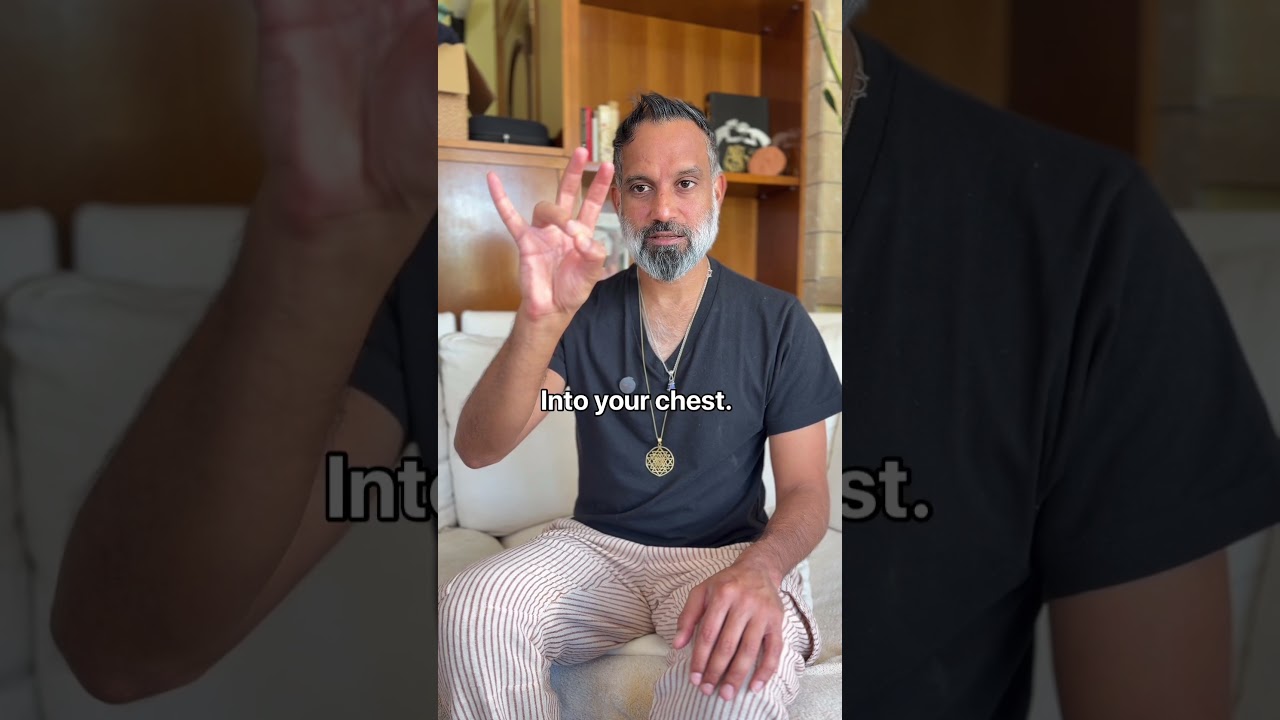
SOMA Breath's Morning Gratitude Daily Dose is a guided 22-minute breathwork session that layers three distinct techniques — rhythmic pranayama-style breathing synchronized to music, full exhale breath retention (kumbhaka), and embodied gratitude visualization — to produce measurable physiological shifts including lower blood pressure, reduced inflammation, stabilized blood sugar, and strengthened immune function. The practice was developed by Niraj Naik (The Renegade Pharmacist) and is designed to be performed once daily, ideally in the morning, as a standalone meditation requiring no prior breathwork experience.
What Is SOMA Breath and How Does It Work?
SOMA Breath is a system of breathwork created by Niraj Naik, a pharmacist who used pranayama and rhythmic breathing techniques to reverse his own chronic illness. The methodology draws on ancient yogic breathing (pranayama), modern neuroscience, and music entrainment to guide practitioners through states that range from heightened arousal to profound inner stillness — often within a single session.
The core mechanism is the deliberate manipulation of carbon dioxide (CO2) and oxygen (O2) levels in the blood. Rhythmic breathing with specific in-breath and out-breath ratios gently alters blood gas concentrations, which in turn affects smooth muscle tone in blood vessels, brain wave states, and the autonomic nervous system. When followed by a full exhale and breath hold (the "hold" phases the instructor cues), CO2 briefly rises and triggers a deep relaxation response — what the instructor describes as "a moment of deep relaxation and inner peace" where "life is just a series of inhales and exhales" and the hold becomes a chance to "press pause on life."
How Is the Meditation Structured?
The session unfolds in three interlocking phases, each building on the last:
- Gratitude Visualization (Opening): Before any breathing instruction begins, practitioners are guided to "bring awareness to an intention of gratitude by becoming aware of a time when you're truly grateful for being alive." The instructor asks you to project a vivid internal movie — one where you are "the lead character doing what it is that makes you feel truly grateful." The goal is to embody the feeling before the breathwork amplifies it: "disembody this feeling, sensations of deep gratitude… and embody those feelings as they're happening right now."
- Rhythmic Breathing Phase: Once the gratitude state is established, the instructor introduces a rhythmic breath pattern synchronized to the music — breathing in on the cue "in" and out on "balance." This creates what SOMA calls "a smooth, constant rhythm like an ocean wave." The music acts as an entrainment tool, pacing the breath and deepening the meditative state. With each breath cycle, the practitioner is instructed to "turn up the dial on those good sensations" and to imagine "breathing in light, breathing out love." The instructor notes that gratitude "expands into every single cell of your body, healing and nourishing."
- Breath Retention (Kumbhaka) Phases: At intervals, the practitioner is guided to "exhale fully… squeeze and let go" and then hold the breath. These retentions are the physiological engine of the practice. During the hold, the instructor says, "this allows the thought files to reassemble, giving your sensor a policy" — a reference to the way reduced neural noise during breath suspension can produce clarity and insight. Practitioners are encouraged to "push a little bit beyond the comfort zone" on each successive hold, as this is where "strength, growth, expansion, and truth of who you are" emerge. The instruction is to "override the first sensation" to breathe, "take a little sip," exhale fully, and hold again.
What Role Does Visualization Play in SOMA Breathwork?
Visualization in SOMA Breath is not incidental — it is pharmacological in intent. Because the breath hold creates an altered state of heightened neuroplasticity, the images and intentions held during that window are understood to have outsized influence on the subconscious mind. The instructor guides practitioners to "give the feeling a color and observe that color expanding and rising with every breath you take." This synesthetic anchoring of emotion to color is a technique rooted in neuro-linguistic programming (NLP) and somatic experiencing.
Later in the session, during deeper retention phases, the visualization becomes more expansive: practitioners are asked to "imagine shooting this energy up… sending electric currents of consciousness… white light radiating away from your body and expanding into the corners, sending information to yourself to bring you into absolute alignment." This imagery functions as a form of directed intention-setting at the moment the nervous system is most receptive.
"You are amazing. You are a miracle. You already have everything. Infinite love, health, wealth, abundance are yours — just open your heart, open your mind." — SOMA Breath instructor, ~12:56
What Are the Scientifically Backed Benefits of This Practice?
SOMA Breath cites a substantial body of peer-reviewed research supporting the physiological effects of rhythmic pranayama and breath retention. The documented benefits of regular practice include:
- Cardiovascular health: Reduced blood pressure, lower risk of stroke and heart disease, and a strengthened heart muscle.
- Metabolic regulation: Stabilized blood sugar levels and support for weight loss through improved metabolic efficiency.
- Immune function: Strengthening of the innate immune system and increased bone mineral density.
- Neurological benefits: Improved brain function and memory, reduced symptoms of depression, and heightened aerobic capacity.
- Inflammation: Lower systemic inflammation and reduced cholesterol, both of which are linked to chronic disease prevention.
These effects are largely attributed to the interplay between intermittent hypoxia (mild, controlled reduction of oxygen during breath holds), the parasympathetic activation triggered by slow rhythmic breathing, and the neurochemical effects of sustained positive emotion — particularly gratitude, which has independently been shown to activate the hypothalamus and influence dopamine and serotonin regulation.
How Does Gratitude Function as a Physiological Anchor?
The choice of gratitude as the emotional anchor for this practice is deliberate and research-informed. Gratitude activates the prefrontal cortex and the anterior cingulate cortex — areas associated with decision-making, empathy, and emotional regulation. When this emotional state is paired with rhythmic breathing, the heart rate variability (HRV) pattern becomes coherent, meaning the heart and brain synchronize in a way associated with reduced stress hormones and improved immune markers.
The instructor's repeated instruction to "turn up the dial on those good sensations" is a directive to increase the amplitude of this coherence signal. The metaphor of a dial is precise: research in psychophysiology shows that the intensity of a felt emotion directly correlates with its downstream physiological effect. A vividly imagined and fully felt gratitude state produces a stronger HRV coherence response than a merely conceptual one.
Who Should and Should Not Practice This Meditation?
The SOMA Morning Gratitude meditation is suitable for most healthy adults. However, SOMA Breath explicitly contraindicates this practice for anyone who:
- Has suffered from epileptic attacks
- Has cardiac arrhythmia or a pacemaker
- Is pregnant
- Has severe COPD
These contraindications relate specifically to the breath retention phases, which alter blood gas levels in ways that can be unsafe for individuals with the above conditions. For beginners, SOMA recommends starting gently and not forcing the breath holds beyond mild discomfort.
How Does Music Entrainment Deepen the Practice?
One of the distinguishing features of SOMA Breath compared to silent breathwork traditions is the use of specially composed music as an entrainment and pacing tool. The music in the Morning Gratitude session is structured so that its tempo matches the intended breathing rhythm, removing the need for practitioners to count their breath. This frees cognitive resources for the visualization and emotional embodiment work that runs concurrently.
The music also serves an emotional priming function. The instructor notes that "the feelings of gratitude expand and amplify" as the music builds, suggesting that the sonic architecture of the track is designed to mirror and reinforce the emotional arc of the meditation — from quiet introspection at the opening to energized expansion during the final breathing rounds.
What Happens in the Final Phase of the Meditation?
The closing section of the session moves into the deepest retention phase. The instructor guides a final full exhale followed by a prolonged hold, described as "going back into a moment of absolute stillness — the deepest, most profound state of meditation — as you connect with the essence of your soul." Here the visualization peaks: new energy is imagined "penetrating every cell in your body," aligning "your inner world with your outer world" and taking the practitioner "into absolute states of flow."
Coming out of the final hold, the session transitions to an integration cue: "Take forward this energy and gratitude wherever you go. Notice how those around you are affected, and be grateful for the feeling you give to others via your higher frequency." This frames the practice not as a private wellness ritual but as a relational one — the internal state cultivated in meditation is understood to radiate outward and affect one's environment and relationships.
Where to Go From Here
For those who want to understand the mechanics of the technique in greater detail before practicing, SOMA Breath has published a dedicated instructional video explaining how to perform the meditation correctly. To explore the full system, SOMA Breath offers a free 7-day mini course at somabreath.com that covers the foundational breathwork protocols in depth. For those who prefer in-person guidance, SOMA Breath instructors are available globally through the SOMA Breath instructor directory. If this morning session resonates, practicing it daily — even for two weeks — is where the cumulative physiological and psychological benefits reported in the research begin to compound.