
BrightStar

Ver todos os Events

Discover conscious gatherings

events

Yoga
Meditation
Breathwork
Qigong
Tai Chi
Sacred Music
World Music
Medicine Music
Sound Healing
Ecstatic Dance
Destinos populares
BaliSedonaLos AngelesCosta RicaNew YorkSan FranciscoAustinMiamiJoshua TreeTulum
Ver todas as categoriasVer todos os destinos

Explorar todos os recursos

Ferramentas poderosas para expandir seus eventos

Recursos da plataforma

Precificação dinâmica inteligente
Categorias de ingressos
Lugares marcados
Recuperação de carrinho abandonado
Recuperação de visitantes
Doações e preço variável
Sistema de afiliados
Scanner de ingressos
Códigos de desconto
Perguntas personalizadas
Compartilhamento de ingressos
Upsells e complementos
Análises e relatórios
Sequências de e-mail
Lista de espera / Notificar / Lembrar
Pessoas e Lugares
Artists & TeachersEvent OrganizersVenues & StudiosKnowledge BaseGlossaryInspiration
Ver todos os recursosSobre nós
PreçosBlog
Ver todos os eventos

events

YogaMeditationBreathworkQigongTai ChiSacred MusicWorld MusicMedicine Music

Destinos populares

BaliSedonaLos AngelesCosta RicaNew YorkSan Francisco

Pessoas e Lugares

Artists & TeachersEvent OrganizersVenues & StudiosKnowledge BaseGlossaryInspiration

Recursos da plataforma

Precificação dinâmica inteligenteCategorias de ingressosLugares marcadosRecuperação de carrinho abandonadoRecuperação de visitantesDoações e preço variávelSistema de afiliadosScanner de ingressosCódigos de descontoPerguntas personalizadasCompartilhamento de ingressosUpsells e complementosAnálises e relatóriosSequências de e-mailLista de espera / Notificar / Lembrar
Ver todos os recursosSobre nós
PreçosBlog
EntrarBuscadoresCriadores
Tibetan BuddhistOm Mani Padme Hum · Om Mani Padme Hum · Om Mani Padme Hum · Om Mani Padme Hum · Om Mani Padme Hum ·
  • Ver todos os Events
  • Para buscadores
  • Yoga
  • Meditation
  • Breathwork
  • Qigong
  • Tai Chi
  • Sacred Music
  • Retiros
  • Workshops
  • Todas as categorias →
  • Bali
  • Sedona
  • Los Angeles
  • Costa Rica
  • Tulum
  • Byron Bay
  • San Francisco
  • Austin
  • Todas as cidades →
  • Para criadores
  • For Teams
  • Para escritores
  • Para professores
  • Para artistas de kirtan
  • Para estúdios
  • Para festivais
  • Para centros de retiro
  • Para organizações sem fins lucrativos
  • Embaixador da marca
  • Estudos de caso
  • Seva
  • Elevate
  • Amplify
  • Rede de 350K+ compradores
  • Recuperação de carrinho abandonado
  • Precificação dinâmica inteligente
  • Categorias de ingressos
  • Eventos recorrentes
  • Lugares marcados
  • Sistema de afiliados
  • Lista de espera / Notificar
  • Scanner de ingressos
  • Widget incorporável
  • Event Syndication
  • Message Center
  • Integrations
  • Reports
  • Todos os recursos →
  • Sobre
  • The Ecosystem
  • Blog
  • Glossário
  • Inspiration
  • Central de ajuda
  • Contato
  • Documentação da API
  • Recursos da marca
  • Carreiras
  • Imprensa
  • Termos de Serviço
  • Política de Privacidade

Events

  • Ver todos os Events
  • Para buscadores
  • Yoga
  • Meditation
  • Breathwork
  • Qigong
  • Tai Chi
  • Sacred Music
  • Retiros
  • Workshops
  • Todas as categorias →

Destinos

  • Bali
  • Sedona
  • Los Angeles
  • Costa Rica
  • Tulum
  • Byron Bay
  • San Francisco
  • Austin
  • Todas as cidades →

Para criadores

  • Para criadores
  • For Teams
  • Para escritores
  • Para professores
  • Para artistas de kirtan
  • Para estúdios
  • Para festivais
  • Para centros de retiro
  • Para organizações sem fins lucrativos
  • Embaixador da marca
  • Estudos de caso
  • Seva
  • Elevate
  • Amplify

Recursos

  • Rede de 350K+ compradores
  • Recuperação de carrinho abandonado
  • Precificação dinâmica inteligente
  • Categorias de ingressos
  • Eventos recorrentes
  • Lugares marcados
  • Sistema de afiliados
  • Lista de espera / Notificar
  • Scanner de ingressos
  • Widget incorporável
  • Event Syndication
  • Message Center
  • Integrations
  • Reports
  • Todos os recursos →

Empresa

  • Sobre
  • The Ecosystem
  • Blog
  • Glossário
  • Inspiration
  • Central de ajuda
  • Contato
  • Documentação da API
  • Recursos da marca
  • Carreiras
  • Imprensa
  • Termos de Serviço
  • Política de Privacidade
BrightStar
© 2026 BrightStar. Todos os direitos reservados.
Back to Shyam Dattani
The Music of Shyam Dattani: Sound, Sacred Texture, and Lineage
Music

The Music of Shyam Dattani: Sound, Sacred Texture, and Lineage

Shyam Dattani's voice enters a room like calligraphy drawn in real time—unhurried, weighted with intent, shaped by centuries of vocal refinement. His music is not built for volume or crescendo. It is built for proximity.

Shyam Dattani
Shyam Dattani
Jul 18, 2026
4 min read
Read · 5 sections

The Music of Shyam Dattani: Sound, Sacred Texture, and Lineage

Shyam Dattani's voice enters a room like calligraphy drawn in real time—unhurried, weighted with intent, shaped by centuries of vocal refinement. His music is not built for volume or crescendo. It is built for proximity. Working primarily in ghazal and thumrī, two of the most poetry-saturated forms in the Hindustani tradition, Dattani practices an art of restraint, where a single microtonal inflection can recontextualize an entire couplet, and silence functions as punctuation.

The instrumentation surrounding his voice is minimal and deliberately supportive: typically harmonium or sarangi for harmonic grounding, tabla for rhythmic dialogue, and occasionally tanpura providing the continuous drone that anchors all melodic movement in Indian classical music. There is no layering for effect, no reverb to soften the edges. The texture is dry, intimate, almost conversational. Tempo varies depending on the emotional arc of the text—some pieces unfold in slow, meditative cycles that stretch a single line across minutes; others quicken into flirtation or longing, but never into spectacle. This is music designed to be heard within arm's reach, where breath and ornamentation are as audible as pitch.

Lineage and Form

Ghazal and thumrī both emerge from the courtly and salon traditions of North India, shaped in royal courts, kothas, and private gatherings where music served not as entertainment but as a form of aesthetic discourse. Ghazal, rooted in Persian and Urdu poetry, is the genre of paradox and longing—couplets that turn on double meanings, where the beloved may be human or divine, present or irretrievably lost. Thumrī, lighter in structure but no less emotionally sophisticated, explores the terrain of shringar (romantic longing) and viraha (separation), often drawing on Krishna-Radha imagery or secular romantic themes.

Both forms prioritize bol-baant—the art of text treatment—where meaning is not simply sung but unfolded, dissected, and reassembled through melodic variation. A single word might be repeated with different ornamentations, each iteration revealing a new shade of meaning. This requires not just technical skill but interpretive depth, an understanding of the poetic tradition as much as the musical one.

Dattani works squarely within this lineage, but with a curatorial sensibility that is rare among younger practitioners. Rather than treating these forms as repertoire to be adapted for modern venues, he has committed to preserving the spatial and social conditions they were designed for.

The Baithak as Practice

What sets Dattani apart is his role as host and architect of the baithak itself. Through his ongoing series Poems of Love, presented in collaboration with Aangan Studio London, he recreates the mehfil—the intimate gathering where listeners sit on the floor, often in candlelit or low-lit spaces, without microphones or stage separation. This is not nostalgia. It is structural necessity. Ghazal and thumrī rely on subtleties—breath control, gamak (vocal oscillation), murki (quick ornamental turns)—that dissolve in amplified or acoustically diffuse environments.

The baithak format also reshapes the audience's role. Listeners are not passive consumers but participants in a shared aesthetic event. There is an etiquette: attentive silence, occasional affirmations ("wah"), a collective attunement that influences the performer's interpretive choices in real time. Dattani curates not just the music but the conditions of listening, collaborating with other vocalists and instrumentalists who understand the form's demands.

What to Expect

For a listener encountering Dattani's work for the first time, the experience may feel disorienting if you arrive expecting catharsis or climax. This is not kirtan's participatory ecstasy, not qawwali's building fervor, not the harmonic wash of mantra music recorded in studio. It is slower, more patient, more literary. You will hear a couplet repeated with minute variation. You will notice how a single syllable is stretched, bent, colored differently each time. The surprises are small-scale: a sudden ornament that reframes a word's emotional weight, a rhythmic phrase that locks into the tabla cycle with surgical precision.

The voice itself is trained in classical technique but deployed with interpretive freedom. Dattani does not flatten affect into devotional purity or technical demonstration. There is flirtation, melancholy, irony—the full emotional range the poetry demands.

In the Wider Landscape

In the broader world of conscious or devotional music, Dattani's work occupies a distinct position. He is not creating fusion, not building soundscapes around mantras, not crossing over into Western harmonic structures. He is a preservationist with a contemporary curatorial practice, insisting that certain musics require certain conditions to be heard as intended.

Where artists like Krishna Das brought kirtan into yoga studios and concert halls, and qawwali found festival stages through figures like Nusrat Fateh Ali Khan, Dattani is doing something quieter and perhaps more radical: refusing scale, refusing adaptation, holding space for a music that will not translate into streaming playlists or background ambience. It is music that asks you to sit down, stay still, and listen as though language and melody were being woven together in front of you for the first time.

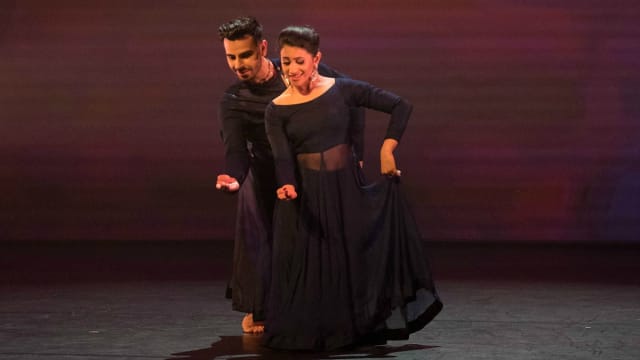
Shyam Dattani
AboutShyam Dattani

Shyam Dattani is a classical Indian vocalist specializing in ghazal and thumrī, performed in the intimate baithak format. He hosts the Poems of Love series in collaboration with Aa…

View profile

Continue Reading

More about Shyam Dattani

View All
Who Is Shyam Dattani? Life, Work, and Legacy
Article

Who Is Shyam Dattani? Life, Work, and Legacy

Essential Shyam Dattani Albums: A Listening Guide
Article

Essential Shyam Dattani Albums: A Listening Guide

Where to Start with Shyam Dattani: A Beginner's Guide
Article

Where to Start with Shyam Dattani: A Beginner's Guide

Keep exploring

Continue your journey

More wisdom and gatherings from across the BrightStar directory.

More Articles

Browse the full library of teachings, interviews, and guides.

Back to all articles →

Teachers & Artists

Explore the lineages, musicians, and guides of the conscious world.

Explore artists →

Find an Event

Kirtan, retreats, sound baths, breathwork, festivals — happening soon.

Browse events →