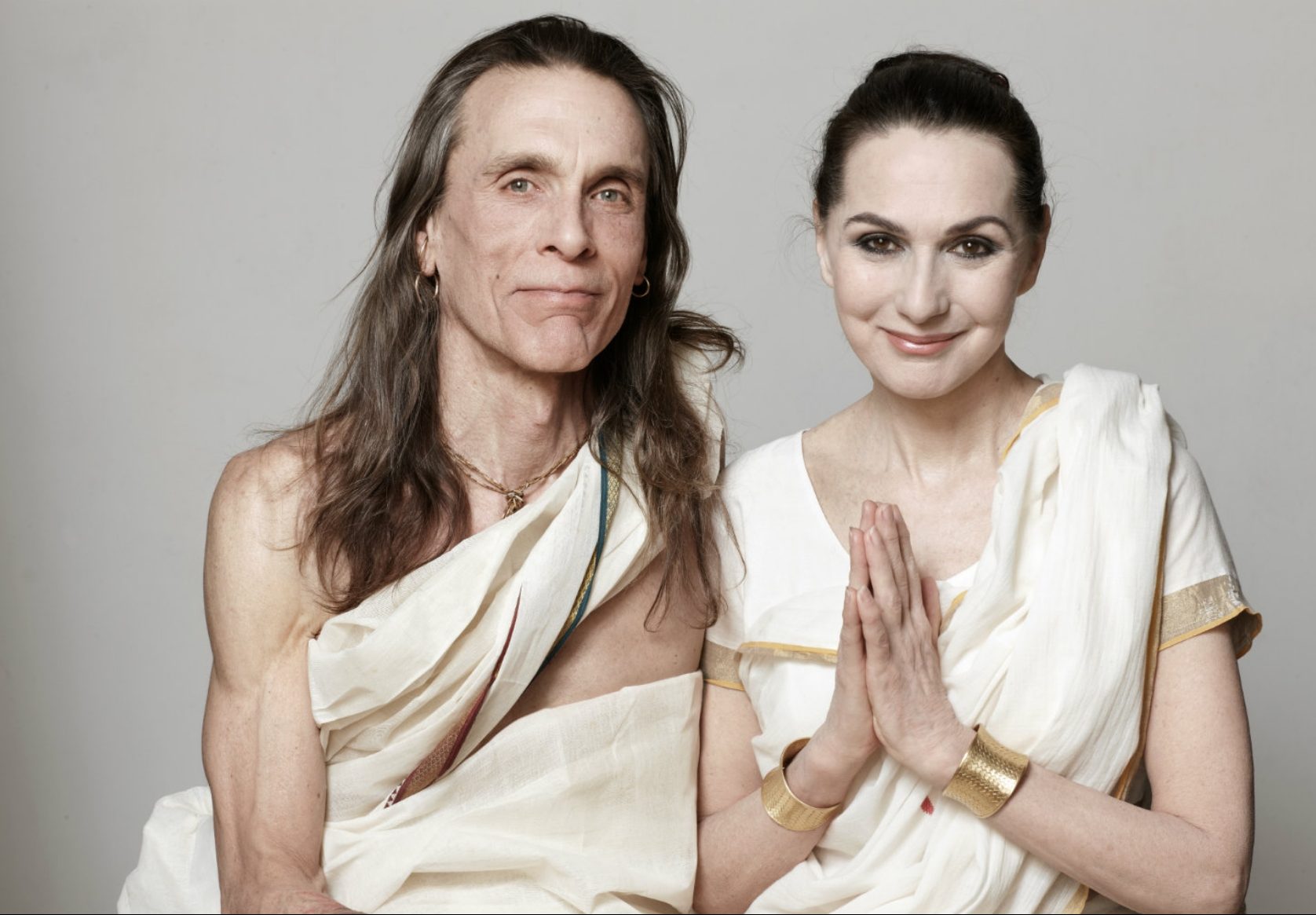

Sharon Gannon's path to becoming one of the most influential yoga teachers in the Western world began far from the studios and wellness centers where her method would eventually flourish. Born in Washington state, Gannon arrived in New York City through the arts, working as a dancer, musician, and avant-garde performer in the vibrant downtown scene of the 1980s. This wasn't the typical origin story for someone who would go on to reshape American yoga—but then again, nothing about Jivamukti Yoga would prove typical.
It was within New York's experimental arts community that Gannon encountered yoga, not as fitness or stress relief, but as a comprehensive philosophy with radical implications for how one might live. She pursued studies with teachers including Swami Nirmalananda, Shri Brahmananda Sarasvati, and Shri K. Pattabhi Jois, immersing herself in traditions that viewed physical practice as inseparable from ethical commitment and spiritual inquiry.
In 1984, Gannon and her partner David Life opened the first Jivamukti Yoga studio in Manhattan's East Village. The timing was significant: American yoga in the mid-1980s remained largely relegated to church basements and community centers, perceived as either gentle stretching for seniors or esoteric practice for seekers at the margins. Jivamukti would help catalyze a transformation.
The studio brought together seemingly disparate elements—rigorous vinyasa sequencing derived from Ashtanga yoga, Sanskrit chanting, readings from classical texts like the Yoga Sutras and Bhagavad Gita, and an uncompromising ethical stance centered on veganism and animal rights. Where other Western yoga studios treated asana as exercise, Jivamukti presented it as one component of a complete spiritual practice rooted in Indian philosophical tradition.
This synthesis spoke to a particular cultural moment. Jivamukti became a bridge between downtown New York's countercultural bohemianism and the ancient lineages of classical yoga. Artists, musicians, and creative professionals found in Gannon's classes a practice that honored both physical rigor and intellectual depth, that didn't ask them to choose between their contemporary lives and traditional wisdom.
Jivamukti Yoga organizes itself around five central tenets: ahimsa (nonviolence), bhakti (devotion), dhyana (meditation), nada (sacred sound), and shastra (study of scripture). This framework represents Gannon's core contribution—the insistence that yoga practice in the West needed to recover its ethical and devotional dimensions, not simply refine its physical techniques.
The emphasis on ahimsa, particularly as expressed through veganism and animal rights advocacy, distinguished Jivamukti from virtually all other yoga methods being taught in America at the time. Gannon didn't present ethical vegetarianism as a lifestyle suggestion but as fundamental to yoga practice itself, arguing that nonviolence cannot be compartmentalized or practiced selectively.
Similarly, the integration of bhakti—devotional practice expressed through chanting and kirtan—brought an emotional and devotional dimension often missing from Western approaches to yoga. Gannon's classes featured Sanskrit mantras and devotional songs, treating these not as exotic embellishments but as technologies for transformation in their own right.
Gannon has authored and co-authored multiple books exploring yoga philosophy and practice. Works like Jivamukti Yoga, Yoga and Vegetarianism, and The Art of Yoga extend the reach of her teaching beyond the studio, offering students pathways into both practical instruction and deeper philosophical inquiry.
She has also released spoken-word and chant albums, including Sharanam, which pairs traditional Sanskrit mantras with contemporary music production. These recordings reflect Gannon's background in music and performance, treating sacred sound as both ancient practice and living art form. Her recorded dharma talks have become resources for students practicing at home, bringing the texture of in-person instruction into private practice.
The teaching materials Gannon has developed over decades now form the curriculum used by Jivamukti teachers worldwide, creating a method that can be transmitted with both consistency and depth.
Jivamukti's influence on contemporary yoga culture extends far beyond its own studios and certified teachers. The method helped establish the template for what a modern urban yoga studio could be—a space where physical practice, philosophical study, and ethical commitment coexist as integrated dimensions of a single path.
Gannon's work reaches practitioners who might never set foot in a Jivamukti studio, through the broader normalization of practices she championed: the integration of chanting into vinyasa classes, the treatment of yoga as inherently connected to environmental and animal welfare concerns, and the centering of classical texts in teacher training programs.
Her cultural significance lies partly in what she insisted upon: that Westernizing yoga need not mean stripping it of its spiritual, devotional, and ethical core. At a moment when yoga risked becoming merely another form of exercise, Gannon and Jivamukti offered an alternative vision—one that honored lineage while speaking to contemporary concerns about justice, ecology, and meaningful practice.
For students seeking yoga as transformation rather than workout, as philosophy rather than fitness trend, Gannon's teaching provides a roadmap. Her legacy is visible in every studio that treats yoga as inseparable from how we eat, how we treat other beings, and what we understand practice to actually mean.