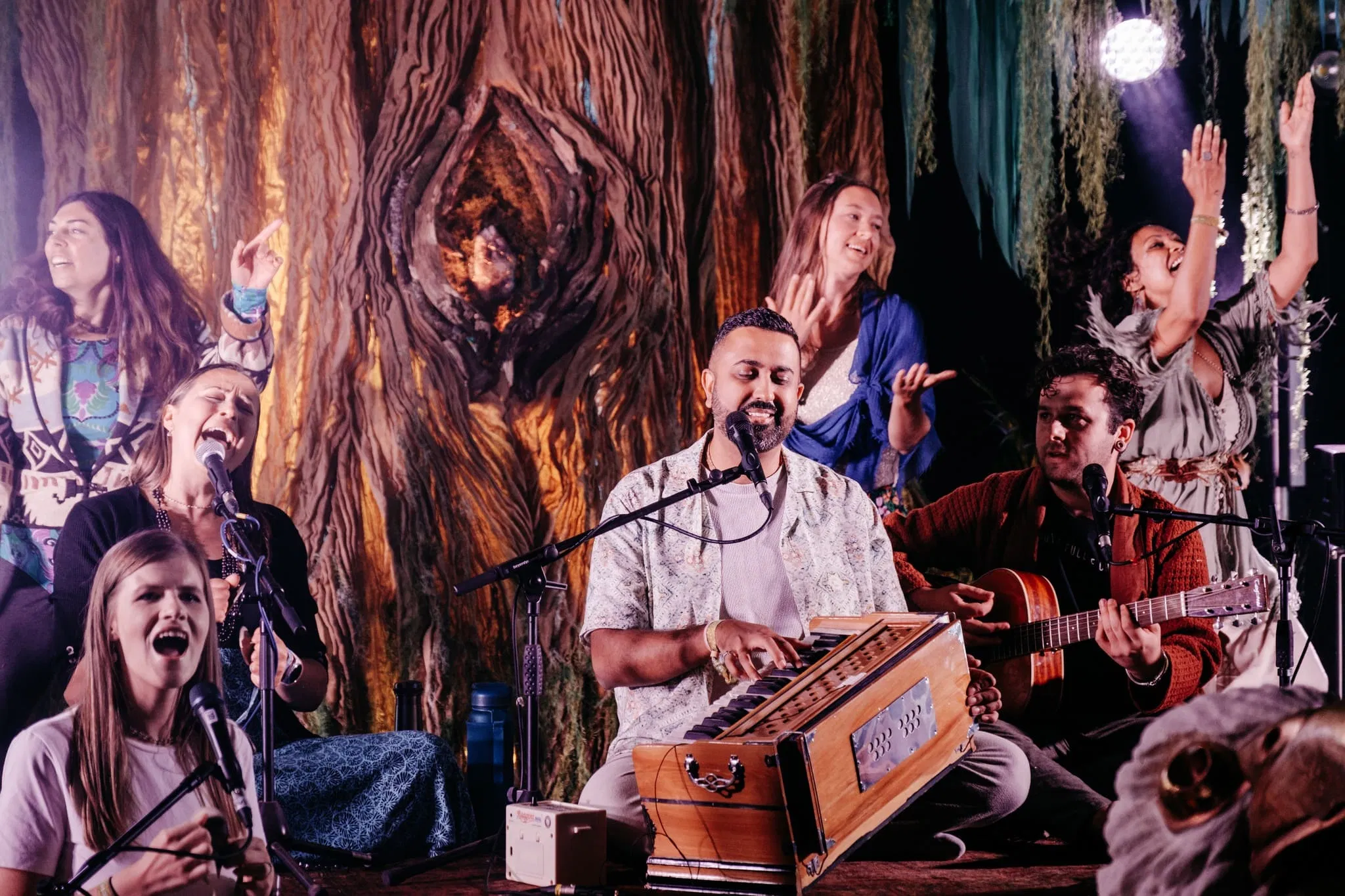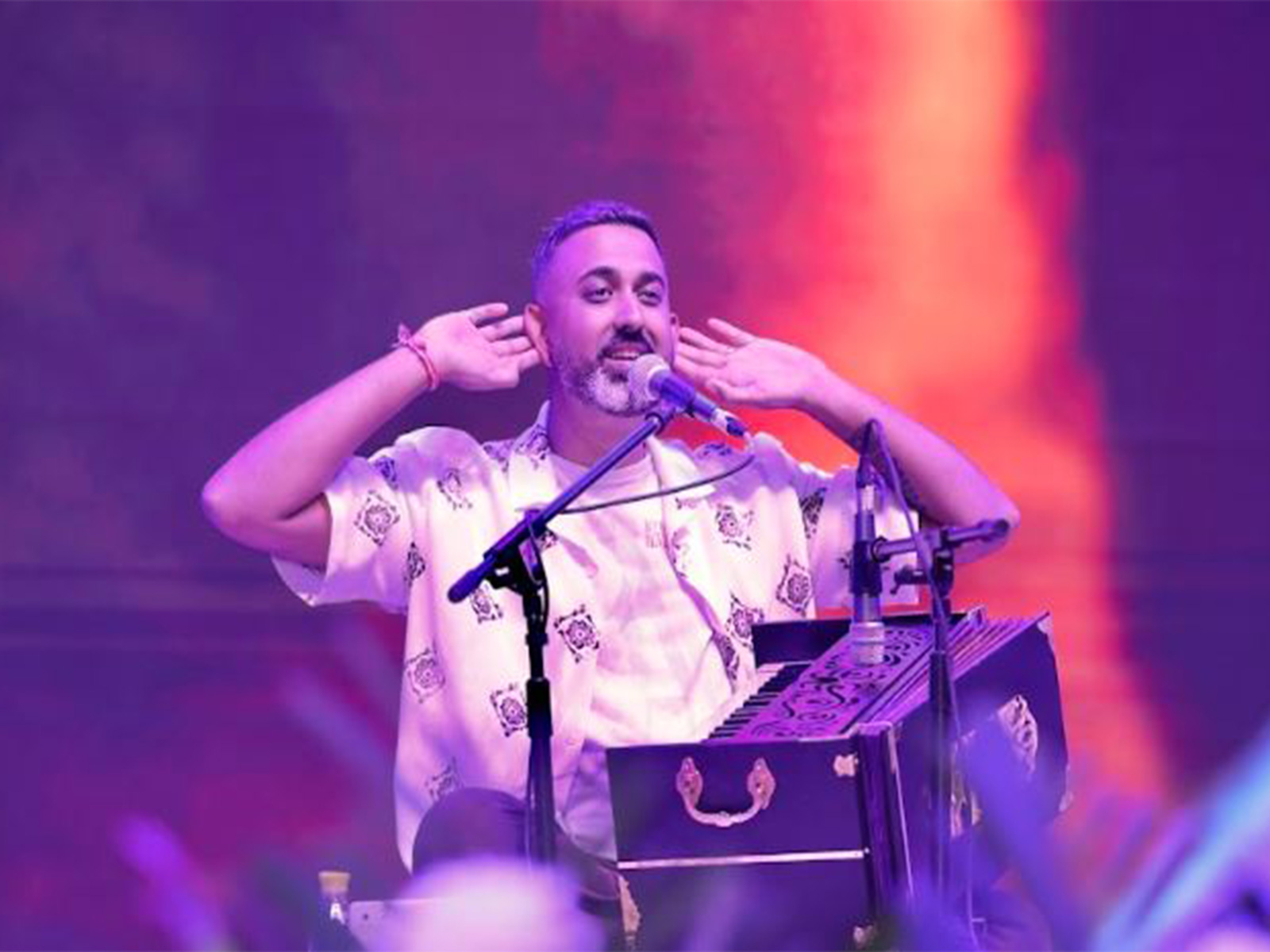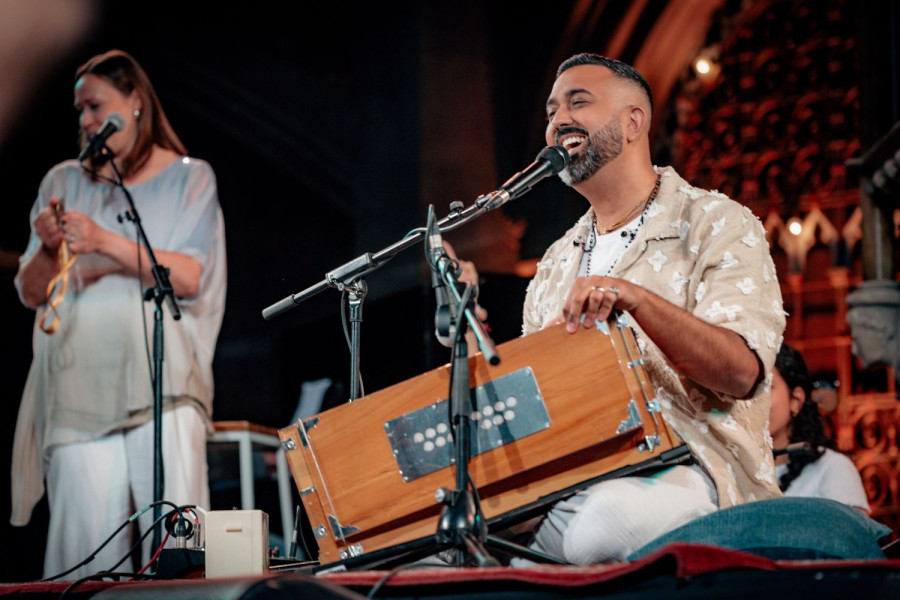
Sri Narasingha arrives as a single—two tracks of crystalline intention—in early 2025, marking a distilled moment in Radhika Das's unfolding arc. Where his larger gatherings and meditation nights have cultivated community across continents, this release turns inward and outward simultaneously: a focused invocation of one of Hinduism's most ferocious and protective deities. After years of stewarding kirtan into concert halls and retreat centers, Das offers here something more concentrated, more intimate—a rendering that feels less like a public gathering and more like an offering placed at an altar. The single format itself is telling: not an album's sprawl, but a prayer distilled to its essential utterance. This is Das at a crossroads between ambassador and devotee, between the teacher who fills rooms and the practitioner who whispers into the dark.
The sound of Sri Narasingha walks a careful line between ancient tradition and present-day listening. Radhika Das's voice sits at the center—warm, trained, capable of both intimate vulnerability and expansive declaration. The instrumentation is restrained, which is precisely its power. Rather than the full kirtan band that often accompanies his live work, these two tracks feel accompanied by a closer circle: acoustic instruments that don't overwhelm the mantra but cradle it. Harmonium, perhaps; sustained strings; the kind of production that lets space breathe. The pacing is unhurried, almost devotional in its patience—there is no rush to resolve, no pop song's arc of tension and release. Instead, the repetition of the name and invocation creates a meditative pulse, the way a mantra is meant to work: through iteration toward transformation.
The mood is neither somber nor ecstatic, but something more complex: reverent clarity. There is a martial gentleness to it, if such a thing exists—the protection of Narasingha rendered not as aggression but as fierce love.
With two tracks, both deserve naming and sitting with. The opening piece establishes the sonic world immediately: Das's voice entering clean and unadorned, calling out to the Lion-Man avatar. Listen for the moment where the drone settles and the repetition begins—this is where the mantra starts to work on you, where listening becomes less passive and more participatory. There's an invitation in that sustained note, a threshold you can choose to cross.
The second track deepens the territory already opened. If the first piece establishes the shrine, the second tends it—a deepening rather than a restart. The voice gains a slight fervor here, the instrumentation a whisper more present, as if confidence is growing. This is where a listener often finds themselves either fully committed to the practice or aware that they've resisted it. Both responses are honest.
Sri Narasingha sits squarely within the bhakti yoga lineage—the devotional path of the heart that Das has spent over a decade embodying. But it's bhakti filtered through contemporary sensibilities: produced with clarity, released into streaming platforms, created for the alone listener in headphones as much as for collective practice. Narasingha himself occupies a particular place in Hindu theology: a fearsome protector, the half-man, half-lion incarnation of Vishnu who defends the devotee against spiritual darkness. By invoking this deity, Das is calling on protection not from enemies but from inner obstacles—fear, forgetting, disconnection from the heart.
The single format also recalls a broader ambient and meditation music tradition—the idea that a focused piece of sacred sound, even in miniature, can be a complete experience. This is devotion in the age of playlists, yet somehow still sacred.
Sri Narasingha will land deepest with listeners already oriented toward mantra practice or bhakti exploration—those who have felt the pull of repetitive sound as a spiritual technology. But it will also speak to anyone in search of protection, literally or spiritually: those in transition, those grieving, those aware of inner struggle and seeking a fierce, loving counterforce. Parents protecting children. Teachers protecting students. Anyone invoking the lion-heart within.
It reaches the solitary practitioner most directly—not the festival-goer but the person who lights a candle alone and remembers what matters.
Listen in evening, preferably at dusk when the day's noise is settling. Use headphones. Sit upright or lie down—ceremony doesn't require stiffness. Play it more than once in a single sitting if you're called to; the mantra deepens with repetition. Consider lighting a candle, or stepping outside after. This is music that asks you to do something with it, not merely consume it. It is an invitation, not a product.
Sri Narasingha is best approached as a ritual object, a threshold, a reminder that protection and devotion are not separate from daily life but woven through it, waiting to be invoked.