
Radhe Govinda is a single, one track released on 15 January 2025. It is a small door into a large body of work, and it works best if you treat it as one sustained offering rather than a sampler.
Radhika Das is a London-based kirtan leader and bhakti yoga teacher with sixteen years of practice behind his music. His catalogue leans heavily on live recordings, including five Heartland volumes and Midnight 23/24 (Live). Against that backdrop, a studio single stands out.
It arrives at the start of 2025, the year of the studio album Mantra (June) and Heartland 5 (Live). The 2026 singles Lightfall, Hara Mahadeva and Sita Rama Jaya came after. The materials don't say whether this track also appears on a larger release, so take it as its own piece. It opens a year in which his current sound took shape.
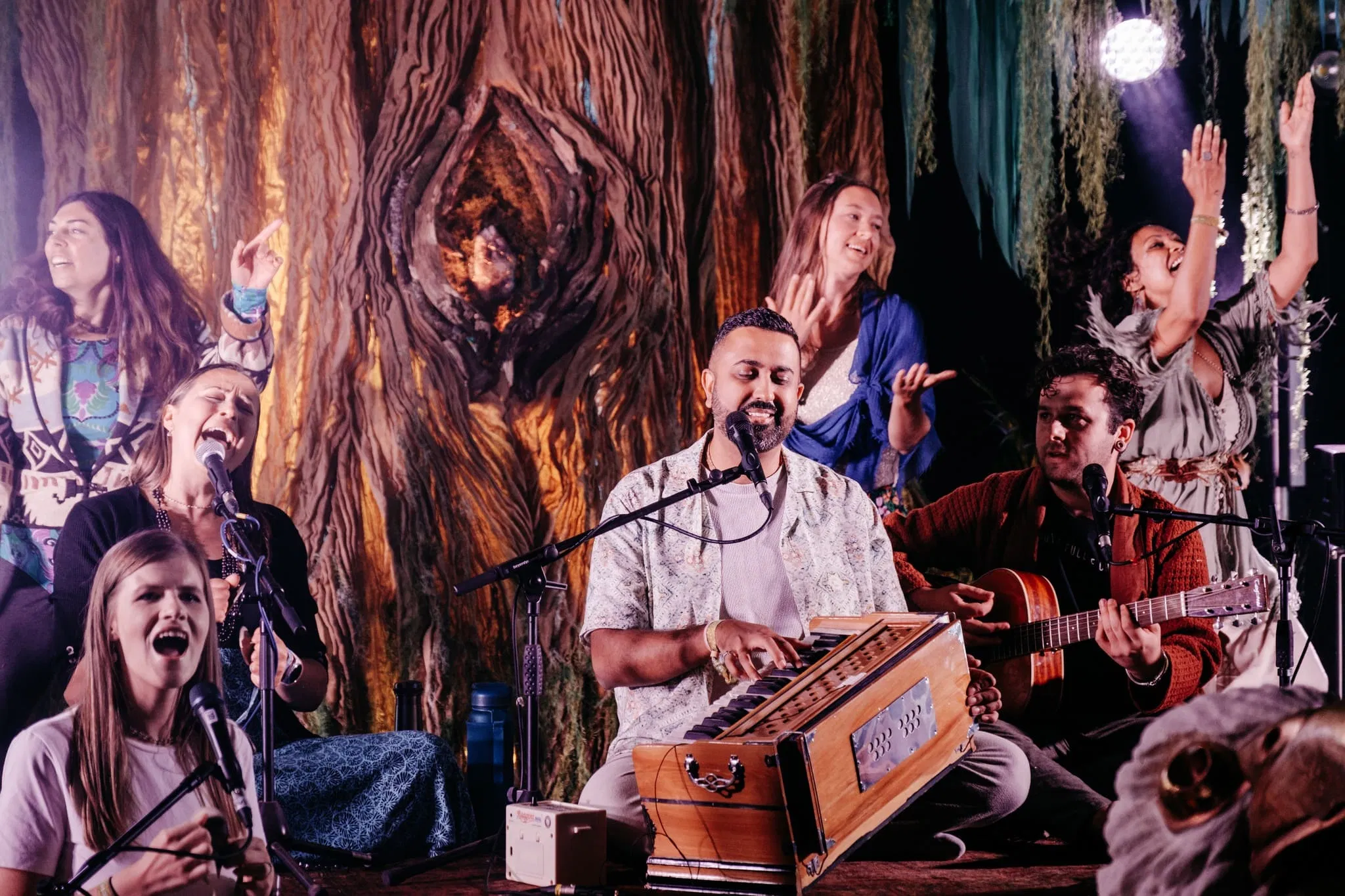
The materials describe his recordings as favouring voice and call-and-response over harmonic complexity. A lead voice carries the melody and a band answers. Sacred names are repeated over a steady pulse, and the aesthetic is restraint rather than spectacle.
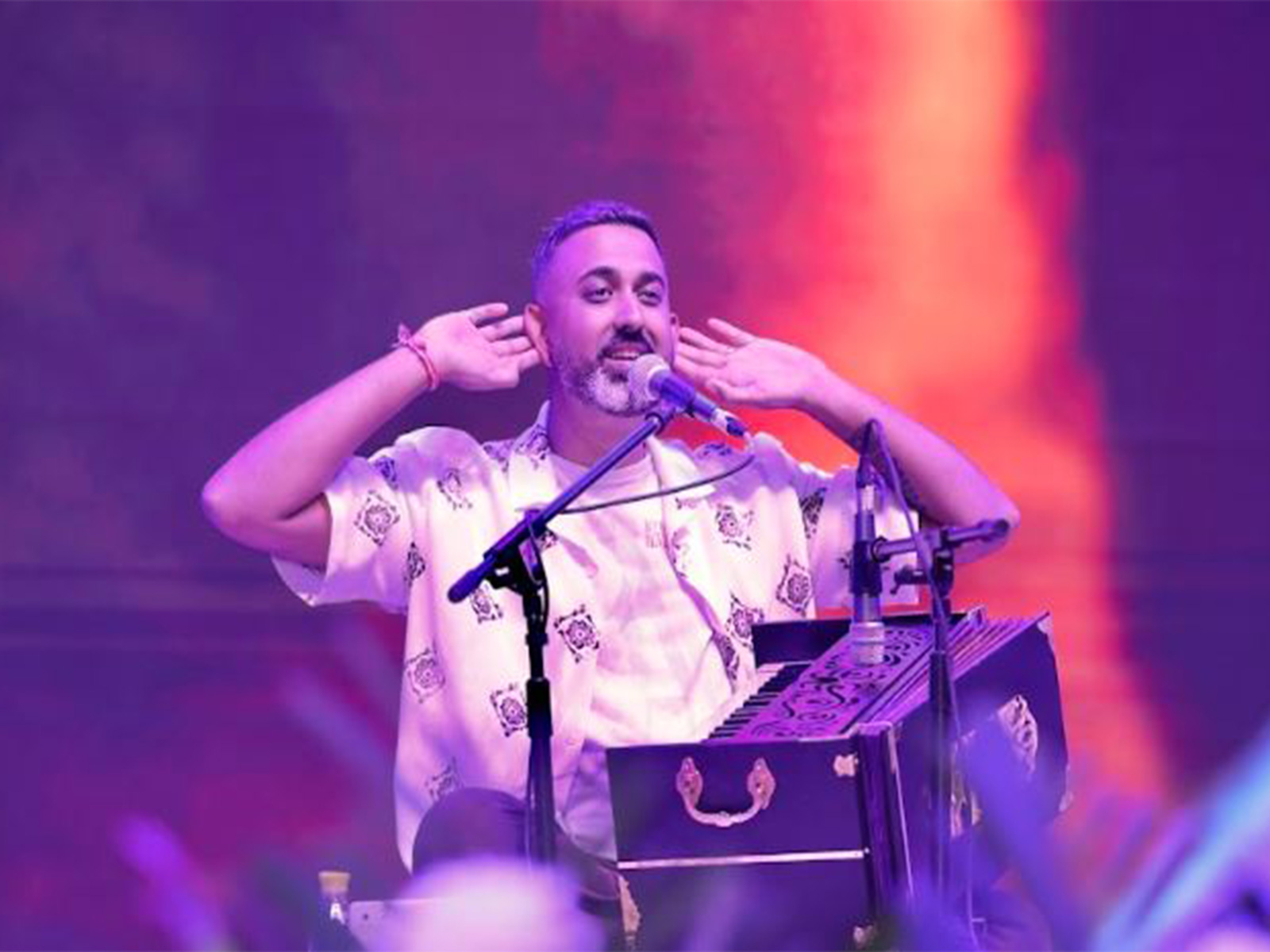
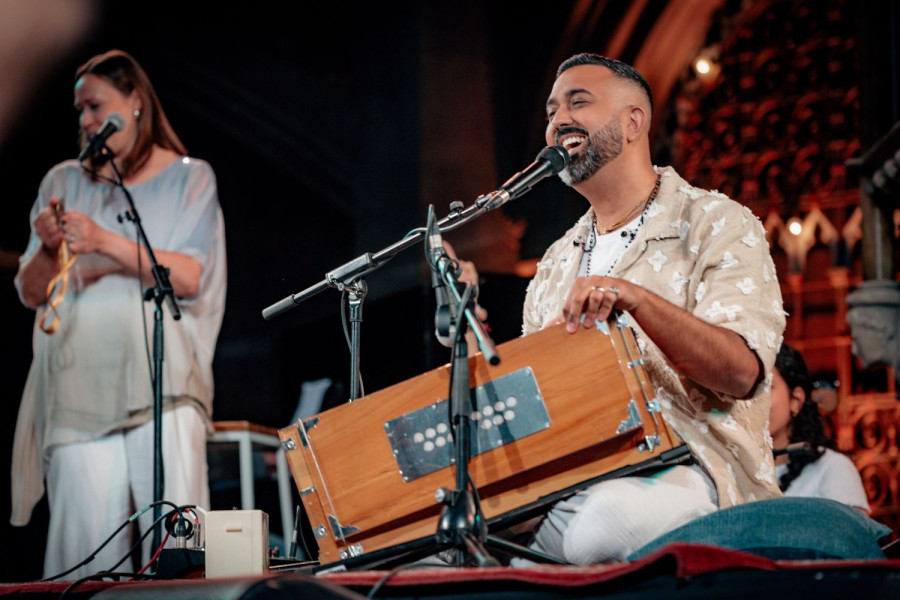
The public materials don't name the instruments, so I won't either. Kirtan ensembles in this tradition commonly centre on harmonium, hand drums and cymbals, and those are the sounds to expect. Pacing is deliberate. A mantra may run for minutes because the repetition is the point. Expect a mood of warmth and steadiness rather than drama. The melody tends to reveal itself as the repetition settles, so give it a few minutes before judging.
With a single track, the signature track is the title. Radhe Govinda lands because of what it declines to do. There is no verse-chorus architecture to wait out and no production gloss laid over the names. The song is sacred names set to melody, a description that fits his work generally.
Govinda is a name of Krishna, and the bhakti path centres on love of a personal deity expressed through singing and remembrance. This is a song of address. It is sung to someone, not performed at someone. The effect builds through accumulation. Each return of the phrase feels slightly different from the last, even as the pulse stays put.
This belongs to bhakti, the devotional path within Hinduism, and specifically to kirtan in call-and-response form. It is not ambient music, though it can calm a room. The materials are clear that many pieces call for singing along, and the call-and-response is part of the design.
Radhika Das's teaching draws on the Bhagavad Gita, and his retreats include pilgrimages to Vrindavan, the town most associated with Krishna's childhood. The public materials name no specific sampradaya or guru lineage, so none is claimed here. What is documented is mantra meditation as method and kirtan as form. Titles such as Shri Rama, Sita Rama Jaya and Hara Mahadeva show Radhe Govinda sitting within a wider set of divine names.
This is for someone already drawn to bhakti, kirtan or slow sacred song, especially a listener who wants to join in rather than observe. It suits a person coming to chanting for the first time, because a single repeated name is an easy thing to follow and answer.
It also suits a restless or crowded stretch of life. In his own words, he has been fascinated since early on by how a single melody can calm a restless mind. A short, steady mantra is a practical tool for that.
It will not suit listeners who want high-BPM electronic music, cinematic production or workout background. Anyone wanting a secular, purely aesthetic experience may find the devotional framing too direct, since the work is an offering to a deity rather than neutral sound.
Choose a quiet evening and set aside time to sit. Headphones help you hear the lead voice and the answering response clearly, but this is not a piece to lose yourself in passively. Sing the name back, even quietly. The call-and-response is the form, and joining it changes the track from something you hear to something you do.
Play it on repeat for about five minutes, in the spirit of the simple test the materials suggest of chanting one mantra for that long. Let the first minute feel slow. By the third, the repetition should start doing its work.
If the single draws you in, a sensible next step is the studio album Mantra, the most complete single listen in the catalogue. Then try Heartland 5 (Live) to hear how the form sounds when a room answers.