BrightStar

Ver todos os Events

Discover conscious gatherings

events

Yoga
Meditation
Breathwork
Qigong
Tai Chi
Sacred Music
World Music
Medicine Music
Sound Healing
Ecstatic Dance
Destinos populares
BaliSedonaLos AngelesCosta RicaNew YorkSan FranciscoAustinMiamiJoshua TreeTulum
Ver todas as categoriasVer todos os destinos

Explorar todos os recursos

Ferramentas poderosas para expandir seus eventos

Recursos da plataforma

Precificação dinâmica inteligente
Categorias de ingressos
Lugares marcados
Recuperação de carrinho abandonado
Recuperação de visitantes
Doações e preço variável
Sistema de afiliados
Scanner de ingressos
Códigos de desconto
Perguntas personalizadas
Compartilhamento de ingressos
Upsells e complementos
Análises e relatórios
Sequências de e-mail
Lista de espera / Notificar / Lembrar
Pessoas e Lugares
Artists & TeachersEvent OrganizersVenues & StudiosKnowledge BaseGlossaryInspiration
Ver todos os recursosSobre nós
PreçosBlog
Ver todos os eventos

events

YogaMeditationBreathworkQigongTai ChiSacred MusicWorld MusicMedicine Music

Destinos populares

BaliSedonaLos AngelesCosta RicaNew YorkSan Francisco

Pessoas e Lugares

Artists & TeachersEvent OrganizersVenues & StudiosKnowledge BaseGlossaryInspiration

Recursos da plataforma

Precificação dinâmica inteligenteCategorias de ingressosLugares marcadosRecuperação de carrinho abandonadoRecuperação de visitantesDoações e preço variávelSistema de afiliadosScanner de ingressosCódigos de descontoPerguntas personalizadasCompartilhamento de ingressosUpsells e complementosAnálises e relatóriosSequências de e-mailLista de espera / Notificar / Lembrar
Ver todos os recursosSobre nós
PreçosBlog
EntrarBuscadoresCriadores
Tibetan BuddhistOm Mani Padme Hum · Om Mani Padme Hum · Om Mani Padme Hum · Om Mani Padme Hum · Om Mani Padme Hum ·
  • Ver todos os Events
  • Para buscadores
  • Yoga
  • Meditation
  • Breathwork
  • Qigong
  • Tai Chi
  • Sacred Music
  • Retiros
  • Workshops
  • Todas as categorias →
  • Bali
  • Sedona
  • Los Angeles
  • Costa Rica
  • Tulum
  • Byron Bay
  • San Francisco
  • Austin
  • Todas as cidades →
  • Para criadores
  • For Teams
  • Para escritores
  • Para professores
  • Para artistas de kirtan
  • Para estúdios
  • Para festivais
  • Para centros de retiro
  • Para organizações sem fins lucrativos
  • Embaixador da marca
  • Estudos de caso
  • Seva
  • Elevate
  • Amplify
  • Rede de 350K+ compradores
  • Recuperação de carrinho abandonado
  • Precificação dinâmica inteligente
  • Categorias de ingressos
  • Eventos recorrentes
  • Lugares marcados
  • Sistema de afiliados
  • Lista de espera / Notificar
  • Scanner de ingressos
  • Widget incorporável
  • Event Syndication
  • Message Center
  • Integrations
  • Reports
  • Todos os recursos →
  • Sobre
  • The Ecosystem
  • Blog
  • Glossário
  • Inspiration
  • Central de ajuda
  • Contato
  • Documentação da API
  • Recursos da marca
  • Carreiras
  • Imprensa
  • Termos de Serviço
  • Política de Privacidade

Events

  • Ver todos os Events
  • Para buscadores
  • Yoga
  • Meditation
  • Breathwork
  • Qigong
  • Tai Chi
  • Sacred Music
  • Retiros
  • Workshops
  • Todas as categorias →

Destinos

  • Bali
  • Sedona
  • Los Angeles
  • Costa Rica
  • Tulum
  • Byron Bay
  • San Francisco
  • Austin
  • Todas as cidades →

Para criadores

  • Para criadores
  • For Teams
  • Para escritores
  • Para professores
  • Para artistas de kirtan
  • Para estúdios
  • Para festivais
  • Para centros de retiro
  • Para organizações sem fins lucrativos
  • Embaixador da marca
  • Estudos de caso
  • Seva
  • Elevate
  • Amplify

Recursos

  • Rede de 350K+ compradores
  • Recuperação de carrinho abandonado
  • Precificação dinâmica inteligente
  • Categorias de ingressos
  • Eventos recorrentes
  • Lugares marcados
  • Sistema de afiliados
  • Lista de espera / Notificar
  • Scanner de ingressos
  • Widget incorporável
  • Event Syndication
  • Message Center
  • Integrations
  • Reports
  • Todos os recursos →

Empresa

  • Sobre
  • The Ecosystem
  • Blog
  • Glossário
  • Inspiration
  • Central de ajuda
  • Contato
  • Documentação da API
  • Recursos da marca
  • Carreiras
  • Imprensa
  • Termos de Serviço
  • Política de Privacidade
BrightStar
© 2026 BrightStar. Todos os direitos reservados.
Back to Pauline Drossart
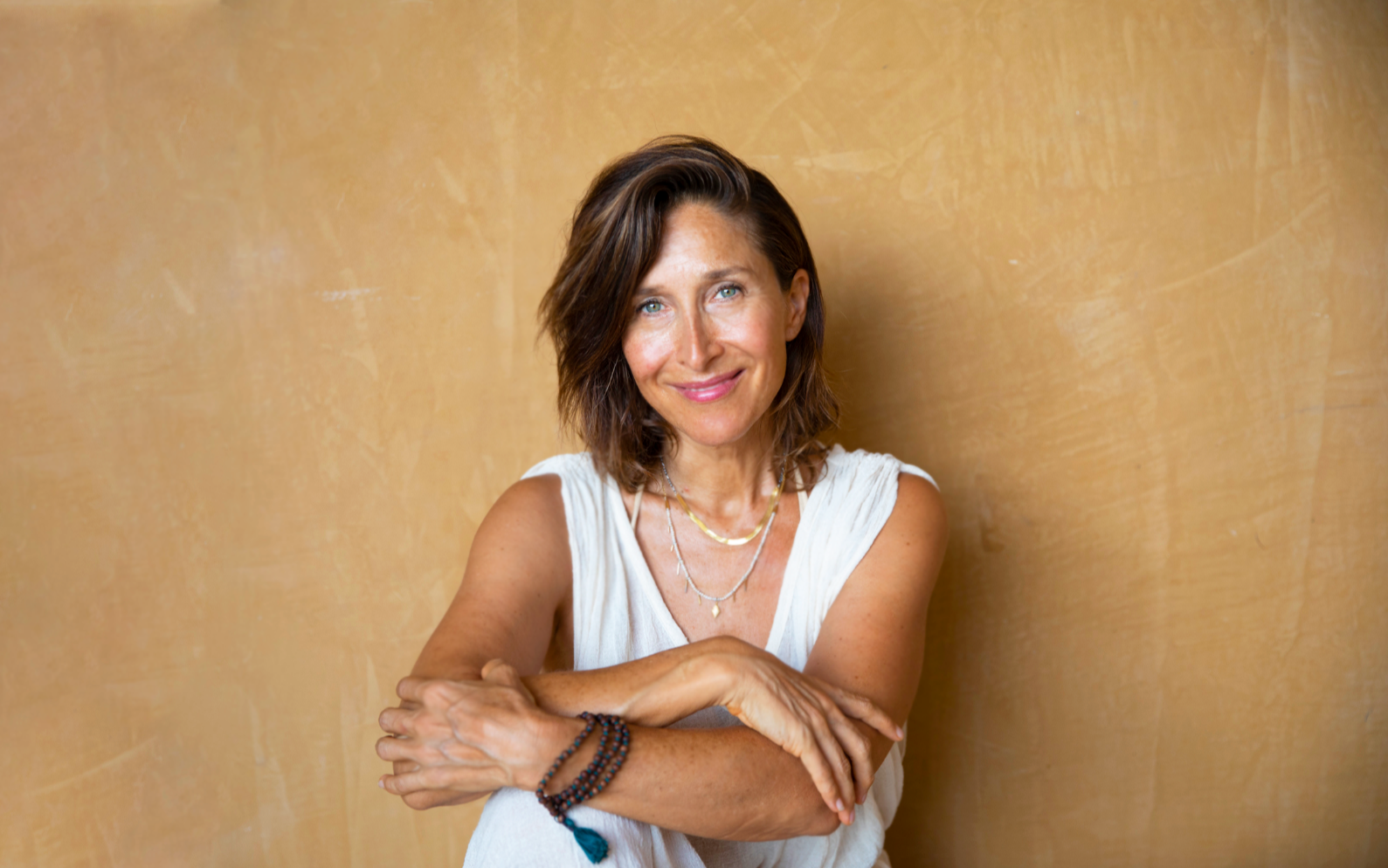
Pauline Drossart's Teaching: Approach, Method, and Voice
Teaching

Pauline Drossart's Teaching: Approach, Method, and Voice

A class with Pauline Drossart follows the classical Kundalini structure—tuning in with "Ong Namo Guru Dev Namo," moving through a kriya sequence designed to target specific energetic channels, then closing with meditation and a long savasana.

Pauline Drossart
Pauline Drossart
Jul 18, 2026
4 min read
Read · 7 sections

Pauline Drossart's Teaching: Approach, Method, and Voice

The Architecture of a Session

A class with Pauline Drossart follows the classical Kundalini structure—tuning in with "Ong Namo Guru Dev Namo," moving through a kriya sequence designed to target specific energetic channels, then closing with meditation and a long savasana. But the frame she builds around it is contemporary and specific. Before the physical practice begins, she teaches. Not inspiration, but information: how the sympathetic nervous system holds the body hostage during perimenopause, why breath retention affects vagal tone, what happens hormonally when you hold your arms overhead for three minutes in a static pose. She wants students to understand the mechanism before they feel it.

The kriyas themselves are not gentle. Kundalini Yoga rarely is. Arm positions held until they burn. Breath of Fire pushed past comfort. Repetition that becomes confrontation. Drossart does not soften this. Her adjustments are minimal. She expects you to meet the practice where it is. What distinguishes her approach is the interpretation she offers: the shake in your legs is not weakness but discharge. The heat is the nervous system recalibrating. The discomfort is not punitive—it is the condition under which the body learns to self-regulate.

Her retreats extend this intensity across days. Mornings begin early with silent breathwork. Kriyas are longer, more demanding. She builds in nervous system education between sessions, teaching polyvagal theory and somatic awareness with the same rigor she applies to yogic philosophy. There is very little casual conversation. The container is held tight. Students are asked to notice what arises and to stay with it—not to process it verbally, but to let the body complete the cycle.

The Themes She Returns To

Drossart's teaching orbits a single, insistent claim: menopause is not a problem to solve but a threshold to cross. She rejects the medicalized narrative of hormone replacement and symptom management in favor of something older and more demanding—initiation. In her framework, the volatility of perimenopause is not malfunction. It is the body dismantling an old operating system. Hot flashes are not nuisances but energetic releases. Insomnia is the nervous system trying to reorganize itself under new conditions.

This is not metaphor for her. It is physiology mapped onto tradition. She draws heavily on the Kundalini teaching that energy moves through the body via nadis and chakras, but she translates this into the language of the autonomic nervous system—vagal pathways, dorsal shutdown, sympathetic surge. Her students are asked to hold both frameworks at once: that they are clearing energetic blockages and also training their bodies to down-regulate after decades of stress conditioning.

The other theme that surfaces constantly is reclamation. Not empowerment in the vague contemporary sense, but the specific recovery of bodily authority. She teaches women to trust sensation over diagnosis, to track their own cycles of activation and rest, to see themselves as capable of regulation without external intervention.

The Questions She Asks

Drossart does not ask rhetorical questions. She asks questions meant to be lived with: What would it mean to stop resisting the heat? Where in your body are you still performing? What if the instability is not the problem but the path? She does not expect verbal answers. The practice itself is the inquiry. She wants students to sit inside the question while their arms are raised, while their breath is suspended, while they are shaking and sweating and wanting to quit.

Aesthetic and Delivery

There is no spiritual bypass in her teaching. No incense-scented reassurance. She uses humor sparingly and never to soften a hard moment. Silence is her primary tool. She lets the room sit with discomfort. Her voice during instruction is clear, direct, and unadorned. She does not perform serenity. When she quotes the tradition—Yogi Bhajan's teachings, yogic scripture—it is functional, not decorative. She references mantra meanings and chakra correspondences because they matter to the technique, not to set a mood.

Stories appear rarely. When she does speak personally, it is brief and aimed at normalization—her own experience with hot flashes, with rage, with the difficulty of the work. But she does not linger. The teaching is not about her.

Who This Lands For

Drossart's teaching is built for women in midlife who have tried gentler approaches and found them insufficient. It suits those who want structure, who are willing to work hard, who prefer precision to poetry. It requires a tolerance for discomfort and a willingness to see symptoms as signals rather than enemies.

It will not suit those looking for comfort, affirmation, or community-building as the center of practice. Her work is not trauma-informed in the contemporary therapeutic sense—she does not offer modifications for activation or encourage students to stop when it feels like too much. This is deliberate, but it limits accessibility.

The Lineage

Drossart stands within the Kundalini Yoga tradition as codified by Yogi Bhajan, but she has adapted it through the lens of nervous system science and women's health. She belongs less to the new-age wellness world and more to a lineage of teachers who insist that transformation requires rigor, that the body is wiser than the mind, and that midlife is not an ending but a second education.

Pauline Drossart
AboutPauline Drossart

Pauline Drossart is a Kundalini Yoga teacher and nervous system guide who has spent over twenty years working with women through yoga, breathwork, and somatic practices. She teache…

View profile

Continue Reading

More about Pauline Drossart

View All
Who Is Pauline Drossart? Life, Work, and Legacy
Article

Who Is Pauline Drossart? Life, Work, and Legacy

Where to Start with Pauline Drossart: A Beginner's Guide
Article

Where to Start with Pauline Drossart: A Beginner's Guide

Keep exploring

Continue your journey

More wisdom and gatherings from across the BrightStar directory.

More Articles

Browse the full library of teachings, interviews, and guides.

Back to all articles →

Teachers & Artists

Explore the lineages, musicians, and guides of the conscious world.

Explore artists →

Find an Event

Kirtan, retreats, sound baths, breathwork, festivals — happening soon.

Browse events →