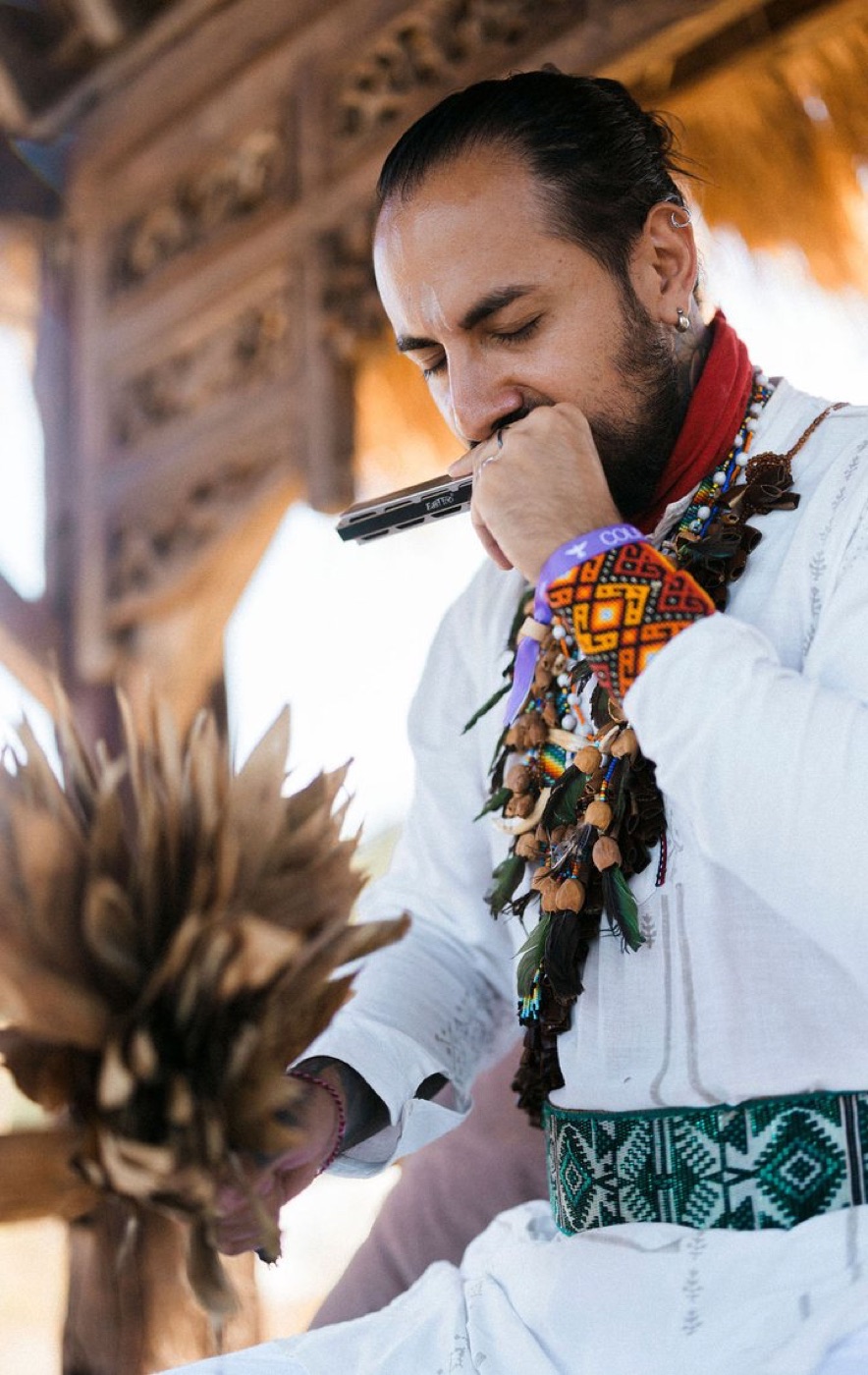

The problem with Nicolas Canon is that he doesn't exist in the conventional sense. No albums on Spotify. No books on Amazon. No TED talks. What you get instead is word-of-mouth, workshop attendance, and direct transmission—which means if you're looking for a starting point, you'll need to approach this differently than you would a typical artist or teacher.
Your best entry is attending one of Canon's workshops focused on sound and consciousness. These aren't recorded, marketed, or packaged for mass consumption. They happen in person, often in smaller venues, and serve as the primary medium through which his work actually lives. If you can't access a workshop immediately, seek out communities or spaces where his former students gather—they often create practice groups that echo his teaching methods. The work is participatory by design; it resists passive consumption.
After experiencing a workshop, the progression is experiential rather than consumptive:
First, integrate what you encountered through daily practice. Canon's approach to spirituality and creativity isn't theoretical—it demands consistent creative expression as spiritual practice. Set aside time each morning for what he calls "creative prayer": making art or sound without agenda or audience.
Second, explore his teachings on healing through art by creating your own mini-workshop structure. Gather 3-5 people and facilitate simple exercises based on what you learned: sound circles, collaborative visual art projects, or movement practices that prioritize process over product.
Third, if possible, attend a longer-format intensive. Canon occasionally offers multi-day retreats that go deeper into the intersection of artistic expression and transformation. These build on workshop foundations and create space for breakthrough experiences that single sessions can't accommodate.
Canon's work feels surprisingly simple—disarmingly so. You might expect complex techniques or esoteric knowledge, but what you get is permission to make sounds, move, create, and express without the burden of making "good art." The first hour often involves just humming, toning, or making marks on paper. Many people feel foolish initially. That's intentional. The work begins precisely where your resistance to being a beginner meets your willingness to try anyway.
His teaching style is warm but non-hierarchical. Don't expect guru theatrics or mystical performances. Expect someone who creates containers for your own discovery rather than delivering revelations from on high.
Beginners often mistake Canon's work for art therapy or entertainment. It's neither. This isn't about fixing yourself through creative expression, nor is it about learning to perform or produce finished artworks. The transformation happens in the consistent practice of creative engagement itself, not in the artifacts produced.
Another misunderstanding: treating workshops as one-off experiences. Canon's framework requires repetition and daily integration. Attending once and moving on means you've essentially experienced the introduction to something that reveals itself only through sustained practice.
Canon's teachings tend to hit deepest during life transitions: career shifts, relationship endings, creative blocks, or spiritual crises. The work is particularly powerful for people who've intellectualized their spirituality or professionalized their creativity to the point of disconnection. If you're burned out on self-improvement but hungry for something real, or if you're accomplished in your field but feeling spiritually hollow, this work tends to crack something open.
It also resonates with people in their 30s and 40s who are ready to reclaim the unselfconscious creativity of childhood without the childishness.
Days 1-2: Spend 20 minutes each morning making sounds without words—humming, toning, experimental vocalizations. No judgment, no recording.
Days 3-4: Add visual art. Fill one page in a sketchbook daily using any medium. Speed and spontaneity over precision.
Days 5-6: Combine both practices—sound and visual art simultaneously for 30 minutes.
Day 7: Invite someone to practice with you. Share the space, not the product. Notice the difference between creating alone and witnessed.
This week won't make you understand Canon's work. It will make you ready to begin.