BrightStar

Ver todos os Events

Discover conscious gatherings

events

Yoga
Meditation
Breathwork
Qigong
Tai Chi
Sacred Music
World Music
Medicine Music
Sound Healing
Ecstatic Dance
Destinos populares
BaliSedonaLos AngelesCosta RicaNew YorkSan FranciscoAustinMiamiJoshua TreeTulum
Ver todas as categoriasVer todos os destinos

Explorar todos os recursos

Ferramentas poderosas para expandir seus eventos

Recursos da plataforma

Precificação dinâmica inteligente
Categorias de ingressos
Lugares marcados
Recuperação de carrinho abandonado
Recuperação de visitantes
Doações e preço variável
Sistema de afiliados
Scanner de ingressos
Códigos de desconto
Perguntas personalizadas
Compartilhamento de ingressos
Upsells e complementos
Análises e relatórios
Sequências de e-mail
Lista de espera / Notificar / Lembrar
Pessoas e Lugares
Artists & TeachersEvent OrganizersVenues & StudiosKnowledge BaseGlossaryInspiration
Ver todos os recursosSobre nós
PreçosBlog
Ver todos os eventos

events

YogaMeditationBreathworkQigongTai ChiSacred MusicWorld MusicMedicine Music

Destinos populares

BaliSedonaLos AngelesCosta RicaNew YorkSan Francisco

Pessoas e Lugares

Artists & TeachersEvent OrganizersVenues & StudiosKnowledge BaseGlossaryInspiration

Recursos da plataforma

Precificação dinâmica inteligenteCategorias de ingressosLugares marcadosRecuperação de carrinho abandonadoRecuperação de visitantesDoações e preço variávelSistema de afiliadosScanner de ingressosCódigos de descontoPerguntas personalizadasCompartilhamento de ingressosUpsells e complementosAnálises e relatóriosSequências de e-mailLista de espera / Notificar / Lembrar
Ver todos os recursosSobre nós
PreçosBlog
EntrarBuscadoresCriadores
Tibetan BuddhistOm Mani Padme Hum · Om Mani Padme Hum · Om Mani Padme Hum · Om Mani Padme Hum · Om Mani Padme Hum ·
  • Ver todos os Events
  • Para buscadores
  • Yoga
  • Meditation
  • Breathwork
  • Qigong
  • Tai Chi
  • Sacred Music
  • Retiros
  • Workshops
  • Todas as categorias →
  • Bali
  • Sedona
  • Los Angeles
  • Costa Rica
  • Tulum
  • Byron Bay
  • San Francisco
  • Austin
  • Todas as cidades →
  • Para criadores
  • For Teams
  • Para escritores
  • Para professores
  • Para artistas de kirtan
  • Para estúdios
  • Para festivais
  • Para centros de retiro
  • Para organizações sem fins lucrativos
  • Embaixador da marca
  • Estudos de caso
  • Seva
  • Elevate
  • Amplify
  • Rede de 350K+ compradores
  • Recuperação de carrinho abandonado
  • Precificação dinâmica inteligente
  • Categorias de ingressos
  • Eventos recorrentes
  • Lugares marcados
  • Sistema de afiliados
  • Lista de espera / Notificar
  • Scanner de ingressos
  • Widget incorporável
  • Event Syndication
  • Message Center
  • Integrations
  • Reports
  • Todos os recursos →
  • Sobre
  • The Ecosystem
  • Blog
  • Glossário
  • Inspiration
  • Central de ajuda
  • Contato
  • Documentação da API
  • Recursos da marca
  • Carreiras
  • Imprensa
  • Termos de Serviço
  • Política de Privacidade

Events

  • Ver todos os Events
  • Para buscadores
  • Yoga
  • Meditation
  • Breathwork
  • Qigong
  • Tai Chi
  • Sacred Music
  • Retiros
  • Workshops
  • Todas as categorias →

Destinos

  • Bali
  • Sedona
  • Los Angeles
  • Costa Rica
  • Tulum
  • Byron Bay
  • San Francisco
  • Austin
  • Todas as cidades →

Para criadores

  • Para criadores
  • For Teams
  • Para escritores
  • Para professores
  • Para artistas de kirtan
  • Para estúdios
  • Para festivais
  • Para centros de retiro
  • Para organizações sem fins lucrativos
  • Embaixador da marca
  • Estudos de caso
  • Seva
  • Elevate
  • Amplify

Recursos

  • Rede de 350K+ compradores
  • Recuperação de carrinho abandonado
  • Precificação dinâmica inteligente
  • Categorias de ingressos
  • Eventos recorrentes
  • Lugares marcados
  • Sistema de afiliados
  • Lista de espera / Notificar
  • Scanner de ingressos
  • Widget incorporável
  • Event Syndication
  • Message Center
  • Integrations
  • Reports
  • Todos os recursos →

Empresa

  • Sobre
  • The Ecosystem
  • Blog
  • Glossário
  • Inspiration
  • Central de ajuda
  • Contato
  • Documentação da API
  • Recursos da marca
  • Carreiras
  • Imprensa
  • Termos de Serviço
  • Política de Privacidade
BrightStar
© 2026 BrightStar. Todos os direitos reservados.
Back to Karmapa
Karmapa's Teaching: Approach, Method, and Voice
Teaching

Karmapa's Teaching: Approach, Method, and Voice

A teaching session with the 17th Karmapa, Ogyen Trinley Dorje, typically unfolds without theatrics. He sits, often in traditional robes, sometimes in casual dress, and begins speaking in a measured cadence that suggests the weight of a lineage stretching back…

Karmapa
Karmapa
Jul 18, 2026
4 min read
Read · 4 sections

Karmapa's Teaching: Approach, Method, and Voice

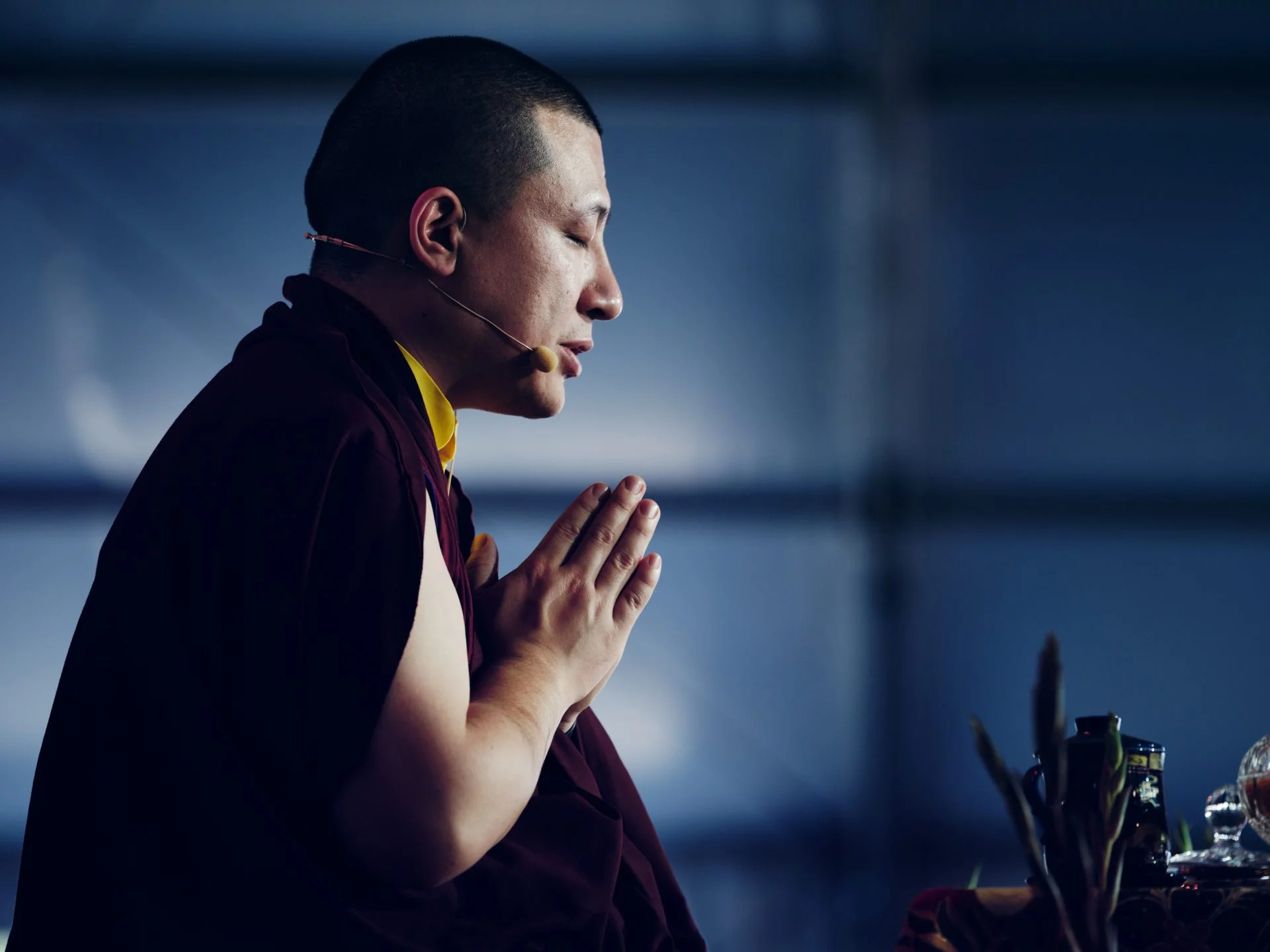
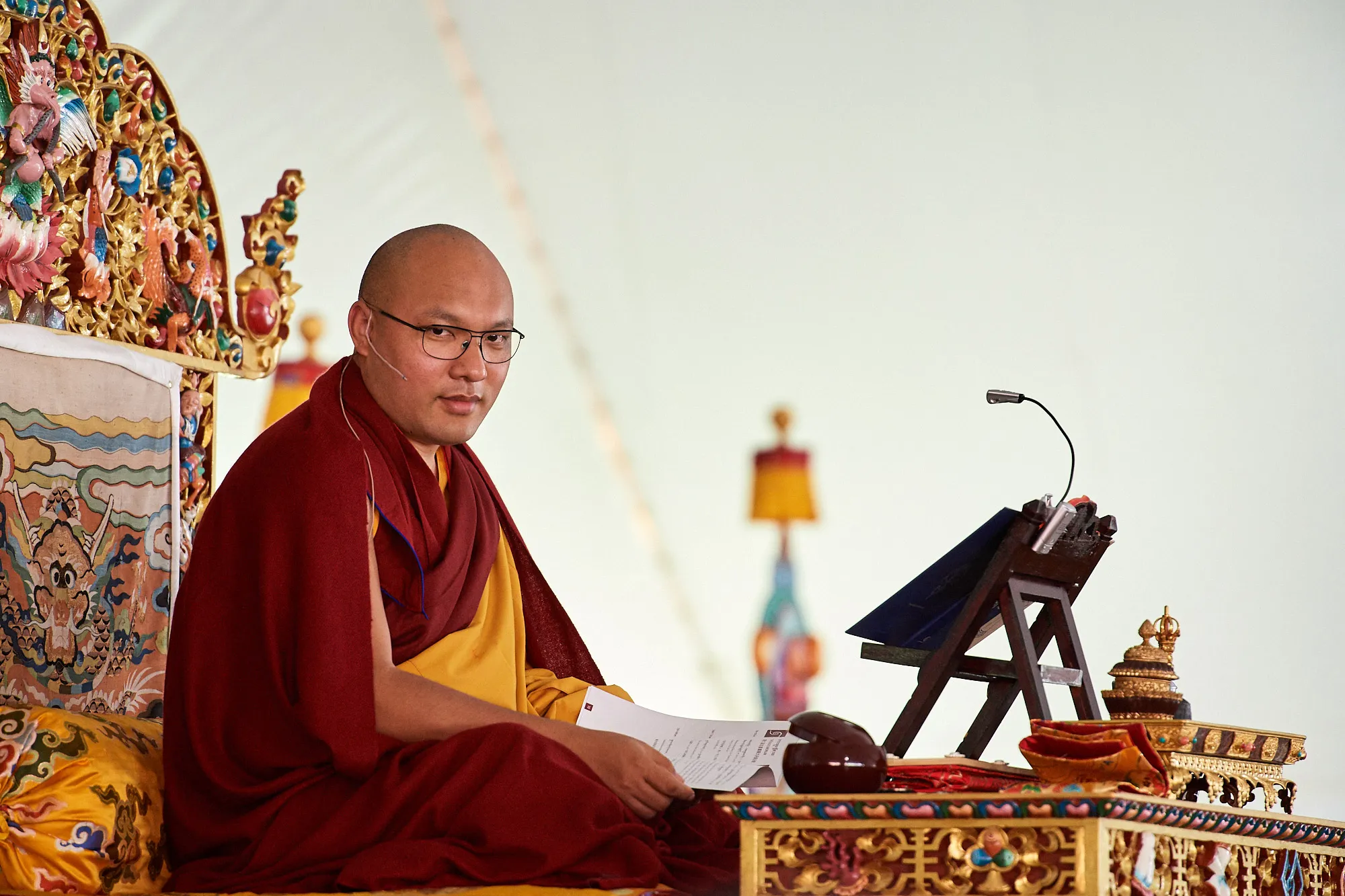
A teaching session with the 17th Karmapa, Ogyen Trinley Dorje, typically unfolds without theatrics. He sits, often in traditional robes, sometimes in casual dress, and begins speaking in a measured cadence that suggests the weight of a lineage stretching back nine centuries. His delivery is neither austere nor overly warm—there is formality, but it bends. A retreat with him might include extended periods of silent meditation punctuated by teachings that toggle between classical Buddhist philosophy and unexpectedly concrete discussions: the ethics of meat consumption, the mechanics of institutional corruption, the way anger lives in the body. He does not rush. Silence is structural, not accidental. When he pauses, it is to let a point settle, not to perform gravitas.

The Karmapa belongs to the Karma Kagyu lineage, one of the four major schools of Tibetan Buddhism, and his teaching style reflects its emphasis on direct experience over scholastic elaboration. Mahamudra—the "great seal" meditation tradition central to Kagyu practice—prioritizes recognizing the nature of mind through sustained contemplation rather than doctrinal mastery. This shapes his method: he will cite scripture, but he more often circles back to the question of what you are actually doing when you sit down to meditate. What are you bringing to the cushion? What are you avoiding? He pushes students to examine their motivation, not as a moral audit but as a diagnostic tool. Why are you here? What do you want from this practice? The questions are not rhetorical.

Recurring Themes and Concerns

Environmental collapse appears frequently in his teachings, not as a side topic but as a moral emergency continuous with Buddhist ethics. He draws the connection plainly: interdependence is not metaphor. If all beings are connected, then the destruction of ecosystems is a failure of compassion at scale. He has spoken about reducing meat consumption, about the carbon footprint of large religious gatherings, about the complicity of silence. This is not the language of traditional dharma talks, and it can feel jarring to students expecting purely contemplative instruction.

Gender inequality within Buddhist institutions is another thread he returns to, sometimes with visible frustration. He has publicly supported full ordination for women in Tibetan Buddhism, a position that places him at odds with conservative elements of his own tradition. His critiques are measured but clear: institutional inertia is not the same as doctrinal necessity. The question he leaves hanging: if Buddhism teaches the dissolution of ego and the equality of all beings, why do its power structures contradict this?

Nonviolence, in his teaching, is both principle and practice. He speaks often about anger—not to demonize it, but to anatomize it. Where does it come from? What does it cost? He draws on Shantideva's Bodhisattvacharyavatara, but he also talks about geopolitics, about Tibet, about the ethics of resistance. He does not offer easy answers. The question persists: how do you hold both compassion and accountability?

Aesthetic and Delivery

Humor exists in his teaching but arrives obliquely. A wry comment about the absurdity of celebrity lamas. A self-deprecating aside about his own impatience. He does not perform levity; it surfaces when the tension of a difficult teaching needs puncturing. Story is present but not dominant—he will relate a Jataka tale or a lineage anecdote, but more often he works through concepts methodically, building arguments rather than painting parables.

Scripture is cited, but he does not hide behind it. He will quote Nagarjuna or Gampopa and then pivot to contemporary application. The Uttaratantra Shastra on Buddha-nature becomes a lens for examining self-hatred. The Abhidharma becomes a framework for understanding digital distraction. He assumes his students can handle complexity. There is little coddling.

His voice on digital platforms—YouTube, Instagram—extends this approach. The production is clean but unadorned. He speaks directly to the camera, often from a simple room. The content is teaching, not branding. This is consistent with his broader aesthetic: clarity over charisma.

Who It Lands For

This teaching appeals to practitioners who want rigor without scholasticism, tradition without nostalgia. It suits people who are uncomfortable with guru devotion as pageantry but still want lineage transmission. Those drawn to socially engaged Buddhism, to the intersection of contemplative practice and systemic critique, will find traction here.

It may not land for students seeking ecstatic experience, for those who want teaching to feel like balm rather than challenge. His refusal to soften difficult questions—about complicity, about motivation, about the gap between belief and action—can feel confrontational. If you come wanting reassurance, you may leave unsettled. That appears to be intentional. The Karmapa teaches as though the stakes are high, because in his framework, they are.
Karmapa
AboutKarmapa

Ogyen Trinley Dorje is the 17th Gyalwang Karmapa, the head of the Karma Kagyu lineage of Tibetan Buddhism. He teaches on the Dharma through both traditional monastery settings and…

View profileWebsite

Continue Reading

More about Karmapa

View All
Where to Start with Karmapa: A Beginner's Guide
Article

Where to Start with Karmapa: A Beginner's Guide

Who Is Karmapa? Life, Work, and Legacy
Article

Who Is Karmapa? Life, Work, and Legacy

Keep exploring

Continue your journey

More wisdom and gatherings from across the BrightStar directory.

More Articles

Browse the full library of teachings, interviews, and guides.

Back to all articles →

Teachers & Artists

Explore the lineages, musicians, and guides of the conscious world.

Explore artists →

Find an Event

Kirtan, retreats, sound baths, breathwork, festivals — happening soon.

Browse events →