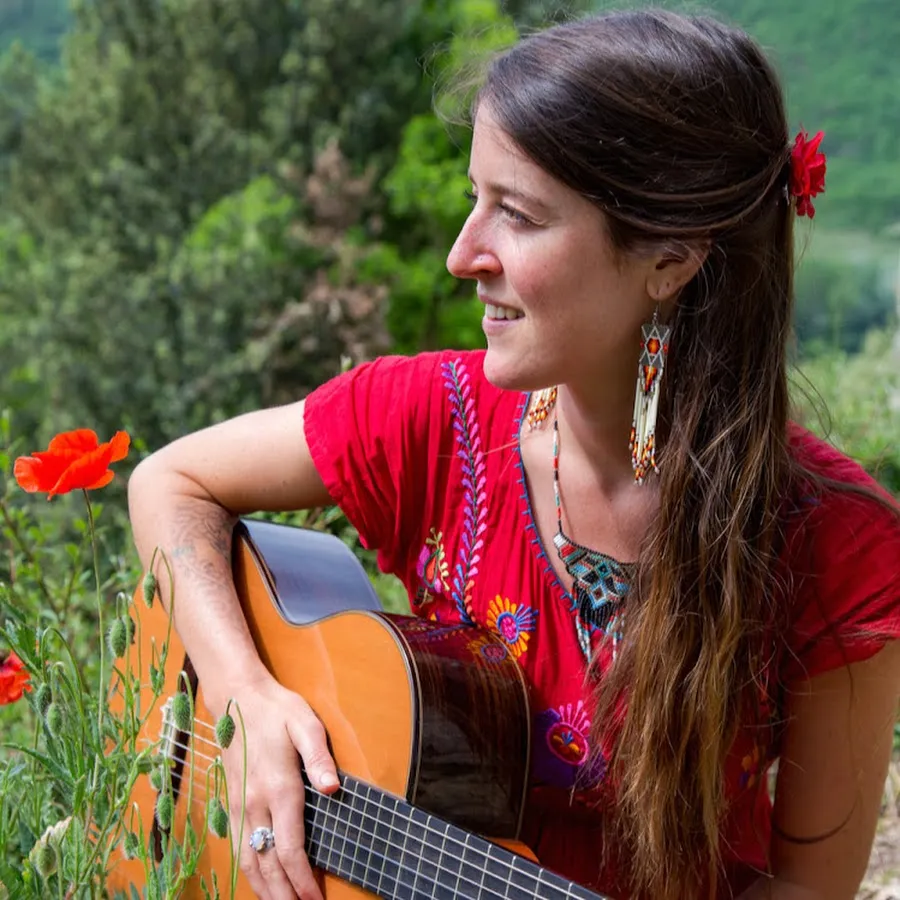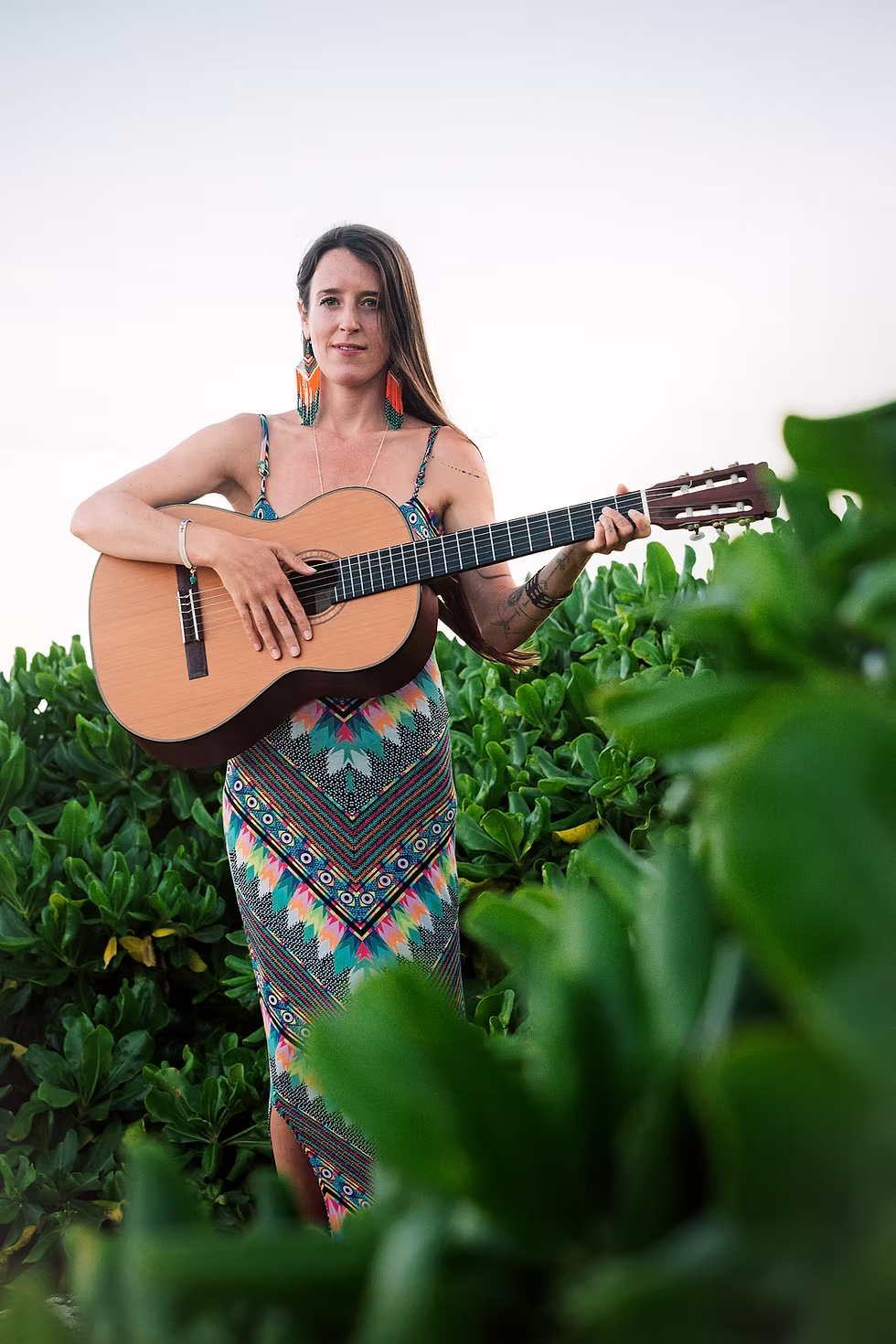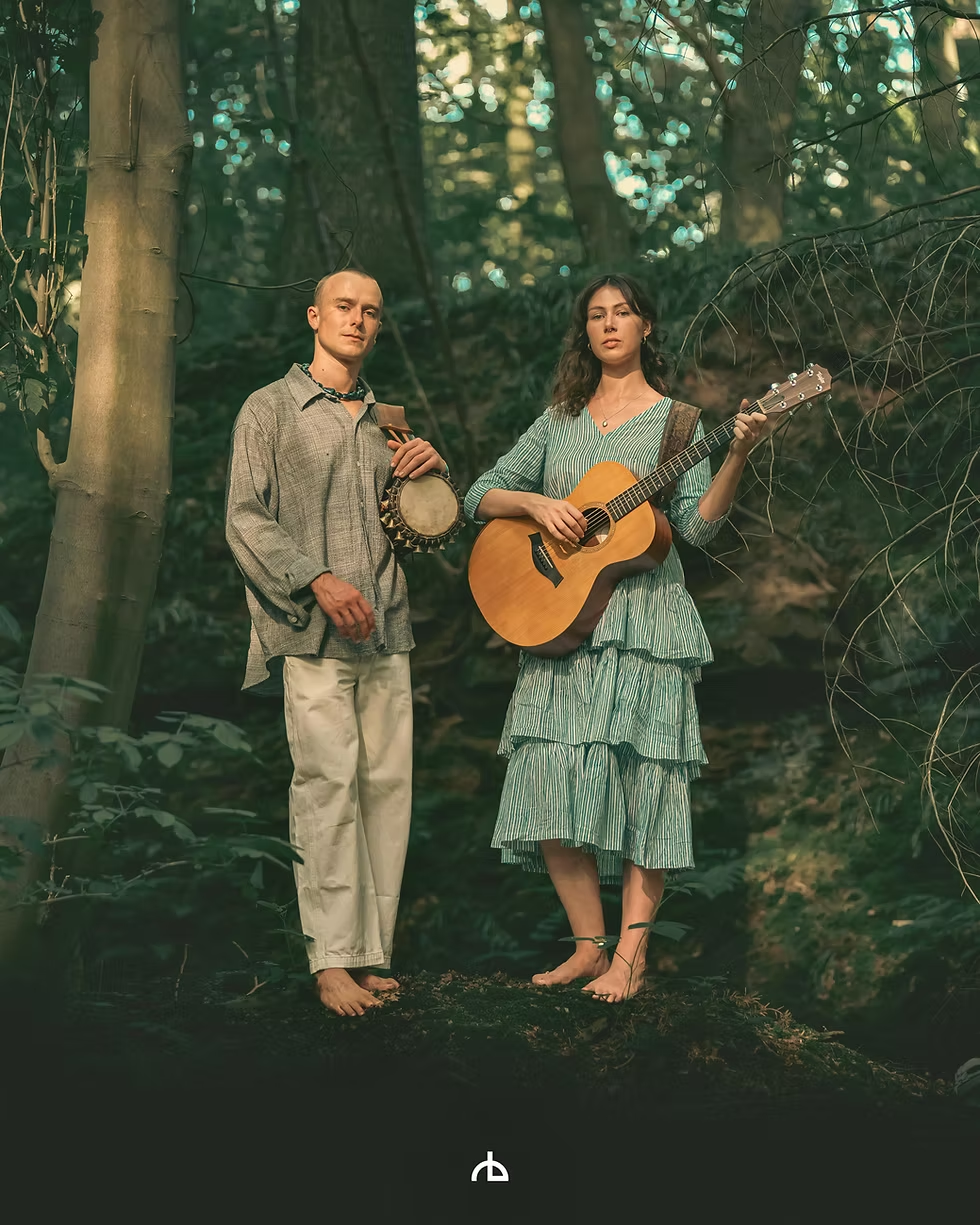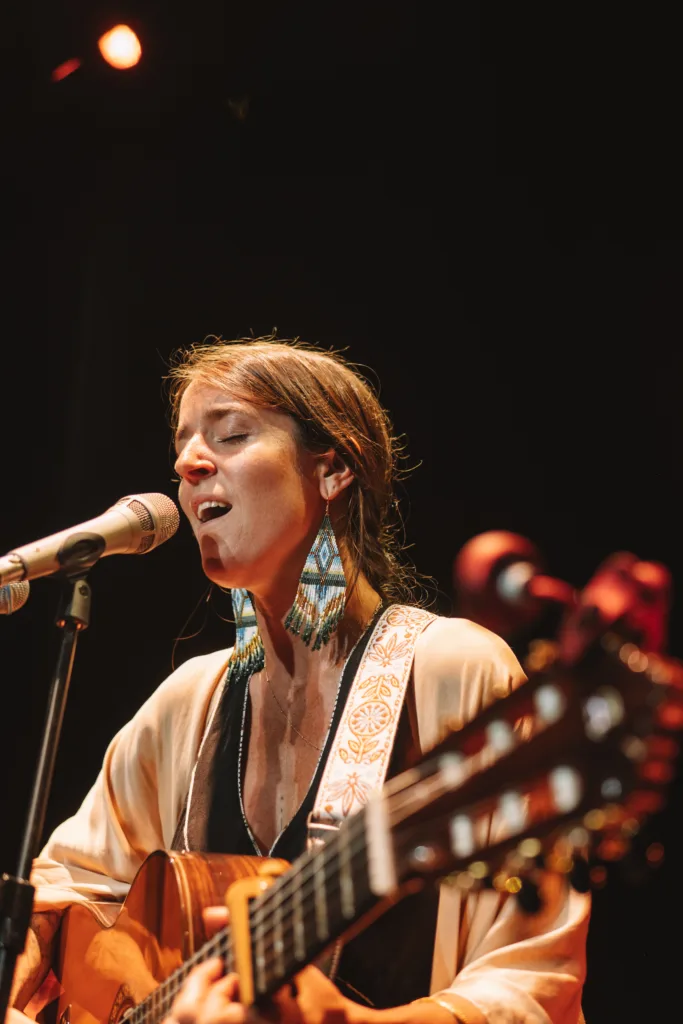

Mâtîrja (Ancestral Mothers) arrived on 17 April 2026 as a nine-track album. It is the kind of record Ayla Schafer's biography has long pointed toward. She is a multilingual "world folk" singer-songwriter and ceremonial musician, described as a "Voice of the Earth," who lives among the wild lands of Dartmoor and is a mother of two. The title carries both the maternal and the ancestral, and it fits a body of work built on memory, remembrance and the "quiet power of presence."
Her path helps explain the album's weight. She began performing at sixteen and worked across the UK festival scene. A turning point came in 2010, when she travelled through South America and spent years away from home. There she explored her inner landscape and learned from various indigenous traditions about the healing power of song. A record about ancestral mothers reads as the natural next step for a writer whose songs already hold what the bio calls "the beauty, shadow and rawness of human experience."
The most distinctive feature of Schafer's repertoire is language. She sings in Spanish, English and Proto-Celtic, the reconstructed ancestral language of the Bronze Age. The album's title word, Mâtîrja, appears to belong to that ancestral register, so the record asks you to hear the voice as something older than the song. Even without a translation in hand, the sound of a reconstructed tongue gives the music a sense of deep time.
Her work is described as weaving world folk with medicinal song, meaning songs meant to do something for the listener, not merely entertain. Expect a voice-led record in which the singing carries the emotional argument. I can't responsibly list the instruments or collaborators here, because none are documented in the information available. What the bio does support is the mood: grounded, earthy, and oriented toward remembrance and reconnection with oneself and the land. Treat pacing as something to discover on your own listen. Music built around presence rarely hurries.
The album has nine tracks, but the track titles were not supplied with the information I have, and I won't invent them. Instead, here is what to listen for as you find your own signature moments:
- The first song you hear sung in Proto-Celtic. Notice how a language no one speaks natively still communicates through vowel shape, rhythm and the grain of the voice.
- A song in Spanish. This is where the South American years are most likely to echo, so listen for the warmth and directness of a language she lived inside while travelling.
- A song in English. Here the poetry is most immediately legible. Follow the lyrics for the remembrance and shadow themes her bio describes.
- The closing track. On a nine-track album the final song usually shapes how the whole record settles. Note whether it resolves or simply opens out.
Once you have your own favorites, the Spotify page for the album lists the full sequence.
Schafer's own descriptors are world folk, medicinal song and ceremonial music. She doesn't present herself within a named lineage or school, and it would be wrong to assign her one. What the bio does say is that she learned from various indigenous traditions about the healing power of song, and that her work carries a commitment to earth consciousness and ancestral wisdom.
That puts the album in conversation with a wider field of devotional and ceremonial music, including song used for gathering, grieving and remembering. It differs from much of that field in drawing on a reconstructed Bronze Age language alongside contemporary ones. The effect is less a revival than an imaginative reaching back, a way of addressing the ancestors in a tongue they might have recognized.
This album will matter most to listeners who come to music for orientation rather than distraction. Parents will find the title and its maternal lineage resonant, especially in a season of becoming or reconsidering what has been inherited. People in a period of grief, return or transition, and anyone drawn to songs that treat memory as a living thing, are the natural audience. It will also suit those who feel a pull toward the land and older ways of marking time, and who are comfortable with lyrics they don't fully understand. If you want rhythmic propulsion or hooks, this may not be your record.
Give it one uninterrupted sitting, from track one to nine, ideally in the evening when the day's noise has settled. Headphones will help you catch the details of the voice, such as breath, vowel color and the small shifts between languages. Read the lyrics afterward rather than during the first pass, so the sound reaches you before the meaning does.
If you use music in ritual or reflective practice, this album suits a quiet, solitary setting: a candle, an open window, perhaps a notebook for whatever surfaces. Let the Proto-Celtic passages simply wash over you. Then, on a second listen, follow the English and Spanish lines and see how they speak to one another. The record rewards patience, and its subject is the slow work of remembering who came before you.